
Unlock Your Potential: The Blueprint for Rapid Skill Mastery
Discover evidence-based strategies to learn anything faster and more effectively than ever before.
Learning a new skill, whether for professional development, personal enrichment, or simply the joy of acquiring new capabilities, can feel daunting. However, armed with the right strategies, you can significantly accelerate the learning curve and achieve proficiency much faster than you might expect. This guide synthesizes effective techniques to help you master new skills quickly and efficiently.
Rapid Learning Highlights
- Deconstruct and Conquer: Break down complex skills into their smallest components and master them individually before combining them.
- Practice with Purpose: Engage in deliberate, focused practice sessions, targeting specific weaknesses and seeking immediate feedback for maximum improvement.
- Reinforce Smartly: Utilize active recall, spaced repetition, and teaching others to embed knowledge deeply and ensure long-term retention.
Strategic Foundations: Setting the Stage for Speed
Before diving into practice, laying a solid foundation is crucial for rapid skill acquisition. This involves understanding the skill, setting clear objectives, and identifying the most crucial elements to focus on.
Define Your Destination: Goal Setting and Motivation
Why Clear Goals Matter
Ambiguity is the enemy of speed. Start by precisely defining what "mastery" looks like for the skill you want to acquire. Is it conversational fluency in a language, the ability to build a functional website, or playing a specific piece of music flawlessly? Setting specific, measurable, achievable, relevant, and time-bound (SMART) goals provides direction and focus. Understand your core motivation – whether it's career advancement, personal passion, or solving a specific problem – as this intrinsic drive will fuel your persistence through challenges.
Break It Down: Deconstructing the Skill
Most skills are complex combinations of smaller, fundamental sub-skills. Deconstruct the larger skill into these manageable components. For example, learning guitar involves sub-skills like finger placement for chords, strumming patterns, reading tablature, and understanding rhythm. By identifying and listing these sub-skills, you create a roadmap. Focus on mastering one or two sub-skills at a time before integrating them. This prevents overwhelm and builds a solid base.
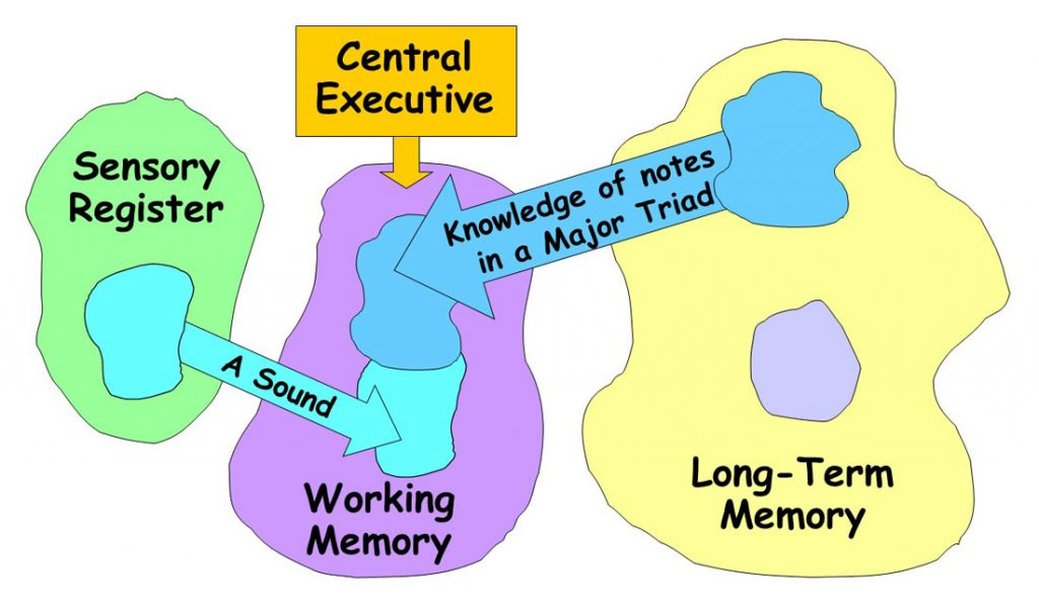
Understanding how the brain learns helps in structuring the skill breakdown effectively.
Apply the 80/20 Rule: Focus on High-Impact Activities
The Pareto Principle, or the 80/20 rule, suggests that roughly 80% of results come from 20% of the effort. In skill acquisition, this means identifying the critical few sub-skills or techniques that will yield the most significant progress. For language learning, this might be mastering the most common 1000 words and basic grammar structures. For programming, it could be understanding core syntax and data structures. Prioritize these high-impact areas early on to build momentum and achieve functional competence quickly.
Gather Your Tools: Leveraging Resources
Don't reinvent the wheel. Utilize available resources like online tutorials (YouTube, Coursera, Udemy), books, blogs, forums (Reddit, Stack Overflow), and professional communities. Research how others have successfully learned the skill. Identify high-quality guides, mentors, or courses. Preparing your resources beforehand saves time and provides structured pathways.
The Engine of Mastery: Practice and Refinement
With a clear plan, the next phase involves focused, intelligent practice. It's not just about putting in hours; it's about how you use that time.
Deliberate Practice: The Gold Standard
Passive repetition yields slow results. Deliberate practice, in contrast, is purposeful and systematic. It involves:
- Focused Attention: Concentrate intensely on the specific sub-skill you're practicing.
- Pushing Boundaries: Operate just outside your current comfort zone, tackling tasks that are challenging but achievable.
- Immediate Feedback: Find ways to get immediate, specific feedback on your performance. This could be from a coach, mentor, software, or even self-recording and analysis.
- Repetition and Refinement: Repeat the task, incorporating the feedback to correct errors and improve technique.
Dedicate specific, scheduled blocks of time for deliberate practice. Even short, focused sessions (e.g., using the Pomodoro Technique – 25 minutes on, 5 minutes off) are more effective than long, unfocused ones.

Deliberate practice is key to turning effort into expertise.
Create Your Learning Sanctuary: Optimize Your Environment
Your environment significantly impacts your ability to focus and learn. Minimize distractions by setting up a dedicated learning space. Turn off notifications on your devices, inform others of your study times, and ensure you have all necessary materials readily available. A conducive environment supports the deep concentration required for deliberate practice.

A well-structured environment enhances focus and learning efficiency.
Consistency Over Intensity
Learning is a marathon, not a sprint. Consistent daily or regular practice, even for short durations (e.g., 20-30 minutes), builds stronger neural pathways than infrequent, lengthy cramming sessions. Regularity reinforces learning and makes the process a habit.
Seek and Integrate Feedback
Feedback is critical for identifying blind spots and correcting mistakes before they become ingrained habits. Seek feedback from multiple sources if possible – mentors, peers, coaches, or online communities. If external feedback isn't readily available, use self-assessment tools like video recording (for physical skills) or comparing your work against expert examples. Actively analyze the feedback and adjust your practice accordingly.
Cementing Knowledge: Retention and Application
Learning isn't just about acquiring information; it's about retaining and applying it effectively. Several techniques can significantly boost long-term memory and understanding.
Active Recall: Test Yourself
Passive review (re-reading notes, re-watching videos) is far less effective than active recall. This technique involves actively retrieving information from your memory. Instead of re-reading a chapter, close the book and try to summarize the key concepts. Use flashcards (physical or digital like Anki), practice problems, or quizzes. Forcing your brain to retrieve information strengthens the neural connections associated with that knowledge.
Spaced Repetition: Timing is Everything
Combine active recall with spaced repetition. Instead of cramming reviews, space them out over increasing intervals. Review new material shortly after learning it, then again a day later, then a few days later, then a week, and so on. This technique interrupts the natural forgetting curve and transfers information from short-term to long-term memory much more efficiently.
Teach to Learn: The Protégé Effect
Explaining a concept to someone else (or even pretending to) is a powerful way to solidify your own understanding. Teaching forces you to organize your thoughts, identify gaps in your knowledge, and simplify complex ideas. Find a study partner, explain concepts to friends or family, or write blog posts about what you're learning.
Connect the Dots: Relate to Existing Knowledge
Your brain learns new things more easily when it can connect them to information it already possesses. Actively look for analogies, metaphors, or relationships between the new skill and your existing knowledge base. This creates a richer network of understanding, making recall easier and faster.
Optimize Your Brain: Sleep and Breaks
Learning physically changes your brain, and these changes consolidate during sleep. Practicing a skill, particularly motor skills, within a few hours of sleeping can significantly enhance memory consolidation. Furthermore, taking regular short breaks during learning sessions (like the Pomodoro Technique) prevents burnout and helps maintain focus.
Mindset and Adaptation
The psychological aspect of learning is just as important as the techniques employed.
Embrace the Struggle: Growth Mindset
Adopt a growth mindset – the belief that abilities can be developed through dedication and hard work. View challenges and mistakes not as failures, but as opportunities to learn and improve. This resilience is crucial for overcoming the inevitable plateaus and difficulties encountered during skill acquisition.
Review, Reflect, and Adjust
Regularly step back to evaluate your progress. Are the methods you're using effective? Are you hitting your milestones? Be prepared to adjust your learning plan based on what's working and what isn't. If a particular technique isn't yielding results, try a different approach.
Comparing Learning Techniques
Different learning techniques offer unique advantages. This radar chart provides a comparative perspective on some key methods based on factors like perceived effectiveness, speed of initial results, effort required, and contribution to long-term retention. Note that the ideal blend often depends on the specific skill and individual learning style.
Visualizing the Path to Mastery
This mind map outlines the interconnected strategies for accelerating skill acquisition, providing a visual overview of the key stages and techniques involved in the learning process.
(SMART)"] id1b["Deconstruct Skill
(Sub-skills)"] id1c["Apply 80/20 Rule
(Prioritize)"] id1d["Gather Resources
(Books, Courses, Tools)"] id2["Practice & Execution"] id2a["Deliberate Practice
(Focused, Challenging)"] id2b["Consistency
(Regular Sessions)"] id2c["Optimal Environment
(Minimize Distractions)"] id2d["Seek Feedback
(Coach, Mentor, Self)"] id3["Reinforcement & Retention"] id3a["Active Recall
(Testing Memory)"] id3b["Spaced Repetition
(Increasing Intervals)"] id3c["Teach Others
(Protégé Effect)"] id3d["Connect Knowledge
(Analogies, Relations)"] id4["Mindset & Support"] id4a["Growth Mindset
(Embrace Challenges)"] id4b["Optimize Brain
(Sleep, Breaks)"] id4c["Review & Adjust
(Evaluate Progress)"] id4d["Stay Motivated
(Track Wins)"]
Learning Techniques Compared
Understanding the strengths of different learning methods allows you to tailor your approach. Here's a comparison of some effective techniques:
| Technique | Description | Best For | Key Benefit |
|---|---|---|---|
| Deliberate Practice | Highly focused, structured practice aimed at improving specific aspects just beyond current ability, with immediate feedback. | Performance skills (music, sports, coding, surgery), complex problem-solving. | Rapid improvement in targeted areas, high level of proficiency. |
| Active Recall | Retrieving information from memory without looking at the source material (e.g., self-testing, flashcards). | Memorizing facts, concepts, vocabulary, procedures. | Strengthens memory traces significantly more than passive review. |
| Spaced Repetition | Reviewing material at increasing intervals over time. | Long-term retention of facts, vocabulary, formulas. Often used with active recall. | Combats the forgetting curve, embeds information in long-term memory. |
| Teaching Others (Protégé Effect) | Explaining concepts or demonstrating skills to someone else. | Deepening understanding of complex topics, identifying knowledge gaps. | Forces clarification of thought and reinforces learning. |
| 80/20 Rule (Pareto Principle) | Identifying and focusing on the vital few inputs (~20%) that produce the majority of results (~80%). | Initial learning stages, prioritizing tasks, efficient use of time. | Achieves functional competence quickly by focusing on core elements. |
| Immersion | Surrounding yourself with the skill environment (e.g., living abroad for language, joining coding bootcamps). | Language learning, cultural adaptation, environments requiring constant application. | Accelerated learning through continuous exposure and practical application. |
Watch: A Practical 4-Step Process
This video provides a concise and actionable 4-step framework for learning new skills rapidly. It covers key aspects like deconstruction, learning enough to self-correct, removing barriers, and committing to practice, aligning well with the principles discussed above.
Frequently Asked Questions (FAQ)
How long does it *really* take to master a skill?
There's no single answer, as it depends heavily on the skill's complexity, your prior experience, the quality of your practice, and your definition of "mastery." Some models suggest ~20 hours of deliberate practice for basic proficiency (the "First 20 Hours" concept) and the popularized "10,000-hour rule" for world-class expertise (though this is often debated and context-dependent). Focus on consistent, deliberate practice rather than a fixed number of hours. Rapid progress is possible, but true mastery takes sustained effort.
What's the single most important factor for learning quickly?
While many factors contribute, deliberate practice is often cited as the most crucial element for rapid improvement. It involves focused effort on challenging tasks combined with immediate feedback and refinement. Without purposeful practice aimed at improvement, simply spending time won't lead to efficient skill acquisition.
Can I learn multiple skills at once effectively?
It's possible, but generally less efficient, especially in the initial stages. Learning requires significant cognitive resources and focus. Splitting your attention and practice time across multiple demanding skills can slow down progress in all of them. It's often more effective to focus intensely on mastering one skill (or a few closely related ones) before moving on to the next.
What if I lose motivation or hit a plateau?
Plateaus and waning motivation are normal. Revisit your initial goals and "why" to reignite passion. Break down the skill further – perhaps you need to focus on a different sub-skill. Seek new feedback or try different learning resources. Track small wins to see progress. Sometimes, taking a short break can help reset your perspective. Embracing the growth mindset helps you see plateaus as temporary challenges, not dead ends.
References
- 10 Steps To Learn New Skills (With Tips) - Indeed.com
- How to Learn Faster: 12 Quick & Efficient Study Tricks - wikiHow
- 3 Hacks to Mastering Any Skill Quickly - LEANFoundry
- Top 10 Learning Techniques for Rapid Skill Acquisition - learningforge.co
- How to learn faster: 5 ways to tune your brain for new things - study.gov.pl
- Expertise expert offers 8 tips for learning a new skill - UNC-Chapel Hill
- 8 Tips for Learning a New Skill | Psychology Today - Psychology Today
Recommended

Last updated April 17, 2025