
Mastering Autoencoders: The Secret Weapon for Solving Real Business Problems
Unlock the power of neural compression to build valuable models that translate directly to business success
Essential Insights About Autoencoders
- Autoencoders are neural networks that learn to compress data into meaningful representations and reconstruct it with minimal loss
- They excel at dimensionality reduction, anomaly detection, denoising, and generating new data samples
- Mastering autoencoder variants (VAEs, sparse, denoising) will significantly expand your machine learning toolkit
Autoencoders represent one of the most versatile tools in the machine learning arsenal. As unsupervised neural networks, they learn to compress input data into a lower-dimensional representation and then reconstruct it as accurately as possible. This seemingly simple process unlocks remarkable capabilities that can solve complex business problems and deliver measurable ROI.
Understanding the Autoencoder Architecture
At its core, an autoencoder consists of three main components working together to learn the most important features of your data:
The Three Essential Components
- Encoder: Compresses input data into a lower-dimensional latent space representation, capturing the most important features while discarding noise
- Bottleneck (Latent Space): The compressed representation where the most important features are stored
- Decoder: Reconstructs the original input from the compressed representation
The magic happens during training, where the autoencoder learns to minimize the difference between its input and output (reconstruction error). This forces the network to learn which features are truly important for reconstruction.
The Training Process
- Input data is fed into the encoder
- The encoder compresses it into the latent space representation
- The decoder attempts to reconstruct the original input
- The reconstruction error is calculated between input and output
- The network's weights are updated to minimize this error
Types of Autoencoders and Their Business Applications
| Type | Key Characteristics | Business Applications |
|---|---|---|
| Simple Autoencoder | Basic architecture with fewer nodes in hidden layer than input/output | Dimensionality reduction, feature extraction for simpler datasets |
| Variational Autoencoder (VAE) | Learns probability distribution of data, adds randomness to encoding | Generating new product designs, synthetic data creation, advanced recommendation systems |
| Denoising Autoencoder | Trained to reconstruct clean data from corrupted inputs | Noise removal from sensor data, image enhancement, signal processing |
| Sparse Autoencoder | Adds sparsity constraint to latent representation | Feature selection, efficient representation learning, compression |
| Convolutional Autoencoder | Uses convolutional layers in encoder/decoder | Image processing, visual quality control, medical imaging |
Real-World Business Applications with Examples
Anomaly Detection: Finding the Needle in the Haystack
Autoencoders excel at identifying unusual patterns that could indicate fraud, equipment failure, or other business-critical anomalies.
How It Works in Practice
A manufacturing company trains an autoencoder on sensor data from normal production runs. When equipment begins to malfunction, the reconstruction error spikes because the autoencoder fails to accurately reconstruct the abnormal patterns. This early warning system prevents costly downtime and maintenance issues.
Implementation Approach
Train the autoencoder on "normal" data only. In production, continuously monitor reconstruction error. When this error exceeds a certain threshold, flag the data point as a potential anomaly for investigation.
Dimensionality Reduction: Making Big Data Manageable
When dealing with high-dimensional data, autoencoders can compress information while preserving meaningful relationships—often outperforming traditional methods like PCA.
How It Works in Practice
A retail company with thousands of products uses an autoencoder to compress product attribute data into a lower-dimensional space. This compressed representation makes it easier to build effective recommendation systems and identify product relationships that boost cross-selling opportunities.
Implementation Approach
Use the encoder portion of a trained autoencoder to transform high-dimensional data into a more manageable representation. This compressed data can then be used for visualization, clustering, or as input to other machine learning models.
Image Denoising and Enhancement: Clarity from Chaos
Denoising autoencoders can recover clean data from corrupted or noisy inputs, which has valuable applications across industries.
How It Works in Practice
A healthcare company uses denoising autoencoders to clean up low-quality medical images, enhancing diagnostic accuracy without requiring expensive equipment upgrades. This improves patient outcomes while controlling costs.
Implementation Approach
Train the autoencoder on pairs of noisy and clean images. The network learns to map noisy inputs to clean outputs. In production, apply the network to new noisy images to obtain enhanced versions.
Generative Modeling: Creating New Possibilities
Variational autoencoders (VAEs) learn the underlying distribution of data, enabling the generation of new, realistic samples.
How It Works in Practice
A product design company uses VAEs to generate novel design variations. By sampling from the learned latent space, designers discover creative alternatives they might not have considered otherwise, accelerating the innovation cycle.
Implementation Approach
Train a VAE on existing design data. Then sample from the latent space distribution and use the decoder to generate new designs. The latent space can also be interpolated to create smooth transitions between existing designs.
This radar chart compares the effectiveness of different autoencoder types across various applications. Understanding these strengths will help you select the right architecture for your specific business problem.
The Autoencoder Mindmap: Conceptual Framework
This mindmap illustrates the key concepts of autoencoders and how they relate to one another. Use it as a mental model to organize your understanding of the topic.
Visual Guide to Autoencoders
These images illustrate key concepts in autoencoder architecture and applications:
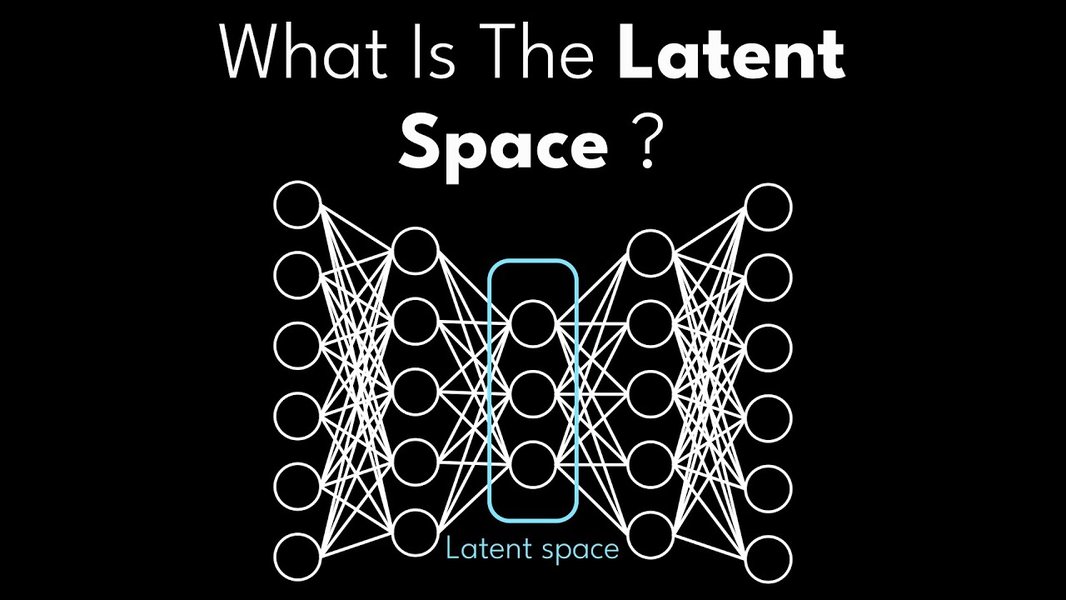
Autoencoder Architecture: This diagram shows the classic encoder-bottleneck-decoder structure that defines all autoencoders.
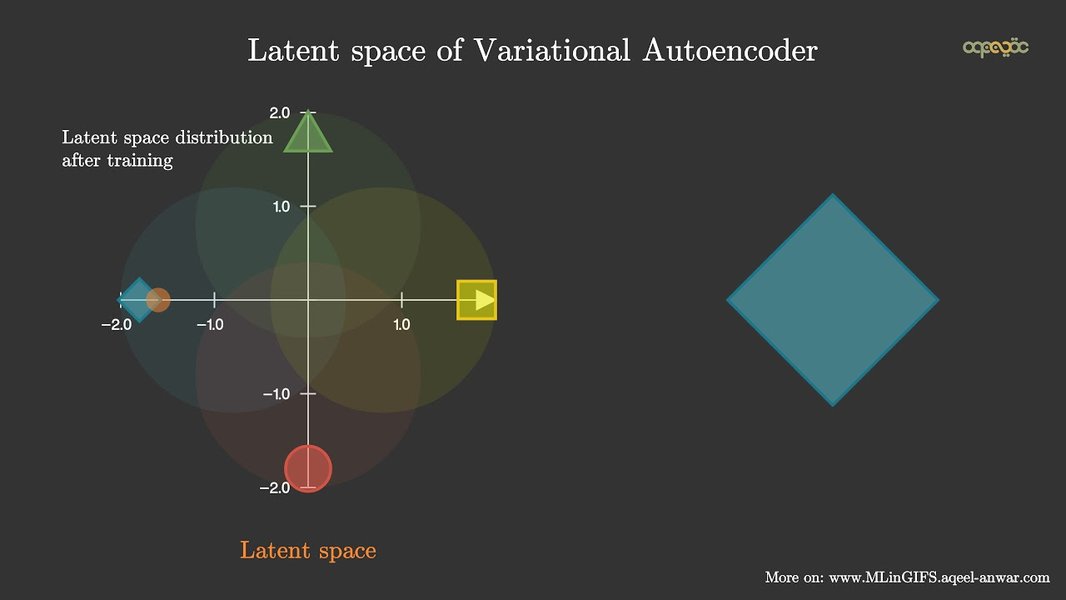
Latent Space Visualization: Visualizing the latent space of a VAE shows how similar data points cluster together, enabling interpolation between classes.
Expert Video Breakdown: Autoencoders Explained
This comprehensive video tutorial breaks down autoencoders in simple, intuitive terms while still covering advanced concepts. It's an excellent resource for visual learners who want to grasp both the theory and practical applications.
The video covers everything from basic concepts to advanced variants, making it an excellent resource for reinforcing your understanding of autoencoders and their applications.
Practical Implementation Steps for Business Success
Step-by-Step Approach to Building Effective Autoencoder Models
- Problem Definition: Clearly articulate what business problem you're trying to solve and how an autoencoder might help
- Data Collection & Preparation: Gather relevant data and preprocess it for training
- Architecture Selection: Choose the appropriate autoencoder type based on your specific use case
- Implementation: Build and train your model using frameworks like TensorFlow or PyTorch
- Evaluation: Assess performance using appropriate metrics for your application
- Deployment: Integrate the model into your business workflows
- Monitoring & Refinement: Continuously track performance and update as needed
Common Challenges and Solutions
Challenge: Overfitting
Solution: Implement regularization techniques like dropout or L1/L2 regularization. Also consider using a validation set to monitor performance and implement early stopping.
Challenge: Choosing the Right Bottleneck Size
Solution: Experiment with different bottleneck dimensions and evaluate performance. Too small might lose important information, while too large might learn to simply copy the input.
Challenge: Training Instability
Solution: Use appropriate learning rate schedules, batch normalization, and modern optimizers like Adam to stabilize training.
Challenge: Interpreting the Latent Space
Solution: Visualize the latent space using techniques like t-SNE or UMAP. For VAEs, explore the space by generating samples from different regions.
Memory Techniques for Mastering Autoencoders
To effectively retain and apply your knowledge of autoencoders, implement these proven learning strategies:
Active Learning Approaches
- Implement from Scratch: Build a simple autoencoder using only basic neural network components before using high-level APIs
- Explain to Others: Teaching concepts to colleagues reinforces your understanding
- Solve Incremental Challenges: Start with simple problems and gradually increase complexity
- Create Visual Notes: Draw the architecture and data flow to reinforce spatial understanding
Spaced Repetition Strategy
Use spaced repetition to review key concepts at increasing intervals:
- Review core concepts after 1 day
- Second review after 3 days
- Third review after 1 week
- Final review after 2 weeks
- Periodic practical application to cement understanding
Conceptual Frameworks
Associate autoencoder concepts with familiar analogies:
- Compression Analogy: Think of autoencoders as learning to zip and unzip files while preserving the most important content
- Photography Analogy: The encoder focuses the camera, capturing essential elements; the decoder develops the photo, reconstructing details
- Language Translation Analogy: Encoding is like translating to a concise language; decoding translates back to the original verbose language
Frequently Asked Questions
References
- Autoencoders in Deep Learning: Tutorial & Use Cases - V7 Labs
- Unleashing the Power of Autoencoders: Applications and Use Cases - Analytics Vidhya
-
7 Applications of Auto-Encoders Every Data Scientist Should Know - Towards Data Science
- What Is an Autoencoder? - IBM
- Introduction to Autoencoders - DataCamp
- Introduction to Autoencoders - PyImageSearch
- Autoencoders Tutorial - TensorFlow
Recommended Explorations
Last updated April 4, 2025