
Comprehensive Analysis of Matcha-Infused Cookies for Stress Reduction
Exploring the Optimal Composition of Matcha Components in Functional Confectionery
Key Takeaways
- Optimal CE/TA Ratio: A caffeine to theanine and arginine (CE/TA) ratio of 2 or less is crucial for effective stress reduction.
- Functional Food Innovation: Incorporating matcha into baked goods like cookies offers a novel approach to stress management, especially for non-tea drinkers.
- Comprehensive Impact: The balanced formulation of matcha components significantly lowers stress markers in both animal models and human subjects.
Study Overview
Investigating the Stress-Reducing Properties of Matcha-Enhanced Cookies
The research undertaken delves into the potential of matcha green tea, a well-regarded antioxidant-rich beverage, when incorporated into confectionery products, specifically cookies, to alleviate stress. Authored by a team of experts, the study was meticulously published in the esteemed journal Heliyon in May 2019. The primary objective was to discern the essential ratio among key bioactive components in matcha—namely theanine, arginine, caffeine, and epigallocatechin gallate (EGCG)—that contributes most effectively to stress reduction.
Research Objectives and Significance
Defining the Purpose and Scope of the Study
The escalating concerns surrounding stress-related health issues have propelled research into dietary interventions that can offer relief without adverse side effects. Matcha green tea, celebrated for its high antioxidant content and unique amino acid profile, emerged as a potential candidate for such interventions. The study aimed to:
- Determine the optimal ratio of theanine, arginine, caffeine, and EGCG in matcha that maximizes stress-reducing effects.
- Develop a functional cookie formulation that effectively delivers these bioactive components.
- Assess the efficacy of the formulated cookies in reducing stress markers in both animal models and human participants.
Methodology
Detailed Approach to Investigating Stress Reduction
Formulation of Matcha-Infused Cookies
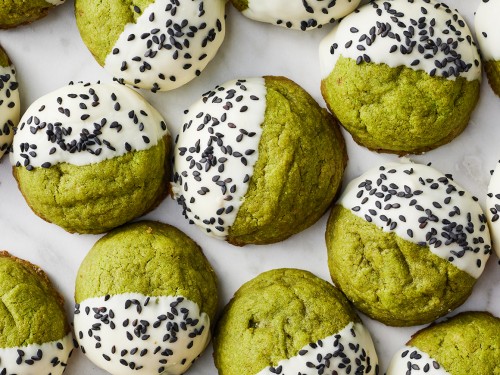
The study commenced with the development of a functional cookie incorporating matcha green tea. The formulation was meticulously crafted to achieve varying ratios of caffeine and EGCG to theanine and arginine (CE/TA ratio). The CE/TA ratio is pivotal as it influences the synergistic effects of these compounds on stress biomarkers.
Experimental Design
To comprehensively evaluate the stress-reducing effects, the researchers employed both animal and human study models:
- Animal Study: Mice were subjected to psychological stress protocols to induce measurable stress markers, such as adrenal hypertrophy. Different groups of mice were administered cookies with varying CE/TA ratios to observe the physiological responses.
- Human Clinical Trial: A randomized double-blind placebo-controlled trial was conducted involving 36 fifth-year pharmacy students. Participants were divided into two groups: one consuming test-matcha cookies with a CE/TA ratio of 1.79, and the other consuming placebo cookies with a higher CE/TA ratio. The intervention lasted for 15 days, with participants ingesting three cookies daily.
Measurement of Stress Markers
In both study models, specific biomarkers indicative of stress were measured:
-
Salivary α-Amylase Activity: Used as a non-invasive biomarker for stress in human participants.
-
Adrenal Hypertrophy: Assessed in mice as a physiological indicator of chronic stress.
Key Findings
Unveiling the Efficacy of Matcha Component Ratios
Optimal CE/TA Ratio for Stress Reduction
The crux of the study revealed that a CE/TA ratio of 2 or less is instrumental in achieving significant stress reduction. This ratio ensures that the calming effects of theanine and arginine are not counteracted by the stimulating properties of caffeine and EGCG.
Impact on Human Participants
Participants consuming the test-matcha cookies exhibited a notable decrease in salivary α-amylase activity compared to the placebo group. This decline signifies a reduction in physiological stress responses, underscoring the effectiveness of the matcha formulation.
Animal Model Insights
In mice, the ingestion of matcha components with a CE/TA ratio of 2 or less resulted in a significant suppression of adrenal hypertrophy. This outcome suggests that the optimized matcha formulation can mitigate adverse stress-induced physiological changes.
Synergistic Effects of Bioactive Components
The balanced interplay among theanine, arginine, caffeine, and EGCG was pivotal. Theanine and arginine impart calming effects, whereas caffeine and EGCG, while known for their antioxidant properties, can be stimulatory. Maintaining the CE/TA ratio at 2 or below ensures that the calming agents predominate, enhancing the overall stress-reducing efficacy.
Analysis and Interpretation
Understanding the Mechanisms Behind Stress Reduction
Role of Theanine and Arginine
Theanine, an amino acid prevalent in green tea, is renowned for its ability to promote relaxation without sedation. It modulates brain waves, particularly increasing alpha-wave activity, which is associated with a state of relaxed alertness. Arginine, another amino acid, contributes to nitric oxide production, enhancing blood flow and potentially alleviating physiological stress responses.
Caffeine and EGCG Dynamics
Caffeine acts as a central nervous system stimulant, enhancing alertness but potentially inducing jitteriness and anxiety in high concentrations. EGCG, a potent catechin, offers antioxidant benefits but can also influence metabolic processes that may counteract the calming effects if not balanced correctly. The study’s emphasis on the CE/TA ratio ensures that these components do not overshadow the beneficial calming agents.
Synergistic Interactions
The optimized CE/TA ratio facilitates a balance where the stimulating effects of caffeine and EGCG are moderated by the relaxing properties of theanine and arginine. This synergy enhances the overall efficacy of matcha in reducing stress markers, making the functional cookies a viable dietary intervention for stress management.
Practical Implications
Translating Research into Functional Food Innovations
Development of Stress-Alleviating Confectionery
The successful formulation of matcha-infused cookies with an optimal CE/TA ratio paves the way for the creation of functional foods designed specifically for stress management. This approach caters to individuals seeking convenient, enjoyable means to incorporate stress-reducing agents into their daily diets without the need for traditional tea consumption.
Broader Applications in Nutritional Interventions
The findings suggest potential applications beyond confectionery. Other food products, such as beverages, snacks, and supplements, can leverage the optimal matcha component ratios to enhance their stress-reducing properties. This opens avenues for diverse product development within the functional food industry.
Targeting Diverse Demographics
While the study focused on pharmacy students, the implications extend to broader populations, including working professionals, students, and individuals prone to stress-related conditions. Tailoring functional foods to meet the needs of these groups could have significant public health benefits.
Challenges and Future Directions
Addressing Limitations and Exploring Further Research
Sample Size and Demographics
The human study, while insightful, involved a relatively small and homogeneous group of pharmacy students. Future research should encompass larger and more diverse populations to validate the findings and enhance generalizability.
Long-Term Effects
Assessing the long-term consumption of matcha-infused cookies and their sustained impact on stress levels is essential. Understanding how chronic intake affects both physiological and psychological stress markers will provide a clearer picture of their efficacy and safety.
Exploring Other Bioactive Compounds
While the study focused on four key components, matcha contains a plethora of other bioactive compounds that may influence stress responses. Future studies could explore the role of these additional components and their interactions with theanine, arginine, caffeine, and EGCG.
Conclusion
Summarizing the Impact of Matcha-Infused Cookies on Stress Reduction
The comprehensive study elucidates the critical role of the CE/TA ratio in harnessing the stress-reducing benefits of matcha green tea when incorporated into functional foods like cookies. By meticulously balancing theanine and arginine with caffeine and EGCG, the researchers demonstrated significant reductions in stress markers in both animal models and human subjects. This innovative approach not only offers a practical means for individuals to manage stress through their diet but also opens new avenues for the development of targeted functional foods. Future research, addressing the current limitations and expanding the scope, will further cement the role of matcha-infused confectionery in holistic stress management strategies.
References
Last updated February 11, 2025