


The ubiquitous role of calculus in modern education, often beginning with courses like Math 1A.
Essential Insights into Math 1A
- Foundational Calculus: Math 1A serves as the primary introductory course to single-variable calculus in many universities, focusing on essential concepts like limits, derivatives, and integrals.
- STEM Cornerstone: This course is specifically designed for students pursuing Science, Technology, Engineering, and Mathematics (STEM) fields, providing critical analytical tools.
- Comprehensive Resources: Universities provide extensive support, including detailed syllabi, practice exams, lecture notes, and online tutorials, to aid student success in Math 1A.
Math 1A typically refers to the first course in a sequence of college-level calculus, widely adopted by universities to lay the groundwork for more advanced studies in various STEM disciplines. This course is crucial for developing the analytical and problem-solving skills necessary for a multitude of scientific and engineering careers. While the specific content and emphasis might vary slightly across institutions, the core principles remain consistent, centering around the fundamental building blocks of calculus.
The Core Curriculum: What Does Math 1A Encompass?
At its heart, Math 1A introduces students to the transformative power of calculus, a branch of mathematics that deals with continuous change. The curriculum is meticulously crafted to ensure a solid understanding of both theoretical concepts and their practical applications.
Limits and Continuity
The journey into calculus often begins with an exploration of limits, which form the bedrock for understanding derivatives and integrals. Students learn how to evaluate limits, comprehend the concept of continuity, and identify discontinuities in functions. This initial phase sets the stage for analyzing the behavior of functions as input values approach specific points.
Derivatives: The Mathematics of Change
A significant portion of Math 1A is dedicated to derivatives. These are mathematical tools used to determine the rate at which a function's value changes with respect to a change in its input. Topics include:
- Defining the derivative using the limit definition.
- Mastering differentiation rules (power, product, quotient, chain rules).
- Understanding implicit differentiation.
- Exploring applications such as rates of change, optimization problems (finding maximum and minimum values), and related rates.
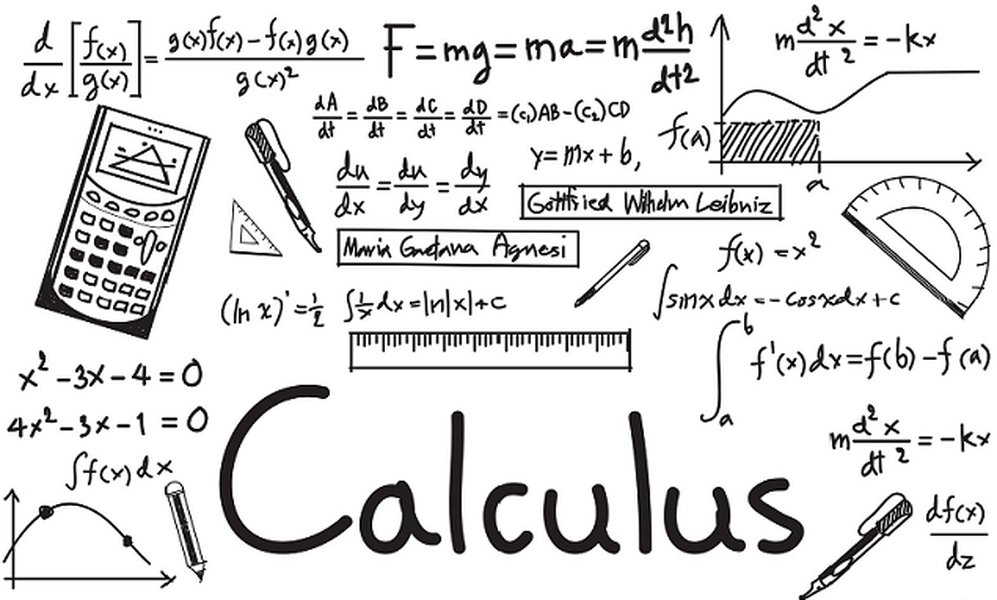
A visual representation of the foundational calculus textbooks often used in Math 1A courses.
Integrals: Accumulation and Area
The latter part of Math 1A introduces the concept of integration, which is essentially the reverse process of differentiation. Integrals are used to find the accumulation of quantities and the area under curves. Key topics include:
- Understanding indefinite and definite integrals.
- Applying the Fundamental Theorem of Calculus, a cornerstone that links differentiation and integration.
- Calculating areas between curves and volumes of solids of revolution.
- Exploring integration techniques such as substitution.
Broader Course Content and Variations
While the core topics remain consistent, some Math 1A courses may extend into areas like sequences and series, Fourier series, or even an early introduction to multivariable calculus, depending on the program's specific requirements and the total number of calculus courses offered. For example, some institutions, like UC Berkeley, explicitly highlight the "three main ideas: limits, derivatives, and integrals" as the primary focus of their Math 1A.
Who is Math 1A For? Academic Pathways and Prerequisites
Math 1A is primarily geared towards students aspiring to careers or further studies in STEM fields. It serves as a critical prerequisite for advanced mathematics, physics, engineering, computer science, economics, and various other quantitative disciplines.
Target Audience
Students intending to major in fields such as engineering, physics, chemistry, biology, computer science, and certain areas of economics will almost invariably take Math 1A. It provides the essential mathematical toolkit for understanding complex phenomena and solving real-world problems in these areas.
Essential Prerequisites
To succeed in Math 1A, students are generally expected to have a strong foundation in pre-calculus mathematics. This typically includes:
- College algebra: Proficiency in algebraic manipulation, solving equations, and working with functions.
- Trigonometry: Understanding trigonometric functions, identities, and their applications.
- Functions: A solid grasp of different types of functions (linear, quadratic, exponential, logarithmic) and their properties.
Many universities require a satisfactory score on a placement test or completion of prerequisite courses to ensure students are adequately prepared for the rigor of Math 1A.
Navigating the Course: Structure and Study Strategies
Math 1A courses are typically structured to provide a blend of theoretical instruction, practical application, and regular assessment. Success in this course hinges on consistent effort and effective study habits.
Typical Course Structure
Most Math 1A courses involve:
- Lectures: Regular sessions where instructors introduce new concepts, demonstrate problem-solving techniques, and provide contextual understanding.
- Discussion Sections/Labs: Smaller group sessions that offer opportunities for students to work through problems, ask questions, and engage with the material more interactively. Some courses, like the one at Foothill College, may incorporate student projects and computer algebra systems.
- Homework and Problem Sets: Weekly assignments are critical for reinforcing understanding and practicing problem-solving. UC Berkeley's Math 1A, for instance, emphasizes the importance of homework for deeper comprehension.
- Quizzes and Exams: Regular assessments, including midterms and a final exam, are used to evaluate student mastery of the material. Many universities provide past exams and solutions as study aids.
Effective Study Strategies
To excel in Math 1A, students are advised to:
- Master Prerequisites: Ensure a strong understanding of pre-calculus topics before starting Math 1A. Reviewing algebra, trigonometry, and function concepts can prevent foundational difficulties.
- Active Engagement: Don't just passively listen to lectures. Actively participate in discussions, ask questions, and work through problems yourself rather than just observing solutions.
- Consistent Practice: Mathematics is best learned by doing. Regularly complete homework assignments, work through extra practice problems, and utilize available resources like sample exams.
- Utilize Resources: Take advantage of university-provided materials such as detailed syllabi (e.g., Harvard's hour-by-hour plan), lecture notes, handouts, and tutoring services. Online platforms like Khan Academy also offer supplementary video tutorials and exercises.
- Collaborate: Form study groups to discuss concepts and work through challenging problems with peers. Explaining concepts to others can solidify your own understanding.
Resources for Learning and Preparation
Universities and educational platforms offer a wealth of resources to support students undertaking Math 1A. These range from official course materials to supplementary learning tools.
Official University Resources
Many institutions make their Math 1A syllabi, lecture notes, homework problems, and even past exams publicly available. These are invaluable for understanding course expectations and for self-study. Examples include:
- Harvard University Mathematics Department: Provides detailed syllabi, handouts, and exams with solutions for their Math 1A courses.
- UC Berkeley Math 1A Home Page: Offers an overview of the course focus, structure, and emphasizes homework. Their Tau Beta Pi chapter also curates past exams.
- De Anza College and Foothill College: Publish detailed course outlines and syllabi for their Math 1A offerings, often including specific materials and project requirements.
- Santa Rosa Junior College: Offers a comprehensive course outline for Math 1A, specifying its focus for STEM majors.
Online Learning Platforms and Open Educational Resources (OER)
Beyond institutional resources, several online platforms and OER initiatives provide excellent supplementary materials:
- Khan Academy: A popular resource offering free video tutorials and exercises across a broad spectrum of calculus topics, making it ideal for review and conceptual reinforcement.
- OpenStax: Provides free, peer-reviewed textbooks, including those for calculus, which can serve as an alternative or supplementary text.
- YouTube Channels: Many educators and universities host channels with video lectures and problem-solving walkthroughs relevant to Math 1A content.
This YouTube video, "Calculus 1 Final Exam Review Problems and Solutions," is highly relevant for anyone taking Math 1A. It provides a comprehensive walkthrough of various problems that students can expect to encounter in a typical Calculus 1 final exam. Watching such review sessions can significantly aid in consolidating knowledge and preparing for assessments by demonstrating effective problem-solving strategies and highlighting key concepts.
The Significance of Math 1A
Math 1A is more than just a gateway course; it's a foundational experience that cultivates critical thinking and analytical rigor essential for success in scientific and technical fields. It equips students with the tools to model and understand dynamic systems, rates of change, and cumulative processes, which are ubiquitous in the natural sciences, engineering, and economics.
The concepts learned in Math 1A are not isolated; they form the basis for subsequent courses in multivariate calculus, differential equations, linear algebra, and advanced physics. Without a strong grasp of these fundamentals, students would struggle to progress in their chosen STEM disciplines. Therefore, investing time and effort into mastering Math 1A is an investment in a robust academic and professional future.
This mindmap visually outlines the comprehensive structure of Math 1A, detailing its core concepts, necessary prerequisites, target audience, valuable learning resources, and crucial study strategies for success, ultimately underscoring its significant role in academic progression.
Comparative Overview of Math 1A Offerings
While the fundamental content of Math 1A remains consistent, institutions may present the course with slight variations in emphasis, structure, and additional topics. The table below provides a comparative overview based on typical university offerings.
| Institution/Focus | Primary Content Focus | Emphasized Skills | Potential Additional Topics | Example Resources/Notes |
|---|---|---|---|---|
| UC Berkeley Math 1A | Limits, Derivatives, Integrals | Conceptual understanding, problem-solving, application | None explicitly listed beyond core | Strong emphasis on homework, detailed course page. |
| Harvard Math 1A | Introduction to Calculus | Theoretical rigor, application of concepts | Hour-by-hour structured syllabus | Comprehensive handouts, exams with solutions. |
| Foothill College MATH 1A | Differential & Integral Calculus | Student projects, use of computer algebra systems | Applications to various fields | Focus on practical application and technology integration. |
| De Anza College Math 1A | Fundamentals of Differential Calculus | Problem-solving techniques, analytical reasoning | Focus on foundational differential calculus | Detailed syllabus, often includes specific textbook requirements. |
| Santa Rosa Junior College Math 1A | First course in Differential & Integral Calculus | STEM preparation, foundational knowledge | Designed for STEM majors | Course outline highlights suitability for transfer to four-year institutions. |
Frequently Asked Questions About Math 1A
What is the main difference between Math 1A and other calculus courses?
Is Math 1A difficult?
What should I study to prepare for Math 1A?
Where can I find practice problems for Math 1A?
Conclusion: The Enduring Value of Math 1A
Math 1A stands as a critical academic milestone for countless students embarking on STEM pathways. It offers a rigorous introduction to the core principles of calculus – limits, derivatives, and integrals – equipping learners with the analytical framework necessary to understand and quantify change, motion, and accumulation. The course not only serves as a gateway to more advanced mathematical concepts but also fosters problem-solving abilities that are indispensable across a wide range of scientific and technical disciplines. By mastering Math 1A, students gain a powerful toolset that underpins innovation and discovery in the modern world, making it an invaluable component of higher education.
Recommended Further Exploration
- What advanced calculus concepts follow Math 1A?
- How is calculus applied in real-world engineering problems?
- What are effective strategies for mastering challenging university math courses?
- Explore the fascinating history and development of calculus.