
Related Literature: The Impact of Mathematics on Academic Research Among Grade 10 Students
Exploring the Intersection of Mathematics Proficiency and Academic Research in High School
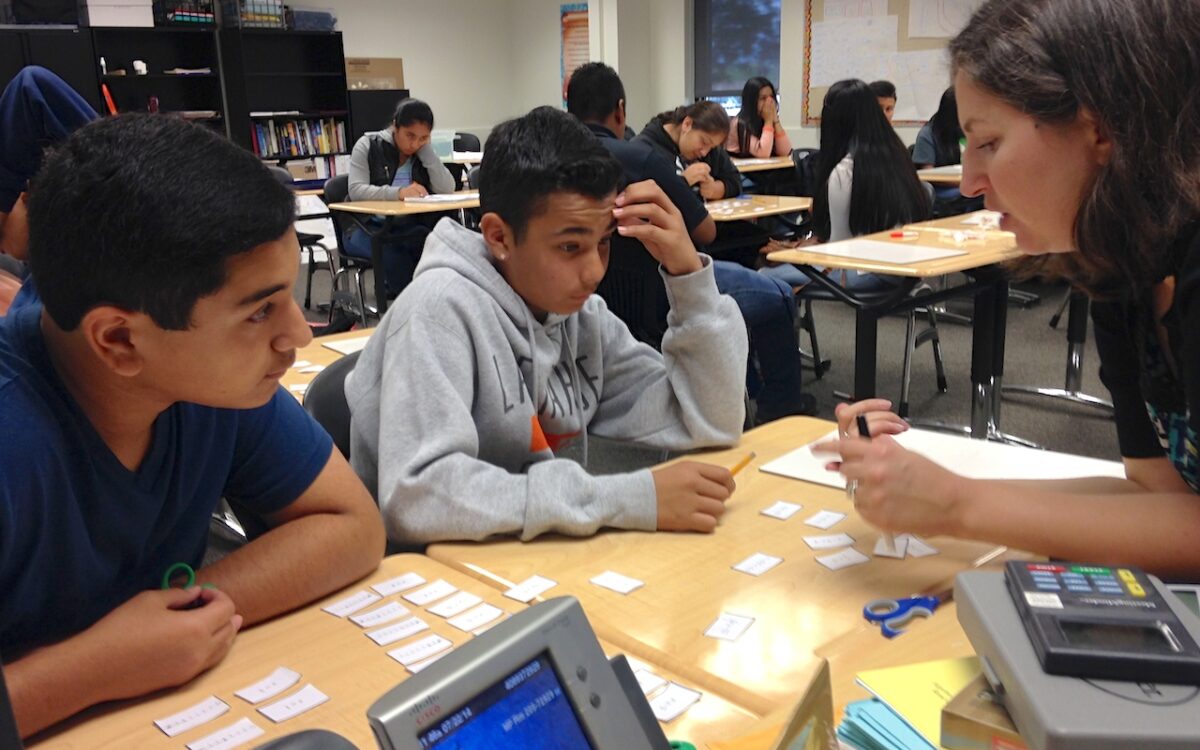
Key Insights
- Mathematics enriches cognitive development by enhancing problem-solving, critical thinking, and analytical skills.
- Interdisciplinary connections empower students to apply mathematical concepts across science, engineering, and technology.
- Innovative teaching methods and supportive learning environments play a pivotal role in mitigating math anxiety and improving performance.
Introduction to the Impact of Mathematics on Academic Research
Mathematics, often described as the language of science, holds a foundational position in shaping academic research and influencing student performance. At the Grade 10 level, the proficiency in mathematics is not solely viewed as a subject to be mastered but also as a critical skill that bolsters cognitive ability, underpins interdisciplinary research, and fosters innovative problem-solving approaches. This literature review synthesizes current research and insights that probe the relationship between mathematics achievement and academic research outcomes among high school students.
Cognitive Development and Academic Success
Enhancing Problem-Solving and Critical Thinking
Research consistently demonstrates that excellence in mathematics is closely associated with cognitive growth, particularly in areas such as \(\text{\emph{logical reasoning}}\), \(\text{\emph{analytical thinking}}\), and \(\text{\emph{problem-solving}}\). These capabilities are instrumental in academic research across disciplines. As students develop competence in mathematical concepts, they also refine their ability to approach complex real-world problems methodically.
Studies have shown that students who excel in mathematics tend to exhibit an elevated capacity for critical thinking and logical reasoning. Such skills are not restricted to mathematics alone; they extend to scientific inquiries, engineering challenges, and even literary analyses. This integrated approach to learning demonstrates that when students are nurtured with a robust mathematical foundation, they tend to transfer these cognitive skills across other academic disciplines.
The Correlation Between Mathematical Skills and Academic Achievement
Empirical evidence highlights a reciprocal relationship between mathematical proficiency and overall academic performance. Research indicates that students with higher achievements in mathematics often display superior academic results in other subjects. This phenomenon is largely attributed to enhanced problem-solving skills, which stimulate students’ ability to conduct in-depth research and engage in data analysis. Consequently, mathematics acts as both a predictor and catalyst of academic success.
Interdisciplinary Applications of Mathematical Competence
Bridging Academic Research Across Disciplines
Mathematics serves as an essential tool across a spectrum of academic domains. In scientific research, mathematics is employed to formulate models that predict natural phenomena. In technology and engineering, it provides the algorithms and frameworks necessary for technological innovations. In the social sciences, quantitative methods derived from mathematics are used for data analysis and interpretation.
At the Grade 10 level, the interdisciplinary nature of mathematics shows that the subject not only promotes scientific literacy but also encourages students to integrate mathematical methods with practical applications. This integration proves invaluable in class projects and research assignments, empowering students to tackle multidimensional problems through a unified analytical approach.
Impact on STEM and Beyond
A critical consequence of mathematical literacy is its influential role in fostering enthusiasm for STEM (Science, Technology, Engineering, and Mathematics) fields. By reinforcing their mathematical skills, students gain a competitive edge that opens doors to various advanced courses and research opportunities within these fields. The competence gained through mathematics often translates into a higher propensity for pursuing careers in science and technology.
Innovative Teaching Methods and Learning Approaches
Digital Gamification and Interactive Learning
One of the key modern strategies to enhance mathematics education is the use of digital gamification. Studies have shown that integrating digital tools and gamified elements into the curriculum significantly improves engagement and learning outcomes. This method not only makes learning more engaging but also reinforces mathematical concepts by providing real-time feedback and interactive challenges.
Digital gamification introduces a playful yet rigorous approach to problem-solving that stimulates students’ interest and mitigates the challenges posed by mathematics anxiety. The adoption of technology in the classroom has been associated with increased motivation and improved academic performance. Furthermore, this innovative teaching strategy encourages peer collaboration, enhancing collective academic research skills as students work together to solve complex mathematical problems.
Problem-Based Learning and Analytic Development
Problem-Based Learning (PBL) represents another forward-thinking educational approach in mathematics teaching. PBL incorporates real-life problems into the learning process, compelling students to apply theoretical knowledge in practical scenarios. This not only deepens their understanding of mathematical principles but also sharpens their analytical skills which are essential for academic research.
The application of PBL has been documented to have a considerable positive effect on students' mathematical and research aptitude. Through this method, learners are engaged in active problem-solving, where questioning, analysis, and discussion become integral to the learning process. PBL, therefore, serves as a key driver in reducing performance gaps and bridging the divide between theoretical lectures and practical research applications.
Addressing Mathematics Anxiety and Enhancing Self-Efficacy
Mathematics anxiety is a well-recognized barrier impacting students' academic research and performance. A significant body of literature underscores the negative impact of high anxiety levels on mathematics achievement, which in turn affects overall academic outcomes. Addressing this challenge involves not only improving the curriculum but also implementing supportive interventions that foster a positive learning environment.
Initiatives that promote self-efficacy have proven effective in mitigating math anxiety. When students perceive their efforts to be worthwhile, their confidence rises, leading to improved academic performance. Collaborative projects, mentorship programs, and parental involvement further enhance this self-belief by providing the encouragement necessary to excel in mathematics, thereby strengthening their research capabilities.
Factors Influencing Mathematics Performance
Key Determinants and Their Effects
Various factors play interdependent roles in shaping Grade 10 students' performance in mathematics. These determinants extend from intrinsic student characteristics to the methods adopted by educators and the broader learning environment. The following table summarizes the primary factors and their associated impacts on student performance:
| Factor | Impact on Performance | Example / Reference |
|---|---|---|
| Motivation and Self-Efficacy | Enhances problem-solving, builds confidence, and promotes active learning. | Studies linking high self-efficacy with improved mathematics performance. |
| Parental Support | Positive parental involvement improves academic outcomes, particularly in mathematics. | Research from Barobo National High School. |
| Mathematics Anxiety | High anxiety levels can detrimentally affect concentration and performance. | Studies on the negative correlation between math anxiety and academic performance. |
| Innovative Teaching Methods | Digital gamification and problem-based learning enhance engagement and comprehension. | Research on the integration of technology in math education. |
| Learning Environment | A supportive and collaborative environment fosters better academic outcomes. | Case studies highlighting peer interaction and teacher development programs. |
This comprehensive perspective on the influencing factors not only highlights the multifaceted nature of mathematics education but also underscores the need for a balanced approach that incorporates technology, supportive instruction, and parental involvement.
Parental and Institutional Roles in Enhancing Mathematical Skills
The Role of Parental Involvement
Parental support emerges as a significant influence on how well students perform in mathematics. Studies have demonstrated that when parents—especially mothers—are actively involved in their children’s education, students tend to achieve higher academic outcomes. This involvement ranges from providing homework assistance to fostering a positive attitude toward learning. As such, educational interventions that encourage parental engagement can further enhance students' mathematical capabilities.
Institutional Strategies and Teacher Development
Institutions also play a critical role in shaping the academic landscape for Grade 10 students. The implementation of teacher training programs focused on student-centered methodologies can dramatically improve instructional quality. Teachers who are adept in integrating digital resources and applying innovative teaching methods tend to create more engaging and effective learning environments. Such educational reforms have been important in bridging the academic research gap and ensuring that students are well equipped to tackle challenging mathematical problems.
Factors Affecting Research Engagement
Integrating Research into Mathematics Curriculum
In addition to improving academic outcomes, a robust mathematics curriculum can directly influence research engagement. Students who demonstrate strong mathematical skills are more likely to take on research projects and explore scientific inquiries independently. Integrating research projects, case studies, and data analysis tasks into the curriculum not only reinforces their mathematical knowledge but also prepares them for future academic endeavors.
The Impact of Collaborative Learning
Peer interactions and collaborative learning are vital components that reinforce academic research. When students work collaboratively on problem-solving tasks, they are exposed to diverse approaches and perspectives that enrich their understanding. Collaborative projects foster a research-oriented mindset that is essential for developing comprehensive analytical skills required in higher education and professional domains.
Technological Advancements and Digital Integration
Leveraging Digital Tools to Enhance Understanding
The rise of digital technology has transformed the educational landscape, particularly in mathematics instruction. Digital tools such as interactive software, online simulations, and gamified learning platforms have proven to be highly effective in making abstract mathematical concepts more accessible. The use of these tools not only engages students but also helps demystify challenging topics by providing visual and interactive representations.
Digital integration in the classroom has been linked to a significant improvement in student performance. By leveraging technology, educators create immersive learning environments that enhance both intuition and analytical abilities. This synergy of technology and traditional instruction establishes a framework that is conducive to both academic excellence and innovative research.
References
- Illustrating the Impact of the Mathematical Sciences - National Academies
-
Parental Involvement and Math Performance - PMC
-
Mathematics Problem-Solving Understanding - Frontiers
- Digital Gamification Impact on Mathematics - ResearchGate
-
Impact of Mathematics on Academic Outcomes - IJSRP
Recommended Queries for Deeper Exploration
Last updated March 19, 2025