
Unlocking Higher Powers: Solving for a^12 + b^12
A step-by-step guide to finding the value of \(a^{12} + b^{12}\) given \(a+b=1\) and \(a^2+b^2=2\).
Highlights
- Starting Point: We begin with the given equations \(a + b = 1\) and \(a^2 + b^2 = 2\).
- Core Method: The solution involves finding the product \(ab\) and then establishing a recurrence relation for the sum of powers, \(S_n = a^n + b^n\), to avoid calculating \(a\) and \(b\) explicitly.
- The Answer: Through systematic calculation using the recurrence relation, we find that \(a^{12} + b^{12} = \frac{1351}{32}\) or \(42.21875\).
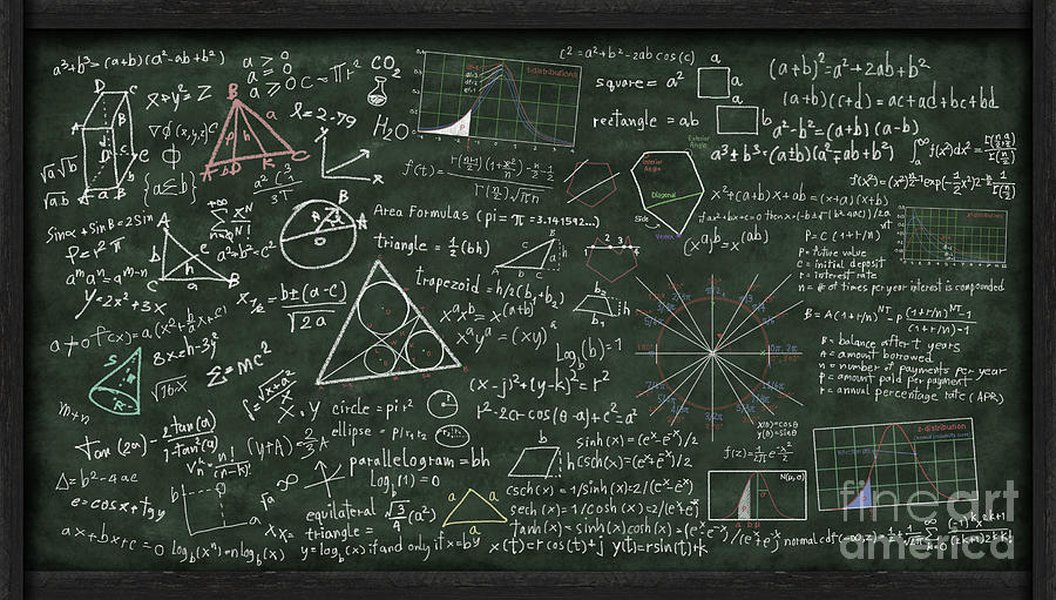
Exploring mathematical relationships to solve for higher powers.
Understanding the Problem Setup
Defining the Given Information
We are presented with a system of two equations involving two variables, \(a\) and \(b\):
- \[ a + b = 1 \]
- \[ a^2 + b^2 = 2 \]
Our objective is to determine the value of the expression \(a^{12} + b^{12}\).
Finding the Product \(ab\)
A crucial first step is to find the product of \(a\) and \(b\). We can use the algebraic identity relating the square of a sum to the sum of squares:
\[ (a + b)^2 = a^2 + b^2 + 2ab \]Substituting the given values into this identity:
\[ (1)^2 = (2) + 2ab \] \[ 1 = 2 + 2ab \]Now, we solve for \(ab\):
\[ 2ab = 1 - 2 \] \[ 2ab = -1 \] \[ ab = -\frac{1}{2} \]So, we have established that \(a+b = 1\) and \(ab = -\frac{1}{2}\).
The Characteristic Equation
The values \(a\) and \(b\) can be thought of as the roots of a quadratic equation. Recall that a quadratic equation with roots \(a\) and \(b\) can be written as:
\[ x^2 - (\text{sum of roots})x + (\text{product of roots}) = 0 \] \[ x^2 - (a+b)x + ab = 0 \]Substituting the values we found for \(a+b\) and \(ab\):
\[ x^2 - (1)x + \left(-\frac{1}{2}\right) = 0 \] \[ x^2 - x - \frac{1}{2} = 0 \]Multiplying by 2 to clear the fraction gives the characteristic equation whose roots are \(a\) and \(b\):
\[ 2x^2 - 2x - 1 = 0 \]Optional: Finding Explicit Values for a and b
While not strictly necessary for finding \(a^{12} + b^{12}\) using the recurrence method, we could solve this quadratic equation using the quadratic formula \(x = \frac{-B \pm \sqrt{B^2 - 4AC}}{2A}\) with \(A=2, B=-2, C=-1\):
\[ x = \frac{-(-2) \pm \sqrt{(-2)^2 - 4(2)(-1)}}{2(2)} = \frac{2 \pm \sqrt{4 + 8}}{4} = \frac{2 \pm \sqrt{12}}{4} = \frac{2 \pm 2\sqrt{3}}{4} = \frac{1 \pm \sqrt{3}}{2} \]So, the values are \(a = \frac{1 + \sqrt{3}}{2}\) and \(b = \frac{1 - \sqrt{3}}{2}\) (or vice versa). Directly calculating the 12th powers of these irrational numbers would be computationally intensive.
The Power Sum Recurrence Relation
Defining \(S_n = a^n + b^n\)
Let's define a sequence \(S_n\) representing the sum of the \(n\)-th powers of \(a\) and \(b\):
\[ S_n = a^n + b^n \]Our goal is to find \(S_{12}\). We know the first two terms:
- \(S_1 = a^1 + b^1 = 1\)
- \(S_2 = a^2 + b^2 = 2\)
Recurrence relations provide an elegant way to compute sequences.
Deriving the Recurrence
Since \(a\) and \(b\) are roots of \(x^2 - x - \frac{1}{2} = 0\), they satisfy this equation. We can multiply the equation by \(x^{n-2}\) (for \(n \ge 2\)):
\[ x^{n-2} \left( x^2 - x - \frac{1}{2} \right) = 0 \] \[ x^n - x^{n-1} - \frac{1}{2}x^{n-2} = 0 \]This equation holds true when \(x=a\) and when \(x=b\):
\[ a^n - a^{n-1} - \frac{1}{2}a^{n-2} = 0 \] \[ b^n - b^{n-1} - \frac{1}{2}b^{n-2} = 0 \]Adding these two equations together gives:
\[ (a^n + b^n) - (a^{n-1} + b^{n-1}) - \frac{1}{2}(a^{n-2} + b^{n-2}) = 0 \]Substituting our definition \(S_n = a^n + b^n\):
\[ S_n - S_{n-1} - \frac{1}{2}S_{n-2} = 0 \]Rearranging this gives the recurrence relation:
\[ S_n = S_{n-1} + \frac{1}{2}S_{n-2} \quad \text{for } n \ge 3 \]This powerful relation allows us to calculate any term \(S_n\) if we know the two preceding terms.
Calculating \(S_{12} = a^{12} + b^{12}\)
Iterative Calculation using the Recurrence
We will now use the recurrence relation \(S_n = S_{n-1} + \frac{1}{2}S_{n-2}\) with the initial values \(S_1 = 1\) and \(S_2 = 2\) to compute the terms up to \(S_{12}\).
Step-by-Step Computation
- \(S_3 = S_2 + \frac{1}{2}S_1 = 2 + \frac{1}{2}(1) = 2 + \frac{1}{2} = \frac{5}{2} = 2.5\)
- \(S_4 = S_3 + \frac{1}{2}S_2 = \frac{5}{2} + \frac{1}{2}(2) = \frac{5}{2} + 1 = \frac{7}{2} = 3.5\)
- \(S_5 = S_4 + \frac{1}{2}S_3 = \frac{7}{2} + \frac{1}{2}(\frac{5}{2}) = \frac{7}{2} + \frac{5}{4} = \frac{14+5}{4} = \frac{19}{4} = 4.75\)
- \(S_6 = S_5 + \frac{1}{2}S_4 = \frac{19}{4} + \frac{1}{2}(\frac{7}{2}) = \frac{19}{4} + \frac{7}{4} = \frac{26}{4} = \frac{13}{2} = 6.5\)
- \(S_7 = S_6 + \frac{1}{2}S_5 = \frac{13}{2} + \frac{1}{2}(\frac{19}{4}) = \frac{13}{2} + \frac{19}{8} = \frac{52+19}{8} = \frac{71}{8} = 8.875\)
- \(S_8 = S_7 + \frac{1}{2}S_6 = \frac{71}{8} + \frac{1}{2}(\frac{13}{2}) = \frac{71}{8} + \frac{13}{4} = \frac{71+26}{8} = \frac{97}{8} = 12.125\)
- \(S_9 = S_8 + \frac{1}{2}S_7 = \frac{97}{8} + \frac{1}{2}(\frac{71}{8}) = \frac{97}{8} + \frac{71}{16} = \frac{194+71}{16} = \frac{265}{16} = 16.5625\)
- \(S_{10} = S_9 + \frac{1}{2}S_8 = \frac{265}{16} + \frac{1}{2}(\frac{97}{8}) = \frac{265}{16} + \frac{97}{16} = \frac{362}{16} = \frac{181}{8} = 22.625\)
- \(S_{11} = S_{10} + \frac{1}{2}S_9 = \frac{181}{8} + \frac{1}{2}(\frac{265}{16}) = \frac{181}{8} + \frac{265}{32} = \frac{724+265}{32} = \frac{989}{32} = 30.90625\)
- \(S_{12} = S_{11} + \frac{1}{2}S_{10} = \frac{989}{32} + \frac{1}{2}(\frac{181}{8}) = \frac{989}{32} + \frac{181}{16} = \frac{989+362}{32} = \frac{1351}{32} = 42.21875\)
Summary Table of Power Sums
The table below summarizes the calculated values for \(S_n = a^n + b^n\) from \(n=1\) to \(n=12\).
| Term (n) | Value \(S_n\) (Fraction) | Value \(S_n\) (Decimal) |
|---|---|---|
| 1 | 1 / 1 | 1.0 |
| 2 | 2 / 1 | 2.0 |
| 3 | 5 / 2 | 2.5 |
| 4 | 7 / 2 | 3.5 |
| 5 | 19 / 4 | 4.75 |
| 6 | 13 / 2 | 6.5 |
| 7 | 71 / 8 | 8.875 |
| 8 | 97 / 8 | 12.125 |
| 9 | 265 / 16 | 16.5625 |
| 10 | 181 / 8 | 22.625 |
| 11 | 989 / 32 | 30.90625 |
| 12 | 1351 / 32 | 42.21875 |
Final Result
Through the iterative application of the recurrence relation, we have found the value of \(a^{12} + b^{12}\):
\[ a^{12} + b^{12} = S_{12} = \frac{1351}{32} = 42.21875 \]Visualizing the Growth of Power Sums
The radar chart below illustrates the growth of the power sums \(S_n = a^n + b^n\) for the first eight terms (n=1 to n=8). This visualization helps appreciate how the sequence values increase based on the recurrence relation \(S_n = S_{n-1} + \frac{1}{2}S_{n-2}\).
Observe how the values spiral outwards, indicating a growth pattern determined by the combination of the previous two terms.
Understanding the Solution Strategy
The mindmap below outlines the logical flow used to solve this problem. It highlights the key inputs, the crucial intermediate steps like finding \(ab\) and deriving the recurrence relation, and the final calculation leading to the result.
(a+b)^2 = a^2+b^2+2ab"] id2a2["Result: ab = -1/2"] id2b["Form Characteristic Equation"] id2b1["x^2 - (a+b)x + ab = 0"] id2b2["Equation: x^2 - x - 1/2 = 0"] id2c["Derive Recurrence Relation for S_n = a^n + b^n"] id2c1["From characteristic equation"] id2c2["Relation: S_n = S_{n-1} + (1/2)S_{n-2}"] id3["Calculation"] id3a["Initial Values: S_1=1, S_2=2"] id3b["Iterate using recurrence"] id3c["Compute S_3, S_4, ..., S_12"] id4["Final Result"] id4a["S_12 = a^12 + b^12"] id4b["Value: 1351 / 32"] id4c["Decimal: 42.21875"]
This structured approach allows for an efficient and elegant solution without needing to compute the explicit, potentially complex, values of \(a\) and \(b\).
Mathematical problems often have elegant solutions discoverable through structured methods.
Frequently Asked Questions (FAQ)
Why not just calculate \(a\) and \(b\) explicitly and raise them to the power of 12? +
While we found that \(a = \frac{1 + \sqrt{3}}{2}\) and \(b = \frac{1 - \sqrt{3}}{2}\), calculating \(\left(\frac{1 + \sqrt{3}}{2}\right)^{12}\) and \(\left(\frac{1 - \sqrt{3}}{2}\right)^{12}\) directly involves expanding binomials with irrational numbers to a high power. This process is very tedious, prone to algebraic errors, and potentially subject to rounding errors if using decimal approximations. The recurrence relation method is significantly more efficient and algebraically cleaner, directly targeting the sum \(a^{12} + b^{12}\) without needing the individual powered terms.
What is \(S_0\)? +
The term \(S_0\) corresponds to \(n=0\) in the sequence \(S_n = a^n + b^n\). Thus, \(S_0 = a^0 + b^0\). Assuming \(a\) and \(b\) are non-zero (which they are, as their product is \(-\frac{1}{2}\)), we have \(a^0 = 1\) and \(b^0 = 1\). Therefore, \(S_0 = 1 + 1 = 2\). We can verify if this fits the recurrence relation: Does \(S_2 = S_1 + \frac{1}{2}S_0\)? Substituting the values: \(2 = 1 + \frac{1}{2}(2) \implies 2 = 1 + 1\), which is true. So, \(S_0 = 2\) can also be used as a base case alongside \(S_1 = 1\) to generate the sequence.
What are Newton's Sums? +
Newton's sums (also known as Newton-Girard formulae) are identities that relate the power sums of the roots of a polynomial (\(S_k = \sum x_i^k\)) to the coefficients of the polynomial (specifically, the elementary symmetric polynomials). The recurrence relation we derived, \(S_n = S_{n-1} + \frac{1}{2}S_{n-2}\), is a direct consequence or a specific instance of Newton's sums applied to the characteristic quadratic polynomial \(x^2 - x - \frac{1}{2} = 0\) whose roots are \(a\) and \(b\). In general, for a polynomial \(P(x) = x^d + c_1 x^{d-1} + \dots + c_d\), Newton's sums provide a way to recursively compute the power sums \(S_k\) of its roots using the coefficients \(c_i\).
Can this method be generalized? +
Yes, absolutely. The method of using recurrence relations derived from the characteristic polynomial is a standard technique for finding power sums \(S_n = a^n + b^n\) for any integer \(n\), as long as the elementary symmetric polynomials (in this case, \(a+b\) and \(ab\)) are known. If you were given \(a+b=S\) and \(ab=P\), the roots \(a, b\) satisfy \(x^2 - Sx + P = 0\), leading to the recurrence \(S_n = S \cdot S_{n-1} - P \cdot S_{n-2}\). This concept also extends to polynomials of higher degrees with more roots, where Newton's sums provide the corresponding recurrence relations involving more previous terms.
References
- Solving Systems of Equations (Simultaneous Equations) - cliffsnotes.com
- Simultaneous equations with linear and quadratic - Solving simultaneous equations - AQA - GCSE Maths Revision - AQA - bbc.co.uk
- Power of a Power Rule - Explanation and Examples - cuemath.com
- Exponents Questions - Problems and Solved Examples - byjus.com
- Solving simultaneous equations | Equations and inequalities | Siyavula - siyavula.com
Recommended

Last updated April 24, 2025