
Exploring the Applications of Mathematical Models in Environmental Science
Unveiling the Power of Mathematical Modeling for Understanding and Managing Our Environment
Key Highlights of Mathematical Modeling in Environmental Science
- Understanding Complex Systems: Mathematical models help simplify and analyze the intricate interactions within ecosystems and environmental processes.
- Predicting Future Trends: These models enable scientists to forecast the impacts of various factors like climate change, pollution, and land use on the environment.
- Informing Decision-Making: By simulating different scenarios, mathematical models provide valuable insights for developing effective environmental management strategies and policies.
The Role of Mathematical Models in Environmental Science
Mathematical models are essential tools for quantitatively addressing environmental pollution control and understanding complex ecological problems. They act as an abstract representation, often mathematical, of an ecological system. This representation allows scientists to study and better understand the real system, offering a way to analyze and simulate environmental data, processes, and scenarios.
These models are used across various disciplines, including natural resource management, ecotoxicology, environmental health, agriculture, and wildlife conservation. They provide insights into the underlying mechanisms and relationships within environmental systems, helping to predict future behaviors and outcomes, assess risks, and evaluate the impacts of interventions.
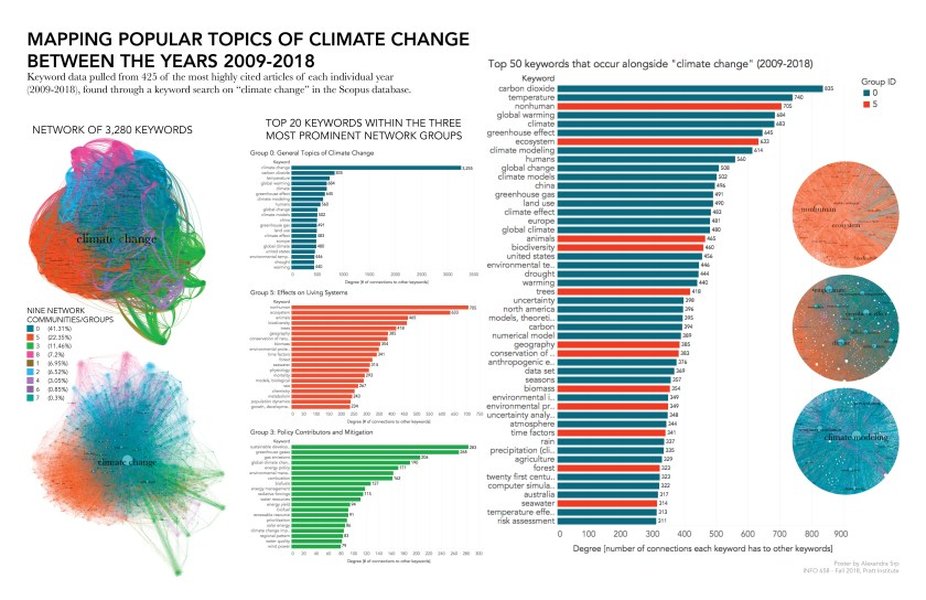 Mapping Popular Topics of Climate Change
Types of Ecological Models
Ecological models come in several forms, each suited to different types of problems and research goals. The main types include:
- Conceptual Models: These are simple, often qualitative, representations of a system's components and their interactions.
- Analytical Models: Typically simpler, often linear systems that can be accurately described by mathematical equations with well-known behaviors.
- Simulation Models: These use numerical techniques to solve complex problems where analytical solutions are impractical. They are often considered more ecologically realistic.
- Empirical (Statistical) Models: These models are based on observed data and statistical relationships, without necessarily incorporating detailed mechanisms.
- Mechanistic (Process-Based) Models: These models focus on simulating detailed physical or biological processes to describe the behavior of a system explicitly.
Specific Applications of Mathematical Modeling
Mathematical models are applied to a wide array of environmental issues, helping to analyze, predict, and manage various phenomena.
Climate Change Modeling
Mathematical models are crucial for understanding and predicting climate change. These models simulate the interactions of the atmosphere, oceans, land surface, and ice to project future climate scenarios. They help in assessing the impacts of greenhouse gas emissions, evaluating mitigation strategies, and informing policy decisions. For instance, models can forecast climate effects on key ecological processes like water flow and plant life, aiding in the creation of informed management plans for species and ecosystems.
 Visualizations of Climate Predictions
Air and Water Quality Modeling
Mathematical models are used to simulate the dispersion of pollutants in the air and water. These models help in understanding the sources and pathways of pollution, predicting pollutant concentrations, and evaluating the effectiveness of pollution control measures. They are also used to assess the impact of pollution on human health and ecosystems.
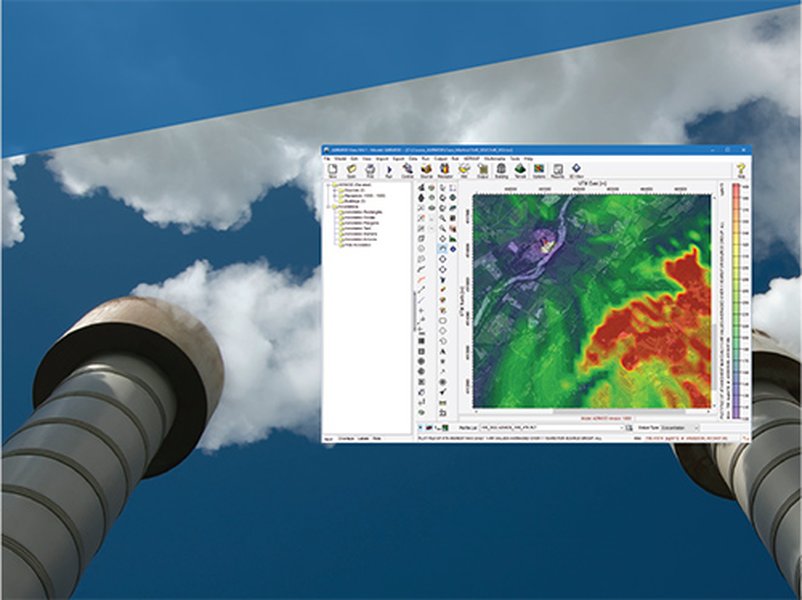 Air Dispersion Modeling
Ecosystem Dynamics Modeling
Ecological models are used to simulate the interactions between species and their environment. These models help in understanding population dynamics, community structure, and ecosystem functioning. They are also used to predict the impacts of environmental changes, such as habitat loss, climate change, and invasive species, on ecosystems. For example, multi-level agent-based modeling simulates how individual behaviors and interactions happen in ecological networks, showcasing the complexity of natural systems and human impacts.
Resource Management
Mathematical models aid in the sustainable management of natural resources by examining the economic, environmental, and ecological impacts of different management strategies. These models can help optimize resource extraction, minimize environmental damage, and ensure the long-term availability of resources. Hydrological models, for instance, replicate water flow and distribution in natural systems, critical for managing water resources and forecasting floods.
Mathematical Modeling Techniques
Various mathematical techniques are employed in environmental modeling, depending on the specific problem and the desired level of detail.
Statistical Models
Statistical models are used to analyze environmental data and identify relationships between variables. These models can be used for prediction, inference, and data exploration.
Differential Equations
Differential equations are used to describe the rate of change of environmental variables over time. These equations can be used to model population growth, pollutant transport, and chemical reactions. For example, the Streeter-Phelps model, developed in the early 1900s, uses differential equations to model the oxygen balance in a stream.
\[ \frac{dC}{dt} = k_a (C_s - C) - k_d B \]Where:
- \(C\) = Dissolved oxygen concentration
- \(t\) = Time
- \(k_a\) = Reaeration rate constant
- \(C_s\) = Saturated dissolved oxygen concentration
- \(k_d\) = Deoxygenation rate constant
- \(B\) = Biochemical oxygen demand
Optimization Models
Optimization models are used to find the best solution to an environmental management problem. These models can be used to minimize pollution, maximize resource use, or achieve other environmental goals.
Agent-Based Models
Agent-based models simulate the interactions of individual agents (e.g., organisms, people) to understand emergent patterns and system-level behavior. These models are particularly useful for studying complex ecological and social-ecological systems.
Benefits and Challenges
Mathematical models offer numerous benefits, but also present certain challenges in environmental science.
Benefits
- Improved Understanding: Models enhance our understanding of complex environmental systems by simplifying them into manageable components.
- Predictive Power: They allow us to predict future environmental conditions and the impacts of various interventions.
- Informed Decision-Making: Models support decision-making by evaluating different management strategies and policies.
- Effective Communication: They help communicate and visualize findings and recommendations to stakeholders.
Challenges
-
Complexity: Developing and using mathematical models can be complex and require specialized knowledge.
-
Uncertainty: Models are subject to uncertainty due to incomplete data, simplifying assumptions, and inherent variability in environmental systems.
-
Data Requirements: Accurate and reliable data are essential for building and validating models.
-
Scaling Issues: Translating information from one scale to another can be challenging, especially when dealing with processes that operate at different spatial or temporal scales.
Examples of Mathematical Models in Action
To illustrate the application of mathematical models, let's consider a few specific examples.
Species Distribution Models (SDMs)
SDMs, also known as ecological niche models, predict the distribution of species across geographic space and time. These models use statistical techniques to relate species occurrences to environmental conditions. SDMs are used for various applications, including conservation planning, predicting the impacts of climate change on species distributions, and identifying potential areas for species reintroduction.
There are two main types of SDMs: correlative and mechanistic. Correlative SDMs model the observed distribution of a species as a function of environmental conditions, assuming that species are at equilibrium with their environment. Mechanistic SDMs, on the other hand, incorporate physiological and behavioral mechanisms to predict species distributions.
Ecosystem Service Models
Ecosystem service models quantify the benefits that humans derive from ecosystems, such as clean water, pollination, and carbon sequestration. These models help in assessing the economic value of ecosystems and informing decisions about land use and conservation. For example, models can be used to evaluate the impact of deforestation on carbon sequestration and climate change mitigation.
Water Quality Models
Water quality models simulate the transport and transformation of pollutants in aquatic systems. These models are used to assess the impact of pollution sources, predict water quality conditions, and evaluate the effectiveness of pollution control measures. For instance, models can be used to simulate the impact of agricultural runoff on nutrient levels in a lake or river.
Advancements in Ecological Modeling
The field of ecological modeling is continuously evolving, with new techniques and approaches being developed to address complex environmental problems.
Multi-Level Agent-Based Modeling
Recent developments have highlighted the importance of multi-level agent-based modeling, which simulates how individual behaviors and interactions occur in ecological networks. This approach helps to reveal the complexity of natural systems and the effects of human activities on them.
Integration of Big Data and Machine Learning
The surge in big data technology and machine learning offers profound opportunities for enhancing mathematical models in environmental science. By integrating these technologies, models can process vast amounts of data faster and more accurately, uncovering patterns that were previously undetectable.
Improved Data Collection Methods
Innovative methods for collecting data, such as ecotrones, mesocosm experiments, remote sensing, and experimental economics, are enhancing the development of theory-driven, data-based (socio)ecological models.
FAQ
What is an ecological model?
An ecological model is a simplified, often mathematical, representation of an ecological system used to understand and predict its behavior.
Why are mathematical models important in environmental science?
They help in understanding complex systems, predicting future trends, informing decision-making, and evaluating management strategies.
What are the different types of ecological models?
The main types include conceptual, analytical, simulation, empirical (statistical), and mechanistic (process-based) models.
What are some challenges in using mathematical models?
Challenges include model complexity, uncertainty, data requirements, and scaling issues.
How can mathematical models help with climate change?
They simulate climate processes to project future scenarios, assess the impacts of greenhouse gas emissions, and evaluate mitigation strategies.
References

Last updated April 13, 2025