
Unlock Your Future Fortune: The Ultimate Guide to Maximizing Your Roth IRA at 18!
Discover how starting your Roth IRA journey at 18 can pave the way for substantial, tax-free wealth in retirement.
Key Takeaways: Your Quick Start to Roth IRA Mastery
- Start Early, Contribute Consistently: The magic of compound interest is most powerful over long periods. Contributing the maximum allowed as early and consistently as possible at age 18 sets a strong foundation.
- Invest for Aggressive Growth: With decades until retirement, your investment strategy can afford to be more growth-oriented, typically through diversified stock market index funds or ETFs, to maximize tax-free gains.
- Understand the Rules, Leverage the Benefits: Knowing the eligibility criteria (earned income is key!), contribution limits, and withdrawal rules for both contributions and earnings is crucial to fully utilizing the Roth IRA's advantages.
The Roth IRA: Your Financial Superpower at 18
A Roth Individual Retirement Account (IRA) is a special retirement savings plan that offers a significant advantage: tax-free growth and tax-free withdrawals in retirement. You contribute money that you've already paid taxes on (after-tax dollars). This means that all the investment earnings your money generates over the years can be withdrawn completely tax-free, provided you meet certain conditions. Unlike traditional IRAs, Roth IRAs generally do not have required minimum distributions (RMDs) during your lifetime, offering greater flexibility in managing your retirement funds.
Starting a Roth IRA at age 18 is an incredibly powerful financial move. Why? The answer lies in the principle of compound interest. Compounding means your earnings start generating their own earnings. Over decades, this effect can lead to exponential growth. The longer your money is invested, the more significant the impact of compounding. An 18-year-old has a multi-decade runway for their investments to grow, potentially turning modest, consistent contributions into a substantial nest egg by retirement age.
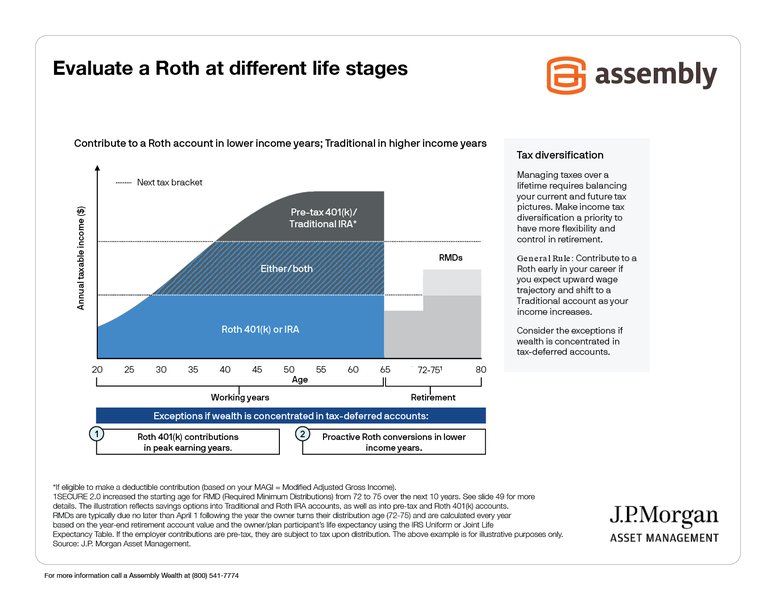
Visualizing the power of early investing and compound growth in a Roth IRA.
Getting Started: Eligibility and Opening Your Account
Before you can start maximizing your Roth IRA, you need to ensure you're eligible and know how to open an account.
Are You Eligible?
The Earned Income Requirement
The most critical rule for contributing to a Roth IRA is that you must have earned income. This means money you receive from working, such as wages from a part-time job, summer job, freelancing, or self-employment. Income from investments, gifts, or allowances does not count as earned income for Roth IRA contribution purposes.
Age Requirement
At age 18, you are typically considered an adult for financial purposes and can open your own Roth IRA account. If you were younger, a parent or guardian would need to open a custodial Roth IRA on your behalf.
Income Limitations (MAGI)
There are Modified Adjusted Gross Income (MAGI) limitations that can reduce or eliminate your ability to contribute to a Roth IRA. For example, for the 2024 tax year, single filers with MAGI under $146,000 could contribute the full amount, with contributions phasing out up to $161,000. While these limits are unlikely to affect most 18-year-olds, it's good to be aware of them for the future.
Choosing a Provider and Opening Your Account
Selecting the right brokerage firm is an important step. Look for providers that offer:
- Low or no account maintenance fees.
- No or low minimum deposit requirements.
- A wide range of low-cost investment options, especially index funds and ETFs.
- A user-friendly platform (website and mobile app).
Popular choices for young investors often include Fidelity, Charles Schwab, SoFi, and Robinhood. The process to open an account is usually straightforward and can be done online:
- Select your chosen provider.
- Provide personal information (Social Security number, address, date of birth).
- Specify that you are opening a Roth IRA.
- Fund the account through a bank transfer, check, or potentially direct deposit from your paycheck.
Fueling Your Future: Contribution Strategies
Once your account is open, the next step is to contribute money. How much and how often you contribute significantly impacts your long-term growth.
Contribution Limits: Know Your Maximum
The IRS sets annual limits on how much you can contribute to an IRA. For 2025, the maximum contribution is $7,000. However, there's a crucial rule: you cannot contribute more than your total earned income for the year. For instance, if you earn $4,500 from your part-time job in 2025, your maximum Roth IRA contribution for that year is $4,500, even though the general limit is $7,000.
The Power of Consistent Contributions
Aim to contribute as much as you can, up to the annual limit, as early as possible each year. Even small, regular contributions can add up significantly over decades due to compounding. Consider setting up automatic monthly transfers from your bank account to your Roth IRA to make contributing a consistent habit.
Parental Support and Earned Income
While contributions must come from your earned income, parents or other family members can gift you money which you can then use to make your Roth IRA contribution, provided you have earned at least that amount yourself. For example, if you earn $3,000 and your parents gift you $3,000, you can contribute $3,000 to your Roth IRA using that gifted money because you met the earned income requirement.
Prioritizing Your Savings
While maximizing your Roth IRA is a fantastic goal, ensure it fits within your overall financial plan. It's wise to also build an emergency fund (typically 3-6 months of living expenses in a readily accessible savings account) before focusing solely on retirement contributions.
Investing Wisely: Your Blueprint for Growth
Contributing money is just the first step; you also need to invest that money within your Roth IRA. Since you're 18, you have a long time horizon, which generally allows for a more aggressive investment strategy focused on growth.
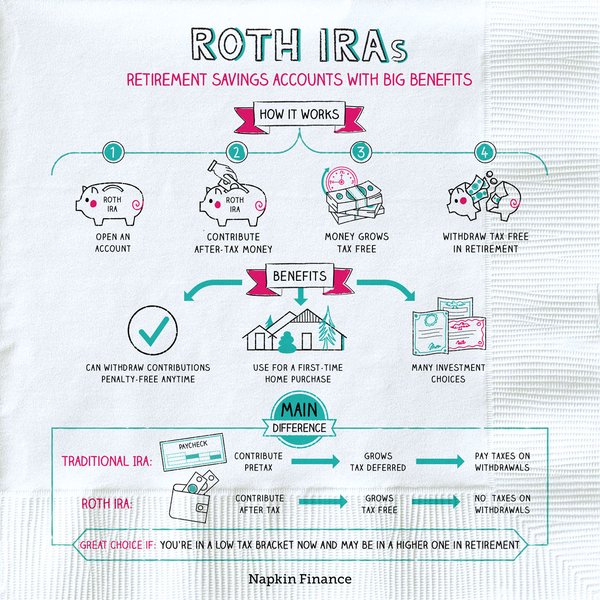
Understanding the core benefits of a Roth IRA.
Focus on Growth-Oriented Assets
Because all qualified withdrawals from a Roth IRA are tax-free, it's generally recommended to hold investments with high growth potential within this account. This way, your largest gains are shielded from taxes.
- Stock Market Index Funds: These funds track a broad market index like the S&P 500 (which represents 500 of the largest U.S. companies) or a total stock market index (which includes virtually all U.S. stocks). They offer diversification and historically strong long-term returns. Examples include funds like Fidelity Total Market Index Fund (FSKAX).
- Exchange-Traded Funds (ETFs): Similar to index funds, ETFs can track various market indexes and typically have low expense ratios. They trade like stocks on an exchange.
- Global or International Stock Funds: To diversify beyond the U.S. market, consider funds that invest in international companies.
At a young age, it's common to allocate a significant portion of your portfolio (e.g., 80-100%) to stocks. Bonds are generally more conservative and might play a larger role as you get closer to retirement.
Keep Costs Low
Investment fees, known as expense ratios for mutual funds and ETFs, can eat into your returns over time. Opt for low-cost index funds or ETFs, ideally with expense ratios below 0.10%.
Maintain a Long-Term Perspective
The stock market will have ups and downs. It's crucial to maintain a long-term perspective and not make impulsive decisions based on short-term market volatility. Historically, the market has trended upwards over long periods.
Visualizing Investment Strategy Focus
For an 18-year-old with a long investment horizon, an aggressive growth strategy is often recommended for a Roth IRA. This chart compares key factors of an aggressive approach versus a more conservative one, illustrating why a growth focus is typically suitable when you have decades until retirement.
This comparison highlights that an aggressive strategy prioritizes high long-term growth potential, accepting higher near-term volatility, which aligns well with the extended time horizon an 18-year-old investor possesses.
Understanding Roth IRA Withdrawal Rules & Benefits
A key feature of Roth IRAs is the flexibility and tax advantages associated with withdrawals, but it's important to understand the rules.
Withdrawing Contributions
One of the major benefits of a Roth IRA is that you can withdraw your contributions (the money you put in) at any time, for any reason, without owing taxes or penalties. This provides a level of flexibility, making your Roth IRA contributions accessible if you face an unexpected major financial need. However, the primary goal is long-term retirement savings, so tapping into these funds early should be a last resort.
Withdrawing Earnings (The Growth)
Withdrawing your earnings (the profits your investments have made) tax-free and penalty-free requires meeting two conditions:
- The 5-Year Rule: The Roth IRA account must have been open for at least five years. This five-year clock starts on January 1st of the tax year for which you made your first contribution.
- Age 59½ or Older: You must generally be age 59½ or older.
There are exceptions to the age 59½ rule where you can withdraw earnings tax-free and penalty-free (as long as the 5-year rule is met), such as for a qualified first-time home purchase (up to a $10,000 lifetime limit from earnings), disability, or death.
Key Roth IRA Features at a Glance
This table summarizes some crucial aspects of a Roth IRA for an 18-year-old investor in 2025:
| Aspect | Detail for 2025 | Why It Matters at 18 |
|---|---|---|
| Annual Contribution Limit | $7,000 or total earned income, whichever is less. | Maximizes early investment, jumpstarting compound growth over many decades. |
| Earned Income Requirement | Must have income from work (job, gig, self-employment). Not investment income or gifts. | Foundation for eligibility; you cannot contribute gifted money directly without having earned at least that much yourself. |
| Investment Focus | High-growth potential assets (e.g., stock index funds, ETFs). | A long time horizon (40+ years) allows for more aggressive growth strategies to maximize potential tax-free gains. |
| Withdrawal of Contributions | Can withdraw your direct contributions (not earnings) anytime, tax-free and penalty-free. | Provides significant flexibility for major life events or emergencies, though using it should be carefully considered. |
| Withdrawal of Earnings (Qualified) | Tax-free and penalty-free after the account has been open for 5 years AND you are age 59½ (or meet other qualifying exceptions). | This is the primary long-term benefit for retirement; all investment growth is potentially tax-free. |
Your Journey to Roth IRA Success: A Visual Map
Navigating your Roth IRA strategy can be simplified by visualizing the key components. This mindmap outlines the essential steps and considerations for an 18-year-old aiming to maximize their Roth IRA.
($7,000 or earned income for 2025)"] id2b["Contribute Consistently
(e.g., monthly automation)"] id2c["Contribute Early in the Tax Year"] id3["Investment Strategy"] id3a["Focus on Long-Term Growth
(Stocks, Index Funds, ETFs)"] id3b["Diversify Your Holdings"] id3c["Minimize Investment Fees
(Low Expense Ratios)"] id3d["Maintain Long-Term Perspective
(Avoid emotional trading)"] id4["Understanding Rules & Benefits"] id4a["Tax-Free Growth"] id4b["Tax-Free Qualified Withdrawals"] id4c["Contributions Withdrawable Anytime (Tax/Penalty Free)"] id4d["Earnings: 5-Year Rule & Age 59.5+ for Tax/Penalty Free"] id4e["Exceptions for Early Earnings Withdrawal
(e.g., First Home Purchase)"] id5["Long-Term Management"] id5a["Monitor & Rebalance Annually"] id5b["Increase Contributions with Income Growth"] id5c["Stay Educated on Personal Finance"]
This map provides a clear overview, from initial eligibility checks and account setup through strategic contributions, wise investing, understanding the rules, and long-term management, all designed to leverage the powerful benefits of a Roth IRA started at a young age.
Dive Deeper: Becoming a Roth IRA Millionaire
This video offers a beginner-friendly guide to understanding how a Roth IRA works and the potential it holds for building significant wealth, especially when starting young. It covers key aspects like income limits, contribution strategies, and how it can complement other retirement accounts like a 401(k).
Learn the fundamentals and strategies to harness the full potential of your Roth IRA.
Frequently Asked Questions (FAQ)
What if I don't earn $7,000 in a year? Can I still contribute?
Yes, absolutely! The rule is that you can contribute up to the annual maximum (e.g., $7,000 for 2025) OR your total earned income for the year, whichever is less. So, if you earn $3,000 from a summer job, you can contribute up to $3,000 to your Roth IRA for that year. Any contribution, no matter how small, is a great start at age 18.
What are the "best" investments for an 18-year-old in a Roth IRA?
For an 18-year-old with a long time horizon, investments with higher growth potential are generally favored. Low-cost, diversified index funds or ETFs that track broad market indices like the S&P 500 or a total stock market index are popular and often recommended. These offer exposure to a wide range of companies and aim to match market performance over time. Since Roth IRA growth is tax-free, maximizing that growth is key.
Can my parents contribute directly to my Roth IRA for me?
No, contributions to your Roth IRA must technically come from your own earned income. However, your parents can gift you money. If you have earned income equal to or greater than the amount you wish to contribute, you can then use that gifted money to make the contribution yourself. For example, if you earn $2,000 and your parents gift you $2,000, you can contribute $2,000 of that money to your Roth IRA.
What happens if I need the money in my Roth IRA before retirement?
You can withdraw your contributions (the principal amount you put in) from your Roth IRA at any time, for any reason, tax-free and penalty-free. This provides a good degree of flexibility. However, withdrawing earnings before age 59½ and before the account has been open for five years typically results in income taxes and a 10% penalty on those earnings, unless you qualify for an exception (like a first-time home purchase, disability, etc.).
Are there income limits to contribute to a Roth IRA?
Yes, there are Modified Adjusted Gross Income (MAGI) limits. If your income is above a certain threshold, your ability to contribute to a Roth IRA may be reduced or eliminated. For 2024, single filers with MAGI below $146,000 could contribute the full amount, with a phase-out range up to $161,000. These limits are adjusted periodically by the IRS. At age 18, it's less common to exceed these limits, but it's important to be aware of them as your income grows.
Recommended Further Exploration
- What are the best low-cost index funds for a Roth IRA in 2025?
- How does the Roth IRA 5-year rule work for withdrawals?
- Can I have a Roth IRA and a 401k at the same time?
- What is the impact of compound interest if I start investing $100 a month at age 18?
References
Last updated May 7, 2025