
The Evolving Landscape of Trust: Mainstream vs. Alternative Media in America
Unpacking the Shifting Dynamics of News Consumption and Public Confidence
The sentiment that "so many Americans" no longer trust mainstream media and are increasingly turning to "alternative, uncensored media" reflects a significant trend in the U.S. media landscape. While the specific figure of "90%" may be an exaggeration, data consistently shows a substantial and growing distrust in traditional news outlets, prompting a notable shift towards alternative sources. This complex phenomenon is driven by a confluence of factors, including perceived bias, economic pressures on traditional journalism, and the rise of digital platforms that empower diverse voices.
Key Insights into Media Trust and the Rise of Alternatives
- Declining Trust in Mainstream Media: Public confidence in mass media has reached historic lows, with only about 31% of Americans expressing a "great deal" or "fair amount" of trust in traditional news organizations. This decline is stark when compared to the 1970s, when trust levels hovered around 70%.
- Partisan and Generational Divides: Distrust is not uniform. Republicans consistently show lower trust in mainstream media than Democrats, and younger generations, particularly those under 30, are increasingly relying on social media for news, sometimes trusting it almost as much as national news outlets.
- Emergence of Alternative Media: The digital age has fostered a thriving ecosystem of alternative news platforms, including podcasts, YouTube channels, and independent journalists. These sources often gain traction by promising unfiltered perspectives and critiquing perceived biases or corporate interests within traditional media.
The Erosion of Trust in Mainstream Media
The decline in Americans' trust in mainstream media is a decades-long trend, reaching critical lows in recent years. Gallup polls indicate that only about 31% of Americans currently express a "great deal" or "fair amount" of confidence in the mass media to report the news fully, accurately, and fairly. This figure represents a dramatic drop from the 1970s, when over two-thirds of Americans held such trust.
Historical Context of Declining Trust
In the mid-20th century, the news media was among the most trusted institutions in the United States. However, this trust began to erode significantly from the late 1990s onward. Several factors have contributed to this sustained decline:
Perceived Bias and Agenda-Setting
A primary driver of distrust is the widespread perception of bias. Many Americans believe that mainstream news organizations are more concerned with supporting an ideology or political position than with informing the public objectively. This perception is particularly acute among those who do not trust the media, with 67% citing bias, spin, and hidden agendas as key reasons. This isn't just about political partisanship; many people dislike seeing opinion mixed with news.
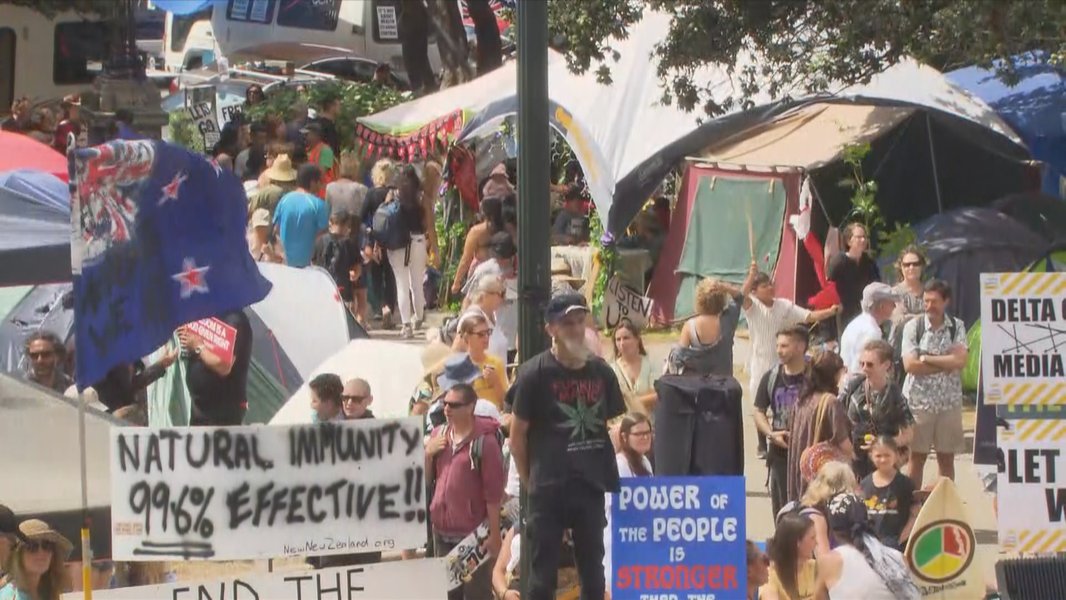
Protesters showing widespread distrust of mainstream media.
Economic Disruptions and Industry Changes
The economic model of journalism has undergone massive shifts, largely due to the internet and digital media. The decline in advertising revenue for traditional outlets has led to layoffs, reduced investigative reporting, and increased pressure to attract audiences, sometimes at the expense of in-depth, unbiased coverage. The rise of a "competitive digital media environment" means that there are now enough outlets for every American to find news that confirms their existing biases, potentially leading to the impression that "most people, and most media, is wrong."
Political Polarization and Media Fragmentation
Increased political polarization has exacerbated the trust crisis. News audiences are increasingly sorting along partisan lines, and new media entrants often amplify partisan attacks on traditional media. While trust among Democrats remained relatively stable for a period, it has also begun to decline recently, narrowing the gap with Republicans' consistently low trust levels. This suggests a broader erosion of confidence that transcends strict partisan divides.
Misinformation and Sensationalism
The prevalence of misinformation and the perception of sensationalism also contribute to public skepticism. When news organizations are perceived as prioritizing sensational headlines or inaccurate information over factual reporting, trust diminishes. Many Americans are bothered more by inaccurate information than by the political opinions of commentators.
The Ascent of Alternative Media
As trust in mainstream media wanes, a parallel trend has emerged: the significant rise of alternative, non-traditional news platforms. These outlets offer a diverse range of voices and perspectives, often presenting themselves as correctives to what they perceive as the dominant, biased narratives of mainstream media.
Characteristics and Appeal of Alternative Media
Direct Engagement and Unfiltered Content
Alternative media thrives on platforms like YouTube, podcasts, and various social media sites (e.g., Rumble, Gettr, Gab, Parler). These platforms allow content creators and independent journalists to bypass traditional gatekeepers, offering what many users perceive as more direct, authentic, and "uncensored" information. The appeal lies in the promise of transparency and a perceived freedom from corporate or political influence that is often attributed to mainstream outlets.
Community Building and Niche Interests
Alternative media often fosters identity-based communities and caters to niche interests or ideological viewpoints that may feel underrepresented in traditional news. This allows audiences to find content that resonates with their specific concerns and worldviews, leading to stronger engagement and loyalty. Examples include progressive news programs like Democracy Now! or sites focused on specific social justice issues.
Critique of Mainstream Practices
Many alternative outlets explicitly position themselves as a critique of mainstream journalism, challenging conventions such as news sourcing, journalistic objectivity, and the hierarchical economy of commercial media. They often highlight issues like corruption, media ownership, and ecological concerns that they believe are downplayed by traditional news organizations.
An example of an alternative media news website.
Impact on News Consumption Habits
The shift towards alternative media signifies a fundamental change in how Americans access information. While mainstream media brands still hold influence on older platforms like Facebook and X, newer networks like TikTok and Instagram see significant challenges from online influencers, creators, and smaller alternative news outlets. Young adults (18-29) in particular show a nearly equal level of trust in social media information compared to national news organizations.
This YouTube video provides a comprehensive discussion on the decline of trust in traditional media and the reasons behind it, touching upon the rise of alternative sources. It delves into how journalism has changed with digital media and the challenges it faces in regaining public confidence.
Exploring the reasons for the decline of trust in mainstream media.
The Spectrum of Alternative Media
It's important to note that "alternative media" is a broad category. It includes reputable independent investigative journalism sites, citizen journalism initiatives, and also hyper-partisan or ideologically driven platforms that may spread misinformation. The concern among researchers is that while some alternative media provide valuable diverse perspectives, others may purvey false or misleading information, often relying on social media for propagation. The challenge for consumers is discerning credible alternative sources from those that prioritize sensationalism or propaganda.
Comparative Analysis of Media Trust Factors
To better understand the distinct challenges and advantages of mainstream versus alternative media, it's useful to compare their characteristics across several key dimensions. The following table highlights these differences:
| Characteristic | Mainstream Media | Alternative Media |
|---|---|---|
| Historical Trust Level | High (e.g., 70% in 1970s), now low (approx. 31%) | Historically niche, now increasing significantly |
| Perceived Bias | Often seen as having political or corporate biases | Often self-proclaimed "unbiased" or having explicit ideological stances |
| Information Control | Centralized gatekeepers, editorial processes | Decentralized, allows individual creators to bypass gatekeepers |
| Economic Model | Advertising, subscriptions (facing disruption) | Crowdfunding, direct support, platform revenue |
| Content Nature | Aims for broad appeal, often perceived as generic or diluted | Niche, specialized, caters to specific interests/communities |
| Reach/Distribution | Traditional channels (TV, print, major online portals) | Primarily social media, podcasts, video platforms (e.g., YouTube) |
| Audience Engagement | Often passive consumption | Highly interactive, participatory (e.g., comments, live streams) |
| Challenge/Critique | Often criticized for maintaining status quo narratives | Explicitly critiques mainstream narratives and power structures |
Quantifying the Trust Landscape: A Radar Chart Perspective
The complex interplay of factors influencing trust in both mainstream and alternative media can be visually represented. This radar chart illustrates the perceived strengths and weaknesses of mainstream media across several crucial dimensions, based on aggregated public sentiment and expert analyses. It highlights areas where mainstream media struggles to maintain public confidence and provides context for why audiences might seek out alternative sources.
This radar chart provides a visual representation of how mainstream and alternative media are often perceived across key indicators of trust and effectiveness. Higher values indicate stronger positive perception. For instance, alternative media often score higher in terms of "Freedom from Corporate Influence" and "Audience Connection" due to their decentralized nature and direct engagement with communities. Conversely, mainstream media, while having broader reach, may struggle with "Perceived Objectivity" and "Coverage of Diverse Perspectives" in the public eye. The chart is based on general public sentiment and trends rather than specific quantitative data points, aiming to illustrate the comparative strengths and weaknesses that drive public trust.
The Implications and the Path Forward
The profound distrust in mainstream media and the increasing reliance on alternative sources have significant implications for public discourse, civic engagement, and the health of democracy. When citizens lack a common understanding of facts or trust in shared information sources, it becomes challenging to address societal problems or engage in constructive political dialogue.
Challenges and Opportunities
Combatting Misinformation
The rise of alternative media, while offering diverse perspectives, also presents challenges in the form of misinformation and disinformation. While Americans express a desire for restrictions on misleading news, there's also a strong emphasis on protecting freedom of access and publication. This creates a delicate balance for society to navigate.
Rebuilding Trust
For mainstream media, rebuilding trust requires a renewed commitment to journalistic fundamentals: accuracy, fairness, and transparency. This includes clearly separating opinion from news, being transparent about editorial processes, and actively addressing perceived biases. Focusing on local news, which generally enjoys higher trust than national news, could also be a strategic avenue for regaining confidence.
Media Literacy
For the public, increased media literacy is crucial. Understanding how news is produced, recognizing different forms of bias (both explicit and implicit), and critically evaluating sources are essential skills in the current information environment. This empowers individuals to make informed choices about where they get their news and how they interpret it.
Adaptation and Innovation
Both traditional and alternative media must continue to adapt to technological changes and evolving audience habits. For traditional outlets, this might involve embracing new digital formats, engaging with audiences on social media more authentically, and exploring new economic models that prioritize quality journalism over clickbait. For alternative media, the challenge lies in maintaining credibility and fostering responsible information sharing as they grow in influence.
Frequently Asked Questions (FAQ)
Why has trust in mainstream media declined so significantly?
What defines "alternative, uncensored media"?
Is the "90% distrust" figure accurate?
Do different political affiliations have varying levels of media trust?
What impact does social media have on media trust?
Conclusion
The shift in how Americans consume news and where they place their trust is a multifaceted issue rooted in decades of evolving media practices, economic pressures, and political polarization. While the notion that "90%" of Americans distrust mainstream media is an overstatement, the significant decline in public confidence is undeniable. This has fueled the growth of a diverse alternative media landscape, promising unfiltered perspectives and direct engagement. Understanding these dynamics is crucial for comprehending the current information environment and for fostering a more informed and engaged citizenry. Rebuilding trust will require concerted efforts from all corners—journalists, media organizations, educators, and the public—to prioritize accuracy, foster transparency, and cultivate critical media literacy skills.
Recommended Further Exploration
- How has political polarization impacted media trust in the US?
- What are the economic challenges facing traditional journalism today?
- How can media literacy help combat misinformation in the digital age?
- What are the ethical considerations for independent and alternative news sources?
References
Last updated May 21, 2025