
Unveiling Mercury Coder: The Diffusion-Powered LLM Revolutionizing Code Generation?
A deep dive into Inception Labs' high-speed model, its technology, performance, and the path to replication.
Highlights: Key Insights into Mercury Coder
- Breakthrough Speed: Mercury Coder leverages innovative diffusion technology for significantly faster text and code generation—reportedly over 1,000 tokens per second—outpacing many traditional autoregressive models.
- Code Generation Prowess: Specifically optimized for coding tasks, the Mercury Coder Mini variant demonstrates impressive performance, achieving results comparable to leading models like GPT-4o Mini on benchmarks such as HumanEval and MBPP.
- Proprietary Innovation with Limited Access: Developed by Inception Labs, a startup co-founded by prominent AI researchers, Mercury Coder is a commercial offering. Its core model weights and detailed training methodologies are not currently open-sourced, limiting direct replication efforts.
Understanding Mercury Coder: A New Wave in AI Text Generation
What is Mercury Coder?
Mercury Coder is a state-of-the-art large language model (LLM) developed by Inception Labs, designed with a primary focus on code generation. What sets Mercury Coder apart is its foundational architecture: it's a diffusion-based LLM (dLLM). This marks a significant departure from the more common autoregressive models (like those in the GPT series or Claude) that have dominated the LLM landscape.
The Diffusion Difference: How Mercury Coder Works
Traditional autoregressive LLMs generate text sequentially, predicting one token at a time from left to right, based on the preceding tokens. In contrast, diffusion models, including Mercury Coder, operate on a different principle, often described as a "coarse-to-fine" generation process.
This process typically involves:
- Starting with an initial, often noisy or incomplete, representation of the entire output (e.g., a sequence of random tokens or a masked sequence).
- Iteratively refining this representation over a series of "denoising" steps. In each step, the model predicts a cleaner version of the sequence.
- This iterative refinement allows the model to consider the global context of the entire sequence simultaneously, rather than just the preceding tokens.
This parallel processing capability is a key factor behind the claimed speed advantages of Mercury Coder. The diffusion approach may also offer benefits in terms of error correction and potentially reducing hallucinations, as the model can adjust and improve the entire output during the generation process.
Visual comparison: Autoregressive models generate token by token, while diffusion models refine the entire output in parallel.
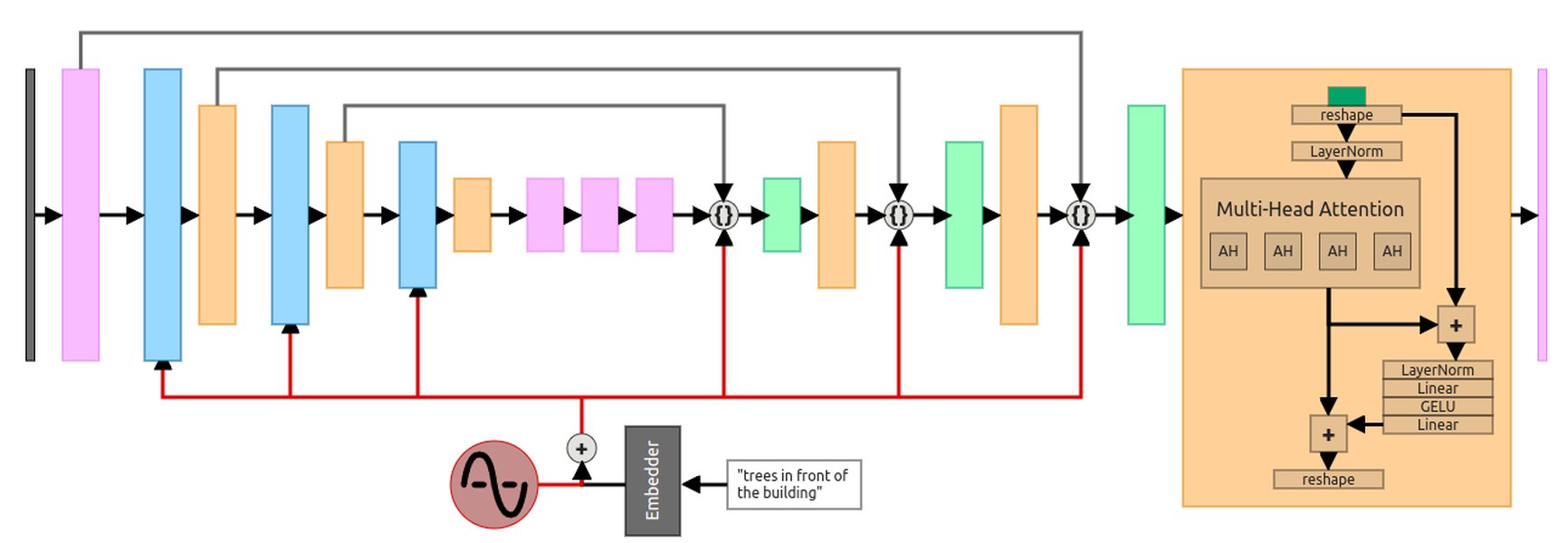
The diffusion process involves adding noise to data and then training a model to reverse this process, generating data from noise.
The Minds Behind Mercury Coder: Inception Labs
Founding and Vision
Mercury Coder is the creation of Inception Labs, a Silicon Valley AI startup. The company was co-founded by a team of respected AI researchers, including Stanford professor Stefano Ermon, along with Volodymyr Kuleshov and Aditya Grover. Professor Ermon reportedly hypothesized the potential for generating and modifying large blocks of text in parallel using diffusion models, a concept that underpins Mercury Coder's technology. Inception Labs aims to push the boundaries of LLM performance, particularly in speed and efficiency, by commercializing this novel diffusion-based approach.
Performance Unleashed: Mercury Coder Benchmarks
Mercury Coder, particularly its "Mini" variant, has demonstrated compelling performance metrics, especially in the realm of code generation, balancing both speed and output quality.
Speed and Throughput
One of the most highlighted attributes of Mercury Coder is its generation speed. Mercury Coder Mini has been reported to achieve throughput exceeding 1,000 tokens per second on NVIDIA H100 GPUs. This is a substantial increase compared to many speed-optimized autoregressive models. For instance, it's stated to be approximately 5.5 times faster than Gemini 2.0 Flash-Lite and around 18 times faster than Claude 3.5 Haiku in terms of tokens generated per second.
Quality in Code Generation
Beyond speed, Mercury Coder Mini has shown competitive results on standard code generation benchmarks:
- HumanEval: Achieved a score of around 88.0%, comparable to models like GPT-4o Mini.
- MBPP (Mostly Basic Programming Problems): Scored approximately 77.1%, again on par with GPT-4o Mini.
- Copilot Arena: Reports indicate Mercury Coder Mini tied for second place in certain evaluations, outperforming some larger models in speed-optimized settings.
Comparative Performance Overview
The following table summarizes the reported performance of Mercury Coder Mini against some contemporary models. Note that benchmark conditions can vary, and these figures represent reported values from available sources.
| Model | Reported Speed (Tokens/sec on H100) | HumanEval Score (%) | MBPP Score (%) |
|---|---|---|---|
| Mercury Coder Mini | ~1,109 | ~88.0 | ~77.1 |
| GPT-4o Mini (Comparable Tier) | Varies (Lower than Mercury Coder Mini) | Comparable to Mercury Coder Mini | Comparable to Mercury Coder Mini |
| Claude 3.5 Haiku | ~61 | N/A (Focus on speed comparison) | N/A (Focus on speed comparison) |
| Gemini 2.0 Flash-Lite | ~201 | N/A (Focus on speed comparison) | N/A (Focus on speed comparison) |
Note: "N/A" indicates data was not prominently featured for that specific metric in the context of direct speed comparisons with Mercury Coder in the provided information. Speed for GPT-4o Mini can vary based on implementation and optimization.
The Science Powering Mercury Coder: Research and Papers
Foundational Research: The Role of Score Entropy
While a specific, peer-reviewed academic paper solely dedicated to "Mercury Coder" as a commercial product has not been widely publicized, its technological underpinnings are rooted in active AI research. A key piece of research connected to Inception Labs is a paper from October 2023, co-authored by one of Inception Labs' co-founders. This paper delves into the training of text diffusion models utilizing a concept called "score entropy." It discusses how the model learns to estimate the transition ratio between tokens, indicating the probability of one token being more correct than another during the denoising process. This research is considered foundational to the development of diffusion-based language models like Mercury Coder.
Current Status of Peer-Reviewed Publications
As of May 2025, the primary academic linkage appears to be the aforementioned October 2023 paper. While disseminated through channels like AI research newsletters and company announcements, a formal publication in a top-tier, peer-reviewed conference or journal specifically detailing Mercury Coder's architecture and comprehensive evaluation as a product is not explicitly highlighted in publicly available information. The focus has largely been on its performance capabilities and commercial availability.
Exploring the Mercury Coder Ecosystem
Availability and Access
Inception Labs provides a few avenues for interacting with Mercury Coder:
- Demo Playground: A demonstration version is reportedly available at
chat.inceptionlabs.ai, allowing users to experience the model's capabilities. - Enterprise Options: For commercial use, Inception Labs offers enterprise solutions, including API access and potential on-premise deployments. Interested parties are typically directed to contact the company for these options.
Open Source Status: Is Mercury Coder Publicly Available?
No, Mercury Coder itself is currently not an open-source model. The core model weights, specific architectural details, and the training code remain proprietary to Inception Labs. This is a common approach for commercially focused AI models where significant R&D investment is involved.
GitHub Repositories: What's Out There?
Consistent with its proprietary nature, there are no official public GitHub repositories containing the source code or trained weights for Mercury Coder. While searches for "Mercury" on GitHub might yield various unrelated projects (e.g., programming languages, RPC libraries, or music coding tools), these are not affiliated with Inception Labs' diffusion LLM.
However, the field of diffusion LLMs is evolving, and related research or tools might appear in public repositories over time. For instance, the LLaDA model, discussed later, has associated code available on platforms like Hugging Face.
Diving Deeper: Training, Weights, and Architecture
Training Methodology
The training of Mercury Coder leverages the diffusion process, likely drawing heavily from the concepts outlined in the October 2023 "score entropy" paper. This involves training the model to reverse a noise process: clean training data (large corpora of code and text) is progressively corrupted with noise, and the model learns to denoise it, step by step, to recover the original data. This method allows the model to learn rich representations of language and code structure. Instead of a standard cross-entropy loss, a score entropy loss function is likely employed.
Model Weights and Parameters
Specific details about the exact parameter count for different versions of Mercury Coder or the precise datasets used for training are not publicly disclosed by Inception Labs. The existence of "Mercury Coder Mini" suggests that there are different model sizes tailored for various performance and resource requirements. Access to the model weights is typically restricted to enterprise clients or through controlled environments like the demo playground.
Key Attributes of Diffusion-Based Code Generators: A Comparative Perspective
The radar chart below offers a conceptual comparison of Mercury Coder Mini against a typical autoregressive coding model on several key attributes. These are illustrative and based on general characteristics discussed in the available information, not precise, undisclosed metrics.
This chart illustrates Mercury Coder Mini's strengths in speed, research novelty, and parallel processing due to its diffusion architecture. While its reported code quality is competitive, its openness and direct developer accessibility (for modifying weights or deep replication) are lower compared to established open-source autoregressive models.
For Developers: Replication, Post-Training, and Quantization
Challenges and Considerations for Replication
Directly replicating Mercury Coder presents significant challenges due to its proprietary nature. Without access to:
- The specific model architecture details,
- The exact training datasets,
- The pre-trained model weights, and
- The fine-tuned algorithms developed by Inception Labs,
an exact one-to-one replication is currently infeasible for the general public or independent researchers. However, understanding the principles of diffusion models for text and the foundational research (like the score entropy paper) can guide efforts to build similar systems from scratch.
Exploring Alternatives: The LLaDA Model
For developers interested in experimenting with diffusion-based language models, the LLaDA model has emerged as a notable open-source alternative. LLaDA is an 8-billion parameter diffusion LLM reported to offer competitive performance on various benchmarks. It shares the "coarse-to-fine" generation principle with Mercury Coder. Code and information for LLaDA are available on platforms like Hugging Face, providing a tangible starting point for:
- Understanding the implementation of diffusion LLMs.
- Experimenting with training or fine-tuning on custom datasets.
- Exploring the characteristics of diffusion-based text generation.
The mindmap below illustrates the relationships between Mercury Coder, its underlying technology, and related concepts like LLaDA.
Volodymyr Kuleshov, Aditya Grover"] id3_2["Commercial Product (Enterprise API, On-Premise)"] id3_3["Public Demo Playground Available"] id3_4["Proprietary: Not Open Source (Weights/Code Private)"] id4["Research & Academic Context"] id4_1["Foundational Paper: October 2023 (Text Diffusion with Score Entropy)"] id4_2["Part of Emerging Field of Diffusion LLMs"] id4_3["Focus on Overcoming Autoregressive Limitations"] id5["Developer Considerations & Alternatives"] id5_1["Direct Replication Challenging (Proprietary)"] id5_2["LLaDA: Open-Source Diffusion LLM"] id5_2_1["Allows Experimentation with Diffusion for Text"] id5_2_2["8 Billion Parameters, Code on Hugging Face"] id5_2_3["Similar Coarse-to-Fine Approach"] id5_3["Post-Training/Quantization dependent on model access"]
Potential for Post-Training and Quantization
Post-training (e.g., fine-tuning on specific tasks or datasets) and quantization (reducing model precision for faster inference and smaller footprint) are common practices for adapting LLMs. For Mercury Coder itself, pursuing these would depend on the level of access provided by Inception Labs through their enterprise offerings. If modifiable model weights or suitable APIs are available, such techniques could be applied.
For those working with open-source alternatives like LLaDA, standard libraries and techniques for fine-tuning and quantization (e.g., Hugging Face Transformers, bitsandbytes) could be explored, provided the model architecture is compatible.
Visualizing Diffusion LLMs in Action
The emergence of diffusion models for language, like Mercury Coder, is an exciting development in AI. The following video provides an overview of diffusion LLMs and discusses Inception Labs' Mercury, offering further context on this technology.
Video discussing the launch of Inception Labs' Mercury and the rise of diffusion LLMs.
Frequently Asked Questions (FAQ)
What makes Mercury Coder different from models like GPT?
The primary difference lies in their generation mechanism. GPT models are typically autoregressive, meaning they generate text token by token, sequentially from left to right, where each new token is predicted based on the ones before it. Mercury Coder is a diffusion-based model. It starts with a noisy or rough version of the entire output and refines it iteratively in parallel. This parallel refinement of the whole sequence at once is key to its speed and allows it to consider global context throughout the generation process, potentially leading to different error characteristics and coherence.
How fast is Mercury Coder?
Mercury Coder Mini is reported to be significantly fast, achieving over 1,000 tokens per second (specifically, around 1,109 tokens/sec) on NVIDIA H100 GPUs. This is claimed to be up to 10 times faster than some speed-optimized autoregressive models. For comparison, it's stated to be about 18 times faster than Claude 3.5 Haiku and 5.5 times faster than Gemini 2.0 Flash-Lite under certain benchmark conditions.
Can I use Mercury Coder for free?
Inception Labs offers a demo playground (reportedly at chat.inceptionlabs.ai) where users can try out Mercury Coder. However, for broader use, API access, or on-premise deployment, Mercury Coder is positioned as an enterprise solution, requiring contact with Inception Labs for commercial terms. It is not a freely available open-source model that you can download and run without restrictions.
Is the source code for Mercury Coder available?
No, the source code, specific model architecture details, and pre-trained weights for Mercury Coder are proprietary and not publicly available. Inception Labs has kept these details private as part of their commercial offering. There are no official GitHub repositories for Mercury Coder.
What is LLaDA and how does it relate to Mercury Coder?
LLaDA is an open-source diffusion-based large language model with 8 billion parameters. It is relevant in discussions about Mercury Coder because it employs similar underlying principles of diffusion and "coarse-to-fine" text generation. While developed by a different group, LLaDA's availability (code on Hugging Face) offers researchers and developers a platform to experiment with diffusion LLM techniques that are conceptually similar to those used in Mercury Coder. It can serve as a practical tool for understanding and potentially building upon diffusion-based approaches if direct access to Mercury Coder is not an option.
Recommended Further Exploration
- How do diffusion models work for text generation?
- What are the latest advancements in code generation AI models?
- Compare performance benchmarks of Mercury Coder Mini versus other small LLMs.
- Explore the research paper on score entropy for training text diffusion models.
References
Last updated May 6, 2025