
Unlock Your Full-Stack Potential: A 6-Month MERN, Next.js & Tailwind Roadmap (2025-2027 Focus)
Your beginner-friendly guide to mastering modern web development, complete with key resources and future-proof skills.
Key Highlights of Your Learning Journey
- Structured Progression: Master foundational web concepts before diving into the MERN stack, Next.js, and Tailwind CSS in a logical, month-by-month plan.
- Project-Driven Learning: Solidify your understanding by building practical projects at each stage, culminating in portfolio-ready applications.
- Future-Focused Skills: Equip yourself with in-demand technologies and practices relevant for the 2025-2027 job market, including TypeScript, testing, and deployment fundamentals.
Embarking on Your 6-Month Roadmap
This roadmap provides a structured path to becoming proficient in the MERN stack (MongoDB, Express.js, React, Node.js) complemented by the power of Next.js for full-stack React development and Tailwind CSS for rapid UI styling. This plan is designed for beginners and paced over six months, incorporating demanding skills projected to be valuable through 2027. Remember, consistency and hands-on practice are paramount. My knowledge cutoff is Sunday, 2025-05-04.
Month 1: Laying the Foundation - Web Development & JavaScript Fundamentals
Before diving into frameworks, a strong grasp of the basics is essential. This month focuses on the core technologies that underpin all web development.
Building blocks of modern web design.
Key Topics:
- HTML5 & CSS3: Structure, semantics, layout (Flexbox, Grid), responsive design principles.
- JavaScript Fundamentals (ES6+): Variables, data types, functions, objects, arrays, loops, DOM manipulation, events.
- Asynchronous JavaScript: Promises, async/await for handling operations like fetching data.
- Browser Developer Tools: Learning to inspect elements, debug JavaScript, and analyze network requests.
- Version Control Basics: Introduction to Git and GitHub for code management and collaboration.
Recommended Resources (YouTube):
- HTML & CSS: HTML & CSS Crash Course by Traversy Media
- JavaScript: JavaScript Tutorial for Beginners by Programming with Mosh
- Git & GitHub: Git and GitHub for Beginners - Crash Course by freeCodeCamp.org (Note: Link synthesized, check relevance)
Month 2: Diving into React & Styling with Tailwind CSS
With JavaScript fundamentals in hand, you'll now learn React, the library for building user interfaces, and Tailwind CSS for efficient styling.
Key Topics:
- React Fundamentals: Components (functional), JSX syntax, props (passing data), state management (useState hook), event handling.
- React Hooks: Essential hooks like
useState,useEffectfor managing state and side effects. - Component Composition: Building reusable UI elements.
- Introduction to Tailwind CSS: Setting up Tailwind in a React project, understanding the utility-first approach.
- Basic Styling with Tailwind: Using utility classes for layout, colors, typography, and responsiveness.
Recommended Resources (YouTube):
- React: React JS Tutorial for Beginners - Full Course by freeCodeCamp.org (See video below!)
- Tailwind CSS: Tailwind CSS Crash Course by Traversy Media
Deep Dive: React JS Full Course
This comprehensive course from freeCodeCamp.org is an excellent starting point for mastering React. It covers the core concepts from the ground up, including components, hooks, state management, and more, providing a solid foundation for building modern web applications. Follow along and build the example projects to solidify your learning.
Month 3: Building the Backend - Node.js, Express.js & MongoDB
This month focuses on the backend components of the MERN stack: Node.js for the runtime environment, Express.js as the web framework, and MongoDB as the NoSQL database.
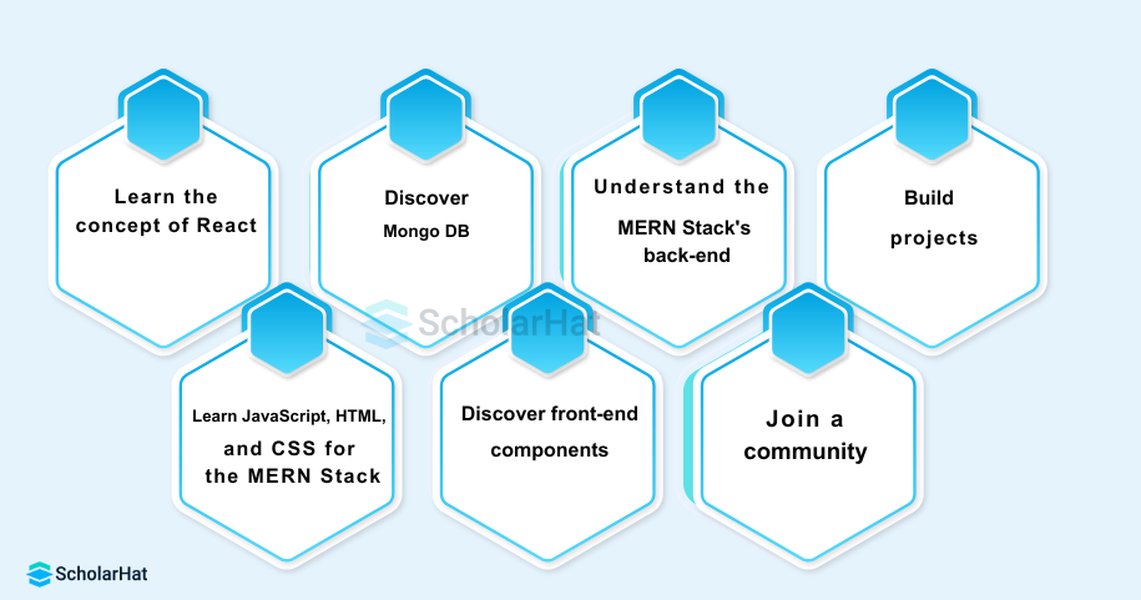
The core technologies of the MERN stack.
Key Topics:
- Node.js Basics: Understanding the event loop, modules (CommonJS vs ES Modules), npm (package management), environment variables.
- Express.js Framework: Setting up a server, routing (handling HTTP requests), middleware concepts, error handling.
- RESTful API Design: Principles of building APIs (endpoints, methods, status codes).
- MongoDB Fundamentals: NoSQL concepts, document databases, collections, basic CRUD operations (Create, Read, Update, Delete).
- Mongoose ODM: Connecting Node/Express to MongoDB, defining schemas and models, performing database operations.
Recommended Resources (YouTube):
- Node.js & Express.js: Node.js & Express.js - Full Course by freeCodeCamp.org
- MongoDB & Mongoose: MongoDB Tutorial for Beginners by WebDevSimplified
Month 4: Supercharging React with Next.js
Learn Next.js, a powerful React framework that enables features like server-side rendering (SSR) and static site generation (SSG), enhancing performance and SEO for your applications.
Key Topics:
- Next.js Introduction: Benefits over standard React (SSR, SSG, File-based Routing).
- Routing: Understanding the
approuter (recommended) orpagesrouter. Creating pages and layouts. - Data Fetching: Server Components, Client Components, fetching data on the server (
asyncServer Components) or client (useEffect). - API Routes: Building backend API endpoints directly within your Next.js application.
- Integration: Setting up Tailwind CSS within a Next.js project (refer to official docs).
Recommended Resources (YouTube):
- Next.js: Next.js Crash Course by Traversy Media (Check for newer versions covering App Router if possible)
- Next.js + Tailwind: Official Tailwind CSS + Next.js Guide (Documentation)
- Next.js Advanced: Next.js Tutorial for Beginners by Codevolution (Playlist, check for App Router content)
Month 5: Full-Stack Integration & Advanced Concepts
Bring everything together by connecting your Next.js frontend with your Express/MongoDB backend. You'll also explore essential concepts like authentication and state management.

Connecting the pieces of the MERN stack with Next.js.
Key Topics:
- Connecting Frontend & Backend: Making API requests from Next.js (using
fetchor libraries like Axios) to your Express API. - Authentication Strategies: Implementing user login/registration using techniques like JSON Web Tokens (JWT) or libraries like NextAuth.js.
- State Management: Exploring options beyond basic
useState:- React Context API for simpler global state.
- Introduction to libraries like Zustand or Redux Toolkit for more complex state.
- Error Handling: Managing errors gracefully on both frontend and backend.
- Basic Deployment: Introduction to deploying your frontend (Vercel, Netlify) and backend (Render, Fly.io, Heroku - check free tier status).
Recommended Resources (YouTube):
- Full MERN Project: Build and Deploy a Full Stack MERN Social Media App by JavaScript Mastery (Example, search for recent MERN + Next.js specific tutorials)
- NextAuth.js: NextAuth.js Authentication Tutorial by The Net Ninja
- State Management (Zustand): Zustand Crash Course by Laith Academy (Example resource)
- State Management (Redux Toolkit): Redux Toolkit Crash Course by The Net Ninja
Month 6: Embracing Demanding Skills & Production Readiness
Focus on skills highly valued in the industry for 2025-2027. This includes TypeScript for safer code, testing practices, and an introduction to containerization and advanced frameworks.
Key Topics:
- TypeScript: Integrating TypeScript into your React/Next.js projects for static typing, improved maintainability, and fewer runtime errors.
- Testing:
- Unit/Integration Testing: Using frameworks like Jest and libraries like React Testing Library to test components and logic.
- API Testing: Basic testing of your backend API endpoints (e.g., using Postman or automated tests).
- Containerization Introduction (Docker): Basic concepts of Docker, writing Dockerfiles for your frontend and backend, and using Docker Compose.
- Advanced/Emerging Concepts (Exploration):
- GraphQL: An alternative to REST APIs (using libraries like Apollo).
- tRPC: End-to-end typesafe APIs without schema generation.
- Server Actions (Next.js): Executing server code directly from client components.
- UI Component Libraries: Exploring libraries like shadcn/ui for pre-built, customizable components with Tailwind.
- Deployment & CI/CD Basics: Refining deployment processes, introduction to Continuous Integration/Continuous Deployment concepts (e.g., using GitHub Actions).
Recommended Resources (YouTube):
- TypeScript: TypeScript React Tutorial by Ben Awad
- Testing: React Testing Library Tutorial by Academind
- GraphQL: GraphQL Crash Course by Traversy Media
- Docker: Docker Tutorial for Beginners by freeCodeCamp.org
- Emerging Tech (Theo): Theo - t3.gg Channel (For insights into modern/emerging tech like tRPC, Server Actions)
Skills Emphasis Radar Chart
This chart provides a visual representation of the relative focus areas during your 6-month journey. While all areas are important, some require more time or are foundational to others. Scores are subjective estimations (1=Low Emphasis, 10=High Emphasis).
Roadmap Visualization Mindmap
This mindmap provides a high-level overview of the key technologies and concepts you'll cover each month throughout your 6-month learning journey.
Summary Table: Your 6-Month Journey
Here's a quick overview of the focus areas and goals for each month:
| Month | Focus Area | Key Topics | Potential Mini-Project Goal |
|---|---|---|---|
| 1 | Web & JS Fundamentals | HTML, CSS, JS ES6+, Async, Git | Build a responsive personal portfolio page. |
| 2 | React & Tailwind Basics | React Components, Hooks, JSX, Tailwind Utilities | Create an interactive To-Do list UI. |
| 3 | Backend (Node/Express/Mongo) | Node.js, Express Server, REST API, MongoDB/Mongoose | Build a simple REST API for the To-Do list (no frontend connection yet). |
| 4 | Next.js Integration | Next.js Routing, Data Fetching, API Routes, Tailwind Setup | Rebuild the To-Do list UI using Next.js and Tailwind. |
| 5 | Full-Stack Integration & Auth | Connecting FE/BE, JWT/NextAuth, State Management | Connect the Next.js frontend to the backend API, add user login. |
| 6 | Demanding Skills & Deployment | TypeScript, Testing, Docker Basics, Advanced Concepts Intro | Add TypeScript, write tests, containerize, and deploy the full-stack To-Do app. |
Tips for Success on Your Journey
- Code Daily: Consistency is key. Even 30 minutes of focused coding each day builds momentum.
- Build Projects: Apply what you learn immediately by building small projects. Gradually increase complexity. Don't just follow tutorials; try to build your own ideas.
- Read Documentation: Official docs (React, Next.js, Tailwind, Node.js, MongoDB) are your best friends. Learn to navigate and understand them.
- Embrace Debugging: You *will* encounter errors. Learning to debug effectively is a crucial skill. Use browser dev tools and console logs.
- Use Version Control (Git): Commit your code frequently using Git and push it to GitHub. This saves your progress and showcases your work.
- Join Communities: Engage with other developers on platforms like Stack Overflow, Reddit (e.g., r/learnjavascript, r/reactjs, r/nextjs), Discord servers, or Dev.to. Ask questions and help others.
- Be Patient: Learning takes time. Don't get discouraged by challenges. Celebrate small wins and focus on progress, not perfection.
Frequently Asked Questions (FAQ)
Is 6 months really enough time for a beginner?
Why these specific technologies (MERN, Next.js, Tailwind)?
How important is building projects versus just watching tutorials?
What are "exclusive demanding frameworks" and why are they included?
What should I do if I get stuck on a topic?
Recommended Next Steps
Continue your learning journey by exploring these related topics:
- How can I build a compelling portfolio project using MERN, Next.js, and Tailwind?
- What are the pros and cons of different state management libraries (Zustand, Redux Toolkit, Context API) in Next.js?
- Can you explain Next.js Server Components versus Client Components in more detail?
- What are the essential security best practices for developing MERN stack applications?
References
Last updated May 4, 2025