
Structural and Physiological Changes During Metamorphosis
Explore the intricate transformations from larva to adult across species
Key Insights
- Comprehensive Transformation: Metamorphosis involves radical shifts in body plan, organ systems, and physiology.
- Hormonal and Genetic Control: Complex interactions of hormones such as ecdysone, juvenile hormone, and thyroid hormones trigger and regulate changes.
- Adaptation and Ecological Transition: Structural and physiological changes prepare organisms for new habitats and feeding behaviors.
Overview
Metamorphosis is a fundamental biological process observed in various species such as insects, amphibians, and certain fish. It is characterized by a series of transformative stages where an immature organism develops into a fully functional adult. This process encompasses radical structural changes, including modifications to limb development and internal organ systems, as well as physiological changes that impact metabolism, hormone regulation, and overall behavior. These transformations ensure the organism is equipped to thrive in a different environment, whether that involves changing from an aquatic to a terrestrial lifestyle or transitioning from a herbivorous diet to a carnivorous one.
Structural Changes
Structural changes during metamorphosis are the most visible and dramatic transformations experienced by an organism. They include alterations in overall body architecture, limb morphology, and internal organ configuration. The nature and scale of these changes largely depend on whether the species in question undergoes complete or incomplete metamorphosis.
Changes in Body Plan and Organ Development
Body Plan Transformation
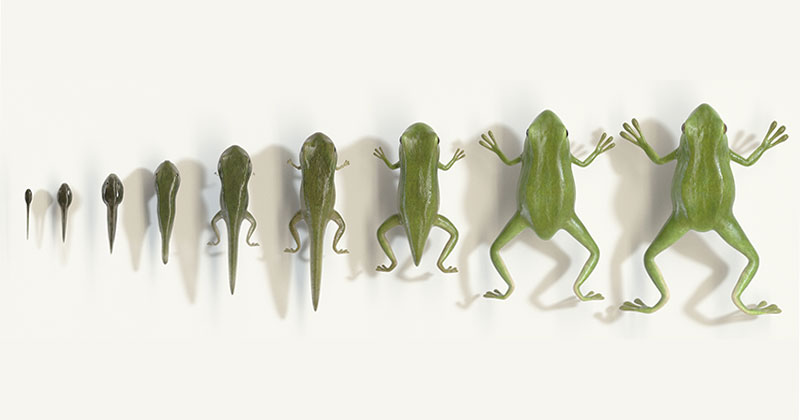
In many species, metamorphosis involves a complete reorganization of the body plan. For example, in insects undergoing holometabolous metamorphosis, the larval form, such as a caterpillar, undergoes extensive remodeling during the pupal stage. During this time, the larval tissues are broken down and new adult structures like wings, legs, and antennae are formed. Similarly, amphibians like tadpoles experience drastic modifications, such as the absorption of the tail and the development of limbs.
Development of New Organ Systems
Metamorphosis also involves critical internal reorganizations. In amphibians, for example, the transition from an aquatic tadpole to a terrestrial frog is accompanied by the evolution of the respiratory system—an organism shifts from gill-based to lung-based gas exchange. Additionally, changes in the digestive system prepare the organism for a new diet; a tadpole's herbivorous intestinal system is restructured into a digestive system suitable for carnivorous feeding in adults.
Loss and Development of Larval Structures
During the metamorphic process, larval-specific structures are resorbed or repurposed as definitive adult structures emerge. For instance, many aquatic larvae lose structures like gills or specialized feeding appendages as the adult form emerges with new, more suitable features for survival in a different habitat.
Physiological Changes
Alongside structural changes, metamorphosis encompasses a series of physiological adjustments that are crucial for the organism’s survival. These changes include alterations in metabolism, shifts in respiratory and digestive functions, and behavioral adaptations that are tightly regulated by hormonal activity.
Hormonal Regulation
Endocrine System’s Role
Hormones are essential for initiating and controlling the metamorphic process. In insects, hormones such as ecdysone and juvenile hormone play a pivotal role in dictating the timing and progression of metamorphic stages. In amphibians, thyroid hormones, such as thyroxine, initiate a cascade of biochemical events that result in the reorganization of tissues and the development of adult characteristics. These hormonal signals ensure that metamorphosis proceeds in a coordinated manner, allowing for a successful transition between life stages.
Metabolic Adjustments
Metamorphosis also requires significant metabolic reprogramming. As an organism transitions to a new life stage, its metabolic pathways adapt to meet the changing energetic and nutritional requirements. For example, in the transition of a tadpole to a frog, metabolic pathways are adjusted to support the new dietary needs and locomotory activities of the adult form. Similarly, insects experience shifts in metabolic enzyme production, which supports the developmental changes associated with the pupal stage.
Cellular and Molecular Changes
Programmed Cell Death and Tissue Remodeling
A key component of metamorphosis is apoptosis, or programmed cell death. This process helps to eliminate cells that are no longer needed in the adult form. For example, the tail of a tadpole is resorbed through apoptosis, freeing up resources for the formation of new adult-specific organs. Concurrently, cellular proliferation drives the creation of new tissues and structures, thereby ensuring the successful reorganization of the organism's anatomy.
Genetic Regulation of Transformation
On a molecular level, a complex interplay of gene activation and repression orchestrates the metamorphic process. Specific genes are upregulated to promote the development of adult characteristics, while others are downregulated to suppress larval traits. This genetic regulation is highly controlled and showcases the intricate design of developmental biology.
Stages of Metamorphosis
Metamorphosis is typically divided into various stages, each characterized by distinct structural and physiological changes. Two common types of metamorphosis are holometabolous and hemimetabolous metamorphosis.
Holometabolous Metamorphosis
This type of metamorphosis is seen in insects such as butterflies, moths, and beetles. It involves four distinct stages: egg, larva, pupa, and adult. Each stage is markedly distinct, with the larva undergoing extensive breakdown and reorganization during the pupal stage to form the adult body.
Hemimetabolous Metamorphosis
In hemimetabolous metamorphosis, seen in insects like grasshoppers and cockroaches, the immature nymphs resemble the adults and gradually acquire adult features through a series of molts. Although the changes are less dramatic compared to holometabolous insects, there are still significant modifications in body structure and behavior as the organism matures.
Comparative Table: Key Metamorphosis Processes
| Aspect | Insects (Holometabolous) | Insects (Hemimetabolous) | Amphibians |
|---|---|---|---|
| Initial Stage | Egg → Larva | Egg → Nymph | Egg → Tadpole |
| Transformation | Pupal stage where larval tissues are reorganized into adult structures | Gradual transformation with each molt | Tail resorption, limb development, shift from gills to lungs |
| Hormonal Drivers | Ecdysone, Juvenile Hormone | Similar hormones with less drastic changes | Thyroid hormone (thyroxine) |
| Dietary and Habitat Shift | Larva to adult diet shift; from feeding on leaves to nectar or other sources | Diet adjustments gradually as nymph molts | Tadpole herbivory shifts to carnivory in adult frogs |
In-Depth Analysis of Hormonal Mechanisms
Hormonal control is arguably one of the most critical factors in metamorphosis. Through precise temporal and spatial regulation, hormones ensure that the structural and physiological changes occur in a coordinated manner. In insects, the balance between ecdysone and juvenile hormone governs the progression from larval stages to the pupal phase, ensuring that larval traits are suppressed and adult characteristics are promoted. For amphibians, thyroid hormones such as thyroxine activate a series of cellular and genetic pathways that lead to dramatic morphological changes including rewiring of the nervous system and reorganization of the digestive tract.
This hormonal regulation is not only essential for proper developmental transitions but also for adapting the organism to its future ecological niche; ensuring that once metamorphosis is complete, the organism has the necessary biological toolkit to survive and reproduce in its new environment.
Behavioral Changes Adapted from Structural and Physiological Shifts
Beyond the physical and chemical transformations, metamorphosis induces significant changes in behavior. The structural remodeling of sensory systems, such as the repositioning of eyes in amphibians or the development of compound eyes in insects, leads to altered behavioral responses. These changes are crucial for functions like hunting, predator avoidance, and mating.
Examples in Nature
Amphibian Behavioral Transition
During the metamorphosis in amphibians, the shift from a primarily aquatic lifestyle to a terrestrial one is accompanied by changes not only in physical configuration but also in behavioral patterns. A tadpole, initially adapted to feeding on algae and remaining mostly submerged, evolves into a frog that actively hunts, exploits new habitats, and exhibits different social behaviors suitable for terrestrial environments.
Insect Behavioral Adaptation
In holometabolous insects, the transformation from a caterpillar to a butterfly or moth brings about changes in behavior related to feeding, reproduction, and migration. The larval stage is primarily focused on rapid growth and consumption, whereas the adult stage centers around mating, dispersal, and sometimes even long-distance migration.
Synthesis and Future Perspectives
The detailed changes during metamorphosis underscore a remarkable evolutionary strategy that enables organisms to occupy multiple ecological niches throughout their lifetimes. The interplay between structural modifications and physiological adaptations demonstrates the complexity and coordination inherent in biological systems. Understanding these processes not only highlights nature's ingenuity but also provides critical insights into developmental biology, endocrinology, and ecology.
As research in genetic and molecular biology advances, we gain a deeper understanding of the signals that trigger metamorphosis and of the ways in which these changes maximize an organism’s survival in a shifting environment. Future studies may further elucidate the specific gene networks and molecular cascades that orchestrate these dramatic transitions across diverse animal groups.
References
- Metamorphosis - NCBI Bookshelf - NCBI
- Metamorphosis - Britannica
- Metamorphosis - Biology Dictionary
- Metamorphosis - Wikipedia
- Metamorphosis Research - Science.gov
Recommended Queries
 microscopiaiwm.wordpress.com
Last updated March 16, 2025