
Unveiling the 2026 Metaverse: Beyond the Hype, Towards Practical Reality
Explore the evolving landscape of virtual and spatial computing, where enterprise drives innovation and consumer experiences mature.

- 1.Key Insights into the 2026 Metaverse
- 2.The Evolving Definition of the Metaverse in 2026
- 3.Dominant Trends and Developments Shaping 2026
- 4.Technological Underpinnings: Advancements Driving Immersion and Accessibility
- 5.Business Applications and Brand Engagement
- 6.The Metaverse in 2026: A Mindmap of Key Concepts
- 7.Analyzing Metaverse and VR Investment: Enterprise vs. Consumer Focus
- 8.Key Platforms and Their Focus in 2026
- 9.A Glimpse into the Immersive Future of VR Gaming
- 10.The Road Ahead: Challenges and Opportunities
- 11.Frequently Asked Questions
- 12.Conclusion
- 13.Recommended Further Exploration
- 14.Referenced Search Results
Key Insights into the 2026 Metaverse
- Enterprise Dominance: The metaverse has seen a significant shift, with enterprise applications now leading the charge in adoption and investment, demonstrating clear ROI in areas like industrial digital twins, training, and collaboration.
- Diverse Ecosystem, Not a Monolith: Instead of a single "metaverse," 2026 presents a network of diverse, interconnected virtual environments accessible via various devices, from VR headsets to smartphones, catering to specific needs across gaming, social, and business sectors.
- Technological Maturation: Advancements in AI integration, haptic feedback, lighter VR hardware, and efforts towards cross-platform interoperability are addressing previous limitations and enhancing immersion and accessibility.
The concept of the metaverse and virtual reality (VR) has undergone a profound transformation by 2026. What was once envisioned as a singular, all-encompassing virtual world has matured into a more nuanced and practical ecosystem. The initial consumer-focused hype has largely receded, making way for significant advancements and widespread adoption within the enterprise sector. This shift indicates a pragmatic evolution, where virtual environments are now seen as powerful tools for business, education, and specialized entertainment, rather than solely as social playgrounds.
The Evolving Definition of the Metaverse in 2026
In 2026, the metaverse is best understood not as a singular, unified platform but as a distributed network of persistent virtual spaces. These environments are accessible through a variety of devices, including advanced VR headsets, augmented reality (AR) glasses, traditional computers, and even smartphones. This multi-access approach democratizes participation, allowing users to engage with virtual worlds based on their hardware capabilities and specific needs. The overarching vision is an interconnected digital realm where assets, identities, and experiences can ideally flow seamlessly across different platforms, driven by evolving standards of interoperability and digital ownership.
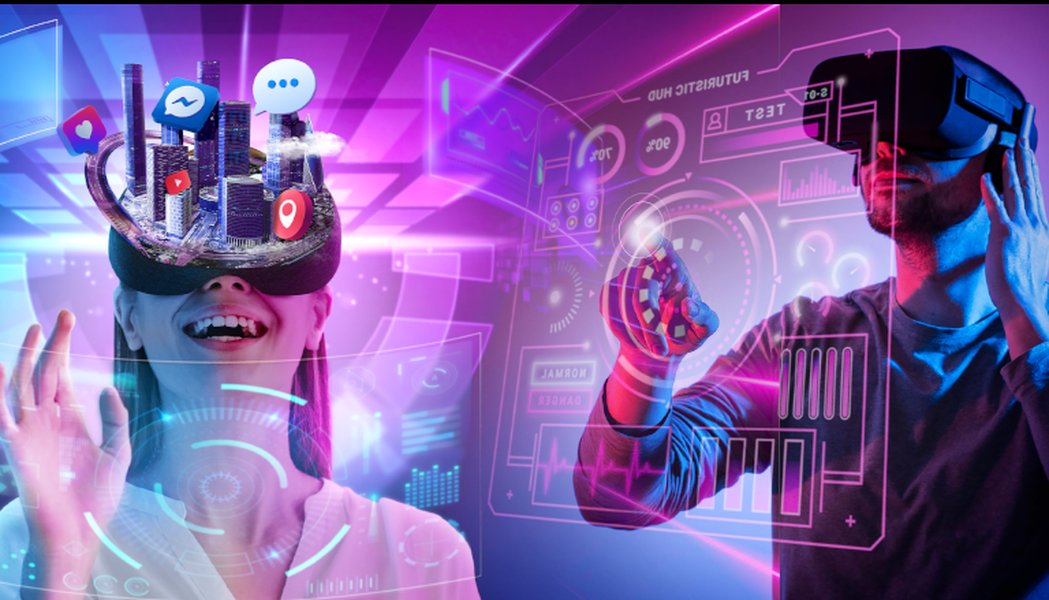
The interconnected nature of the metaverse, featuring digital entities and environments.
Spatial Computing: The New Paradigm
Increasingly, the metaverse is being referred to as "spatial computing." This term highlights a fundamental shift towards more intuitive and integrated interactions with digital environments that mimic our physical world. Spatial computing emphasizes the integration of digital information with our physical surroundings, enabling new forms of interaction and collaboration. This paradigm is crucial for enterprise applications, where precise spatial awareness and interaction are paramount for tasks like design, training, and simulation.
Dominant Trends and Developments Shaping 2026
Several key trends are defining the metaverse and VR landscape in 2026, marking a significant departure from earlier expectations. These trends underscore a maturing technology base and a clearer understanding of where virtual environments provide tangible value.
Enterprise Leads the Charge
The most striking development is the overwhelming success and investment in enterprise metaverse applications. A substantial portion of Fortune 500 companies are dedicating significant budgets to integrate metaverse technologies into their operations. This isn't just about buzzwords; it's about measurable returns on investment (ROI).
- Industrial Digital Twins: Manufacturing sectors are heavily leveraging digital twins to create virtual replicas of physical assets, processes, and systems. This allows for predictive maintenance, optimized production lines, and reduced errors before physical implementation. Companies like Siemens and Hexagon, alongside NVIDIA Omniverse, are at the forefront of this innovation.
- Healthcare VR Therapy: In healthcare, VR is proving instrumental in accelerating recovery times. Applications range from pain management and physical rehabilitation to mental health therapies, offering immersive and controlled environments for patients.
- Training and Education: Virtual training simulations are becoming standard across various industries, from high-risk professions like aviation and emergency services to corporate onboarding and skill development. These simulations offer safe, repeatable, and cost-effective training scenarios.
Diverse Platform Ecosystems
The metaverse of 2026 is characterized by a rich diversity of platforms, each catering to specific user needs and use cases. This fragmentation, while presenting interoperability challenges, also allows for specialized and highly optimized experiences.
- Gaming & Entertainment Powerhouses: Platforms like Roblox and Fortnite continue to dominate the consumer entertainment space, evolving into vast social universes that host millions of users, virtual concerts, and user-generated content. Popular VR titles such as Beat Saber, Half-Life: Alyx, and The Walking Dead: Saints & Sinners continue to attract large user bases.
- Consumer Social and Experiential Platforms: While Meta's Horizon Worlds faced significant challenges and ultimately ceased operations due to substantial losses, platforms like VRChat thrive on fostering social spontaneity and user-created experiences. Location-based entertainment venues such as Sandbox VR and Zero Latency offer unique, full-body multiplayer VR experiences.
- Blockchain-Based Virtual Worlds: Decentraland and The Sandbox persist as notable examples of blockchain-based metaverses, offering virtual land ownership, digital economies, and opportunities for decentralized content creation and monetization.
- Enterprise Collaboration Suites: Platforms such as Microsoft Mesh and Meta Horizon Workrooms (despite Meta's broader consumer struggles) are tailored for business productivity, enabling remote team collaboration, virtual meetings, and shared workspaces.
Technological Underpinnings: Advancements Driving Immersion and Accessibility
The evolution of the metaverse and VR would not be possible without significant technological advancements across several fronts. These innovations are making virtual experiences more realistic, accessible, and integrated into daily life.
This radar chart illustrates the perceived progress and ideal state of key technological advancements underpinning the metaverse in 2026. While AI integration and lighter VR headsets show strong progress, areas like cross-platform interoperability still have significant room for growth to reach an ideal, seamless experience.
Artificial Intelligence Integration
Generative AI is playing an increasingly critical role in the metaverse. It's being used to create more intelligent non-player characters (NPCs), generate dynamic and evolving environments, and streamline the entire content creation pipeline, making it easier for users and developers to build within virtual worlds.
Enhanced Haptic Feedback
To deepen immersion, advancements in haptic technology are allowing users to experience a sense of touch and physical interaction within virtual environments. This ranges from subtle vibrations in controllers to more sophisticated full-body suits that simulate textures, resistance, and impact.
Improved Hardware: Lighter, Longer-Lasting, More Affordable
Addressing previous criticisms of bulky and expensive hardware, newer VR headsets are significantly lighter, more comfortable, and offer extended battery life. This makes them more practical for prolonged use in both consumer and enterprise settings. Furthermore, prices are becoming more accessible, gradually lowering the barrier to entry.

A sleek, modern VR headset, indicative of improved hardware design in 2026.
Cross-Platform Interoperability
While still a significant challenge, there are ongoing efforts to enable seamless transfer of digital assets, identities, and experiences across different metaverse platforms. Standards like Universal Scene Description (USD) and common avatar systems are emerging to facilitate this crucial aspect of an interconnected metaverse.
Mobile-First and Browser-Based Access
To further reduce hardware barriers, there's a strong push towards mobile-first and browser-based metaverse experiences. Android XR and similar initiatives are expanding the reach of virtual environments to a broader audience, demonstrating that immersive experiences aren't solely reliant on high-end VR headsets.
Business Applications and Brand Engagement
Beyond internal enterprise use, brands are actively engaging with metaverse platforms as powerful new channels for marketing, sales, and customer interaction.
- Virtual Stores and Digital Fashion: Brands are establishing virtual storefronts and creating digital fashion lines, allowing consumers to explore products in 3D, try on virtual clothing, and even purchase digital assets for their avatars.
- Marketing Events and Immersive Experiences: The metaverse hosts virtual product launches, interactive marketing campaigns, and immersive brand experiences, offering new ways to engage with target audiences.
- Digital Learning Environments: Educational institutions and corporate training departments are leveraging virtual worlds to create engaging and interactive learning environments, from virtual classrooms to simulated laboratories.
The Metaverse in 2026: A Mindmap of Key Concepts
To better visualize the interconnected elements of the metaverse in 2026, consider the following mindmap:
This mindmap illustrates the multifaceted nature of the metaverse in 2026, highlighting its definition, key trends, technological drivers, and diverse applications across both enterprise and consumer sectors.
Analyzing Metaverse and VR Investment: Enterprise vs. Consumer Focus
The distribution of investment and development in the metaverse space has seen a clear divergence by 2026. While initial focus heavily leaned towards consumer social platforms, the reality of measurable returns has shifted the balance dramatically.
This bar chart visually represents the comparative investment and development focus across different metaverse and VR sectors in 2026. It clearly shows a dominant emphasis on Enterprise Solutions, followed by Gaming & Entertainment and Hardware Development, while consumer social platforms have seen significantly reduced focus.
Key Platforms and Their Focus in 2026
The following table summarizes the prominent metaverse and VR platforms in 2026, categorizing them by their primary focus and outlining their significance.
| Platform/Category | Primary Focus | Key Characteristics in 2026 | Examples |
|---|---|---|---|
| Enterprise & Industrial | Business productivity, simulation, digital twins, training | High ROI, critical for design, manufacturing, remote collaboration. Focus on precise interaction and data integration. | Microsoft Mesh, Meta Horizon Workrooms, NVIDIA Omniverse, Siemens/Hexagon offerings |
| Gaming & Entertainment | Immersive gaming, social events, user-generated content | Large user bases, evolving into social hubs. Strong emphasis on high-fidelity graphics and engaging gameplay. | Roblox, Fortnite, VRChat, Beat Saber, Half-Life: Alyx |
| Blockchain-Based Metaverses | Decentralized ownership, virtual economies, NFT integration | User-owned assets, digital land, cryptocurrency transactions. Focus on community governance and content creation. | Decentraland, The Sandbox |
| Location-Based Entertainment | Physical VR arcades, full-body immersive experiences | High-end, shared experiences often involving specialized hardware and large physical spaces. | Sandbox VR, Zero Latency |
| Educational/Experiential VR | Learning, exploration, curated short experiences | Applications for virtual field trips, skill development, and artistic showcases. | Ocean Rift, Home: A VR Spacewalk, Webby Awards VR experiences |
This table provides a snapshot of the diverse metaverse and VR platforms in 2026, illustrating their core functions and key players.
A Glimpse into the Immersive Future of VR Gaming
While enterprise applications have taken center stage, the consumer segment, especially gaming, remains a vibrant and innovative space within VR. The drive for realism and immersion continues to push boundaries, offering players experiences that blur the lines between the virtual and the physical.
This YouTube video showcases some of the most realistic VR games available in 2026. It's particularly relevant as it highlights how visual fidelity and intricate game design contribute to a truly immersive experience. The games featured often leverage advanced rendering techniques, detailed environmental textures, and realistic physics to create worlds that feel tangible and believable. This level of realism is crucial not only for entertainment but also underpins the effectiveness of many enterprise training and simulation applications, demonstrating a cross-pollination of technological advancements between consumer and professional VR.
A look at some of the most realistic VR games captivating players in 2026, showcasing the cutting edge of virtual immersion.
The Road Ahead: Challenges and Opportunities
Despite the significant progress, the metaverse and VR landscape still faces challenges. High development costs, ensuring true interoperability across disparate platforms, and addressing ethical considerations related to data privacy and digital identity are ongoing concerns. However, the clear success of enterprise adoption, coupled with continuous technological refinement, paints a promising picture for the future. The focus on practical applications and measurable value positions the metaverse not as a fleeting trend, but as a foundational layer for the next generation of digital interaction and innovation.
Frequently Asked Questions
What is the metaverse in 2026?
Is the consumer metaverse dead in 2026?
What is "spatial computing"?
What are the main drivers of metaverse growth in 2026?
What kind of hardware do I need to access the metaverse in 2026?
Conclusion
The metaverse and virtual reality landscape in 2026 presents a compelling narrative of evolution and adaptation. Far from being a fleeting concept, it has transformed into a powerful suite of technologies with tangible, real-world applications. The shift towards enterprise-driven innovation has underscored the practical value of virtual environments, moving beyond speculative consumer social experiences to deliver concrete returns in sectors ranging from manufacturing and healthcare to training and remote work. Simultaneously, advancements in hardware, AI, and interoperability continue to refine the user experience, making virtual worlds more accessible and immersive. As these technologies mature, the metaverse is cementing its place as a crucial layer of our digital infrastructure, promising continued innovation and integration into various facets of our lives.
Recommended Further Exploration
- How are industrial digital twins transforming manufacturing in the metaverse?
- What are the latest advancements in haptic feedback technology for virtual reality?
- Comparing the economic models of blockchain-based metaverses like Decentraland and The Sandbox
- The future of AR glasses and their role in the evolving spatial computing paradigm