
Comprehensive Methods of Obtaining Oxygen
Exploring the Diverse Techniques for Oxygen Production
Key Takeaways
- Industrial Efficiency: Cryogenic distillation and pressure swing adsorption are the most widely used industrial methods for high-purity oxygen production.
- Laboratory Accessibility: Electrolysis of water and thermal decomposition of potassium chlorate are common laboratory techniques for generating oxygen.
- Innovative Space Applications: Techniques like molten regolith electrolysis are essential for extracting oxygen in extraterrestrial environments, such as on the Moon or Mars.
Industrial Methods
Fractional Distillation of Liquefied Air
Fractional distillation is the most established industrial method for oxygen production. This process involves cooling and compressing atmospheric air until it liquefies. The liquefied air is then slowly warmed in a distillation column, where different components vaporize at their respective boiling points. Oxygen, with a boiling point of -183°C, is separated from nitrogen and other gases. This method is highly efficient and capable of producing oxygen with high purity levels.
Pressure Swing Adsorption (PSA) and Vacuum Swing Adsorption (VSA)
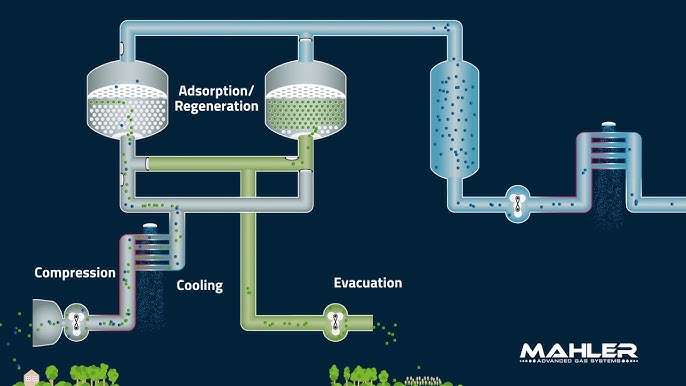
Pressure Swing Adsorption (PSA) is a widely used technique in both industrial and medical settings. PSA systems employ adsorbent materials, such as zeolites, which selectively absorb nitrogen from compressed air under high pressure. When the pressure is reduced, the adsorbed nitrogen is released, resulting in an oxygen-enriched gas stream typically containing 90-93% oxygen. Vacuum Swing Adsorption (VSA) is a similar process that utilizes vacuum conditions to regenerate the adsorbent, enhancing efficiency and reducing energy consumption.
Membrane Separation Technology
Membrane separation involves the use of semi-permeable membranes that allow specific gases to pass through more readily than others. In the context of oxygen production, membranes are designed to be more permeable to oxygen than nitrogen. This selective permeability enables the separation of oxygen from air. Membrane oxygen generators are compact and energy-efficient, making them suitable for applications such as portable oxygen concentrators and emergency oxygen supplies.
Cryogenic Air Separation
Cryogenic air separation units (ASUs) operate by cooling air to extremely low temperatures, around -300°F (-184°C), to liquefy it. The liquid air is then subjected to multi-stage fractional distillation, where oxygen is separated based on its boiling point. Large-scale cryogenic plants can produce up to 5,000 tons of oxygen per day, making this method ideal for industrial applications that require significant oxygen supply.
Laboratory and Small-Scale Methods
Electrolysis of Water
Electrolysis is a fundamental laboratory method for generating oxygen. By passing a direct electric current through water (H₂O), it is split into its constituent gases: hydrogen (H₂) and oxygen (O₂). This process requires electrodes and an electrolyte to facilitate ion movement. Electrolysis not only produces high-purity oxygen but also generates hydrogen as a valuable byproduct. While effective on a small scale, electrolysis requires significant electrical energy, which can impact its environmental footprint depending on the energy source.
Thermal Decomposition of Potassium Chlorate
Heating potassium chlorate (KClO₃) in the presence of a catalyst, such as manganese dioxide (MnO₂), leads to its decomposition into potassium chloride (KCl) and oxygen gas. This method is commonly used in laboratory settings to produce oxygen due to its simplicity and the availability of reagents. However, it is less economical and practical for large-scale oxygen production.
Catalytic Decomposition of Hydrogen Peroxide
Hydrogen peroxide (H₂O₂) can be decomposed into water (H₂O) and oxygen (O₂) by introducing a catalyst like manganese dioxide or enzymes such as catalase. This reaction is exothermic and releases oxygen gas, making it useful for laboratory oxygen generation and emergency oxygen supplies. Care must be taken to control the reaction conditions to prevent excessive heat generation.
Chemical Oxygen Generators
Chemical oxygen generators utilize reactions that release oxygen through the decomposition of oxygen-rich compounds. For instance, sodium chlorate (NaClO₃) can decompose to produce oxygen when heated. These generators are often used in emergency oxygen systems on aircraft and in other situations where on-demand oxygen production is required. While effective, these methods can be hazardous if not properly managed, as the reactions may be highly exothermic or explosive under uncontrolled conditions.
Environmental and Biological Methods
Photosynthesis
Photosynthesis is the natural process by which green plants, algae, and cyanobacteria convert carbon dioxide (CO₂) and water into glucose and oxygen using sunlight as an energy source. This biological method is the primary source of atmospheric oxygen, sustaining life on Earth. While essential for maintaining the planet's oxygen levels, photosynthesis is not utilized directly for industrial oxygen production due to scalability and practicality constraints.
Aerobic Respiration
Aerobic respiration is the process by which organisms, including plants and animals, consume oxygen to produce energy for cellular functions. While this is a critical biological process, it serves as a natural mechanism for oxygen utilization rather than oxygen production. However, maintaining healthy populations of photosynthetic organisms indirectly supports continuous oxygen generation in the environment.
Space and Extraterrestrial Oxygen Extraction
Lunar Soil Processing
Extracting oxygen from the Moon's regolith (soil) involves advanced techniques like molten regolith electrolysis and carbothermal reduction. Molten Regolith Electrolysis (MRE) uses high temperatures to liquefy lunar soil, allowing the separation of oxygen from metal oxides. Carbothermal reduction involves reacting lunar minerals with carbon-rich materials, such as methane, to release oxygen. These methods are pivotal for supporting future lunar habitats by providing oxygen for life support and fuel.
Mars Atmosphere Processing
The Martian atmosphere is primarily composed of carbon dioxide (CO₂). Extracting oxygen from this environment can be achieved through processes like glow-discharge dissociation, where high-energy plasma is used to split CO₂ molecules into oxygen and carbon monoxide. This method is being researched for use in future manned missions to Mars, enabling in-situ resource utilization and reducing the need to transport oxygen from Earth.
Laser Thermal Vacuum Metallurgy
Laser thermal vacuum metallurgy is an innovative technique for extracting oxygen from titanium dioxide (TiO₂) found in lunar regolith. High-powered lasers create a vacuum environment that facilitates the reduction of TiO₂, releasing oxygen gas. This technology holds promise for efficient oxygen extraction in extraterrestrial settings, contributing to the sustainability of space exploration missions.
Aquatic and Terrestrial Organisms' Oxygen Extraction
Aquatic Animals
Aquatic organisms, such as fish and amphibians, extract dissolved oxygen from water through specialized structures like gills. Oxygen diffuses from the water into the bloodstream, facilitated by counter-current exchange mechanisms that maximize oxygen absorption efficiency. This biological method is essential for the survival of aquatic life but is not applicable for direct oxygen production for human uses.
Terrestrial Animals
Terrestrial animals obtain oxygen directly from the surrounding air through respiratory systems. In humans and other mammals, oxygen is inhaled into the lungs, where it diffuses into the bloodstream and is transported to cells for aerobic respiration. While this process is vital for animal life, it serves as a natural oxygen consumption mechanism rather than a production method.
Comparative Overview of Oxygen Production Methods
| Method | Purity Level | Scalability | Applications | Advantages | Disadvantages |
|---|---|---|---|---|---|
| Fractional Distillation | 99.5%+ | High | Medical, Industrial, Welding | High purity, large-scale production | Energy-intensive, requires cryogenic equipment |
| Pressure Swing Adsorption (PSA) | 90-93% | Medium | Medical concentrators, On-site industrial use | Lower capital cost, on-site production | Lower purity compared to distillation, requires maintenance |
| Membrane Separation | Up to 95% | Medium | Portable concentrators, Emergency supplies | Compact, energy-efficient | Limited scalability, moderate purity |
| Electrolysis of Water | 99.9% | Low | Laboratory, Specialized industrial processes | High purity, hydrogen byproduct | Energy-intensive, not economical for large-scale use |
| Thermal Decomposition of Potassium Chlorate | Purity varies | Low | Laboratory, Emergency oxygen generation | Simplicity, availability of reagents | Less economical, potential hazards |
| Photosynthesis | N/A | N/A | Environmental sustainability | Natural, essential for life | Not applicable for industrial oxygen production |
| Molten Regolith Electrolysis | Controlled | Research/Space missions | Extraterrestrial habitats (Moon, Mars) |
Utilizes local resources | Technologically complex, energy requirements |
Advanced and Emerging Techniques
Carbothermal Reduction
Carbothermal reduction involves reacting oxygen-rich minerals with carbon-based materials at high temperatures to release oxygen. This method is particularly relevant for extracting oxygen from lunar ilmenite (FeTiO₃) using methane or other carbon sources. The process not only produces oxygen but also yields useful byproducts like metals and carbon monoxide, which can be utilized in space construction and life support systems.
Laser Thermal Vacuum Metallurgy
This cutting-edge technique employs high-powered lasers in a vacuum environment to reduce titanium dioxide (TiO₂), a common component of lunar regolith. The laser energy breaks the chemical bonds, releasing oxygen gas while producing titanium metal. This method promises efficient oxygen extraction with minimal logistical support, making it suitable for prolonged extraterrestrial missions.
Glow-Discharge Dissociation
Glow-discharge dissociation is a plasma-based method used to split carbon dioxide (CO₂) into oxygen and carbon monoxide. This technique is particularly useful for oxygen production on Mars, where CO₂ is abundant in the atmosphere. By applying an electric field, a plasma is generated that dissociates CO₂ molecules, facilitating the extraction of oxygen for life support and fuel generation in Martian habitats.
Applications of Obtained Oxygen
Medical Applications
Oxygen is essential in medical settings for supporting patients with respiratory issues, during surgeries, and in intensive care units. Medical-grade oxygen produced through fractional distillation and PSA is delivered via oxygen tanks and concentrators. The high purity and reliability of these production methods ensure that patients receive the necessary oxygen for treatment and recovery.
Industrial and Manufacturing
In industrial processes, oxygen is used for purposes such as welding, cutting metals, and in the production of steel and other materials. High-purity oxygen enhances combustion efficiency and ensures the quality of manufactured products. Cryogenic distillation remains the preferred method for supplying large-scale industrial oxygen needs due to its scalability and purity levels.
Aerospace and Space Missions
Oxygen production is critical for life support systems in spacecraft and extraterrestrial habitats. Techniques like molten regolith electrolysis and laser thermal vacuum metallurgy are being developed to utilize local lunar or Martian resources, reducing dependency on Earth-supplied oxygen. This local production is vital for the sustainability of long-term space missions and the establishment of lunar or Martian bases.
Environmental and Sustainable Technologies
Beyond direct human uses, oxygen production methods contribute to environmental sustainability. Photosynthesis by plants and algae helps maintain atmospheric oxygen levels and sequester carbon dioxide, playing a crucial role in mitigating climate change. Additionally, innovative oxygen generation techniques are being integrated into renewable energy systems to enhance overall environmental impact.
Conclusion
Obtaining oxygen is a multifaceted endeavor that spans natural biological processes, industrial-scale technologies, laboratory techniques, and advanced extraterrestrial methods. Industrial approaches like fractional distillation and pressure swing adsorption dominate large-scale oxygen production due to their efficiency and scalability. In contrast, laboratory methods such as electrolysis and thermal decomposition are essential for smaller-scale applications and educational purposes. The burgeoning field of space exploration necessitates innovative oxygen extraction techniques to support life and operations beyond Earth. As technology advances, the methods for obtaining oxygen continue to evolve, offering improved efficiency, purity, and sustainability across diverse applications.
References
Last updated February 11, 2025