

- Generates Samples: The Metropolis-Hastings (MH) algorithm is a foundational Markov Chain Monte Carlo (MCMC) method for drawing samples from target probability distributions, particularly when direct sampling is computationally infeasible or mathematically intractable.
- Versatile Estimation: These generated samples are then instrumental in estimating various properties of the distribution, including means, variances, moments, and especially posterior expectations in Bayesian inference.
- Acceptance Mechanism: The algorithm iteratively proposes new samples and decides to accept or reject them based on a carefully calculated probability, ensuring the sequence of samples eventually converges to the desired target distribution.
The Metropolis-Hastings algorithm stands as a cornerstone in the realm of computational statistics, providing a robust framework for sampling from complex probability distributions. Its utility is particularly pronounced in scenarios where direct sampling methods are impractical or impossible, such as in high-dimensional spaces or when the distribution is known only up to a normalizing constant. By generating a Markov chain whose stationary distribution matches the desired target, MH allows practitioners to effectively explore and estimate characteristics of these intricate distributions. This method has profound implications across various scientific and engineering disciplines, including Bayesian inference, statistical physics, and machine learning.
The Core Mechanics of Metropolis-Hastings
At its heart, the Metropolis-Hastings algorithm is an iterative process that constructs a sequence of samples, forming a Markov chain. The defining characteristic of a Markov chain is that the probability of the next state depends solely on the current state, not on the sequence of events that preceded it. Over a sufficient number of iterations, this chain of samples converges to the desired target distribution, allowing for accurate estimations of its properties.
Navigating the Sampling Process
The algorithm's elegance lies in its ability to generate samples even when the exact form of the probability distribution is not fully known. This is achieved through a two-step process at each iteration: proposing a new sample and then deciding whether to accept or reject it.
Proposal Distribution: Suggesting the Next Step
Central to the MH algorithm is the proposal distribution, also known as the proposal kernel. This distribution dictates how a new candidate sample is generated from the current sample. The choice of proposal distribution is critical for the efficiency and convergence of the algorithm. It can be symmetric, where the probability of proposing x from y is the same as y from x (this simplifies the acceptance criteria and is characteristic of the original Metropolis algorithm), or it can be asymmetric, which necessitates the inclusion of the Hastings correction factor in the acceptance probability calculation.
Acceptance Criteria: Guiding Towards the Target
Once a candidate sample is proposed, the algorithm evaluates an acceptance probability. This probability determines whether the proposed sample is added to the chain or if the current sample is retained for the next iteration. The acceptance probability is carefully constructed to ensure that the long-run distribution of accepted samples aligns with the target distribution. It involves comparing the ratio of the target distribution's probability density at the proposed and current states, along with a correction factor if the proposal distribution is asymmetric. This mechanism guarantees that states with higher probability density in the target distribution are more likely to be visited.
An illustrative mindmap detailing the interconnected components and applications of the Metropolis-Hastings algorithm.
The Power of Estimation with MH
Once a sufficiently long Markov chain of samples has been generated and has converged to the target distribution, these samples can be used for various statistical estimation tasks. This is where the true power of the Metropolis-Hastings algorithm shines, enabling the quantification of properties for distributions that might otherwise remain opaque.
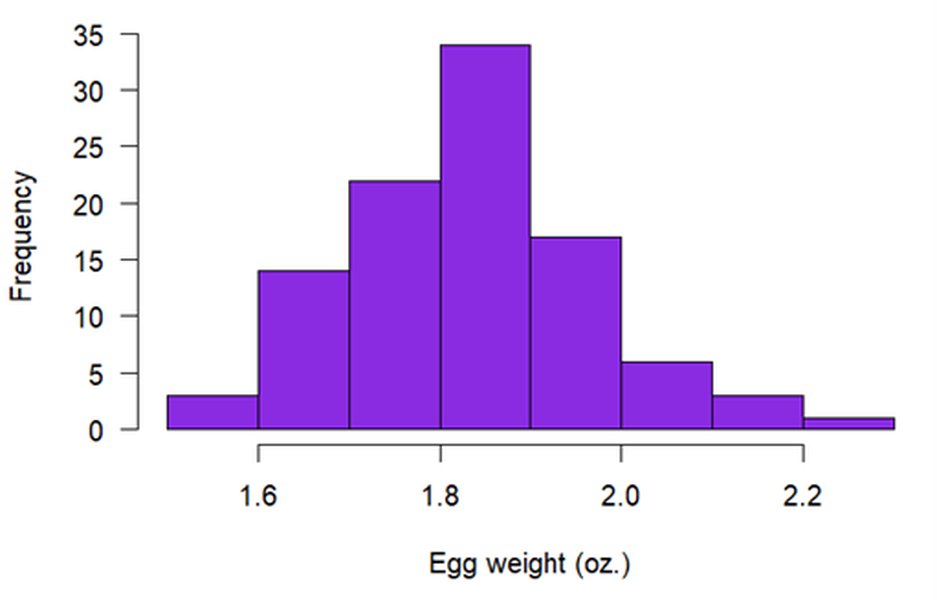
An example of a frequency distribution, illustrating the type of data that the Metropolis-Hastings algorithm can help analyze by estimating its underlying probability distribution.
Estimating Moments and Beyond
The samples generated by the MH algorithm serve as a representative dataset from the target distribution. From this dataset, one can readily compute empirical estimates of various statistical moments, such as the mean, variance, and higher-order moments. For instance, the sample mean of the generated values provides an estimate of the true mean of the target distribution. Similarly, the sample variance offers an estimate of the true variance.
Beyond simple moments, these samples are invaluable for constructing credible intervals in Bayesian inference, allowing researchers to quantify uncertainty around parameter estimates. They can also be used to approximate complex integrals, calculate probabilities of specific events, and even visualize the shape of the underlying distribution.
Bayesian Inference: A Key Application
One of the most prominent applications of the Metropolis-Hastings algorithm is in Bayesian inference. In Bayesian statistics, the goal is often to estimate the posterior distribution of parameters given observed data. This posterior distribution can be analytically intractable, meaning it cannot be solved directly. MH provides a solution by generating samples from this complex posterior, allowing researchers to characterize its shape, find credible intervals for parameters, and make predictions.
This video, "Metropolis-Hastings - Explained", provides a clear explanation of the Metropolis-Hastings algorithm. It delves into the theoretical underpinnings and practical implications of this powerful MCMC method, which is crucial for understanding its role in sampling from complex probability distributions and its applications in fields like Bayesian inference.
Considerations for Effective Implementation
While powerful, the practical implementation of the Metropolis-Hastings algorithm requires careful consideration of several factors to ensure accurate and efficient estimation.
Diagnosing Convergence
A critical aspect of using MH is ensuring that the Markov chain has adequately converged to the target distribution. If the chain has not converged, the samples may not accurately represent the distribution, leading to biased estimates. Various diagnostic tools exist to assess convergence, such as trace plots, autocorrelation plots, and Gelman-Rubin statistics. It's common practice to discard an initial set of samples, known as the "burn-in" period, to mitigate the influence of the starting value and allow the chain to reach its stationary distribution.
Choosing the Right Proposal Distribution
The choice of proposal distribution significantly impacts the efficiency of the MH algorithm. A poorly chosen proposal can lead to slow convergence or a low acceptance rate, resulting in a large number of discarded samples and inefficient exploration of the target distribution. An ideal proposal distribution should be similar in shape to the target distribution and allow for efficient movement across the parameter space. Different variants, such as independent Metropolis-Hastings or random-walk Metropolis-Hastings, employ different strategies for the proposal distribution.
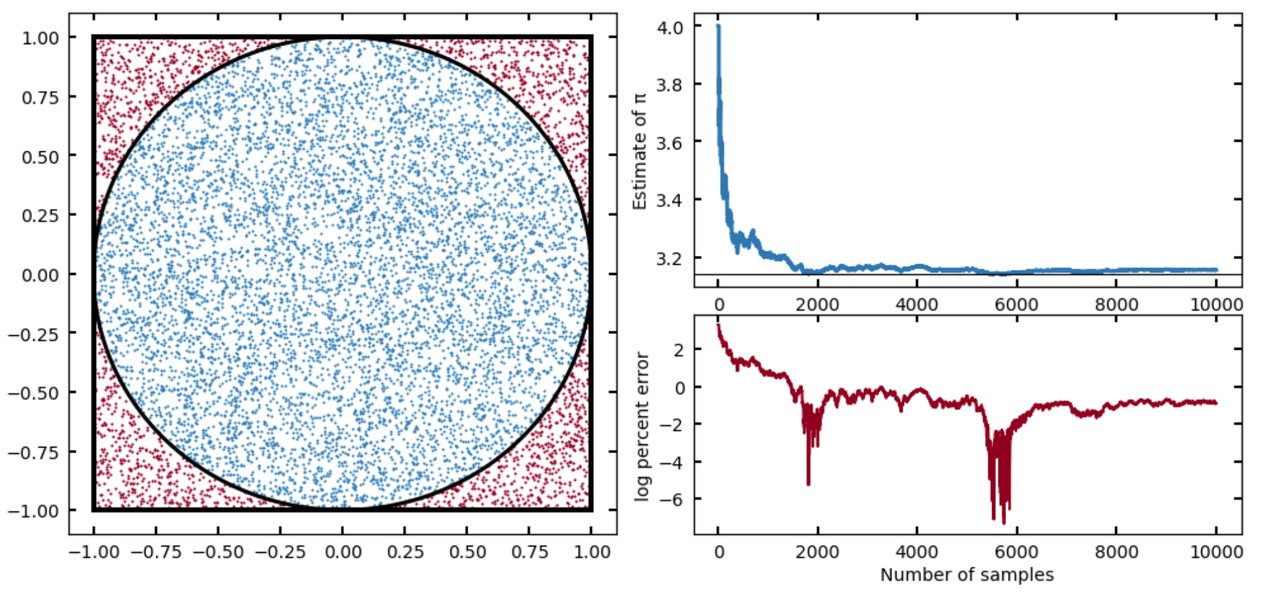
A visual representation of sampling from a target distribution, highlighting how proposed samples (red) are accepted or rejected to gradually approximate the desired distribution (blue).
Key Characteristics and Advantages
The widespread adoption of the Metropolis-Hastings algorithm is due to its distinct characteristics and numerous advantages in statistical modeling and estimation.
| Characteristic | Description | Advantage in Estimation |
|---|---|---|
| Markov Chain Property | Each sample depends only on the previous one. | Guarantees theoretical convergence to a stationary distribution (the target). |
| Accept/Reject Mechanism | Determines whether a proposed sample is kept or discarded. | Ensures that the generated samples accurately reflect the desired probability distribution. |
| Flexibility with Target Density | Can sample from distributions known only up to a normalizing constant. | Crucial for complex distributions where the normalizing constant is intractable (e.g., Bayesian posteriors). |
| Versatility | Applicable to a wide range of probability distributions and dimensions. | Solves sampling problems across various scientific and engineering fields. |
| Foundation for Advanced MCMC | Serves as the basis for many more sophisticated MCMC algorithms. | Provides a stepping stone for developing more efficient and specialized sampling methods. |
This table summarizes the fundamental characteristics of the Metropolis-Hastings algorithm and their direct benefits in the context of statistical estimation.
Frequently Asked Questions (FAQ)
What is the primary purpose of the Metropolis-Hastings algorithm?
How does Metropolis-Hastings handle distributions that are difficult to sample directly?
What is the difference between a proposal distribution and a target distribution?
Why is convergence diagnosis important when using Metropolis-Hastings?
Can the Metropolis-Hastings algorithm be used in Bayesian inference?
Conclusion
The Metropolis-Hastings algorithm remains a powerful and indispensable tool in the statistical and machine learning toolkit. Its ability to navigate and extract meaningful information from complex, high-dimensional probability distributions—even those known only up to a normalizing constant—has revolutionized areas like Bayesian inference and statistical physics. By iteratively proposing and accepting samples, it constructs a Markov chain that ultimately converges to the desired target, allowing for robust estimation of various distributional properties. While careful attention to aspects like proposal distribution selection and convergence diagnostics is crucial, the algorithm's versatility and efficacy cement its place as a cornerstone of modern computational statistics.
Recommended Further Reading
- How is the Metropolis-Hastings algorithm applied to Bayesian posterior estimation?
- What are the common challenges and solutions in Metropolis-Hastings convergence diagnostics?
- How does Metropolis-Hastings compare to other MCMC methods like Gibbs sampling?
- What strategies can be used for optimizing proposal distributions in Metropolis-Hastings?