
Comprehensive Guidance for Your Microplastics Dissertation
Structured Approach to Developing a 6000-Word Dissertation
Key Takeaways
- Interdisciplinary Research: Combining microbiology, environmental science, and toxicology to explore microplastic pollution.
- Comprehensive Methodologies: Utilizing advanced techniques such as FTIR, SEM, and bioinformatics for thorough analysis.
- Impact Assessment: Evaluating both environmental and health implications of microplastics and nanoplastics.
Introduction
Background
Microplastic pollution has emerged as a critical environmental issue, with rivers like the River Thames serving as major conduits for plastic waste transport to marine ecosystems. Understanding the distribution, degradation, and accumulation of microplastics (MPs) and nanoplastics (NPs) in urban river systems is essential for developing effective mitigation strategies. The interdisciplinary approach of the Microplastics Research Team aims to address these challenges by integrating microbiological studies, toxicological assessments, and advanced analytical techniques.
Research Objectives
The primary objectives of this dissertation include:
- Quantifying and characterizing the distribution patterns of MPs and NPs in surface waters and sediments of the River Thames.
- Investigating the degradation pathways of MPs into NPs.
- Exploring the interactions between microbial communities and microplastics, including biofilm formation and potential bioremediation.
- Assessing the toxicological impacts of MPs and their degradation products on bacterial and mammalian cells.
Literature Review
Current Understanding of Microplastics in River Systems
Recent studies have documented the pervasive presence of MPs in river systems worldwide. The River Thames, due to its high population density and urban infrastructure, exhibits significant MP contamination. Research indicates that MPs originate from various sources, including urban runoff, wastewater discharge, and atmospheric deposition. The literature highlights the role of combined sewer overflows (CSOs) as major point sources of MPs in urban rivers.
Degradation Processes of Microplastics
MPs undergo several degradation processes in aquatic environments:
- Photodegradation: UV radiation breaks down plastic polymers, leading to fragmentation.
- Mechanical Abrasion: Physical forces cause MPs to fragment into smaller particles.
- Chemical Degradation: Oxidative and hydrolytic reactions alter the chemical structure of plastics.
- Biological Degradation: Microbial activity can contribute to the breakdown of MP polymers.
Microbial Interactions with Microplastics
Microbes can colonize MPs, forming biofilms that influence the fate and transport of these particles. Biofilms facilitate the adsorption of pollutants and pathogens, potentially turning MPs into vectors for harmful microorganisms. Additionally, certain bacteria possess the capability to degrade plastic polymers, offering a potential avenue for bioremediation.
Toxicological Impacts of Microplastics
MPs and their degradation products can exert various toxicological effects on both microbial and mammalian cells. These effects include:
- Cytotoxicity: Induction of cell death and inhibition of cell proliferation.
- Genotoxicity: DNA damage leading to mutations and potential cancer development.
- Endocrine Disruption: Interference with hormonal systems.
- Immunomodulation: Alteration of immune responses.
Methodology
Study Area
The research focuses on the River Thames, specifically targeting areas such as Royal Docks and selected upstream and downstream sites. These locations were chosen based on their varying levels of urbanization and proximity to potential MP sources.
Sample Collection
Comprehensive sampling strategies include both surface water and sediment collection:
-
Surface Water Sampling: Utilizing custom-designed nets with 300μm mesh to collect 1L water samples at different depths and seasonal intervals.
-
Sediment Sampling: Employing Van Veen grab samplers to collect surface (0-5cm) and subsurface (5-10cm) sediment samples using a stratified random sampling approach.
Analytical Techniques
Advanced analytical methods will be employed to characterize MPs and NPs:
- FTIR Spectroscopy: For polymer identification and characterization.
- SEM Microscopy: To examine surface morphology and degradation patterns.
- Bioinformatics Analysis: Analyzing bacterial rRNA gene sequences to identify microbial communities associated with MPs.
- Antibiotic Susceptibility Testing: Assessing resistance profiles of bacterial isolates.
- Toxicological Assays: Including ELISA, SOS Chromotest, and Comet assay to evaluate the impacts on cell viability and genetic integrity.
Data Analysis
Data will be analyzed using statistical software to identify correlations between MP concentrations, microbial community structures, and toxicological outcomes. Spatial and temporal variations will be assessed to understand the dynamics of MP pollution in the River Thames.
Results and Discussion
Distribution of Microplastics in Surface Waters and Sediments
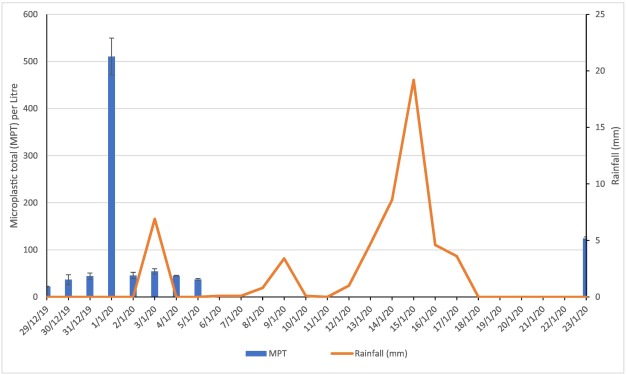
Initial findings indicate significant spatial variations in MP concentrations, with higher densities observed near urbanized sections and CSO discharge points. Sediment samples reveal elevated MP levels in areas with reduced flow velocity, suggesting these zones act as accumulation hotspots.
Degradation Pathways and Nanoplastic Formation
Evidence of photodegradation and mechanical abrasion was observed, leading to the formation of NPs. SEM images show surface weathering patterns, while FTIR spectra indicate chemical alterations consistent with oxidative degradation.
Microbial Biofilms and Their Role in MP Dynamics
Bacterial communities associated with MPs exhibit diverse compositions, including potential degraders capable of breaking down plastic polymers. Biofilm formation enhances the adhesion of pollutants, transforming MPs into vectors for pathogens and toxic compounds.
Toxicological Impacts on Bacterial and Mammalian Cells
Toxicological assays reveal that MPs and NPs can induce cytotoxic and genotoxic effects. Bacterial isolates exposed to MPs show altered antibiotic susceptibility profiles, while mammalian cell cultures exhibit reduced viability and increased DNA damage upon exposure to plastic degradation products.
Environmental and Health Implications
The accumulation of MPs in river sediments poses long-term environmental risks, including the disruption of aquatic ecosystems and the potential transfer of MPs through food webs. The toxicological effects observed underscore the need for comprehensive risk assessments and mitigation strategies to protect both environmental and public health.
Conclusion
This dissertation provides an in-depth analysis of microplastic pollution in the River Thames, highlighting the intricate interactions between MPs, microbial communities, and environmental factors. The findings emphasize the critical role of urban infrastructure in influencing MP distribution and accumulation patterns. Moreover, the toxicological impacts on both bacterial and mammalian cells underscore the urgent need for effective management and remediation strategies. Future research should focus on expanding the scope of studies to include long-term monitoring and the development of innovative bioremediation techniques to mitigate the adverse effects of microplastics in urban waterways.
References
- Devereux, R., Ayati B., Newport, D., Jayaratne, R., Westhead, E.K. (2023). "The Great Source" - microplastic abundance and characteristics along the River Thames. Marine Pollution Bulletin, 191, 114965.
- Devereux, R., Westhead, E.K., Jayaratne, R., Ayati B., Newport, D. (2023). Impact of the Covid-19 pandemic on microplastic abundance along the River Thames. Marine Pollution Bulletin, 189, 114763.
- Devereux, R., Kebede-Westhead, E., Jayaratne, R., Newport, D. (2022). Microplastic abundance in the Thames River during the New Year period. Marine Pollution Bulletin, 177, 113534.
- Sattar, A.A., Good, C.R., Saletes, M., Brandão, J., Jackson, S.K. (2022). Endotoxin as a Marker for Water Quality. International Journal of Environmental Research and Public Health, 19(24), 16528.
- BBC Future. (2024). How 4th of July fireworks pollute the air and might damage your health.
Last updated January 23, 2025