
Microsoft's AI Model Strategy: Current Capabilities and Future Horizons
A comprehensive analysis of Microsoft's approach to developing and deploying powerful AI models across its ecosystem
Microsoft's AI Model Development at a Glance
- Microsoft isn't just partnering with AI companies – it's actively developing its own advanced AI models called MAI (Microsoft Artificial Intelligence)
- The company has established a dual strategy: leveraging partnerships with leading AI providers while building proprietary models to reduce dependency
- Microsoft is planning to invest approximately $80 billion in fiscal 2025 to expand AI-capable data centers and infrastructure
Microsoft's Current AI Model Ecosystem
Microsoft has established a robust ecosystem of AI models through both strategic partnerships and in-house development efforts. This dual approach has positioned the company as a major player in the AI space, offering a diverse range of models to developers and businesses.
Strategic Partnerships and Integrations
At the center of Microsoft's AI strategy is its long-standing partnership with OpenAI. The Azure OpenAI Service provides developers access to powerful models like GPT-3.5 and GPT-4.5, enabling organizations to build sophisticated AI applications without developing models from scratch. This collaboration has been mutually beneficial, with Microsoft providing the infrastructure and OpenAI delivering cutting-edge AI capabilities.
Beyond OpenAI, Microsoft has expanded its model offerings through the Azure AI Model Catalog, which includes models from various providers:
| Provider | Notable Models | Primary Capabilities |
|---|---|---|
| OpenAI | GPT-4, GPT-3.5, DALL-E | Text generation, reasoning, image creation |
| Meta | Llama 3 family | Open-weight language models |
| Mistral AI | Mistral Large, Mistral Medium | Efficient language processing |
| Stability AI | Stable Diffusion | Image generation |
| Core42 | Jais | Multilingual capabilities |
| Nixtla | TimeGPT | Time-series analysis |
In-House Model Development
What's particularly significant is Microsoft's accelerating efforts to develop its own AI models. Reports indicate that Microsoft has created a family of models known as MAI (Microsoft Artificial Intelligence), which are designed to compete directly with models from companies like OpenAI and Anthropic.
The MAI Model Family
The MAI models have been developed internally and reportedly perform nearly as well as leading models from OpenAI and Anthropic on commonly accepted benchmarks. These models include both general-purpose AI capabilities and specialized reasoning-optimized variants that excel at complex problem-solving and decision-making tasks.
Industry-Adapted Models
Microsoft has also introduced adapted AI models specifically tailored for various industries. These models are fine-tuned using industry-specific data to address unique needs across sectors like healthcare, manufacturing, and retail. For example, in the healthcare sector, Microsoft has developed multimodal medical imaging foundation models in collaboration with organizations like Providence and Paige.ai for specialties such as radiology and cardiology.
Microsoft's Future AI Model Strategy
Microsoft's plans for AI model development are ambitious and multifaceted, focusing on both infrastructure expansion and technological innovation.
Infrastructure Investment
Microsoft is planning to invest approximately $80 billion in fiscal 2025 to expand its data centers, which will support AI development and cloud-based applications. This significant investment underscores the company's commitment to building the infrastructure necessary for training and hosting sophisticated AI models.
However, it's worth noting that Microsoft has recently scaled back some of its global AI data center expansion plans amid emerging low-cost model trends. This adjustment suggests that the company is responsive to changes in the AI landscape and is willing to adapt its strategy accordingly.
Strategic Independence
A key aspect of Microsoft's future AI strategy appears to be reducing its dependence on external partners. While the company maintains its partnership with OpenAI, the development of in-house models indicates a desire for greater self-sufficiency.
Reports suggest that Microsoft is considering releasing its MAI models later this year as an application programming interface (API), which would allow outside developers to integrate these models into their own applications. This move would position Microsoft as not just a consumer of AI models but also a provider, competing directly with companies like OpenAI, Anthropic, and others.
Exploration of Alternative Models
In addition to developing its own models, Microsoft is also exploring alternative AI models from companies such as xAI, Meta, Anthropic, and DeepSeek as potential replacements for OpenAI technology in its Copilot bot. This exploration suggests that Microsoft is keeping its options open and is willing to integrate the best available technology, regardless of source.
This radar chart visualizes Microsoft's current and projected AI capabilities compared to key competitors. Microsoft shows a balanced approach across all dimensions, with particularly strong partnership strategies and infrastructure investment. The projection for 2026 indicates Microsoft's plans to enhance its model innovation and industry specialization capabilities while maintaining strong partnerships.
AI Across Microsoft's Product Ecosystem
Microsoft is integrating AI models across its extensive product ecosystem, embedding AI capabilities into various tools and platforms to enhance productivity and user experience.
AI Builder and Power Platform
AI Builder, a feature of the Microsoft Power Platform, allows users to create and use AI models for business process optimization without extensive coding knowledge. Users can choose from prebuilt models for common scenarios or create custom models tailored to specific business needs.
Microsoft 365 and Dynamics 365
Microsoft has integrated AI capabilities like Copilot into its productivity tools, including Microsoft 365 and Dynamics 365. These integrations leverage the company's AI models to provide intelligent assistance, automate tasks, and enhance decision-making across various business processes.
Azure AI Foundry
Azure AI Foundry serves as a platform where developers can access and utilize both pre-trained and customizable AI models. This service allows businesses to host, run, and manage AI-driven applications without extensive infrastructure costs.
This mindmap illustrates the comprehensive structure of Microsoft's AI model ecosystem, showcasing the company's dual approach of in-house development and strategic partnerships, as well as the various channels through which these models are deployed.
Microsoft's Unique Approach to AI Model Development
Microsoft's approach to AI model development sets it apart from many competitors in several key ways:
Balancing Partnerships and Independence
Unlike companies that focus exclusively on either developing their own models or relying on partnerships, Microsoft has adopted a balanced approach. The company maintains strong partnerships with leading AI providers while simultaneously investing in its own model development capabilities. This strategy provides Microsoft with flexibility and reduces its dependence on any single partner.
Industry Specialization
Microsoft's development of industry-adapted models demonstrates a commitment to addressing specific business needs rather than just providing general-purpose AI capabilities. By tailoring models to industries like healthcare, manufacturing, and retail, Microsoft is positioning itself as a provider of specialized AI solutions that can deliver more immediate value to businesses.
Integration Across Platforms
Microsoft's integration of AI capabilities across its extensive product ecosystem gives it a unique advantage. By embedding AI models into widely used tools like Microsoft 365, Dynamics 365, and the Power Platform, the company can drive adoption and demonstrate the practical value of AI in everyday business contexts.
This video explores Microsoft's new AI LAM (Language-Action Model), showcasing how Microsoft is pushing the boundaries of AI automation. LAM represents a significant advancement in Microsoft's AI capabilities, demonstrating the company's commitment to developing models that can understand and execute complex instructions. By automating complex tasks more effectively than general-purpose models like GPT-4, LAM highlights Microsoft's focus on creating practical, action-oriented AI solutions.
Images: Microsoft's AI Infrastructure
Microsoft's ambitious AI model development plans are supported by significant investments in physical infrastructure. These images showcase the scale and scope of Microsoft's commitment to building the foundation for advanced AI capabilities.

Microsoft's planned $80 billion investment in AI data centers for 2025 underscores its commitment to AI infrastructure

The site of Microsoft's planned $3.3 billion AI data center in Mount Pleasant, Wisconsin
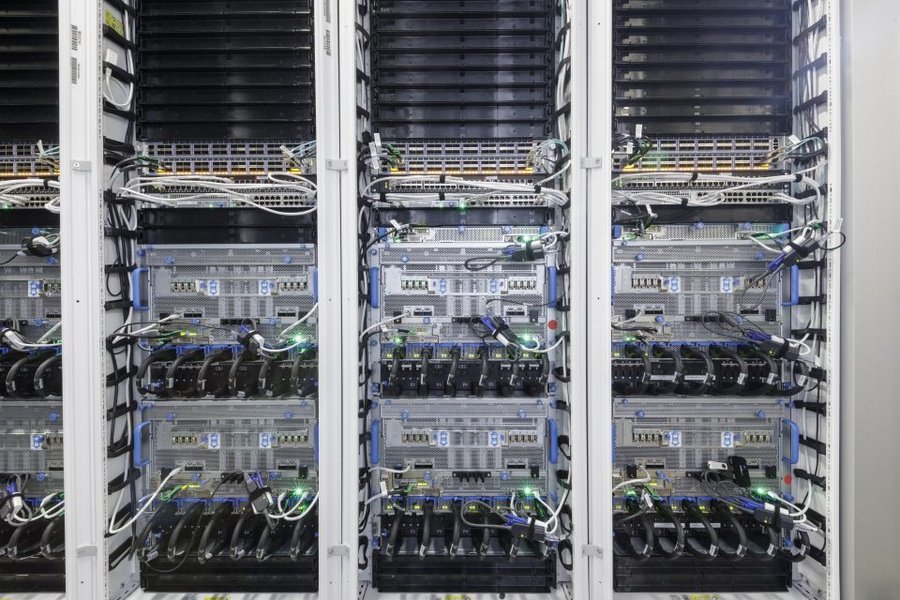
Interior of a Microsoft data center supporting Azure OpenAI Service
Frequently Asked Questions
References
-
Azure AI Model Catalog – Foundation Models | Microsoft Azure
-
Microsoft developing AI reasoning models to compete with OpenAI - Reuters
- Microsoft introduces new adapted AI models for industry - Microsoft Blog
- Azure AI Foundry portal and model catalog overview - Microsoft Learn
- AI Builder overview - Microsoft Learn
- Microsoft plans $80 billion AI infrastructure investment in 2025 - Tech Startups
-
Announcing new models, customization tools, and enterprise agent upgrades in Azure AI Foundry - Azure Blog
Recommended Searches
Last updated April 4, 2025