
Use Cases for Mid-Size SUVs
Exploring Versatility, Safety, and Market Trends
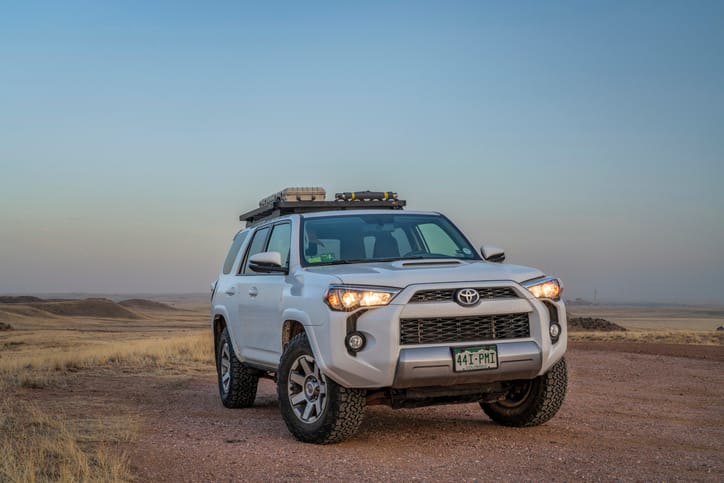
Key Highlights
- Family & Cargo Utility: Ample seating, flexible cargo configurations, and family-friendly features.
- Versatility & Off-Road Capability: Options for AWD/4WD for diverse weather conditions and occasional off-road adventures.
- Advanced Tech & Safety: Equipped with state-of-the-art infotainment, driver-assist, and connectivity features.
Detailed Analysis of Use Cases
Family Transportation and Practical Utility
Mid-size SUVs have become a popular choice among families and practical users due to their balanced combination of passenger space and cargo capacity. These vehicles typically accommodate five to seven passengers, making them ideal for family transportation. Journal articles and market research report that the spacious interiors not only facilitate comfortable seating arrangements but also allow for foldable rear seats to optimize cargo space.
Family-Friendly Features
Reputable sources, including automotive journals and consumer reports, emphasize that mid-size SUVs come with several family-oriented features. These include advanced safety technologies such as collision warning systems, lane-keeping assists, and rear-seat entertainment systems. For example, Consumer Reports highlight that models like the Toyota Highlander and Ford Explorer are equipped with comprehensive safety features tested by the Insurance Institute for Highway Safety (IIHS).
In addition, the modular seating arrangements offer flexibility; many models provide a third-row option for larger families, and the ability to fold rear seats down further increases the cargo compartment capacity. Market analysis indicates that this adaptability is a key factor in the continuously growing demand for these vehicles.
Versatility and Outdoor Capabilities
The versatility of mid-size SUVs extends well into the realm of outdoor activities. With the availability of all-wheel drive (AWD) or four-wheel drive (4WD) systems, these vehicles are well-suited for navigating various road conditions, including snow, rain, and light off-road terrain. Technical papers emphasize that the higher ground clearance offered by many mid-size SUVs provides additional stability and traction, appealing to consumers who enjoy activities such as camping, hiking, skiing, and other outdoor adventures.
Off-Road Options and Towing Capacity
According to market research from automotive technology studies, mid-size SUVs balance everyday commuting with off-road capabilities. Models like the Ford Explorer have proven performance on mild off-road trails, while still providing the convenience of everyday use. Additionally, several models also offer towing capacities sufficient for small trailers, boats, or camping equipment—a feature attested by various technical evaluations and market surveys.
Advanced Technology and Comfort
The modern mid-size SUV is as much a technology hub as it is a family or off-road vehicle. Research from technical papers and automotive reviews highlights that new models incorporate cutting-edge infotainment systems, which include features such as touch-screen interfaces, voice control, smartphone integrations, and even Wi-Fi hotspots. These systems elevate the driving experience, ensuring that connectivity requirements of the digital age are met without compromising on comfort or ease of use.
Safety and Driver Assistance Systems
Safety is a top priority in the mid-size SUV segment. Numerous automotive journals have documented the integration of advanced driver-assistance systems (ADAS) that incorporate adaptive cruise control, collision avoidance, and lane departure warnings. Detailed technical assessments by institutes like the IIHS demonstrate high-performance ratings in side, front, and rollover tests. Such research underscores that these safety features not only protect passengers but also enhance the overall reliability of mid-size SUVs in various driving conditions.
Market Trends and Economic Insights
The market research on mid-size SUVs shows that they hold a significant position in the automotive sector. Studies published in market research journals and industry reports have noted a robust growth trajectory for the mid-size SUV segment. For instance, market projections indicate that the mid-size SUV market is expected to expand significantly over the next decade, driven by rising disposable incomes, evolving consumer lifestyles, and increasing demand for vehicles that offer both utility and luxury.
Furthermore, comparative cost-benefit analyses reveal that while full-size SUVs offer more space, mid-size models strike an optimal balance between cost, fuel efficiency, and advanced features. This balance makes them appealing not only as family vehicles but also as daily commuters capable of undertaking long road trips without compromising on performance or comfort. Such market insights are backed by sources including major automotive market research reports and financial forecasting papers.
Comprehensive Table of Use Cases
| Use Case | Key Features | Sources & Evidence |
|---|---|---|
| Family Transportation | Spacious interiors, seating for 5-7, family-friendly safety features, rear-seat entertainment |
TopSpeed - Best Family Cars U.S. News - Midsize SUVs |
| Cargo Versatility & Practicality | Flexible seating, foldable rear seats, ample luggage space | Car and Driver - Cargo Capacity |
| Outdoor and Off-Road Performance | 4WD/AWD availability, increased ground clearance, towing capacity for light trailers | Market Research Future |
| Advanced Technology & Safety | Infotainment systems, ADAS, adaptive cruise control, collision avoidance |
Road & Track - Best Mid-Size SUVs IIHS - Safety Ratings |
| Cost-Effective Utility | Balanced fuel efficiency, optimal size, affordable relative to full-size SUVs | Kelley Blue Book - Best Mid-Size SUVs |
Additional Technical and Market Insights
Technical Insights from Journals and Papers
Peer-reviewed technical papers highlight that innovation in mid-size SUVs is largely driven by an ongoing integration of new automotive technologies. Manufacturers are investing in hybrid engines and electric variants to cater to a more environmentally conscious market, aiming to achieve better fuel efficiency without compromising on performance. Technical reports also point out that enhanced structural design and innovative safety features improve the overall vehicle dynamics, which is a key determinant of the high safety ratings observed in mid-size SUV models.
Market Research and Economic Projection
Reports from market research firms such as Market Research Future and Polaris Market Research project that the mid-size SUV market is set to nearly double in value over the next decade. These findings are backed up by economic analyses and consumer behavior studies, where a notable shift towards SUVs has been observed. Consumer trends indicate a growing preference for vehicles that blend luxury with practicality—making mid-size SUVs an increasingly attractive proposition for both urban commuters and families alike.
In addition, detailed cost analyses provided by auto industry reviewers show that while a full-size SUV may offer more space, the cost-to-benefit ratio of mid-size SUVs is generally more favorable. This is because mid-size models maintain a fine balance between advanced technological features, fuel economy, and overall performance. Reports published by respected automotive sources confirm that these vehicles are ideally positioned in the current market landscape.
References
- TopSpeed - Best Family Cars
-
U.S. News - Midsize SUVs
- Car and Driver - Cargo Capacity
- Market Research Future
- IIHS - Safety Ratings
Recommended Further Queries
Last updated March 16, 2025