
Unlocking Efficiency: The Mind Map Approach to Lean Management
Visually navigating waste reduction, continuous improvement, and value creation in any organization.
Key Insights into Lean Management Mind Mapping
- Comprehensive Visualization: A mind map for Lean management visually organizes core concepts, principles, tools, and processes, making complex information digestible and interconnected.
- Enhanced Understanding and Application: By mapping out Lean principles and tools, organizations can clarify relationships, facilitate training, support problem-solving, and drive continuous improvement initiatives effectively.
- Versatile Tool for Optimization: From defining customer value to establishing pull systems and pursuing perfection, mind maps serve as dynamic aids for brainstorming, process mapping, and communicating Lean strategies across diverse sectors.
Lean Management, a systematic philosophy rooted in the Toyota Production System, focuses on maximizing value for the customer while relentlessly minimizing waste. This approach fosters a culture of continuous improvement, where every employee is empowered to identify inefficiencies and contribute to process refinement. Integrating Lean principles with mind mapping offers a powerful visual framework for understanding, implementing, and optimizing organizational processes.
Mind maps are highly effective for Lean management because they transform abstract concepts into clear, interconnected visual representations. They are invaluable for breaking down complex ideas, illustrating relationships between various principles and tools, and facilitating collaborative brainstorming sessions. This visual organization significantly aids in problem-solving, training, and strategic implementation, making the pursuit of perfection—a fundamental Lean goal—more accessible and achievable.
The Genesis and Core Philosophy of Lean Management
Lean management originated from the Toyota Production System (TPS) in the mid-20th century, established with the core goals of continuous improvement (Kaizen), respect for people, and the systematic elimination of waste. Its primary focus is on delivering customer value as efficiently as possible. This philosophy extends beyond manufacturing, finding broad application in diverse sectors including healthcare, software development, education, and service industries. A key cultural aspect of Lean is the empowerment of all employees to actively identify issues and contribute to process improvements, fostering an environment of constant learning and adaptation.
The Five Foundational Principles of Lean
Lean management is built upon five interconnected principles, which form a robust framework for creating efficient and effective organizations. These principles can be effectively visualized in a mind map to highlight their interdependencies and the flow of value creation:
- Define Value: The initial and critical step involves clearly defining what constitutes "value" from the customer's perspective. This means identifying what the customer is genuinely willing to pay for and systematically removing any activities or features that do not contribute to this perceived worth. Anything that does not add customer value is considered waste.
- Map the Value Stream: Once value is defined, the next principle involves mapping out the entire value stream. This comprehensive visual illustration identifies all activities, processes, and steps involved in delivering the product or service to the customer. It also outlines the individuals responsible for each step, along with their inputs and outputs, serving as a powerful tool for identifying waste and inefficiencies.
- Create Flow: After mapping the value stream, the objective shifts to ensuring a continuous workflow. This principle aims to make each step progress smoothly without interruptions or bottlenecks, eliminating tasks that are performed too early, too late, or too often. The goal is for every step to flow seamlessly from beginning to end, delivering the final product to the customer with maximum efficiency.
- Establish Pull: Lean organizations adopt a "pull" production approach, where production is directly triggered by actual customer demand, rather than relying on forecasts or building up inventory in anticipation ("push" systems). This minimizes inventory, significantly reduces waste, and enables the organization to respond precisely to real-time customer needs, thereby enhancing overall efficiency.
- Pursue Perfection: The fifth and arguably most crucial principle is the relentless pursuit of perfection through continuous improvement. This embeds Lean thinking and ongoing process refinement into the organizational culture. It involves constantly analyzing the results of small, incremental improvements and experiments, fostering innovation, and managing risk by testing ideas before committing significant investment.
Understanding and Visualizing Waste in Lean (Muda)
A fundamental aspect of Lean management is the identification and elimination of various forms of waste, known as "Muda." Visualizing these waste types through a mind map helps teams quickly grasp where inefficiencies occur and how to target them. The most common types of waste include:
- Overproduction: Producing more than is needed or sooner than it is needed, leading to excess inventory and storage costs.
- Waiting (Idle Time): Periods of inactivity for people, materials, or equipment due to bottlenecks or poor scheduling.
- Transportation: Unnecessary movement of materials or products, which adds no value and increases the risk of damage.
- Unnecessary Processing: Performing redundant or overly complex steps that do not add value from the customer's perspective.
- Inventory Excess: Holding more raw materials, work-in-progress, or finished goods than immediately required, tying up capital and space.
- Motion: Inefficient or unnecessary movements by people (e.g., searching for tools, walking long distances), leading to wasted time and effort.
- Defects and Rework: Producing products or services that are faulty or require correction, leading to wasted materials, time, and customer dissatisfaction.
- Underutilization of Employees: Failing to utilize the full skills, creativity, and knowledge of employees, which limits innovation and problem-solving potential.
By mapping these wastes, organizations can create a shared understanding and develop targeted strategies for elimination.
Essential Lean Tools and Techniques for Continuous Improvement
Lean management employs a diverse set of tools and techniques designed to achieve its objectives of waste reduction and continuous improvement. A mind map can effectively categorize and connect these tools to the core Lean principles, providing a holistic view of their application:
| Tool/Technique | Description and Purpose | Associated Lean Principles/Benefits |
|---|---|---|
| Kaizen | A philosophy of continuous, incremental improvement involving all employees, from management to front-line workers, in all areas of the company. | Pursue Perfection, Employee Empowerment, Cultural Shift |
| 5S Methodology | A systematic approach to workplace organization focusing on five Japanese terms: Seiri (Sort), Seiton (Set in order), Seiso (Shine), Seiketsu (Standardize), and Shitsuke (Sustain). | Waste Reduction (Motion, Inventory), Enhanced Efficiency, Safety |
| Kanban | A visual management system using cards or boards to signal tasks and manage workflow. It facilitates communication and limits Work-In-Progress (WIP). | Establish Pull, Create Flow, Inventory Reduction, Visual Control |
| Value Stream Mapping (VSM) | A visual tool to illustrate every step in a process chain, identifying where value is created and where waste exists (non-value-adding activities). | Map the Value Stream, Waste Identification, Process Optimization |
| Just-In-Time (JIT) | A production strategy that pulls parts through production based on actual customer demand, minimizing inventory and associated costs. | Establish Pull, Inventory Reduction, Waste Elimination |
| Poka-Yoke (Error Proofing) | Designing processes or products to prevent errors from occurring or to make them immediately detectable, based on the idea of prevention. | Pursue Perfection, Quality Improvement, Defect Reduction |
| Gemba Walks | The practice of managers visiting the "real place" where work happens to observe processes, gather information, identify problems firsthand, and work with employees on solutions. | Respect for People, Problem Identification, Continuous Improvement |
| PDCA Cycle (Plan-Do-Check-Act) | An iterative four-step management method used for the control and continuous improvement of processes and products. | Pursue Perfection, Problem Solving, Experimentation |
| Root Cause Analysis | Techniques (e.g., Five Whys, Ishikawa/Fishbone Diagrams) used to identify the fundamental underlying causes of problems rather than just addressing symptoms. | Problem Solving, Waste Elimination, Continuous Improvement |
| Andon | A visual management tool that alerts operators to abnormalities or problems, empowering them to stop the production process to resolve issues immediately. | Quality Control, Problem Detection, Flow Assurance |
| Bottleneck Analysis | Identifying the slowest process or constraint in a system and determining steps to improve it to maximize the efficiency of the entire production system. | Create Flow, Efficiency Improvement, Throughput Optimization |
Visualizing Lean Performance with a Radar Chart
To effectively assess and communicate progress in Lean implementation, a radar chart can offer a powerful visual representation of an organization's strengths and areas for improvement across various Lean dimensions. This chart can be based on perceived performance, internal assessments, or aggregated metrics, providing a holistic view of the Lean journey.
The radar chart above illustrates a hypothetical comparison between an organization's 'Current State' and its 'Target State' across several key Lean dimensions. Each axis represents a crucial aspect of Lean implementation, such as 'Waste Reduction,' 'Process Flow Smoothness,' and 'Continuous Improvement Culture.' By plotting the current and desired performance levels, this chart clearly highlights areas where the organization is performing well and identifies critical gaps that require focused attention and strategic initiatives to bridge. For example, if 'Pull System Implementation' shows a significant disparity, it indicates a need for more concentrated efforts in this area. This visual tool serves as an excellent discussion point for leadership and teams, facilitating goal setting and progress tracking in the Lean journey.
Harnessing Mind Maps for Lean Management
Mind maps are powerful visual tools that can significantly enhance the understanding, planning, and execution of Lean management initiatives. By organizing ideas and structuring information around a central concept, they are particularly useful for summarizing projects, facilitating brainstorming, improving processes, and effective problem-solving.
The mind map above provides a comprehensive visual overview of Lean Management, with "Lean Management Mind Map" as its central idea. Major branches extend to "Principles," "Tools & Techniques," "Types of Waste (Muda)," "Benefits," and "Implementation Aspects." Each major branch further details key concepts and sub-elements, such as the five core Lean principles (Define Value, Map Value Stream, Create Flow, Establish Pull, Pursue Perfection) and specific tools like Kaizen, 5S, and Kanban. It also outlines the various types of waste targeted by Lean and the organizational benefits derived from its application. This visual structure clarifies the interrelationships between these components, making it an invaluable aid for training, strategic planning, and identifying areas for continuous improvement. It allows for a holistic understanding of how each element contributes to the overall Lean philosophy.
Mind Mapping for Process Improvement and Problem Solving
Mind maps are highly effective for mapping processes, illustrating workflows, and identifying areas ripe for continuous improvement. When applied to problem-solving, particularly in conjunction with tools like Root Cause Analysis (e.g., the Five Whys or Ishikawa diagrams), mind maps can visually present complex problem analyses, allowing teams to delve into underlying causes rather than just symptoms. This visual clarity fosters better collaboration and decision-making.
Mind Mapping for Lean Six Sigma Projects
This video demonstrates how mind maps are utilized within Lean Six Sigma projects to thoroughly flesh out innovations and maintain a complete project view. It highlights the practical application of mind mapping as a strategic tool for comprehensive project planning and ideation in the context of continuous improvement.
The provided video "Lean Six Sigma Tools: Mind Map" showcases how mind mapping can be an integral part of Lean Six Sigma projects. It illustrates how a mind map helps to fully develop and visualize an innovation or project from conception to completion. This aligns perfectly with Lean's emphasis on thorough planning and continuous improvement, ensuring all aspects of a project are considered and organized. The video serves as a practical example of how mind maps can be used to capture, structure, and communicate complex project information, making it easier for teams to collaborate and track progress towards Lean objectives.
Applications of Mind Mapping in Lean Practice
Beyond theoretical understanding, mind maps have practical applications that directly support Lean implementation:
Summarizing and Presenting Lean Projects
Mind maps can summarize Lean Six Sigma projects, their core themes, and implementation plans, making them significantly easier to understand, especially for upper management and stakeholders. This visual summarization ensures that complex project details are conveyed succinctly and effectively.
Brainstorming and Idea Generation
During brainstorming sessions, mind maps help manage divergent-to-convergent thinking. They facilitate the gathering of diverse ideas and aid in the early identification of potential trouble spots or opportunities for improvement. This structured approach to brainstorming ensures no valuable idea is overlooked.
Communication and Knowledge Sharing
Well-designed mind maps can effectively communicate complex Lean concepts, project statuses, or problem analyses to various stakeholders. They serve as a shared visual language that enhances clarity and promotes alignment across teams and departments.
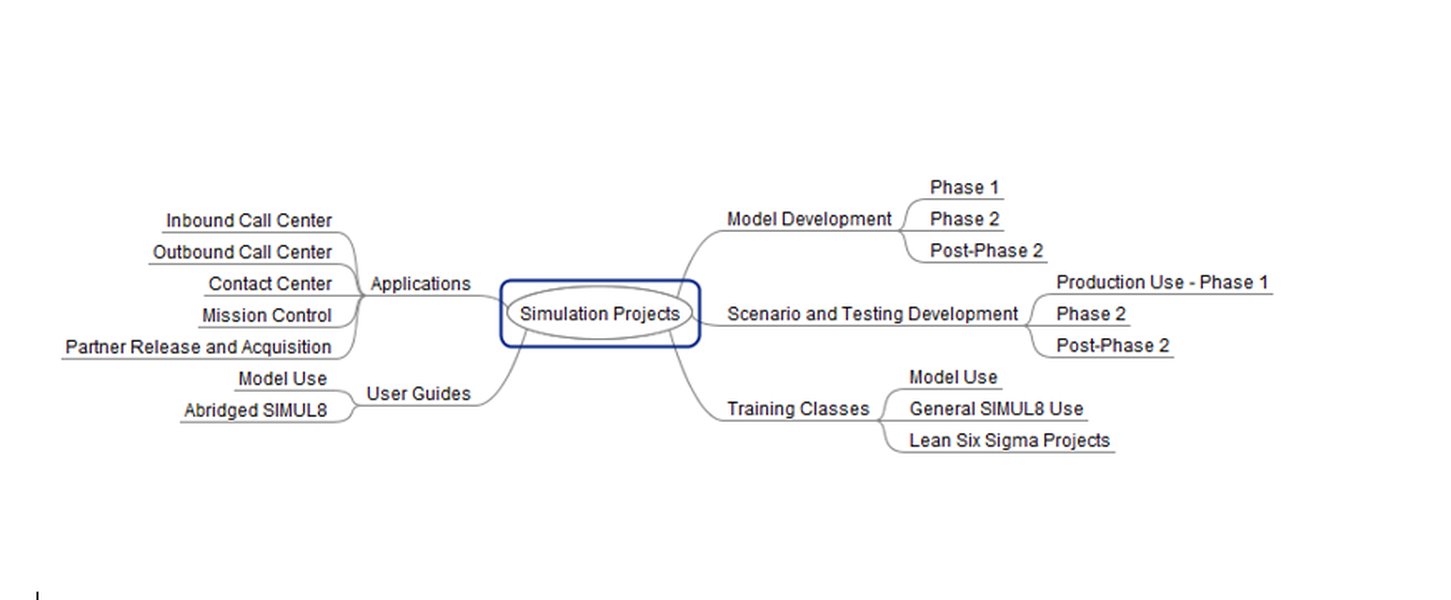
Mind Map for Problem-Solving in Lean Six Sigma
This image depicts a detailed mind map used in a Lean Six Sigma context, illustrating the structured approach to problem-solving. It visually branches out from a central problem, exploring potential causes, solutions, and action plans, thereby facilitating a clear and comprehensive analysis for continuous improvement.
Learning and Training
Mind maps serve as excellent visual guides for individuals learning about Lean management. They help learners understand where they are in their Lean journey and where they are heading, making complex theoretical concepts more tangible and easier to retain.
Tools and Software for Mind Mapping
While paper-based mind maps are effective for creative problem-solving, digital tools like MindMeister or MindManager offer advanced features. These tools often provide templates specifically designed for Lean management and process improvement, facilitating team collaboration, real-time updates, and easy sharing of complex Lean initiatives.
Frequently Asked Questions (FAQ) about Lean Management and Mind Maps
What is Lean Management?
Why use a mind map for Lean Management?
What are the five core principles of Lean?
What types of waste does Lean aim to eliminate?
Can mind maps be used with other Lean tools?
Conclusion
The synergy between Lean management and mind mapping creates a powerful approach to organizational excellence. By visually structuring the core philosophy, principles, key wastes, and essential tools of Lean, mind maps provide a clear, comprehensive, and engaging overview. This visual clarity not only aids in understanding complex concepts but also serves as an invaluable tool for planning, training, and driving continuous improvement initiatives. Whether for summarizing projects, facilitating problem-solving, or fostering a culture of ongoing refinement, leveraging mind maps enables organizations to effectively implement Lean thinking, ultimately leading to greater operational efficiency and enhanced customer value.
Recommended Further Exploration
- How to conduct Value Stream Mapping for process optimization?
- Understanding the 8 wastes (Muda) in Lean manufacturing.
- Implementing Kaizen for continuous improvement in a team setting.
- Exploring advanced Lean Six Sigma methodologies and tools.