
Unlocking Peak Performance: The Profound Impact of Mindfulness on Executive Function
Cultivating Cognitive Agility and Emotional Regulation Through Mindful Practices
Mindfulness, a practice rooted in focusing awareness on the present moment without judgment, has emerged as a powerful tool for enhancing executive functions. These crucial cognitive skills are essential for managing daily tasks, planning, problem-solving, and adapting to new situations. The integration of mindfulness into daily routines can significantly bolster these abilities, leading to improved attention, emotional regulation, and overall cognitive agility.
Key Insights into Mindfulness and Executive Function
- Mindfulness acts as a mental training ground: Consistent mindfulness practices, similar to physical exercise, strengthen the "muscles" of executive function, improving skills like attention, working memory, and impulse control.
- Emotional regulation is a critical link: A key mechanism through which mindfulness enhances executive function is by fostering emotional acceptance and better emotional regulation, which in turn reduces mental fatigue caused by worry and anxiety.
- Specific cognitive gains are observed: Research consistently shows that mindfulness interventions lead to substantial improvements in inhibitory control, with promising, though sometimes inconsistent, benefits for working memory and cognitive flexibility.
Understanding Executive Functions: The Brain's Command Center
Executive functions (EFs) are a collection of higher-order cognitive processes that enable individuals to control and manage their thoughts, emotions, and actions. They are fundamental for goal-directed behavior and adapting to novel or challenging situations. Think of executive functions as the brain's air traffic control system, managing incoming information and orchestrating appropriate responses. These skills are vital across the lifespan, influencing academic success, professional performance, and personal well-being.
The Core Components of Executive Function
Research, notably by Miyake et al. (2000), has fractionated executive functions into three distinct, yet interrelated, domains:
- Inhibitory Control: This is the ability to suppress dominant or automatic responses in favor of more appropriate ones. It involves resisting impulses, distractions, and irrelevant information. Mindfulness has shown consistent improvements in this area, enhancing one's ability to filter out unwanted interference and maintain focus.
- Working Memory: This refers to the capacity to hold and manipulate information in mind over short periods. It's crucial for reasoning, problem-solving, and decision-making. While findings can be more variable, some studies indicate mindfulness can bolster working memory capacity.
- Cognitive Flexibility (or Shifting): This is the ability to switch between different tasks, perspectives, or mental sets fluidly. It allows for adaptive thinking and problem-solving. The evidence for mindfulness's direct impact on cognitive flexibility is emerging and sometimes inconsistent, but integrated mindfulness-based interventions show promise.
These three core components work in concert to facilitate complex behaviors such as planning, prioritizing, organizing, and self-regulation. When executive functions are optimized, individuals can navigate life's complexities with greater ease and effectiveness.
The Mechanism of Mindfulness: How It Enhances Executive Functions
Mindfulness, often practiced through meditation, directly influences the neural mechanisms associated with executive control. By cultivating a non-judgmental awareness of the present moment, individuals can better manage internal distractions (like ruminative thoughts) and external stimuli. This practice strengthens key brain regions, particularly the dorsolateral prefrontal cortex (dlPFC) and the anterior cingulate cortex (ACC), which are central to executive functioning.

Mindfulness exercises can enhance executive functioning by fostering greater self-awareness and attention control.
Cultivating Attention and Focus
A primary benefit of mindfulness meditation is the cultivation of attention skills. By directing focus to a specific anchor, such as the breath or bodily sensations, practitioners train their minds to remain present and to gently redirect attention when it wanders. This systematic training directly strengthens attentional networks, which are foundational to all executive functions. Studies have shown that even short-term meditation practice can improve the ability to filter out distractions, as measured by tasks like the Stroop test.
Regulating Emotions and Reducing Cognitive Load
One of the most significant ways mindfulness impacts executive function is through emotional regulation. Stress, worry, and anxiety can overwhelm the prefrontal cortex, leading to "executive functioning fatigue" and impaired cognitive abilities. Mindfulness helps individuals become more attuned to their emotions, recognizing them quickly and accurately without being consumed by them. This enhanced emotional acceptance and ability to regulate emotional states reduce the cognitive load, allowing for clearer thinking, better decision-making, and improved problem-solving skills.
For example, if the desired outcome is non-judgmental awareness, but the current behavior is rumination, mindfulness practice helps the ACC facilitate the modification of that behavior to achieve the desired goal. This suggests that the relationship between mindfulness and executive functioning is not purely cognitive but also involves important affective components.
Impact on Brain Connectivity
Research indicates that mindfulness training can increase functional connectivity between brain regions associated with executive function. Specifically, it strengthens connections between the dlPFC—a hub of the executive control network—and other frontoparietal regions that coordinate executive function. These neural changes suggest a more efficient and integrated brain network supporting enhanced cognitive control.
The Evidence: What Research Says
A growing body of research supports the positive effects of mindfulness on executive functions, across various populations and age groups. While some newer studies suggest that short-term mindfulness training might not always yield superior improvements compared to relaxation techniques for all executive functions, the overall consensus points to significant benefits, particularly in inhibitory control.
Consistent Gains in Inhibitory Control
Numerous studies consistently report that mindfulness interventions, including short-term and long-term practices, lead to substantial improvements in inhibitory control. This is a crucial skill for managing impulses and maintaining focus in distracting environments. For instance, experienced meditators often perform better on tasks requiring the suppression of automatic responses.
Varied Results for Working Memory and Cognitive Flexibility
While inhibitory control shows strong and consistent improvements, the findings for working memory and cognitive flexibility tend to be more varied. Some studies demonstrate gains in these areas, particularly in contexts like youth with depression where an 8-session mindfulness training showed improvement in executive function. However, other reviews suggest that while benefits exist, they might not be as universally consistent as those for inhibition. This highlights the importance of considering each sub-function of executive control when evaluating the impact of mindfulness.
This video explores how mindfulness empowers individuals and improves executive function, offering a concise overview of the benefits and mechanisms discussed in this article.
Benefits Across Different Populations
Mindfulness practices have shown efficacy in improving executive functions in a diverse range of individuals:
- Children and Adolescents: Programs teaching mindfulness to children have been associated with improved executive function skills, including attention, impulse control, working memory, cognitive flexibility, and emotion regulation. This is particularly relevant for students struggling with these skills, including those with ADHD.
- Adults: Adults engaging in regular mindfulness practices experience enhanced attentional control, reduced rumination, and improved emotional regulation, all contributing to better executive functioning.
- Individuals with ADHD: Mindfulness is consistently found to be effective in increasing attention, working memory, self-monitoring, emotion/mood regulation, conflict attention, and impulse control in individuals with ADHD. It acts as a "gym" for strengthening these executive function muscles.
Practical Applications of Mindfulness for Executive Function Improvement
Incorporating mindfulness into daily life doesn't require extensive retreats or hours of meditation. Even short, consistent practices can yield significant benefits. Here are practical ways to cultivate mindfulness to enhance executive functions:
Simple Mindfulness Techniques
- Mindful Breathing: Focusing on the sensation of your breath as it enters and leaves your body. This helps anchor you to the present moment and is a fundamental practice for cultivating attention.
- Body Scan Meditation: Systematically bringing awareness to different parts of your body, noticing sensations without judgment. This can enhance interoceptive awareness and reduce physical tension.
- Mindful Walking: Paying attention to the sensations of walking – the feel of your feet on the ground, the movement of your legs, the rhythm of your breath.
- Mindful Eating: Engaging all your senses while eating, noticing the smell, taste, texture, and appearance of your food.
- Pausing and Reflecting: Taking short breaks throughout the day to pause, observe your thoughts and feelings, and consciously choose your response rather than reacting impulsively.
These practices act like "gym sessions" for your brain, strengthening the neural pathways associated with executive functions. The key is consistency, even if for short durations (e.g., five minutes daily).
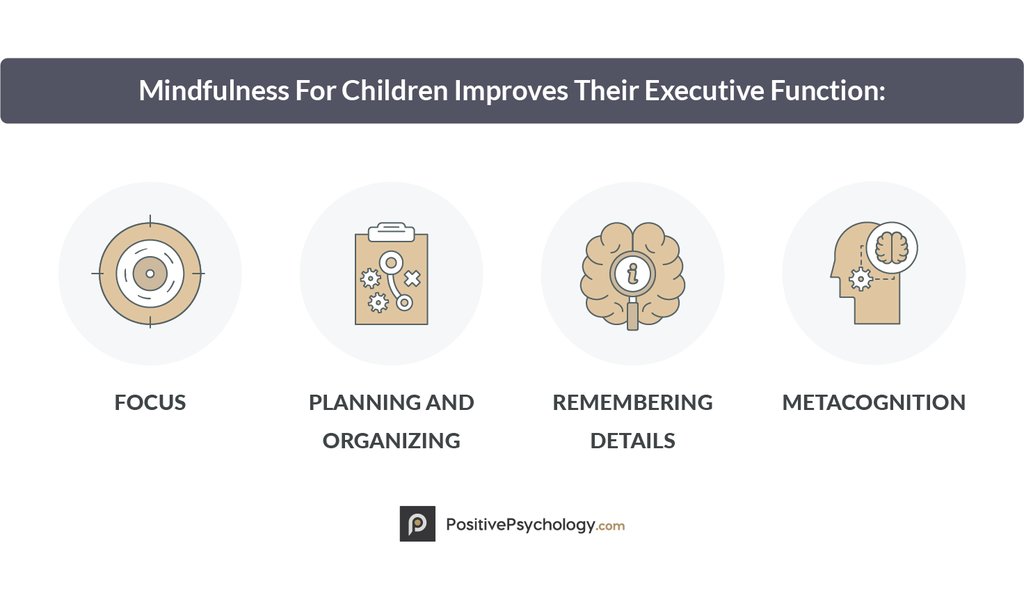
Mindfulness activities tailored for children can significantly enhance their executive function skills, contributing to better self-regulation and focus.
Mindfulness in Educational Settings
For students, particularly those struggling with executive function deficits, mindfulness can be a game-changer. Implementing mindfulness exercises in schools can help students self-regulate, reduce stress, and improve critical skills like attention, focus, and emotional management. Apps designed for mindfulness can also be valuable tools, leading to improved productivity, focus, and reduced stress among students.
Comparing Mindfulness with Other Interventions
While mindfulness is highly effective, it's beneficial to understand its unique contributions compared to other cognitive or behavioral interventions.
| Intervention Method | Primary Mechanisms of Improvement | Impact on Inhibitory Control | Impact on Working Memory | Impact on Cognitive Flexibility | Impact on Emotional Regulation |
|---|---|---|---|---|---|
| Mindfulness Meditation | Present moment awareness, non-judgmental observation, attentional training, emotional acceptance, stress reduction. | Consistent, substantial improvement. | Variable, but often positive gains. | Variable, some positive results with acute practice. | Strong improvement, key to overall EF enhancement. |
| Acute Exercise | Physiological arousal, neurochemical changes, mood enhancement. | Less direct or consistent impact. | Variable, some studies show gains. | Variable. | Enhances positive mood and self-efficacy (psycho-emotional). |
| Cognitive Training | Targeted drills, repetitive practice of specific cognitive tasks. | Directly targets and improves specific skills. | Directly targets and improves specific skills. | Directly targets and improves specific skills. | Indirectly improved through reduced cognitive load. |
| Relaxation Techniques | Physiological relaxation, stress reduction. | Less specific improvement compared to mindfulness. | Limited direct impact. | Limited direct impact. | Aids in general stress reduction. |
This table illustrates that while other interventions have their merits, mindfulness offers a comprehensive approach, particularly strong in enhancing inhibitory control and emotional regulation, which are foundational to overall executive function improvement.
A Visual Overview of Mindfulness's Influence
To further illustrate the multifaceted impact of mindfulness on executive functions and related areas, consider the radar chart below. This chart provides a subjective representation of how different aspects of mindfulness practice contribute to various executive function domains and broader cognitive well-being.
As depicted in the radar chart, consistent mindfulness practice is theorized to significantly boost performance across various executive function domains. Its strongest influence is typically seen in inhibitory control and emotional regulation, leading to a profound improvement in an individual's ability to manage their cognitive and emotional landscape compared to a baseline without mindfulness.
Challenges and Considerations
While the benefits of mindfulness are compelling, it's important to acknowledge some nuances. Short-term mindfulness training, particularly very brief sessions, might not always lead to improvements in executive functions beyond what general relaxation techniques can achieve. This suggests that the duration and consistency of practice play a crucial role. Furthermore, research sometimes faces challenges in defining and measuring mindfulness consistently across studies, leading to varied results for certain executive function sub-domains.
However, the overarching evidence strongly supports mindfulness as a valuable intervention for enhancing executive functions, especially when integrated as a consistent practice. The "no right or wrong" approach to mindfulness makes it accessible and adaptable for individuals of all ages and abilities, emphasizing gradual progress and self-compassion.
Frequently Asked Questions (FAQ)
What are executive functions?
How does mindfulness meditation improve executive function?
Is short-term mindfulness effective for executive function?
Can mindfulness help individuals with ADHD improve executive functions?
What are some simple mindfulness exercises I can try?
Conclusion
Mindfulness offers a compelling and scientifically supported path to enhancing executive functions. By cultivating present-moment awareness, emotional regulation, and focused attention, individuals can significantly improve their ability to plan, prioritize, control impulses, and adapt to challenges. Whether for students, adults, or those with specific executive function deficits like ADHD, consistent mindfulness practice serves as a powerful "mental gym" that strengthens these vital cognitive muscles. The benefits extend beyond mere cognitive improvement, fostering greater emotional well-being and resilience in the face of life's demands. Embracing mindfulness is an investment in a more focused, emotionally balanced, and cognitively agile self.
Recommended Further Exploration
- Explore the specific brain changes that occur with regular mindfulness practice and their link to executive function.
- Investigate targeted mindfulness programs designed to assist individuals with ADHD in improving their executive function skills.
- Examine how prolonged meditation practices might influence the maintenance or improvement of executive functions throughout the aging process.
- Delve into the comprehensive Mindfulness-Based Stress Reduction (MBSR) program and its documented effects on cognitive abilities and overall well-being.
References
Last updated May 21, 2025