
Miracles: Divine Intervention or Nature's Extremes?
Exploring the complex relationship between the supernatural, natural laws, and events that defy explanation.
Key Insights into Miracles
- Supernatural Definition: Traditionally, miracles are defined as events that transcend or violate known natural laws, attributed to a divine or supernatural cause.
- Natural Explanations: Some perspectives suggest miracles might involve rare natural phenomena, extraordinary timing orchestrated by a higher power, or divine action working subtly through existing natural processes.
- Faith and Science Interplay: The discussion around miracles often highlights the tension and potential compatibility between scientific understanding of consistent natural laws and belief in divine intervention that can supersede these laws.
Defining the Miraculous: Beyond the Ordinary
The concept of a miracle has captivated human thought for millennia. At its core, a miracle is generally understood as an event that cannot be readily explained by the established laws of nature or current scientific understanding. Consequently, such events are often attributed to a source beyond the natural world – a supernatural or divine power. This definition inherently positions miracles as distinct from ordinary occurrences, marking them as interventions or manifestations that transcend the predictable workings of the universe.
Philosophers and theologians have long grappled with this definition. Some, like C.S. Lewis, described miracles straightforwardly as "an interference with Nature by supernatural power." Others emphasize the element of wonder and inexplicability they evoke. The Stanford Encyclopedia of Philosophy notes that miracles are often conceptualized as "violations of natural law," signifying events that nature, left to its own devices, could not produce. This highlights the fundamental tension: are miracles truly supernatural, or are they natural events we simply don't fully understand yet?
The Supernatural Perspective: Acts of Divine Power
Why Miracles Point Beyond Nature
The primary argument for the supernatural nature of miracles rests on their apparent contradiction of established scientific principles and natural regularities. Events frequently cited in religious traditions, such as the resurrection of Jesus Christ, Moses parting the Red Sea, or instantaneous, medically inexplicable healings, are presented as occurrences that defy biological, physical, or chemical laws. From this viewpoint, natural explanations are deemed insufficient because the very essence of these events involves an agency operating outside or above the natural order.
Divine Intervention as Cause
Many theological frameworks assert that miracles are direct acts of God or a divine entity. They serve as signs, demonstrations of power, or interventions intended to fulfill a specific purpose, often reinforcing faith or delivering aid. This perspective emphasizes that the source of the miracle is a conscious, supernatural will, rather than random chance or unknown natural forces. The belief is that the Creator of natural laws retains the authority and ability to suspend or override them.
Distinguishing True Miracles
Some religious viewpoints also differentiate between 'true' miracles attributed to a divine source for benevolent purposes and 'false' miracles potentially orchestrated by deceptive forces. This distinction further anchors the concept of miracles within a supernatural framework, where the origin and intent are paramount.
Exploring Natural Explanations: Nature's Hidden Depths?
While the traditional view holds miracles as firmly supernatural, alternative perspectives explore whether some events described as miracles could have explanations rooted in the natural world, albeit extraordinary ones. This doesn't necessarily negate divine involvement but reframes how it might occur.
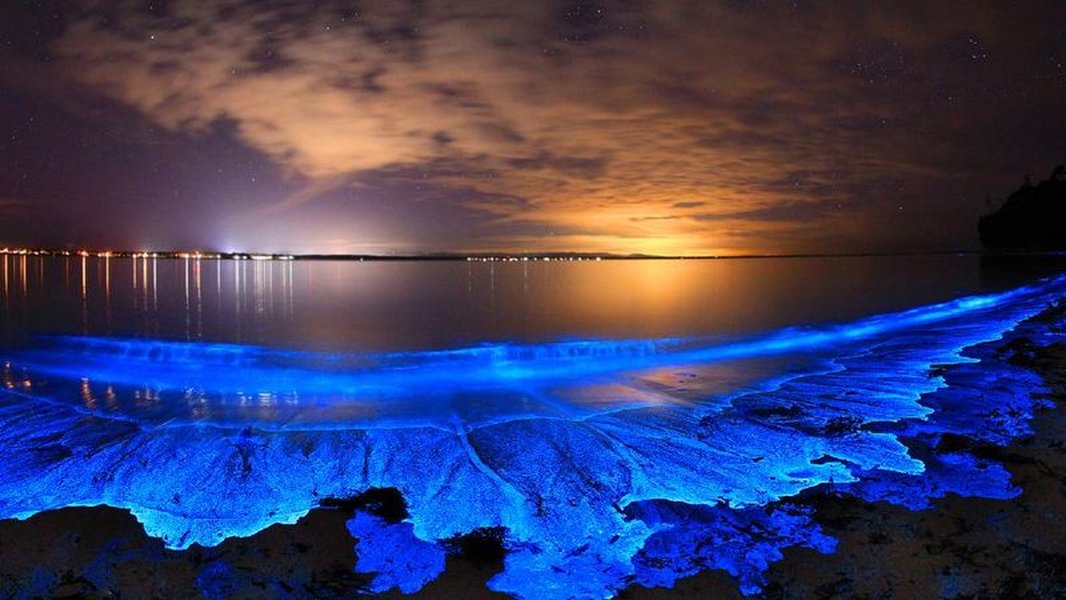
Bioluminescent plankton can create seemingly magical glowing shores, a natural phenomenon that inspires wonder.
Rare or Misunderstood Natural Phenomena
Some argue that events perceived as miracles might be rare natural occurrences that were not understood by observers at the time, or perhaps are still not fully explained by modern science. History is replete with examples where phenomena once considered magical or divine were later explained through scientific discovery. Could some historical miracle accounts fall into this category?
The Miracle of Timing and Providence
Another perspective suggests that miracles might not always involve the *violation* of natural laws but rather the *orchestration* of natural events by a divine hand. This could involve perfect timing – for example, a storm ceasing precisely when prayed for, or a rare confluence of events leading to a rescue. In this view, God might work within the framework of natural laws, guiding events in ways that are highly improbable but not strictly impossible according to physics or biology. This concept is sometimes referred to as divine providence acting through natural means.
For instance, explanations have been proposed for events like the "Miracle of the Loaves and Fishes," suggesting potential natural phenomena related to resource availability or distribution, possibly guided by divine influence rather than a complete suspension of natural principles.

Giant's Causeway features hexagonal basalt columns formed by ancient volcanic activity, a striking example of nature's artistry often mistaken for the supernatural.
Limitations of Natural Explanations
However, proponents of the supernatural view argue that natural explanations often seem strained or inadequate, especially when considering the totality of reported miracles or specific events like resurrections. They contend that reducing all such accounts to mere coincidence, unknown natural laws, or misinterpretation fails to address the core claims of divine intervention described in historical and religious texts.
Perspectives on Miracles: A Comparative Overview
Understanding miracles involves navigating diverse viewpoints, from strict supernaturalism to potential natural explanations. The following radar chart visualizes hypothetical ratings for different perspectives on key aspects related to miracles. It contrasts the 'Classical Theological View' (emphasizing direct divine intervention), a 'Scientific Skepticism View' (prioritizing natural laws and empirical evidence), and a 'Providential View' (seeing divine action working through natural processes).
This chart illustrates the varying emphasis placed on different elements by each perspective. For example, the Classical Theological View strongly emphasizes direct supernatural intervention and violation of natural law, whereas Scientific Skepticism prioritizes empirical testability and scientific plausibility. The Providential View finds a middle ground, highlighting divine orchestration through nature.
Mindmap: Unpacking the Concept of Miracles
To better visualize the interconnected ideas surrounding miracles, the following mindmap breaks down the core concepts, definitions, contrasting perspectives, and their relationship with science and faith.
(e.g., Physics, Biology)"] id2c["Purposeful Acts (Signs, Aid)"] id2d["Examples: Resurrection, Parting Seas"] id2e["Requires Supernatural Agency (God)"] id3["Natural Explanations/Perspectives"] id3a["Rare Natural Phenomena"] id3a1["Misunderstood by observers"] id3a2["Yet to be explained by science"] id3b["Extraordinary Timing/Coincidence"] id3c["Divine Orchestration (Providence)"] id3c1["Working *through* natural laws"] id3c2["Highly improbable events"] id3d["Psychological/Cognitive Factors"] id4["Relationship with Science"] id4a["Perceived Conflict"] id4a1["Science studies regularities"] id4a2["Miracles as non-repeatable exceptions"] id4a3["Naturalistic presuppositions"] id4b["Potential Compatibility"] id4b1["Laws as descriptions, not prescriptions"] id4b2["Possibility of rare divine exceptions"] id4b3["Science's scope limitations"] id5["Evidence & Interpretation"] id5a["Historical/Textual Accounts"] id5b["Eyewitness Testimony"] id5c["Modern Claims (e.g., Healings)"] id5d["Role of Faith and Worldview"]
This mindmap shows the central concept of miracles branching into their definition, the arguments for their supernatural origin, potential natural explanations, the complex relationship with scientific inquiry, and the types of evidence often discussed.
Miracles, Science, and the Laws of Nature
The existence of miracles inevitably intersects with scientific understanding. Science operates by observing regularities in the natural world and formulating laws to describe these patterns. Because miracles, by definition, often appear to be exceptions to these regularities, a tension arises.
Are They Mutually Exclusive?
Some argue that belief in miracles undermines the scientific method, which relies on predictability and testability. If natural laws can be arbitrarily suspended, how can science make reliable predictions? Critics often dismiss miracle claims based on a philosophical presupposition of naturalism – the view that only natural laws and forces operate in the world.
However, others contend that science and miracles are not necessarily incompatible. They argue that scientific laws are descriptions of how nature *usually* behaves, based on consistent observation, not absolute metaphysical decrees about what *must* happen. From this perspective, a supernatural creator could potentially intervene in the natural order He established, creating rare exceptions (miracles) without invalidating the general reliability of natural laws for scientific study. Science describes the norm, while miracles represent singular, purposeful deviations from that norm.
Investigating the Supernatural
Modern interest in miracles continues, with investigations into contemporary claims, particularly in areas like medically inexplicable healings. Documentaries and journalistic inquiries often explore the evidence for and against such events, grappling with the challenges of verifying claims that lie at the intersection of faith, personal experience, and scientific scrutiny.
The following video discusses the investigation into supernatural miracles, exploring evidence and claims in the modern day:
This video delves into the complexities of documenting and verifying events that appear to defy natural explanation, showcasing the ongoing dialogue between faith-based accounts and the desire for empirical evidence.
Comparing Perspectives: Supernatural vs. Natural Explanations
The debate over miracles often boils down to contrasting interpretations of extraordinary events. The table below summarizes the key differences between viewing miracles as primarily supernatural versus seeking natural explanations.
| Aspect | Supernatural Perspective | Natural Explanation Perspective |
|---|---|---|
| Primary Cause | Direct intervention by a divine/supernatural power (e.g., God). | Rare natural phenomena, unknown natural laws, extreme coincidence, or misinterpretation. |
| Relationship to Natural Law | Violation, suspension, or transcendence of known natural laws. | Operates within (potentially unknown or extreme) natural laws; possibly orchestrated timing of natural events. |
| Mechanism | Supernatural power acting upon the natural world. | Natural processes (physical, biological, psychological), possibly guided or exceptionally timed. |
| Source of Wonder | The divine power and purpose behind the event. | The rarity, improbability, or inexplicability of the natural event. |
| Evidence Base | Religious texts, testimony, faith, accounts of inexplicable events (e.g., healings). | Scientific observation, statistical probability, potential for future scientific explanation. |
| Purpose | Often seen as having a divine purpose (e.g., sign, revelation, aid). | Generally lacks inherent purpose beyond natural cause-and-effect, unless divine orchestration is included (Providential View). |
Frequently Asked Questions
What is the core difference between a miracle and a very rare natural event?
The core difference often lies in attribution and perceived violation of natural law. A very rare natural event, however improbable (like winning the lottery multiple times), is still considered possible within the bounds of natural laws and probability. A miracle, traditionally defined, is seen as an event caused by a supernatural power that either violates natural laws (e.g., resurrection) or occurs with such specific timing and purpose that it points to divine orchestration beyond mere chance.
Are miracles compatible with a scientific worldview?
This is debated. Strict naturalism, a worldview assuming only natural forces exist, is incompatible with supernatural miracles. However, some argue that science describes *how* nature usually operates but doesn't necessarily dictate that exceptions are impossible. If one accepts the possibility of a supernatural reality or a Creator who established natural laws, then divine intervention (miracles) could be seen as rare exceptions to the norm that science describes, rather than direct contradictions of science itself. Compatibility often depends on one's underlying philosophical assumptions.
If a 'miracle' is later explained by science, was it ever truly a miracle?
This depends on the definition used. If a miracle is strictly defined as a violation of natural law, then finding a natural explanation would reclassify the event. However, if a miracle is defined by its divine source and purpose, some might argue that even an event operating through natural means could be considered miraculous if it was specifically orchestrated by God at a particular time for a particular reason (the Providential View). The perception often shifts from "violation of law" to "miracle of timing" or divine guidance through natural processes.
Why are miracles considered rare?
From a theological perspective, miracles are often seen as special interventions serving specific divine purposes, not everyday occurrences. If they were common, they might cease to be perceived as extraordinary or as specific signs. From a scientific viewpoint, events that appear to violate natural laws are, by definition, inconsistent with the observed regularities of the universe, making them exceptionally rare or, from a skeptical standpoint, likely misinterpretations or undocumented phenomena.
Recommended Further Exploration
- What are the main philosophical arguments for and against the possibility of miracles occurring?
- How do scientists and researchers investigate modern claims of miracles, such as spontaneous remissions?
- How do theologians and philosophers distinguish between a miracle, divine providence, and simple coincidence?
- What role do miracles play in the beliefs and texts of different world religions beyond Christianity?
References
Last updated May 5, 2025