
Understanding Common Misconceptions in Nodal Analysis
Enhancing Accuracy in Electrical Circuit Analysis
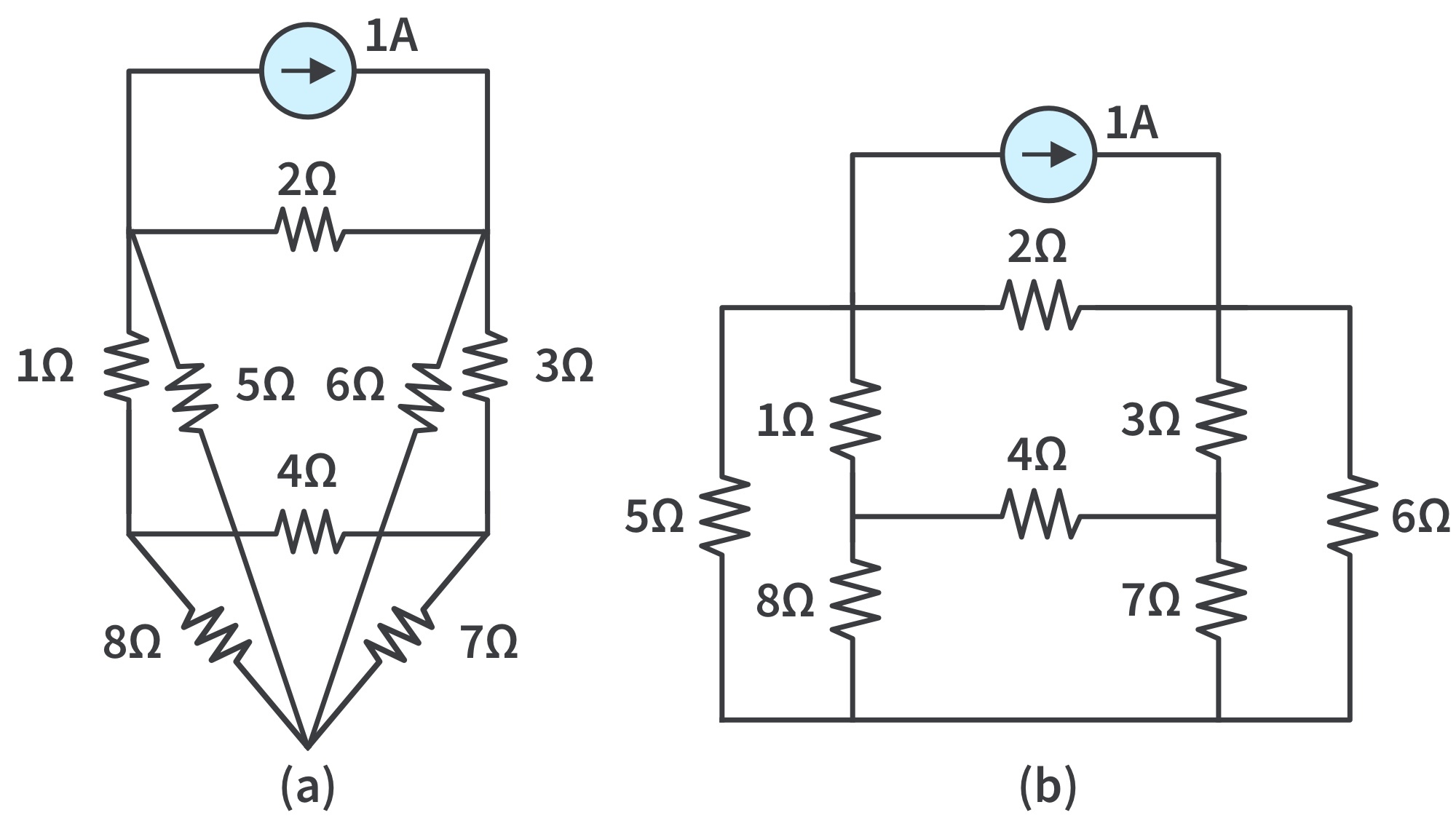
Key Takeaways
- Proper Reference Node Selection: Choosing the correct ground node simplifies equations and avoids unnecessary complexity.
- Accurate Treatment of Voltage Sources: Correctly handling voltage sources, especially between non-reference nodes, is crucial for valid nodal equations.
- Consistent Sign Conventions: Maintaining consistent current directions and voltage sign conventions prevents errors in Kirchhoff's Current Law (KCL) equations.
Common Misconceptions in Nodal Analysis
1. Misunderstanding the Reference Node
The reference node, often referred to as the ground node, serves as the common return path for current in a circuit and is assigned a voltage of zero volts. A prevalent misconception is incorrectly selecting or labeling the reference node, which can complicate the analysis. Ideally, the reference node should be the one with the most connections, simplifying the nodal equations by reducing the number of variables involved.
2. Improper Treatment of Voltage Sources
Voltage sources play a critical role in nodal analysis, and misunderstanding their placement can lead to significant errors. When a voltage source is connected between a non-reference node and the reference node, its voltage directly sets the node voltage, eliminating the need for additional equations. However, when a voltage source is situated between two non-reference nodes, it requires the formation of a "supernode" that encompasses both nodes to correctly apply KCL. Failing to recognize and handle supernodes appropriately often results in incorrect nodal equations.
Supernode Concept
A supernode is created when a voltage source connects two non-reference nodes. By combining these nodes into a supernode, one can apply KCL effectively by considering the voltage difference imposed by the voltage source. This approach ensures that the voltage source constraints are accurately represented in the system of equations.
3. Incorrect Node Labeling and Identification
Accurate labeling of nodes is fundamental to setting up correct nodal equations. A common mistake is misidentifying what constitutes a node, especially in complex circuits where multiple elements converge. Every node, excluding the reference node, must have a unique voltage variable assigned. Overlooking or duplicating node labels can lead to redundant or missing equations, undermining the entire analysis.
4. Sign Convention Errors in KCL Equations
Kirchhoff's Current Law (KCL) states that the sum of currents entering a node must equal the sum of currents leaving the node. Errors often arise from inconsistent application of sign conventions, such as mistakenly considering the direction of current flow or the polarity of voltage drops across components. For instance, neglecting to account for the potential drop across a resistor when applying Ohm's Law (V = IR) can lead to inaccuracies in the nodal equations.
5. Handling of Dependent Sources and Nonlinear Elements
Nodal analysis assumes linearity in circuit elements. Dependent sources, which rely on voltages or currents elsewhere in the circuit, introduce additional constraints that must be incorporated into the analysis. A common misconception is believing that dependent sources can be treated the same as independent sources without accounting for their controlling variables. Additionally, the presence of nonlinear elements, such as diodes or transistors, complicates nodal analysis, often requiring iterative methods or linearization techniques.
6. Including the Ground Node in Equations
Since the ground node is predefined with a voltage of zero volts, it should not be included in the system of nodal equations. Including it can lead to redundant equations and confusion. Recognizing that the ground node's voltage is already known allows for a more streamlined and accurate setup of the nodal analysis.
7. Misinterpretation of Nodes and Branches
Confusing nodes with branches is another common error. A node is a point where two or more circuit elements connect, while a branch is the pathway between two nodes. Misinterpreting this can lead to incorrect identification of node voltages and faulty equation formulation. Ensuring a clear distinction between nodes and branches is essential for accurate nodal analysis.
8. Overcomplicating the Circuit
Sometimes, students and practitioners attempt to apply nodal analysis to overly complex circuits without simplifying them first. Techniques such as combining resistors in series or parallel and reducing the circuit to its simplest form can significantly reduce the complexity of the nodal equations. Overcomplicating the node setup increases the likelihood of algebraic errors and makes the analysis more cumbersome.
Summary of Common Misconceptions and Corrections
| Misconception | Correction |
|---|---|
| Including the ground node in nodal equations. | Exclude the ground node as its voltage is predefined as zero. |
| Incorrectly handling voltage sources between non-reference nodes. | Use the supernode concept to encompass both nodes connected by the voltage source. |
| Mislabeling nodes or misidentifying what constitutes a node. | Accurately label each node and ensure only points where two or more elements connect are considered nodes. |
| Inconsistent sign conventions in KCL equations. | Maintain consistent current directions and voltage polarities when applying KCL. |
| Ignoring dependent sources or nonlinear elements. | Incorporate additional constraints for dependent sources and use appropriate methods for nonlinear components. |
| Confusing nodes with branches. | Clearly distinguish between nodes (connection points) and branches (pathways between nodes). |
| Overcomplicating the circuit without simplification. | Simplify the circuit using series and parallel combinations before applying nodal analysis. |
Conclusion
Nodal analysis is a powerful tool for electrical circuit analysis, but its accuracy hinges on a clear understanding of its foundational principles. By recognizing and avoiding common misconceptions—such as improper reference node selection, incorrect handling of voltage sources, and inconsistent sign conventions—practitioners can enhance the precision and efficiency of their analyses. Additionally, simplifying complex circuits and accurately identifying nodes versus branches further contribute to effective circuit evaluation. Mastery of these concepts not only mitigates errors but also fosters deeper insights into circuit behavior, ultimately advancing both academic and professional endeavors in electrical engineering.
References
Last updated February 13, 2025