
Mitigating International Anarchy: A Liberal Perspective
Exploring Liberal Approaches to Overcoming Global Disorder
Key Highlights of the Liberal Approach
- Economic Interdependence: Liberals emphasize that fostering economic openness and interdependence among states can reduce the likelihood of conflict by increasing the costs of war and promoting mutual gains through cooperation.
- International Institutions: The establishment and strengthening of international organizations and regimes provide platforms for states to cooperate, establish norms, and resolve disputes peacefully, thereby mitigating the effects of anarchy.
- Democracy and Shared Values: Liberals argue that promoting democracy and shared liberal values globally can lead to more peaceful and cooperative international relations, as democracies are less likely to engage in conflict with one another.
Understanding International Anarchy
International anarchy, in the context of international relations, does not imply chaos or disorder, but rather the absence of a central authority above states. This absence means that states operate in a self-help system where they are primarily responsible for their own security and well-being. Different schools of thought offer varying perspectives on how this condition affects international relations. Realists, for example, view anarchy as a primary driver of conflict, emphasizing the constant competition for power and security among states. In contrast, liberals acknowledge the existence of anarchy but believe that its negative effects can be mitigated through cooperation, institutions, and interdependence.
The Liberal Perspective on Anarchy
Liberalism in international relations offers a contrasting view to realism. While realists see anarchy as an insurmountable obstacle to peace and cooperation, liberals believe that states can transcend the constraints of anarchy through various mechanisms. This perspective is rooted in the belief that human nature is not inherently selfish or aggressive and that cooperation is possible and beneficial. Liberals argue that states can achieve mutual gains through cooperation, leading to more stable and peaceful international relations. This optimistic view forms the basis for liberal approaches to mitigating international anarchy.
Liberal Strategies for Mitigating Anarchy
Liberals propose several strategies to mitigate the condition of international anarchy, focusing on fostering cooperation, building institutions, and promoting shared values. These strategies aim to create a more ordered and peaceful international environment, where states can pursue their interests without resorting to conflict.
Promoting Economic Interdependence
Economic interdependence is a cornerstone of the liberal approach to mitigating anarchy. Liberals argue that when states are economically interconnected, the costs of conflict increase significantly. Trade, investment, and financial flows create mutual dependencies that make war less attractive. For example, states heavily reliant on trade with each other are less likely to engage in military conflict because it would disrupt these vital economic ties. This idea is closely linked to the concept of complex interdependence, where multiple channels connect societies, including informal ties, governmental relationships, and transnational organizations. Economic interdependence fosters a sense of shared interest and encourages states to resolve disputes through peaceful means.
Strengthening International Institutions
International institutions play a crucial role in the liberal vision for managing international anarchy. These institutions provide platforms for states to cooperate, negotiate, and establish norms of behavior. They can range from global organizations like the United Nations (UN) to regional bodies like the European Union (EU) and specific regimes governing trade, environmental protection, or human rights. These institutions help reduce uncertainty, facilitate communication, and provide mechanisms for dispute resolution. By participating in these institutions, states can build trust and develop shared expectations, which can mitigate the security dilemma often associated with anarchy.
Fostering Democracy and Shared Values
Liberals also emphasize the importance of democracy and shared liberal values in promoting international peace. The democratic peace theory posits that democracies are less likely to engage in conflict with each other. This is attributed to several factors, including the constraints imposed by public opinion, the transparency of democratic decision-making, and the shared norms of peaceful conflict resolution. By promoting democracy and human rights, liberals believe that the international system can become more peaceful and cooperative. Furthermore, shared values such as the rule of law, respect for human rights, and commitment to peaceful conflict resolution can foster a sense of community and mutual understanding among states.
The Role of International Law and Norms
International law and norms are integral to the liberal approach to mitigating anarchy. These frameworks provide a set of rules and principles that govern state behavior, helping to create a more predictable and orderly international environment. International law can be codified in treaties and conventions or can emerge from customary practices recognized by states. These laws and norms cover a wide range of issues, including the use of force, diplomatic relations, trade, and human rights. By adhering to international law and norms, states demonstrate a commitment to cooperation and peaceful coexistence, which helps to mitigate the negative effects of anarchy. The establishment of international courts and tribunals, such as the International Court of Justice (ICJ) and the International Criminal Court (ICC), further strengthens the role of law in international relations by providing mechanisms for adjudicating disputes and holding individuals accountable for violations of international law.
The Impact of Globalization
Globalization, characterized by the increasing interconnectedness of states through trade, communication, and cultural exchange, also plays a significant role in the liberal approach. Liberals argue that globalization fosters interdependence and reduces the incentives for conflict. The increased flow of information and ideas can promote mutual understanding and break down stereotypes, while economic integration can create shared interests that make war less attractive. However, it is also important to acknowledge that globalization can have negative consequences, such as increased inequality and cultural homogenization, which can lead to tensions and conflicts. Therefore, liberals advocate for managing globalization in a way that maximizes its benefits while mitigating its potential risks.
Comparing Liberalism with Other Perspectives
To fully understand the liberal approach, it is helpful to compare it with other perspectives in international relations, such as realism and constructivism.
Liberalism vs. Realism
Realism views international relations as a struggle for power among states in an anarchic system. Realists emphasize the importance of national security and argue that states must prioritize their own interests in a competitive environment. Unlike liberals, realists are skeptical of international cooperation and institutions, viewing them as tools that powerful states use to advance their own agendas. Realists believe that the best way to ensure peace is through a balance of power, where states deter each other from aggression. While realists focus on the constraints imposed by anarchy, liberals emphasize the possibilities for cooperation and the role of institutions in mitigating its effects.
Liberalism vs. Constructivism
Constructivism offers a different critique, focusing on the social construction of reality. Constructivists argue that anarchy is not an objective condition but rather a social construct that shapes state behavior. They emphasize the role of ideas, norms, and identities in international relations. Constructivists argue that by changing the way states perceive each other and the international system, it is possible to transform the nature of international relations. For example, the development of a norm against the use of nuclear weapons has significantly reduced the likelihood of nuclear war. While liberals focus on institutions and interdependence, constructivists emphasize the role of ideas and norms in shaping state behavior.
Challenges and Criticisms of the Liberal Approach
Despite its optimism, the liberal approach faces several challenges and criticisms. One common criticism is that it is too idealistic and does not adequately account for the persistent role of power politics in international relations. Critics argue that states often prioritize their own interests over cooperation and that international institutions are only as effective as the states that support them. Additionally, some scholars argue that the democratic peace theory is flawed, pointing to historical examples of democracies engaging in aggressive behavior.
The Persistence of Power Politics
The persistence of power politics remains a significant challenge to the liberal vision. Despite the growth of international institutions and economic interdependence, states continue to compete for power and influence. Great power rivalries, such as the competition between the United States and China, can undermine international cooperation and lead to increased tensions. The rise of nationalism and populism in many countries also poses a challenge to the liberal order, as these ideologies often prioritize national interests over international cooperation. To address these challenges, liberals need to develop strategies for managing power politics and promoting cooperation in a world where states continue to pursue their own interests.
The Limits of International Institutions
The effectiveness of international institutions is also limited by the willingness of states to support them. Powerful states can often disregard international norms and rules when they conflict with their interests, undermining the authority of international institutions. Additionally, international institutions can be slow and bureaucratic, making them less effective in responding to crises. To enhance the effectiveness of international institutions, liberals need to advocate for reforms that make them more efficient, transparent, and accountable. It is also important to build broader support for international cooperation by demonstrating its benefits to a wider range of actors.
Examples of Liberal Approaches in Practice
Despite the challenges, there are numerous examples of liberal approaches succeeding in mitigating international anarchy. The European Union is often cited as a successful example of regional integration, where states have pooled their sovereignty to achieve common goals such as economic prosperity and peace. The UN has also played a crucial role in maintaining international peace and security through peacekeeping operations, diplomatic efforts, and the promotion of international law. Additionally, various international regimes, such as the World Trade Organization (WTO) and the International Atomic Energy Agency (IAEA), have helped to regulate specific areas of international relations and promote cooperation among states.
The Role of the United Nations
The United Nations (UN) is a cornerstone of the liberal approach to international relations, embodying the principles of collective security, diplomacy, and international law. Established in 1945, the UN provides a global platform for states to address common challenges and resolve disputes peacefully. The UN Security Council, composed of five permanent members (China, France, Russia, the United Kingdom, and the United States) and ten non-permanent members, is responsible for maintaining international peace and security. The UN also plays a crucial role in promoting economic development, human rights, and humanitarian assistance through its various agencies and programs. Despite its limitations, the UN remains an indispensable institution for managing international anarchy and promoting cooperation among states.
Case Studies: Evaluating Liberal Successes and Failures
Examining specific case studies can provide valuable insights into the effectiveness of liberal approaches in mitigating international anarchy. Successful examples, such as the establishment of the European Union and the resolution of the Cuban Missile Crisis through diplomacy, demonstrate the potential for cooperation and peaceful conflict resolution. However, failures such as the Rwandan genocide and the Iraq War highlight the limitations of the liberal approach in the face of deep-seated conflicts and power politics. By analyzing these cases, it is possible to identify the factors that contribute to the success or failure of liberal strategies and to refine these approaches accordingly.
The European Union: A Success Story
The European Union (EU) stands as a significant example of how liberal principles can foster peace and cooperation among states. Originating from the aftermath of World War II, the EU was conceived as a way to prevent future conflicts by integrating the economies and political systems of European nations. Through a series of treaties and agreements, the EU has evolved into a complex supranational organization with a common market, a single currency (for many members), and a shared legal framework. This deep integration has fostered interdependence, reduced the incentives for conflict, and promoted a sense of shared identity among Europeans. The EU's success demonstrates the potential for liberal approaches to transform international relations and mitigate the negative effects of anarchy.
The Rwandan Genocide: A Failure of Collective Action
The Rwandan genocide in 1994 serves as a stark reminder of the limitations of the liberal approach in the face of extreme violence and political breakdown. Despite the presence of UN peacekeepers in Rwanda, the international community failed to prevent the mass slaughter of hundreds of thousands of people. The genocide highlighted the weaknesses of the UN peacekeeping system, the lack of political will among major powers to intervene, and the failure of international norms to protect vulnerable populations. The Rwandan genocide underscores the importance of addressing the root causes of conflict and strengthening international mechanisms for preventing and responding to mass atrocities.
Future Directions for Liberal Internationalism
Looking ahead, the liberal approach to mitigating international anarchy needs to adapt to new challenges and opportunities. The rise of new powers, such as China and India, the proliferation of non-state actors, and the emergence of global challenges such as climate change and pandemics require innovative approaches to international cooperation. Liberals need to develop strategies for engaging with diverse actors, promoting inclusive institutions, and addressing the root causes of conflict. By embracing flexibility and innovation, liberals can continue to play a vital role in shaping a more peaceful and prosperous world.
Adapting to a Multipolar World
The rise of new powers and the shift towards a multipolar world order present both challenges and opportunities for liberal internationalism. As the relative power of the United States declines, it is important to build broader coalitions and engage with diverse actors in addressing global challenges. This requires a willingness to share power, accommodate different perspectives, and promote inclusive institutions. Liberals need to develop strategies for engaging with rising powers such as China and India, while also upholding liberal values and promoting international norms.
| Theory | View of Anarchy | Mitigation Strategies | Key Actors |
|---|---|---|---|
| Realism | Anarchy is a constant and primary driver of conflict. | Balance of power, self-help, prioritizing national security. | States |
| Liberalism | Anarchy can be mitigated through cooperation and institutions. | Economic interdependence, international institutions, democracy. | States, international organizations, NGOs |
| Constructivism | Anarchy is a social construct that shapes state behavior. | Changing ideas, norms, and identities; promoting shared values. | States, individuals, social movements |
FAQ
What is international anarchy?
International anarchy refers to the absence of a central authority above states in the international system. It does not necessarily imply chaos but rather a system where states are primarily responsible for their own security and well-being.
How do liberals view international anarchy?
Liberals acknowledge the existence of international anarchy but believe that its negative effects can be mitigated through cooperation, institutions, and interdependence. They argue that states can achieve mutual gains through cooperation, leading to more stable and peaceful international relations.
What strategies do liberals propose for mitigating international anarchy?
Liberals propose several strategies, including promoting economic interdependence, strengthening international institutions, fostering democracy and shared values, and upholding international law and norms.
What role do international institutions play in the liberal approach?
International institutions provide platforms for states to cooperate, negotiate, and establish norms of behavior. They help reduce uncertainty, facilitate communication, and provide mechanisms for dispute resolution.
What are some criticisms of the liberal approach?
Some criticisms of the liberal approach include that it is too idealistic, does not adequately account for power politics, and overestimates the effectiveness of international institutions.
Image Gallery: International Cooperation in Action
These images represent international cooperation through various organizations and initiatives. These efforts highlight the tangible ways nations collaborate to address shared challenges, promote peace, and foster sustainable development, reflecting the core tenets of the liberal approach to international relations.

G7 Leaders at a summit, illustrating high-level international cooperation.
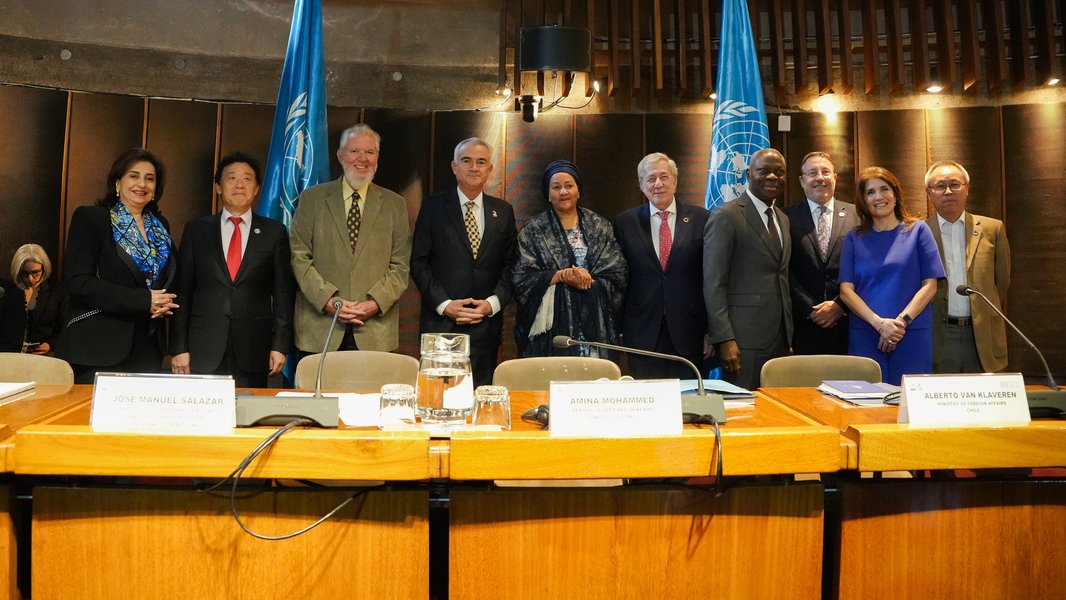
A summit for social development.

The G-20 Summit, highlighting the importance of international cooperation.

The ASEAN summit demonstrating multilateralism and regional collaboration.
Video: Understanding Anarchy in International Relations
This video from Youtube provides an overview of how realism and liberalism explain key global developments since 2000. It touches on the anarchical nature of the international system and how different theories address it. Understanding these perspectives is crucial for grasping the complexities of global politics.
References
Last updated April 11, 2025