
Is Your 2020 Mitsubishi Eclipse Cross Part of a CVT Class Action Lawsuit? Here's What Owners Need to Know.
Discover the details about ongoing legal actions concerning transmission issues in the Eclipse Cross and how you might be affected.
Owners of the 2020 Mitsubishi Eclipse Cross have raised concerns about its performance, particularly regarding the Continuously Variable Transmission (CVT). If you're one such owner, you may be wondering if your vehicle is subject to any class action lawsuits and what steps you can take. This comprehensive guide delves into the existing legal landscape, the nature of the alleged defects, and how you can find out if you're eligible to participate in any ongoing actions.
Key Highlights: Understanding Your Position
- CVT Concerns Lead to Legal Action: Yes, class action lawsuits have been filed concerning the Mitsubishi Eclipse Cross, including the 2020 model year, primarily targeting alleged defects in its Continuously Variable Transmission (CVT).
- Common Complaints: Owners have reported issues such as vehicle shuddering, jerking, hesitation during acceleration, and, in some cases, premature transmission failure.
- Eligibility and Participation: If you own or lease an affected Eclipse Cross and have experienced these CVT-related problems, you might be eligible to join. Information is typically available through law firms handling these cases or dedicated lawsuit websites.
Deep Dive: Class Action Lawsuits and the 2020 Mitsubishi Eclipse Cross
Several class action lawsuits have been initiated against Mitsubishi Motors North America, Inc., concerning the performance and reliability of the CVTs installed in various models, including the Mitsubishi Eclipse Cross (model years 2018-present). The 2020 Mitsubishi Eclipse Cross falls within this category.
The Core of the Issue: Alleged CVT Defects
The central allegation in these lawsuits is that Mitsubishi manufactured, marketed, and sold vehicles equipped with CVTs that are prone to defects. These defects reportedly manifest in several ways, significantly impacting drivability and potentially posing safety risks. Common complaints include:
- Shuddering and Jerking: Vehicles may exhibit noticeable shaking or violent jerking, especially during acceleration.
- Hesitation or Failure to Accelerate: Drivers might experience a delay or inability to accelerate properly, which can be dangerous in traffic.
- Stalling: The transmission issues can allegedly lead to the engine stalling unexpectedly.
- Overheating: Some reports indicate the CVT may overheat, leading to performance degradation or failure.
- Premature or Catastrophic Failure: In more severe cases, the CVT unit may fail entirely, sometimes shortly after the warranty period expires, leading to costly repairs.
One of the prominent lawsuits cited is Hardy, et al. v. Mitsubishi Motors North America, Inc., et al., filed in the United States District Court for the Central District of California. This lawsuit specifically includes the 2018-present Mitsubishi Eclipse Cross among the "Class Vehicles" and alleges that Mitsubishi was aware of these CVT defects but failed to disclose them adequately to consumers or provide a sufficient remedy.
What is a Continuously Variable Transmission (CVT)?
To understand the context of these lawsuits, it's helpful to know what a CVT is. Unlike traditional automatic transmissions that use a set number of gears, a CVT operates using a system of two variable-diameter pulleys connected by a steel belt or chain. This design allows for a continuous range of gear ratios, theoretically providing smoother acceleration and improved fuel efficiency. However, the lawsuits allege that Mitsubishi's specific CVT design is flawed, leading to the problems described.
Further indicating potential issues, Mitsubishi issued a Technical Service Bulletin (TSB 20-23-001) in April 2020, titled "Potential Transmission Issues," which may be related to the concerns raised in the lawsuits.
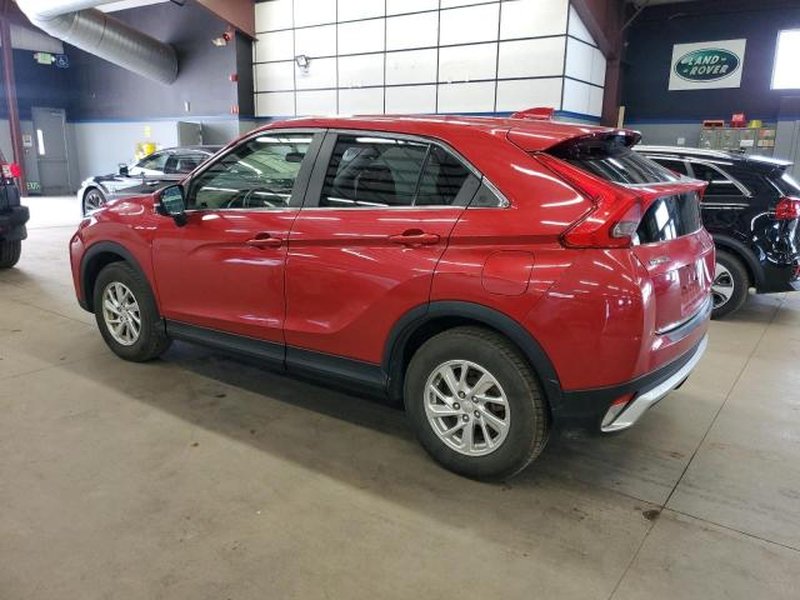
A 2018 Mitsubishi Eclipse Cross, similar in platform to the 2020 model year implicated in CVT-related class action lawsuits.
Are You Eligible to Join and How Can You Sign Up?
If you own or lease a 2020 Mitsubishi Eclipse Cross (or other affected model years from 2018 onwards) and have experienced significant issues with its CVT, you may be eligible to participate in these class action lawsuits. The lawsuits generally aim to represent a class of all U.S. residents who purchased or leased these vehicles.
Determining Eligibility
Eligibility typically hinges on:
- Ownership or lease of an affected vehicle model and year.
- Experiencing the specific problems detailed in the lawsuit (e.g., CVT shuddering, failure, etc.).
- Possession of documentation, such as repair orders, maintenance records, and any communication with Mitsubishi or its dealerships regarding the CVT issues.
How to "Sign Up" or Get Involved
While you generally don't "sign up" for a class action in the traditional sense when it's first filed (class members are often automatically included if a class is certified and a settlement reached), taking proactive steps can be beneficial. Here’s how you can get more information or register your interest:
- Contact Involved Law Firms: Several law firms specialize in automotive class actions and are handling the Mitsubishi CVT cases. You can reach out to them directly. For instance, Capstone Law APC is one firm litigating these claims.
- Phone (example from one firm): 888.293.0875
- Email (example from one firm): info@MitsubishiCVTLawsuit.com
- Visit Dedicated Lawsuit Websites: Some lawsuits have dedicated websites providing information, updates, and forms for potential class members to submit their details. One such site is MitsubishiCVTLawsuit.com.
- Preserve Documentation: Keep meticulous records of all service visits, repair bills, communications with dealerships or Mitsubishi, and any descriptions of the problems experienced. This information will be crucial if you need to make a claim.
- Consult a Legal Professional: For personalized advice based on your specific situation and location, consulting with an attorney who specializes in consumer protection or class action lawsuits is always recommended.
It's important to note that if a settlement is reached or a class is certified by the court, eligible individuals are usually notified directly (often by mail or email if your contact information is available through vehicle registration records) about their rights and options, which may include opting out of the class, submitting a claim form, or objecting to the settlement.
Analyzing Key Aspects of the Mitsubishi CVT Situation
The radar chart below offers a visual representation of various factors related to the Mitsubishi Eclipse Cross CVT issues and the ongoing class action lawsuits. It provides an opinionated analysis comparing perspectives on the severity of the problems, the clarity of legal recourse, manufacturer response, the ease of joining lawsuits, and the potential for resolution. Note that data points are based on aggregated information and legal claims, not definitive empirical data for every owner.
This chart helps illustrate that while reported CVT issues are considered severe from an owner's standpoint, legal actions aim to provide clearer recourse and potential for resolution. Manufacturer acknowledgment via TSBs is noted, but lawsuits often argue this isn't sufficient.
Summary of Key Information: Mitsubishi CVT Lawsuits
The following table summarizes crucial details regarding the class action lawsuits concerning Mitsubishi's CVT transmissions, particularly relevant for 2020 Eclipse Cross owners:
| Feature | Description |
|---|---|
| Affected Vehicle Models (Examples) | Mitsubishi Eclipse Cross (specifically 2018-present, including the 2020 model), Mitsubishi Outlander (various years), Mitsubishi Outlander Sport (various years), Mitsubishi Mirage (various years). |
| Primary Allegation | Vehicles are equipped with a defectively designed and/or manufactured Continuously Variable Transmission (CVT). |
| Commonly Reported CVT Issues | Shuddering, jerking, hesitation during acceleration, sudden loss of power, stalling, transmission overheating, and premature or catastrophic transmission failure. |
| Key Lawsuit Example | Hardy, et al. v. Mitsubishi Motors North America, Inc., et al. (U.S. District Court, Central District of California). |
| Core Legal Claims | Allegations include Mitsubishi's failure to disclose known defects to consumers, breach of express and implied warranties, and violation of consumer protection laws, asserting that these defects pose significant safety hazards. |
| Relevant Manufacturer Action | Issuance of Technical Service Bulletins (TSBs), such as TSB 20-23-001 titled "Potential Transmission Issues," which plaintiffs may argue acknowledges underlying problems. |
Visualizing the Landscape: Eclipse Cross CVT Issues Mindmap
This mindmap provides a structured overview of the interconnected elements surrounding the 2020 Mitsubishi Eclipse Cross CVT class action lawsuits, from the vehicle itself to the alleged problems and the paths for potential owner recourse.
CVT Class Action Lawsuits"] id1["Core Problem: Defective CVT"] id1_1["Alleged Symptoms"] id1_1_1["Shuddering & Jerking"] id1_1_2["Hesitation/Loss of Power"] id1_1_3["Sudden Stalling"] id1_1_4["Overheating Transmission"] id1_1_5["Premature/Catastrophic Failure"] id2["Affected Vehicles Covered"] id2_1["Mitsubishi Eclipse Cross (2018-Present)"] id2_1_1["Includes 2020 Model Year"] id2_2["Other Mitsubishi Models with CVT"] id3["Legal Proceedings"] id3_1["Key Lawsuit: Hardy, et al. vs. Mitsubishi"] id3_2["Allegations Filed"] id3_2_1["Failure to Disclose Defects"] id3_2_2["Breach of Warranty"] id3_2_3["Safety Risks to Consumers"] id4["Owner Options & Actions"] id4_1["Check Eligibility"] id4_2["Contact Law Firms Handling Cases"] id4_3["Visit Lawsuit-Specific Websites
(e.g., MitsubishiCVTLawsuit.com)"] id4_4["Gather Documentation"] id4_4_1["Repair Records"] id4_4_2["Proof of Ownership/Lease"] id4_4_3["Correspondence"] id4_5["Seek Legal Consultation"] id5["Manufacturer's Stance & Actions"] id5_1["Issuance of Technical Service Bulletins (e.g., TSB 20-23-001)"] id5_2["Warranty Provisions (10yr/100k Powertrain)"]
Additional Context: Problems Highlighted
While the class action lawsuits primarily focus on the CVT, understanding broader vehicle issues can be helpful. The following video discusses problems and recalls related to an earlier model year of the Eclipse Cross, which can sometimes indicate platform-wide concerns that might extend to or be similar in the 2020 model.
This video discusses problems and recalls for the 2019 Mitsubishi Eclipse Cross, offering insights into potential issues that owners might encounter.
The 2020 Mitsubishi Eclipse Cross is powered by a 1.5-liter turbocharged four-cylinder engine, paired with the CVT, producing 152 horsepower and 184 lb-ft of torque. While some reviews find this adequate for city driving, others note it can feel underpowered at highway speeds. Beyond the CVT, owner reliability reports are mixed. Some owners praise its dependability and fuel economy, while a few NHTSA complaints for engine issues on the 2020 model have been noted. Mitsubishi generally offers a competitive warranty, including a 5-year/60,000-mile basic warranty and a 10-year/100,000-mile powertrain warranty.
Frequently Asked Questions (FAQ)
What is the main issue cited in the class action lawsuits against the 2020 Mitsubishi Eclipse Cross?
Which specific lawsuit targets the Mitsubishi Eclipse Cross CVT issues?
How do I know if I am eligible to join a class action lawsuit for my 2020 Eclipse Cross?
Do I need to actively "sign up" for a class action lawsuit if my 2020 Eclipse Cross is affected?
What should I do if I believe my 2020 Eclipse Cross has a defective CVT?
- Document all instances of the issue, including dates, mileage, and specific symptoms.
- Keep all service records, repair invoices, and communications with Mitsubishi or its dealerships.
- Report the issue to Mitsubishi and your dealership.
- Consider consulting with a legal professional or contacting the law firms involved in the CVT class actions to understand your rights and options.
Conclusion
Owners of the 2020 Mitsubishi Eclipse Cross facing issues with their Continuously Variable Transmission are indeed covered under the scope of existing class action lawsuits. These legal actions allege significant defects in the CVT, leading to a range of drivability and safety concerns. If you have experienced problems such as shuddering, jerking, or acceleration issues, it is advisable to gather all relevant documentation and explore your options for participation. Websites like MitsubishiCVTLawsuit.com and direct contact with the law firms handling these cases can provide clarity on eligibility and the process for becoming involved. Staying informed and proactive is key to navigating this situation effectively.
Recommended Further Research
To deepen your understanding, consider exploring these related queries:
- What are the specific symptoms of a failing Mitsubishi CVT in an Eclipse Cross?
- Can you provide more details on the settlement terms or progress of the Hardy et al. v. Mitsubishi Motors North America CVT lawsuit?
- How does Mitsubishi's 10-year/100,000-mile powertrain warranty apply to CVT repairs for the Eclipse Cross?
- Have there been any official recalls issued by Mitsubishi for the 2020 Eclipse Cross transmission system?
References
The information presented is based on data from various sources, including:
Last updated May 21, 2025