
Unraveling the Throttle System in Your 2020 Mitsubishi Eclipse Cross: Integrated or Replaceable?
A Deep Dive into the Throttle Body and Position Sensor Dynamics
Key Insights into Your Eclipse Cross's Throttle System
- Integrated Design: For the 2020 Mitsubishi Eclipse Cross, the throttle position sensor (TPS) is generally integrated within the electronic throttle body assembly. This means that if the TPS malfunctions, the entire throttle body often needs to be replaced.
- Crucial Component: The TPS plays a vital role in your vehicle's performance by communicating the throttle plate's position to the Engine Control Unit (ECU), which then precisely adjusts fuel injection and air-fuel mixture.
- Symptoms of Malfunction: Issues with the throttle body or TPS can manifest as rough idling, poor acceleration, stalling, surging, and the illumination of the Check Engine Light, often accompanied by specific diagnostic trouble codes.
The throttle body and its integrated throttle position sensor (TPS) are critical components in modern vehicles like your 2020 Mitsubishi Eclipse Cross. These parts work in tandem to regulate the amount of air entering the engine, which is essential for proper combustion and overall engine performance. Understanding whether the TPS is built into the throttle body or can be replaced independently is a common and important question for vehicle owners.
The Throttle Body and TPS: An Integrated System
Understanding the Design in the 2020 Mitsubishi Eclipse Cross
For the 2020 Mitsubishi Eclipse Cross, and indeed many contemporary vehicles, the throttle position sensor (TPS) is typically an integral part of the electronic throttle body assembly. This design choice is driven by the need for precise electronic control over the air intake, which is crucial for optimizing fuel efficiency, emissions, and engine responsiveness.
The electronic throttle body (ETB) is a complex unit that includes the throttle plate, an electric motor to control its opening, and the TPS. Unlike older vehicles with mechanical throttle cables, modern electronic throttle bodies rely on signals from the accelerator pedal position sensor (APP) to open and close the throttle plate. The TPS then monitors the actual position of this plate and sends feedback to the Engine Control Unit (ECU).
Why an Integrated Design?
The integration of the TPS within the throttle body offers several advantages from an engineering perspective:
- Precision and Responsiveness: An integrated design allows for extremely precise control over the throttle plate's movement. This translates to smoother acceleration, better fuel economy, and reduced emissions, as the ECU can make instantaneous adjustments based on real-time feedback from the TPS.
- Reduced Complexity: While it might seem counterintuitive, an integrated unit can sometimes simplify the overall system by reducing the number of individual components and connections, potentially leading to fewer points of failure.
- Calibration: The TPS and throttle body are factory-calibrated as a single unit to ensure optimal performance. Replacing them as a pair maintains this calibration, preventing potential issues that could arise from misaligned or mismatched sensors.
Therefore, for your 2020 Mitsubishi Eclipse Cross, if the throttle position sensor is found to be faulty, the common and recommended solution is to replace the entire throttle body assembly. This ensures that all interconnected components are new and properly calibrated, restoring your vehicle's performance to optimal levels.
Visualizing the Throttle Body
Below is an image illustrating a typical throttle body assembly, which for your Mitsubishi Eclipse Cross, would include the integrated throttle position sensor.
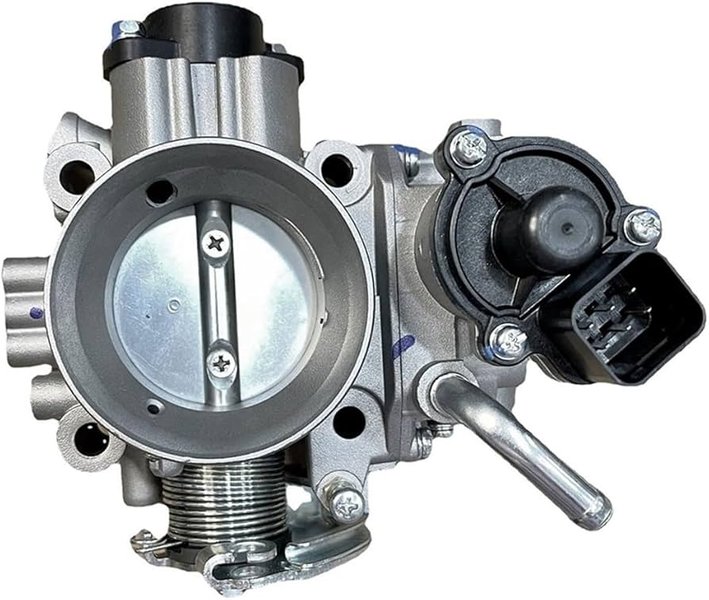
An example of a throttle body assembly, demonstrating its integrated nature.
The Vital Role of the Throttle Position Sensor
How the TPS Influences Engine Performance
The throttle position sensor (TPS) is a small but mighty component, acting as a crucial interface between your foot on the accelerator pedal and the engine's power output. It precisely measures the angle of the throttle plate, which is the butterfly valve inside the throttle body that controls airflow into the engine. This information is then relayed to the Engine Control Unit (ECU).
The ECU relies heavily on the TPS signal to calculate the appropriate amount of fuel to inject into the engine's cylinders and to determine ignition timing. For instance, when you press the accelerator pedal, the throttle plate opens, and the TPS communicates this increased opening to the ECU. The ECU then responds by increasing fuel injection and adjusting ignition timing to match the increased airflow, resulting in acceleration. Conversely, when you lift your foot, the throttle plate closes, the TPS reports this, and the ECU reduces fuel flow.
Impact on Fuel-Air Mixture and Emissions
The delicate balance of the air-fuel mixture is paramount for efficient combustion and reduced emissions. A properly functioning TPS ensures the ECU receives accurate data, allowing it to maintain an optimal stoichiometry. If the TPS provides incorrect readings, the ECU might inject too much or too little fuel, leading to various performance issues and increased harmful emissions.
Modern Mitsubishi vehicles, including the Eclipse Cross, feature electronic throttle control for precise response. Sensors monitor both the pedal position and engine conditions to adjust the throttle plate opening, highlighting the interconnectedness of these systems.
Symptoms of a Failing Throttle Body or TPS
Recognizing the Warning Signs
A malfunctioning throttle body or an integrated TPS can lead to a range of noticeable symptoms that impact your 2020 Mitsubishi Eclipse Cross's drivability and performance. Recognizing these signs early can help prevent more severe issues and costly repairs.
- Check Engine Light: This is often the first and most common indicator. The ECU will store a diagnostic trouble code (DTC) related to the throttle system, such as P0123 (TPS "A" Circuit High Input), which indicates a voltage signal outside the normal operational range.
- Rough Idling or Stalling: If the TPS provides inaccurate readings, the ECU may struggle to maintain the correct air-fuel mixture at idle, leading to a rough or erratic idle, or even stalling, especially when coming to a stop.
- Poor Acceleration or Hesitation: When the TPS cannot accurately communicate the throttle plate's position, the engine may not receive the correct amount of fuel and air when you press the accelerator, resulting in sluggish acceleration or a noticeable hesitation.
- Surging or Bucking: Inconsistent signals from a faulty TPS can cause the engine to randomly surge or buck, as the ECU attempts to compensate for perceived changes in throttle position.
- Unintended Speed Changes: You might experience your vehicle's speed changing without direct input from the accelerator pedal, which can be unsettling and dangerous.
- Buzzing Noise from Throttle Body: Some users have reported a buzzing sound coming from the throttle body, particularly when the ignition is on but the engine is off, which might indicate an issue with the electronic actuator.
If you experience any of these symptoms, it is advisable to have your vehicle diagnosed by a qualified mechanic. An OBD2 scanner can read the stored trouble codes, providing valuable insight into the specific problem.
A Closer Look at Throttle System Performance
The following radar chart illustrates key performance aspects affected by the health of your Mitsubishi Eclipse Cross's throttle body and TPS. A healthy system would show high scores across all parameters.
This chart clearly demonstrates the significant degradation in various performance aspects when the throttle system, including the integrated TPS, is compromised. Maintaining a healthy system is key to enjoying optimal driving dynamics.
Replacement Considerations and Costs
Navigating Throttle Body Replacement
Given the integrated nature of the throttle position sensor in the 2020 Mitsubishi Eclipse Cross's throttle body, replacement typically involves the entire assembly. This is an important consideration for both diagnosis and repair.
Cost Estimates for Throttle Body Replacement
The cost of replacing a throttle body can vary significantly based on parts and labor. OEM (Original Equipment Manufacturer) parts are generally recommended for optimal compatibility and performance, though aftermarket options are available. For a 2020 Mitsubishi Eclipse Cross, the average cost for a throttle body replacement can range from approximately $1142 to $1251. This estimate includes both the cost of the part and the labor involved in the replacement.
It's important to note that labor costs can vary based on your geographic location and the specific repair shop. Some online retailers and auto parts stores offer the throttle body assembly, with new genuine OEM parts available from Mitsubishi parts warehouses.
Where to Find Parts
Genuine OEM throttle bodies for the 2018-2024 Mitsubishi Eclipse Cross, part number 1450A233, are available from various Mitsubishi parts warehouses and authorized dealers. You can also find aftermarket and used throttle bodies from other retailers, but always ensure compatibility and quality.
When considering replacement, consulting your owner's manual for specific details on your vehicle's components and recommended service intervals is always a good idea. The 2020 Eclipse Cross Owner's Manual provides detailed information to enhance your understanding and enjoyment of your vehicle.
The Importance of Professional Installation
Replacing the throttle body and TPS is not a simple task for most DIY enthusiasts, especially with modern electronic systems. Proper installation and calibration are crucial to ensure the new component functions correctly and communicates effectively with the ECU. After replacement, the ECU may need to be reset or reprogrammed to recognize the new throttle body and ensure optimal performance. Incorrect installation can lead to continued issues or even damage to other engine components.
For a visual guide on related maintenance, the following video offers insights into cleaning the Mass Airflow Sensor and Throttle Body on a Mitsubishi Eclipse, which can sometimes resolve minor issues before a full replacement is needed.
Cleaning the Mass Airflow Sensor and Throttle Body on a Mitsubishi Eclipse. While this video is for a different model year, it provides general insight into throttle body maintenance.
While cleaning the throttle body can sometimes alleviate symptoms caused by dirt and grime buildup, it's not a guaranteed fix for a truly faulty integrated TPS. A dirty throttle body can disrupt airflow and cause issues similar to a failing sensor, but if the sensor itself is internally defective, cleaning will not resolve the problem.
Comparison of Throttle Components and Costs
Understanding Key Components and Their Approximate Costs
To provide a clearer picture of the different components within your vehicle's air and fuel delivery system and their associated costs, here is a comparative table. This helps illustrate why a full throttle body replacement, which includes the integrated TPS, might be a more significant expense compared to other sensors.
| Component | Primary Function | Common Symptoms of Failure | Approximate Replacement Cost Range (Parts + Labor) |
|---|---|---|---|
| Throttle Body (with integrated TPS) | Regulates air intake into the engine based on accelerator pedal input; TPS monitors throttle plate angle. | Rough idle, stalling, poor acceleration, surging, Check Engine Light. | $1142 - $1251 (for Eclipse Cross) |
| Throttle Position Sensor (TPS) | Communicates throttle plate position to ECU (typically integrated in 2020 Eclipse Cross throttle body). | Similar to throttle body symptoms: rough idle, hesitation, Check Engine Light (often leads to full throttle body replacement). | N/A (as typically integrated, replacement is full throttle body) |
| Mass Air Flow (MAF) Sensor | Measures the amount of air entering the engine, crucial for calculating fuel delivery. | Loss of power, uneven engine running, erratic idling, misfires, black smoke from exhaust. | $200 - $400+ (estimated) |
| Oxygen Sensor | Monitors oxygen levels in exhaust gas to optimize air-fuel ratio. | Reduced fuel efficiency, increased emissions, Check Engine Light (P0130-P0135, P0150-P0155). | $150 - $500+ (estimated per sensor) |
This table highlights that while individual sensors like the MAF or oxygen sensor might have distinct replacement costs, the integrated design of the throttle body in your 2020 Eclipse Cross means that a TPS failure often necessitates replacing the larger, more expensive throttle body unit.
Conclusion
For your 2020 Mitsubishi Eclipse Cross, the throttle position sensor (TPS) is indeed built into the electronic throttle body assembly. This integrated design means that if the TPS malfunctions, the entire throttle body unit typically needs to be replaced rather than just the sensor itself. This approach ensures optimal performance, as the throttle body and TPS are factory-calibrated as a single, precise system. While the replacement cost for the complete throttle body can be substantial, addressing a faulty unit promptly is crucial for maintaining proper engine function, fuel efficiency, and overall vehicle safety. Always consider professional diagnosis and installation to ensure accurate repair and calibration for your sophisticated electronic throttle system.
Recommended Further Exploration
- How to diagnose a bad throttle body on a Mitsubishi Eclipse Cross?
- What is the cost of a mass airflow sensor replacement for a Mitsubishi Eclipse Cross?
- Can you explain electronic throttle control systems in modern cars?
- What are common check engine light codes related to the air intake system?
References

 static.nhtsa.gov
Last updated May 21, 2025