
Unveiling the Intelligibility of Mixed Languages: More Complex Than You Think
Exploring how hybrid linguistic systems interact with their parent tongues.
Key Insights into Mixed Language Intelligibility
- Distinct Systems: Mixed languages evolve into autonomous linguistic systems, often featuring unique grammatical structures and phonology, making them distinct from their source languages.
- Partial or Low Intelligibility for Monolinguals: While speakers of a mixed language are typically bilingual in its parent tongues, monolingual speakers of either source language generally find the mixed language only partially or minimally intelligible.
- Bilingualism as a Prerequisite: Full comprehension of a mixed language often requires prior familiarity with or fluency in both of its contributing source languages, rather than automatic understanding.
Defining Mixed Languages: A Fusion of Forms
A mixed language, also referred to as a hybrid or fusion language, is a fascinating linguistic phenomenon that arises from intense and prolonged contact between two or more languages within a bilingual community. Unlike pidgins or creoles, which often develop as simplified common languages among diverse linguistic groups, mixed languages typically emerge among populations already fluent in both contributing source languages. This means the creators and users of a mixed language are inherently bilingual, actively drawing upon and blending elements from their linguistic repertoires.
The core characteristic of a mixed language is that it does not primarily derive from a single source. Instead, it integrates structural and lexical components from its parent languages in a balanced yet unique way. For instance, some mixed languages might adopt the vocabulary predominantly from one language and the grammatical system (including phonology, morphology, and syntax) largely from another. This intricate fusion often results in a linguistic system that is distinct from either source language, reflecting a new or hybrid identity of its speakers.
Examples of languages often classified as mixed include Michif (combining Cree verbs with French nouns), Mednyj Aleut (fusing Russian and Aleut features), Gurindji Kriol, and Light Warlpiri (which merges English Creole verb phrases with Aboriginal noun phrases). These examples highlight the complex ways in which languages can intertwine, creating new linguistic codes that are more than just simple blends or instances of code-switching.
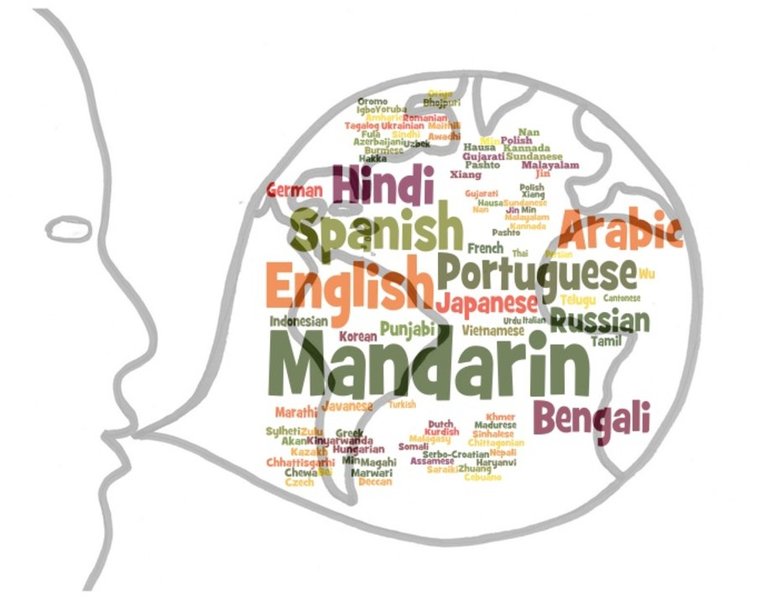
The complex tapestry of global languages and their evolutionary connections.
Mutual Intelligibility: A Nuanced Concept
Mutual intelligibility in linguistics describes the degree to which speakers of different, but related, language varieties can understand each other without prior study or special effort. It's a spectrum, not a binary condition, influenced by numerous variables such as linguistic distance, shared historical roots, and the specific communication context. For instance, closely related languages like Czech and Slovak, or Portuguese and Spanish, often exhibit a significant degree of mutual intelligibility.
However, applying this concept to mixed languages introduces complexities. Since mixed languages are born from bilingual communities already fluent in the source languages, the question of intelligibility isn't about two distinct, unrelated languages interacting. Instead, it concerns how a newly formed, hybrid system is understood by speakers who might only know one of its constituent parts.
Intelligibility of Mixed Languages with Their Sources
A prevalent consensus among linguists is that a mixed language is generally not fully mutually intelligible with its source languages for monolingual speakers. While elements of the source languages are certainly present, the unique ways in which they are combined, restructured, and innovated upon typically create a barrier to complete understanding for someone who only speaks one of the parent languages.
Why Full Intelligibility is Limited
- New Linguistic System: Mixed languages develop their own unique grammatical rules, phonological patterns, and even idiomatic expressions that are not merely direct translations or simple combinations of the source languages. This divergence creates a distinct system.
- Structural Differences: Even if a mixed language heavily borrows vocabulary from one source, its grammatical framework might be entirely derived from another, or be a novel hybrid. For a speaker of the vocabulary-source language, the words might be recognizable, but the syntax would be unfamiliar, hindering comprehension. The reverse is true for a speaker of the grammar-source language.
- Code-Switching vs. Mixed Language: While speakers of mixed languages often engage in code-switching or code-mixing, this is a practice among already bilingual individuals. A mixed language, once established, functions as its own language, transcending mere on-the-fly shifts between two separate languages.
- Impact of Innovation: Over time, mixed languages can undergo their own independent linguistic changes, further distancing them from their original source languages.
Consider informal blends like "Spanglish," a common example of language mixing. While a fluent bilingual speaker of English and Spanish can navigate Spanglish with ease, a monolingual English speaker might only understand the English components, and a monolingual Spanish speaker only the Spanish parts. The "mixing" itself, particularly when it involves grammatical structures or specific lexical choices unique to the blended form, would likely impede full comprehension for someone who knows only one of the source languages.
This radar chart illustrates the perceived degrees of intelligibility for monolingual speakers of source languages when encountering a typical mixed language, based on various linguistic components. The further a point is from the center, the higher the intelligibility in that aspect.
Factors Influencing Intelligibility
The degree of intelligibility between a mixed language and its source languages is not uniform and can depend on several factors:
| Factor | Description | Impact on Intelligibility |
|---|---|---|
| Lexical Integration | How vocabulary from source languages is incorporated and whether it remains recognizable. | Higher lexical overlap may allow for partial word recognition, but full sentence comprehension is still challenged by grammar. |
| Structural Integration | The extent to which grammar, syntax, and phonology are borrowed or uniquely combined. | If grammatical structures are significantly rearranged or sourced from only one language, intelligibility for speakers of the other source language decreases significantly. |
| Bilingual Context | The native fluency of the mixed language speakers in their source languages. | Speakers of the mixed language itself are inherently bilingual, enabling their internal comprehension. However, this doesn't extend to monolingual outsiders. |
| Degree of Fusion | How deeply the languages have blended, from simple code-mixing to a completely new system. | More profound fusion (e.g., consistent grammar from one language, lexicon from another) leads to lower intelligibility with individual source languages. |
| Social and Identity Factors | Whether the mixed language serves as a marker of a distinct group identity. | If the mixed language is an identity marker, it further solidifies its status as a separate language, reducing its perceived intelligibility to outsiders. |
Case Studies: Mixed Language Examples
Specific examples illustrate these complexities:
Michif: A Blend of Cree and French
Michif is a classic example of a mixed language, largely combining Cree verbs and French nouns. A monolingual Cree speaker might recognize the verbal system, and a monolingual French speaker might recognize nouns, but neither would fluently understand the entire Michif language without dedicated learning. Its unique grammatical structure derived from Cree, combined with a predominantly French lexicon, makes it a distinct linguistic entity.
Light Warlpiri: English and Aboriginal Elements
Light Warlpiri, an Australian mixed language, integrates English-based verb phrases with Aboriginal Australian noun phrases. While its speakers are typically bilingual in English and Warlpiri, the mixed language is structurally different enough from either parent language that it challenges mutual intelligibility for a monolingual speaker of pure Warlpiri or English.
The dynamic nature of language contact and evolution is beautifully captured in how mixed languages form. To understand this process better, consider how existing languages combine and influence each other over time, leading to the creation of new forms of communication. The video below offers a compelling exploration of this fascinating linguistic phenomenon.
This video from PBS Eons explores how existing languages can mix and combine to form new linguistic systems, offering insights into the broader context of language evolution and hybridity.
Conceptualizing Mixed Languages: A Mindmap
To further visualize the key aspects of mixed languages and their relationship with intelligibility, the following mindmap outlines the core concepts and their connections.
This mindmap visually represents the core definitions, characteristics, and factors influencing the intelligibility of mixed languages.
Frequently Asked Questions (FAQ)
What is the main difference between a mixed language and code-switching?
Are mixed languages common around the world?
Can a mixed language become a standalone language over time?
What are the social implications of mixed languages?
Conclusion
In conclusion, a mixed language is a complex linguistic entity that arises from the profound intertwining of two or more source languages within a bilingual community. While its very existence is predicated on its speakers' fluency in the contributing languages, the mixed language itself typically develops into an autonomous linguistic system. This means that for a monolingual speaker of either original source language, the mixed language is generally not fully mutually intelligible. Comprehension is often partial, limited to lexical recognition, with structural and grammatical differences posing significant barriers. Full understanding usually requires prior exposure to or learning of both parent languages, underscoring that mixed languages represent unique and distinct forms of communication, rather than mere dialects or simple extensions of their source tongues.
Recommended Further Exploration
- How do creole languages differ from mixed languages?
- What are the common patterns of language mixing in bilingual communities?
- Examples of mixed languages and their linguistic features
- The role of identity in the formation of mixed languages