
Integrating ML into the FEM Framework
A comprehensive guide to combining machine learning with finite element analysis
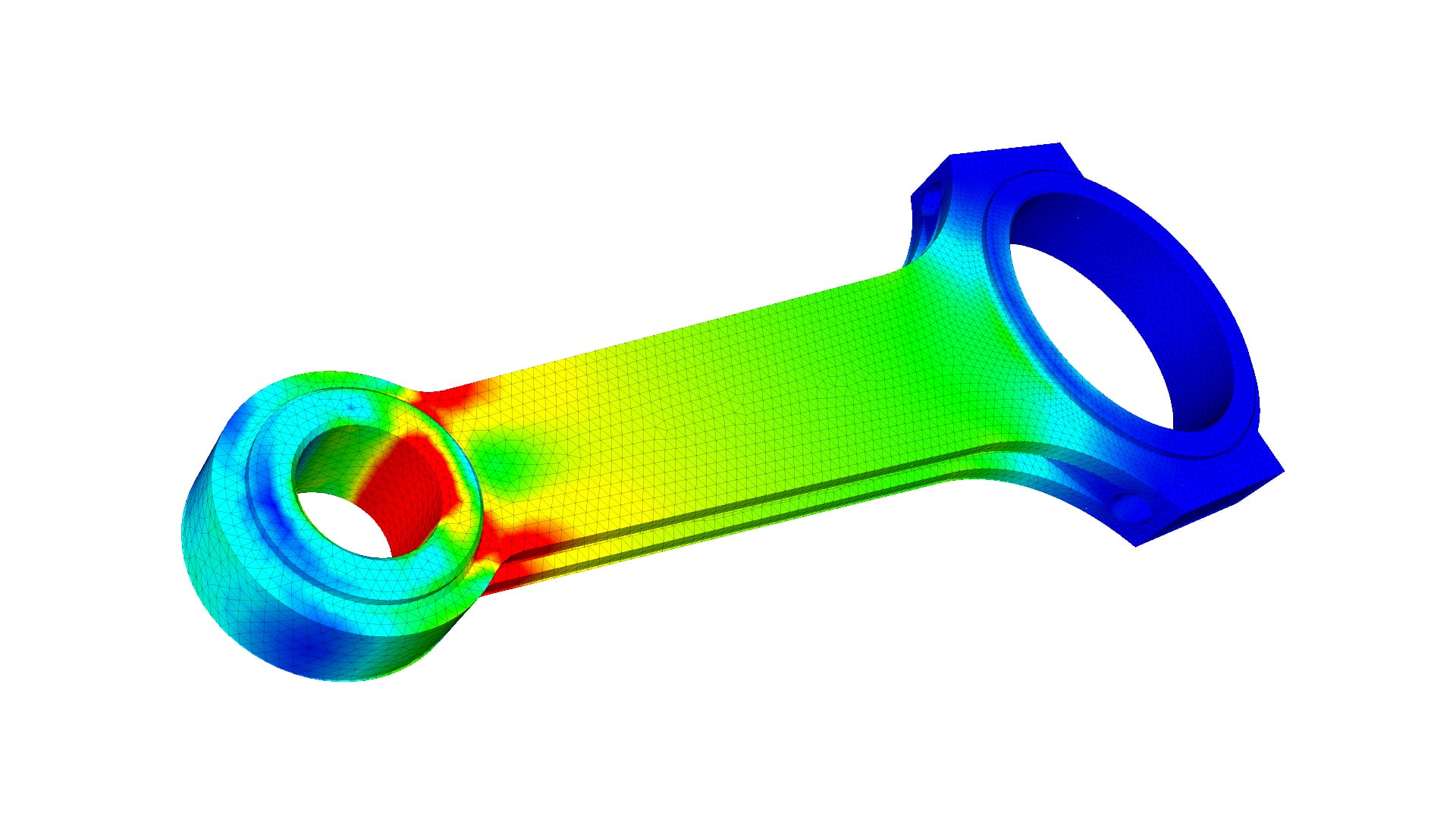
Key Highlights
- Surrogate and Predictive Models: Accelerate simulations by replacing or augmenting FEM with ML-driven surrogate models that predict responses efficiently.
- Hybrid Approaches and Real-time Integration: Fuse ML with physics models (e.g., PINNs) and use ML for mesh optimization, data augmentation, and uncertainty quantification in FEM.
- Data-driven Preprocessing and Post-processing: Utilize ML for feature selection, dimensionality reduction, and refining FEM outputs, improving overall simulation accuracy.
Overview
Integrating machine learning (ML) into the finite element method (FEM) framework establishes a powerful computational paradigm that combines data-driven techniques with traditional physics-based modeling. This synergy facilitates rapid prediction, efficient simulation, and enhanced analysis of varying physical and engineering systems. In this guide, we delve into several approaches and methodologies to integrate ML into the FEM framework, offering a detailed roadmap for researchers and engineers.
Approaches to Integration
1. Surrogate Modeling
One of the most promising applications of ML in FEM is building surrogate models to emulate expensive finite element simulations. When dealing with complex simulations, the computational expense can be significantly reduced by training ML models on data generated from FEM simulations. These surrogate models can predict stress distributions, nodal displacements, or strain fields quickly and accurately given proper training. It results in:
Advantages
- Reduced computational costs and time.
- Real-time responses in simulation-heavy environments.
- Improved design optimization, where multiple iterations are necessary.
Typically, neural networks are trained using simulation data, with inputs being FEM features such as boundary conditions, material properties, and loads. The trained ML model then predicts the FEM responses based on new, unseen input parameters. This methodological shift allows engineers to bypass repeated full-scale simulations once the ML model is validated.
2. Data-driven Predictive Modeling
Data-driven predictive modeling involves applying various ML algorithms—such as regression models, decision trees, or even deep learning networks—to analyze and predict the outcome of FEM simulations. By extracting features from the simulation results, ML can provide insights into:
Key Applications
- Uncertainty Quantification: ML models can assess the uncertainty inherent in simulation outputs by comparing predictions with experimental data or high-fidelity simulations. This provides more robust error bounds.
- Dimensionality Reduction: Using techniques such as Principal Component Analysis (PCA), the number of parameters can be reduced, thereby simplifying the input space and focusing on the most influential features.
- Predicting Failure Modes: Classifying regions that are likely to fail under varying load conditions, which is particularly important in safety-critical designs.
With proper feature selection, the ML system refines the simulation outputs and provides reasonable approximations while highlighting key variables that dominantly influence the system’s behavior.
3. Mesh Generation and Optimization
Finite element analysis heavily depends on the discretization of the domain into elements and nodes. ML can be employed to enhance mesh generation by automating and optimizing the creation of the mesh:
Process
- Sensory Integration: ML algorithms can analyze previous FEM simulations and real-world measurements to determine the optimal mesh density needed in regions where higher accuracy is required.
- Adaptive Mesh Refinement: By learning from simulation errors, ML helps dynamically refine the mesh where needed, ensuring that the delicate balance between computational load and simulation quality is maintained.
- Efficiency in Preprocessing: Preprocessing stages benefit from ML by predicting necessary adjustments or initial conditions that lead to convergent and stable FEM models.
This innovative approach in mesh optimization ensures that the analysis is both efficient and precise. Instead of uniformly refining the mesh, ML-driven adaptive meshing targets only critical regions, thereby optimizing resource usage.
4. Hybrid Frameworks: Combining Physically-Informed Neural Networks with FEM
Beyond surrogate modeling, the hybrid integration of ML and FEM uses physics-informed neural networks (PINNs) to embed physical laws directly into the ML architecture. This technique uses the governing partial differential equations (PDEs) of a system as part of the neural network’s training criteria. Key aspects include:
Noteworthy Features
- Embedding PDEs: Integrating the fundamental laws of physics into neural networks ensures that the predictions remain physically consistent.
- Enhanced Predictive Power: PINNs improve the model’s performance even when data is scarce by enforcing essential physics-based constraints.
- Efficient Resolution of Governing Equations: The hybrid ML-FEM model can solve the PDEs more efficiently compared to classical numerical solvers, leading to a robust and generalizable framework.
This method represents a substantial shift in simulation practices, where learning both the data-driven patterns and fundamental physics creates a dynamic predictive system that excels at both speed and accuracy.
5. Real-time Monitoring and Adaptive FEM
With the growth in sensor technologies and IoT devices, structures can be monitored in real-time, and ML can process this data concurrently. Integrating ML with FEM for real-time monitoring encompasses:
Implementation Steps
- Data Collection: Real-time sensor readings feed into the system, providing continuous data streams of physical responses.
- On-the-fly Prediction: Trained ML models rapidly predict structural responses or detect anomalies based on sensor inputs, which can then fine-tune ongoing FEM analyses.
- Maintenance and Safety: Continuous monitoring and early prediction of possible maintenance issues or failure modes facilitate preventive measures in critical engineering infrastructures.
This real-time system exemplifies how ML enhances the iterative process of FEM by dynamically adjusting models to reflect real-world changes and conditions, leading to more responsive simulations.
Step-by-Step Process for ML-FEM Integration
Step 1: Finite Element Model Construction
Begin by constructing a comprehensive finite element model using dedicated FEM software. The model should capture the geometry, material properties, and boundary conditions of the physical system. A detailed finite element mesh that discretizes the domain into elements and nodes is essential for accurate simulation.
Step 2: Data Generation and Preprocessing
Once the FEM model is constructed, conduct simulations under various loading scenarios to generate a robust dataset. The simulation outputs will serve as both training and testing datasets for the ML models. Key variables such as stresses, deformations, and displacement fields are recorded.
Step 3: ML Model Selection and Training
Choose suitable ML algorithms for building the surrogate or predictive model. Popular choices include deep neural networks, support vector machines, and decision trees. The training process involves:
Critical Considerations
- Identify relevant input features from the FEM dataset (e.g., nodal displacements, material states).
- Determine appropriate output parameters, like stress fields or structural responses.
- Perform hyperparameter tuning to balance model performance and computational efficiency. Metrics such as Mean Absolute Error (MAE), Root Mean Squared Error (RMSE), and coefficient of determination \( \text{R}^2 \) are useful for evaluating model performance.
Step 4: Integration and Deployment
Integrate the trained ML model into the FEM workflow. This can be done offline—where the ML model is pre-trained and then used as a surrogate—or online by embedding the ML prediction routine within the FEM simulation loop. The goal is to use ML predictions to either replace parts of the FEM simulation or enhance it by providing:
Functional Enhancements
- Direct relationships between nodal states and predicted displacements, bypassing iterative solvers.
- On-the-fly adjustments to mesh or boundary conditions based on ML predictions.
- Incorporation of real-time sensor data, allowing the model to adapt to actual operational conditions.
Step 5: Validation and Refinement
For the integrated ML-FEM framework to be reliable, validation is imperative. This involves comparing the ML-augmented predictions with full-scale FEM simulations or experimental measurements. Discrepancies should be analyzed, and the model must be refined accordingly by:
Validation Approaches
- Cross-validation techniques to ensure that the model generalizes well.
- Updating the training dataset periodically with new simulation or measured data.
- Error quantification and uncertainty estimation which bolster confidence in the predictions.
Illustrative Table: ML-FEM Integration Workflow
| Integration Stage | Action | Key Benefit |
|---|---|---|
| Model Construction | Discretize domain using FEM software | Realistic simulation framework |
| Data Generation | Run simulations under varied conditions | Robust training dataset |
| ML Model Training | Select features & train using simulation data | Develop surrogate or predictive model |
| Integration | Deploy ML as part of simulation loop | Enhanced simulation speed and accuracy |
| Validation | Compare predictions with experiments | Ensures model reliability |
Additional Applications and Considerations
Material and Constitutive Modeling
One advanced use of ML in FEM is in the field of material modeling. ML algorithms, such as evolutionary polynomial regression (EPR), can develop constitutive models that represent complex material behaviors in a unified manner. By using ML models, engineers can predict not only stress and strain responses but also capture the evolving behavior of materials under different loading scenarios.
Optimizing Mesh Quality
ML techniques facilitate the examination of large datasets to inform mesh generation and optimization. Instead of using a uniform meshing approach, these algorithms analyze previous FEM results and real-time sensor inputs to recommend mesh refinement or coarsening in specific regions, ensuring a balance between computational efficiency and simulation accuracy.
Real-world Structural Monitoring
The integration of ML into FEM extends beyond simulation into actual structural health monitoring. In scenarios such as bridge monitoring or aerospace structural integrity, sensor data is continuously fed into the integrated ML-FEM model. The ML component, leveraging historical FEM simulation data and real-time inputs, can rapidly predict potential failure or deterioration zones, significantly enhancing preventative maintenance protocols.
Hybrid ML-FEM in Emerging Applications
Innovative applications like simulating biological systems or predicting brain morphogenesis through brain patch growth models also benefit from this integrated approach. For example, simulation data produced by FEM can train a generative adversarial network (GAN) to predict complex biological processes, further expanding the horizons of FEM beyond traditional engineering fields.
References
- Surrogate Models in FEM - MDPI
- Integrating FEM and AI - ResearchGate
- ML in FEM: A Scientific Review - Springer
- Deep FEM Methods - IOPscience
-
Hybrid ML-FEM Integration - ScienceDirect
Recommended Further Reading
Last updated March 19, 2025