
Unlocking Construction's Future: Your 90-Minute Guide to Offsite Methods and Their Transformative Benefits
Explore how Modern Methods of Construction, particularly offsite techniques, are revolutionizing building speed, quality, and sustainability.
Highlights of Offsite Construction
- Modern Methods of Construction (MMC) encompass a spectrum of innovative techniques, with offsite construction (factory-based prefabrication and on-site assembly) being a cornerstone for achieving greater efficiency and predictability in the building process.
- The adoption of offsite construction yields significant advantages, including dramatically reduced project timelines, superior and more consistent quality control, enhanced environmental sustainability through waste reduction, and improved on-site safety with less labor dependency.
- Key offsite methodologies, such as volumetric modular units (e.g., complete rooms or building sections) and panelised systems (e.g., prefabricated walls and floors), are becoming increasingly crucial for meeting contemporary demands for housing and infrastructure development.
Understanding the Landscape of Modern Construction
The construction industry is undergoing a significant transformation, driven by the need for greater efficiency, quality, and sustainability. At the forefront of this evolution are Modern Methods of Construction (MMC), a broad collection of approaches that rethink how buildings and infrastructure are designed, developed, and delivered.
An illustration of modern offsite construction elements.
What is MMC?
Modern Methods of Construction (MMC) refer to a wide array of innovative construction techniques and processes that aim to improve productivity, quality, sustainability, and safety in the built environment. These methods often emphasize moving construction activities away from the traditional, often unpredictable, site environment into controlled factory settings. MMC is not a single technique but rather an umbrella term covering various approaches, from pre-manufactured components to advanced site-based processes.
Defining Offsite Construction
Offsite construction, a prominent subset of MMC, involves the planning, design, fabrication, and assembly of building elements in a factory or other manufacturing facility, away from their final installed location. These completed elements, which can range from individual components to entire building modules, are then transported to the construction site for assembly. This approach allows for parallel processing, where site preparation can occur simultaneously with the manufacturing of building parts, significantly accelerating project delivery.
Categorizing Innovation: The MMC Definition Framework
To bring clarity and standardization to the diverse approaches within MMC, a definition framework is often used, typically categorizing methods based on the extent of offsite fabrication. The UK's 7-category framework is a widely referenced example:
Category 1: Volumetric Modular Systems (3D Pre-manufacturing)
This category involves the factory production of three-dimensional modules that are substantially complete internally (e.g., with services, finishes, and fittings) before being transported to site. These modules can form entire rooms or sections of a building and are craned into position to create the final structure. Examples include modular homes, hotel rooms, and bathroom pods (though bathroom pods can also fall under Category 5).
Category 2: Panelised Systems (2D Pre-manufacturing)
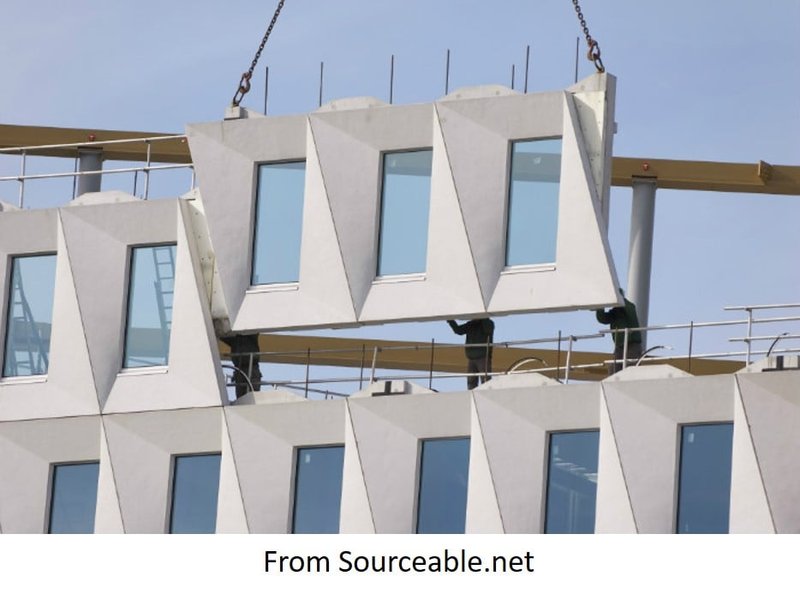
Panelised systems involve the factory manufacturing of flat panel units, such as walls (internal and external), floors, and roof cassettes. These panels can be open-frame or include insulation, cladding, windows, and services. Once on site, these 2D elements are assembled to form the building's structure. Timber frame, light-gauge steel frame, and structural insulated panels (SIPs) are common examples.

Example of panelized construction components being assembled.
Other Key MMC Categories
While Category 1 and 2 represent significant offsite pre-manufacturing, the framework also includes:
- Category 3: Pre-Manufactured Components (Non-Systemised Primary Structure): This includes pre-manufactured structural elements like columns and beams that do not form panelised or volumetric systems but are assembled on site.
- Category 4: Additive Manufacturing: Structural or non-structural elements created through processes like 3D printing, either on-site or off-site.
- Category 5: Pre-Manufactured Non-structural Assemblies and Sub-Assemblies: Components like pre-assembled bathroom pods, plant rooms, or integrated mechanical, electrical, and plumbing (MEP) service modules.
- Category 6: Traditional Building Product Led Site Labour Reduction / Productivity Improvements: Use of innovative traditional materials and products that are not significantly pre-manufactured but improve site efficiency, like pre-cut timber or large format blocks.
- Category 7: Site Process Improvement: On-site innovations that improve efficiency, quality, or safety, such as digital tools for site management, robotics, or lean construction methodologies.
The Advantages Driving MMC Adoption
The shift towards Modern Methods of Construction, particularly offsite techniques, is underpinned by a compelling array of benefits that address many of the long-standing challenges in traditional construction.
Accelerated Project Timelines
One of the most significant advantages is speed. Offsite manufacturing allows building components to be produced concurrently with site preparation (e.g., foundations, groundwork). This parallel activity can reduce overall project timelines by as much as 30-50% compared to traditional methods. Faster completion means earlier occupancy and quicker return on investment.
Superior Quality Control
Manufacturing building elements in a controlled factory environment allows for more rigorous quality control processes, akin to those in other manufacturing industries. This leads to greater precision, improved tolerances, and a higher quality of finish. Weather-related delays and defects common in on-site construction are significantly minimized.
Enhanced Sustainability Practices
MMC offers substantial environmental benefits. Factory-based production optimizes material usage, significantly reducing waste – often by up to 90%. Centralized manufacturing also facilitates better waste segregation and recycling. Furthermore, reduced on-site activity means less noise, dust, and disruption to the local environment, and fewer vehicle movements to and from the site contribute to a lower carbon footprint.
Improved On-Site Safety and Reduced Labour Dependency
Transferring a significant portion of construction work from an open, often hazardous, building site to a controlled factory setting inherently improves worker safety. Factories offer stable working conditions, reduced exposure to weather, and better implementation of safety protocols. Moreover, MMC can help address skilled labor shortages in the construction industry by creating more stable, factory-based employment and reducing the reliance on on-site trades.
The following chart visually compares key performance aspects of offsite construction (MMC) against traditional construction methods, based on typical industry observations. This is an opinionated analysis rather than hard data, designed to illustrate general trends.
This chart highlights how offsite methods generally score higher in areas like speed, quality, sustainability, and safety. While traditional methods might offer greater perceived design flexibility at the outset, advancements in MMC are rapidly closing this gap. Cost-effectiveness can vary based on project scale and repetition, but MMC often provides better cost predictability.
Navigating the Hurdles: Challenges in MMC Implementation
Despite the compelling benefits, the widespread adoption of Modern Methods of Construction, particularly offsite techniques, is not without its challenges. Understanding and addressing these hurdles is key to unlocking the full potential of MMC.
Initial Investment and Costs
Setting up offsite manufacturing facilities requires significant upfront capital investment in plant, machinery, and technology. While MMC can lead to long-term cost savings through efficiency and reduced waste, these initial costs can be a barrier, especially for smaller companies. Projects may also require a different cost profile, with more expenditure earlier in the project lifecycle.
Logistical and Transportation Complexities
Transporting large prefabricated modules or panels from the factory to the construction site can be challenging and costly. Limitations in road networks, bridge clearances, and site access can restrict the size of modules that can be delivered. This requires careful logistical planning and can sometimes influence design choices.
Design Flexibility and Customization
Historically, MMC, especially volumetric modular construction, has been perceived as offering less design flexibility compared to traditional bespoke construction. While this is changing rapidly with advancements in technology and design-for-manufacture-and-assembly (DfMA) principles, there can still be limitations imposed by standardized processes and module dimensions. Early engagement with MMC specialists in the design phase is crucial to maximize design freedom.
Regulatory, Warranty, and Skills Gaps
Building codes, planning regulations, and warranty systems may not always be fully aligned with innovative offsite methods, potentially creating approval delays. Furthermore, the shift towards MMC requires a workforce with new skills in areas like digital design, factory production management, and precision on-site assembly. Upskilling and retraining are necessary to bridge this gap. Integrating the offsite manufacturing supply chain with traditional construction workflows also requires robust collaboration and digital information management.
MMC in Action: Real-World Applications
Modern Methods of Construction are increasingly being utilized across various sectors, demonstrating their versatility and effectiveness. Here are some prominent real-world examples:
Modular Housing Units
Volumetric modular construction (Category 1) is widely used for residential buildings, including affordable housing, student accommodation, hotels, and private homes. Entire apartment units or house modules are manufactured in a factory, complete with internal finishes, kitchens, and bathrooms. These are then transported to the site and craned into place, allowing for rapid assembly and significantly reduced construction times. This approach ensures high quality and can be scaled for large developments.
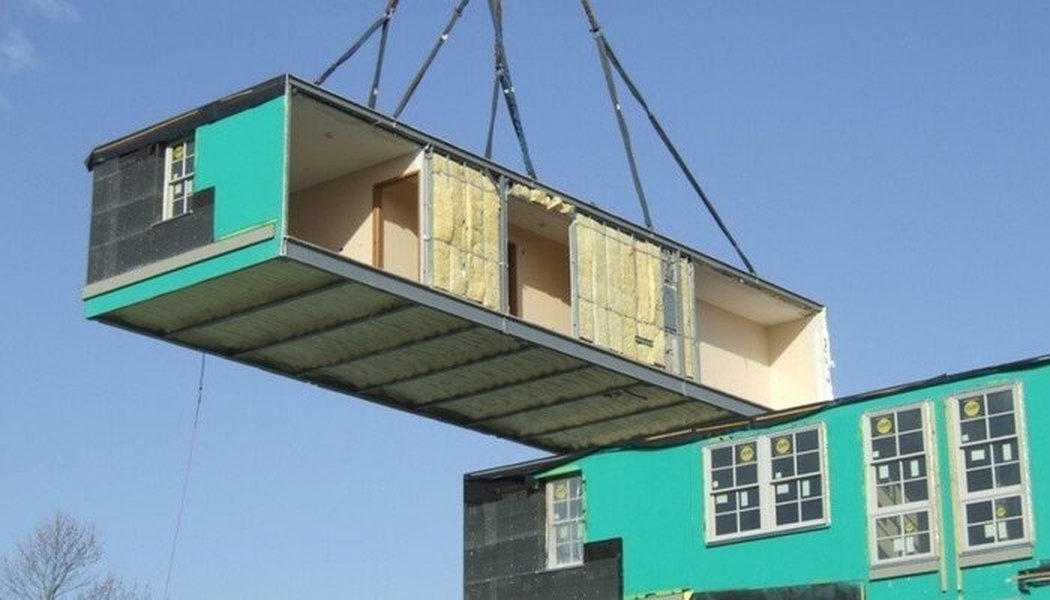
Modular housing units being assembled on-site.
Bathroom Pods
Bathroom pods (often Category 5) are fully-fitted bathroom units manufactured offsite. They arrive on site as a complete, quality-checked component, ready to be craned into position and connected to services. This method is popular in hotels, student housing, hospitals, and residential apartments, as it accelerates construction by removing a complex and labor-intensive part of the build from the on-site critical path, while ensuring consistent quality.
Panelised Wall Systems
Panelised systems (Category 2) involve the offsite manufacture of wall, floor, or roof panels. These can range from simple structural frames to highly insulated, pre-clad panels with windows and doors already installed. Timber frame, light-gauge steel frame, and Structural Insulated Panels (SIPs) are common examples. These systems are used in residential, commercial, and educational buildings, offering speed of erection on site and high thermal performance.
To gain a deeper visual understanding of how offsite manufacturing is revolutionizing the construction industry, the following video provides an excellent overview of the processes and impacts involved:
"Offsite Manufacturing Explained: Special Report" by The B1M provides insights into the factory processes and benefits of MMC.
This report delves into the rise of offsite manufacturing, showcasing factory environments, assembly lines, and the technologies that enable the mass production of building components. It highlights how this shift from traditional building sites to controlled factory settings leads to improvements in efficiency, quality, and sustainability, directly illustrating many of the concepts discussed.
Supporting National Agendas: MMC's Role in Government Targets
Modern Methods of Construction are increasingly recognized by governments worldwide as a critical enabler for meeting pressing national targets related to housing supply, infrastructure development, and sustainability. The inherent benefits of MMC align closely with policy objectives aimed at building more homes, more quickly, to higher quality standards, and with a lower environmental impact.
Many governments are actively promoting the adoption of MMC through various initiatives, including:
- Addressing Housing Shortages: The ability of MMC to accelerate construction timelines is vital for tackling housing crises. By delivering homes faster than traditional methods, MMC can help meet annual housing targets and make housing more affordable.
- Improving Productivity and Efficiency: The construction sector has often lagged behind other industries in productivity gains. MMC offers a pathway to modernize the sector, improve efficiency, and create a more skilled, stable workforce.
- Enhancing Quality and Durability: Factory-controlled production processes lead to more consistent build quality and can incorporate higher performance standards for energy efficiency and durability, aligning with goals for better-quality homes and buildings.
- Promoting Sustainability: With growing emphasis on net-zero carbon targets, MMC's potential to reduce waste, lower embodied carbon, and improve operational energy efficiency is highly attractive to policymakers.
- Supporting Infrastructure Projects: For large-scale infrastructure projects, the predictability, speed, and safety benefits of offsite manufacturing (e.g., for bridge components, tunnel segments, or station buildings) can be crucial for on-time and on-budget delivery.
Government support can take the form of funding for MMC research and development, public procurement policies that favor offsite solutions, reforms to planning and building regulations to accommodate MMC, and initiatives to develop the necessary skills in the workforce. By championing MMC, governments aim to create a more resilient, innovative, and sustainable construction industry capable of meeting future challenges.
90-Minute Microteach Study Plan: An Introduction to Offsite Construction
This study plan outlines a 90-minute microteach session designed to provide learners with a foundational understanding of offsite construction as a key component of Modern Methods of Construction (MMC), covering its categories, benefits, challenges, real-world applications, and its role in meeting government targets.
Overall Session Objective: Learners will be able to define offsite construction, identify its main categories and benefits, discuss its challenges, recognize common examples, and explain its importance for the future of the construction industry and national objectives.
| Time Segment (Duration) | Topic/Activity | Key Content & Methodology | Learning Focus |
|---|---|---|---|
| 0-10 mins (10 mins) | Introduction & Setting the Scene | - Welcome, session objectives, and agenda overview. - Icebreaker: "What comes to mind when you hear 'factory-built homes'?" - Brief introduction to Modern Methods of Construction (MMC) as a concept for innovation. |
Establish context and engage learners. |
| 10-25 mins (15 mins) | Defining MMC & Offsite Construction | - Define MMC: Broad spectrum of techniques. - Define Offsite Construction: Planning, design, fabrication, transportation, assembly. - Explain the MMC Definition Framework (briefly mention the 7 categories). - Focus on Category 1 (Volumetric/3D Pre-manufacturing) and Category 2 (Panelised Systems/2D Pre-manufacturing) with simple visual aids. |
Understand core definitions and key MMC categories relevant to offsite. |
| 25-45 mins (20 mins) | Benefits of Offsite Construction | - Interactive presentation/discussion covering key benefits: • Speed and Efficiency (parallel processing). • Quality Control (factory conditions, precision). • Sustainability (waste reduction, reduced site impact). • Reduced On-site Labour & Improved Safety. - Activity: Small group brainstorm – "Which benefit is most impactful for a specific project type (e.g., school, hospital) and why?" Share back. |
Identify and analyze the advantages of offsite methods. |
| 45-55 mins (10 mins) | Challenges and Limitations of MMC | - Facilitated discussion on common challenges: • Initial capital investment. • Transportation logistics and site access. • Design flexibility perceptions. • Regulatory hurdles and skills gap. - Briefly touch on mitigation strategies. |
Gain a balanced perspective by understanding potential obstacles. |
| 55-70 mins (15 mins) | Real-World Examples of Offsite Construction | - Showcase diverse examples with images/short video clips: • Modular housing (e.g., apartment blocks, individual homes). • Bathroom pods (installation process). • Panelised wall systems (various materials and applications). - Discuss how these examples demonstrate the benefits. |
Visualize practical applications and their impact. |
| 70-80 mins (10 mins) | MMC & Government Housing/Infrastructure Targets | - Explain how offsite construction supports national goals: • Accelerating housing delivery. • Improving infrastructure project efficiency. • Meeting sustainability and quality standards. - Mention government initiatives promoting MMC (if applicable to context). |
Understand the strategic importance of MMC for national development. |
| 80-90 mins (10 mins) | Recap, Q&A, and Wrap-up | - Summarize key learning points. - Open floor for final questions and answers. - Provide resources for further learning (e.g., key websites, articles). - Concluding thought: "How might MMC reshape the construction industry in the next decade?" |
Consolidate learning and encourage further exploration. |
Visualizing the Interconnections: MMC Concepts Mindmap
This mindmap illustrates the core concepts of Modern Methods of Construction (MMC), focusing on offsite construction and its various facets, including categories, benefits, challenges, and applications. It helps to visualize how these elements are interconnected within the broader drive for construction industry innovation.
and on-site assembly"] id1.2["Key Benefits"] id1.2.1["Speed & Efficiency"] id1.2.2["Quality Control"] id1.2.3["Sustainability (Waste Reduction)"] id1.2.4["Reduced On-site Labour & Safety"] id1.3["Challenges"] id1.3.1["Initial Costs & Investment"] id1.3.2["Transportation Logistics"] id1.3.3["Design Limitations (Evolving)"] id1.3.4["Skills Gap & Training Needs"] id1.4["Real-World Applications"] id1.4.1["Modular Housing (Volumetric)"] id1.4.2["Bathroom Pods (Components)"] id1.4.3["Panelised Wall Systems (2D)"] id1.4.4["MEP Modules"] id2["MMC Categories (UK Framework)"] id2.1["Cat 1: Volumetric Modular (3D)"] id2.2["Cat 2: Panelised Systems (2D)"] id2.3["Cat 3: Pre-Manufactured Components (Structural)"] id2.4["Cat 4: Additive Manufacturing"] id2.5["Cat 5: Non-structural Assemblies"] id2.6["Cat 6: Traditional Product Led Improvements"] id2.7["Cat 7: Site Process Improvement"] id3["Strategic Impact"] id3.1["Meeting Government Housing Targets"] id3.2["Efficient Infrastructure Development"] id3.3["Driving Sustainability in Construction"] id3.4["Future of the Construction Industry"]
The mindmap shows "Offsite Construction" as a major branch of MMC, detailing its definition, primary benefits like speed and quality, common challenges such as logistics and initial costs, and prominent applications like modular housing. It also links to the broader MMC categories and the overall strategic impact on housing and infrastructure goals, providing a holistic view of the topic.
Frequently Asked Questions (FAQ)
What's the primary difference between Modern Methods of Construction (MMC) and offsite construction? ▼
Modern Methods of Construction (MMC) is a broad umbrella term that encompasses a wide range of innovative techniques and processes aimed at improving construction efficiency, quality, and sustainability. Offsite construction is a significant subset of MMC, specifically referring to the processes where building elements are planned, designed, manufactured, and assembled in a factory or controlled environment *away* from the final construction site. These components are then transported for on-site assembly. So, while all offsite construction is a form of MMC, not all MMC techniques are necessarily offsite (e.g., some site-based digital tools or advanced material usage also fall under MMC).
Are buildings constructed using offsite methods as durable as traditionally built ones? ▼
Yes, buildings constructed using offsite methods are designed and engineered to be just as durable, if not more so, than traditionally built structures. They must meet the same building codes, regulations, and performance standards. The controlled factory environment often allows for higher precision in manufacturing, better quality materials, and more rigorous quality control checks, which can lead to enhanced durability and structural integrity. Many offsite systems are also designed to withstand the rigors of transportation and craning, which can add to their robustness.
How does offsite construction contribute to environmental sustainability? ▼
Offsite construction offers several environmental benefits:
- Waste Reduction: Factory processes allow for optimized material use and better waste management, often reducing on-site waste by up to 90%.
- Reduced Site Disruption: Less activity on site means less noise, dust, and disruption to the local ecosystem and community.
- Fewer Vehicle Movements: Centralized manufacturing and consolidated deliveries reduce traffic congestion and associated emissions.
- Material Efficiency: Precise manufacturing can lead to less material being used overall. Many offsite systems also readily incorporate sustainable and recycled materials.
- Improved Thermal Performance: Factory-fitted insulation and high-precision assembly can lead to more airtight buildings, improving energy efficiency and reducing operational carbon emissions.
What are the main challenges hindering the widespread adoption of MMC? ▼
Key challenges include:
- High Initial Investment: Setting up factories and investing in new technologies requires significant upfront capital.
- Transportation and Logistics: Moving large modules or panels can be complex and costly, limited by infrastructure.
- Design and Standardization: While improving, there can be a perception of limited design flexibility, and greater standardization is often needed for efficiency.
- Skills Gap: The industry needs more professionals trained in DfMA (Design for Manufacture and Assembly) and factory production.
- Regulatory and Contractual Frameworks: Existing building codes, procurement processes, and contracts may need adaptation to better suit offsite methods.
- Industry Culture and Resistance to Change: The traditional construction industry can be slow to adopt new methods.
Can offsite construction be used for complex and customized building designs? ▼
Yes, increasingly so. While early forms of offsite construction were often associated with highly standardized or "boxy" designs, modern offsite methods, coupled with advanced digital design tools like Building Information Modeling (BIM), offer considerable design flexibility. Panelised systems, in particular, can accommodate complex geometries. Even volumetric modular construction is becoming more adaptable, allowing for varied configurations and bespoke facade treatments. The key is early collaboration between architects, engineers, and manufacturers to leverage the strengths of DfMA principles from the project's inception.
Recommended Further Exploration
- How does Design for Manufacture and Assembly (DfMA) optimize offsite construction projects?
- What are the long-term economic impacts of adopting Modern Methods of Construction on a national scale?
- Explore case studies of award-winning architectural designs achieved using volumetric modular construction.
- What advancements in robotics and automation are shaping the future of offsite manufacturing in construction?
References

Last updated May 7, 2025