
Exploring 3D Molecule Visualization with Augmented Reality
Immersive insights into molecular structures using AR technology
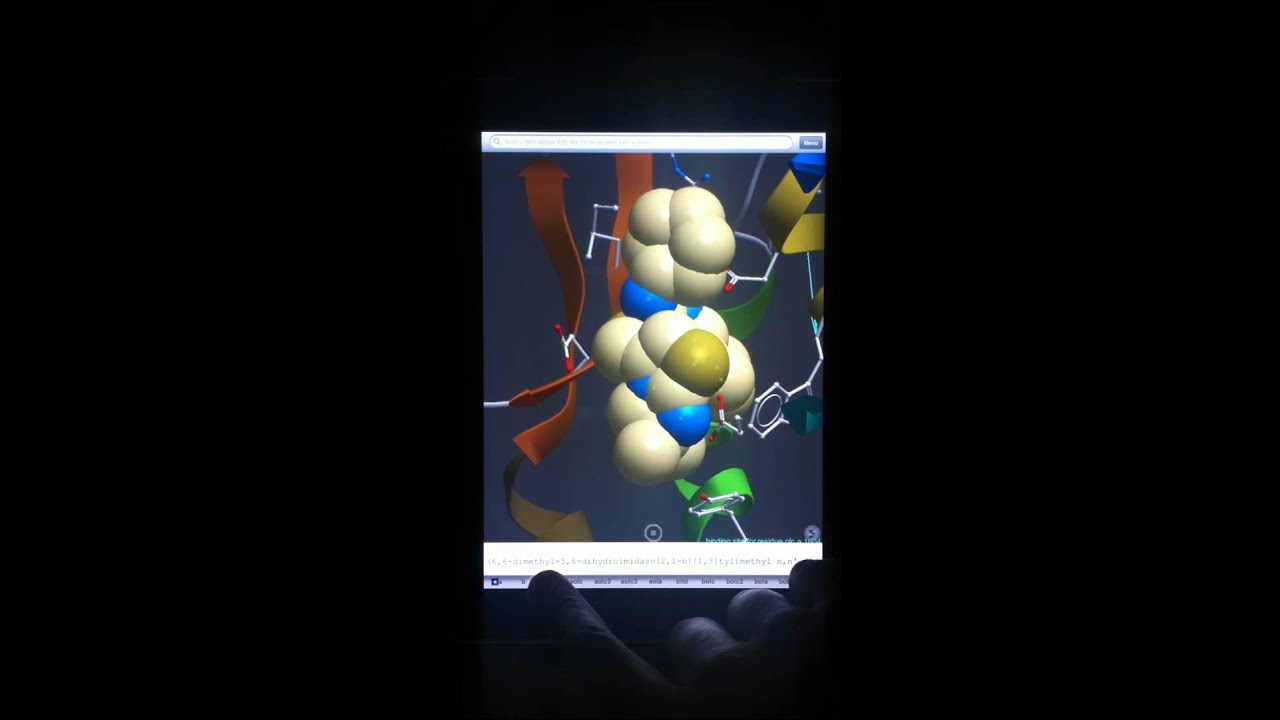
Key Highlights
- Interactive Learning: AR provides fully manipulable 3D models that enhance understanding of molecular geometries and properties.
- Accessibility and Versatility: Mobile and cross-platform accessibility transforms how students and researchers interact with complex molecules.
- Innovative Applications: From education to drug discovery, AR reshapes collaboration and visualization methods in scientific research.
Introduction to AR in Molecular Visualization
Augmented Reality (AR) has emerged as a transformative technology in the visualization of 3D molecular structures. Traditional methods have long relied on static two-dimensional representations, which often fail to convey the intricate spatial relationships inherent in molecular geometry. AR reshapes this narrative by superimposing computer-generated, three-dimensional models onto the real-world environment in real time.
This interactive technology not only facilitates a better comprehension of molecules but also bridges the gap between theory and practical engagement. Through AR, students can explore detailed models in a way that enhances spatial understanding, and researchers gain an innovative tool for visualizing complex molecular interactions.
Key Concepts and Technological Features
Interactive 3D Visualization
One of the primary advantages of AR in molecular science is the ability to interact with three-dimensional representations. Students and researchers can rotate, zoom, and manipulate models dynamically. This level of interactivity is critical for gaining insights into stereochemistry, molecular bonding, and spatial relationships that are not easily perceived through static images.
Enhanced Spatial Understanding
By presenting molecules in 3D, AR helps users understand how atoms are arranged in space. This is particularly useful when considering chirality, isomerism, and the overall geometry that affects molecular function and behavior.
Markerless and Mobile AR
Modern advancements in AR have led to markerless techniques that eliminate the need for printed guides or QR codes. These tools detect spatial coordinates and overlay digital information seamlessly onto the user's environment. Moreover, most AR applications are developed for mobile devices, ensuring accessibility beyond traditional lab environments.
Cross-Platform Compatibility
AR applications in molecular visualization are designed to work on various platforms, including iOS, Android, and web browsers. This compatibility expands their usability, making high-quality 3D molecular visualization accessible to a broader audience.
Applications in Education and Research
Educational Enhancement
One of the most significant impacts of AR in molecular visualization is within educational settings. Traditional chemistry and biology textbooks are limited by two-dimensional representations that can make it challenging to grasp three-dimensional molecular structures and their interactions. Augmented Reality solves this problem by providing a dynamic and engaging learning tool.
Interactive Learning Tools
Numerous educational applications leverage AR to create immersive experiences. These apps allow students to point their mobile devices at instructional materials, such as printed pages or lecture slides, to instantly render interactive 3D models. As students manipulate these models, they can see molecular properties, such as bond angles, electron densities, and spatial configurations in real time.
Collaborative Learning Environments
AR is also increasingly being used to build collaborative platforms where groups of students or researchers can share a common AR model. By collectively exploring these models, users gain a more comprehensive understanding of the molecular structure in discussion. This collaborative aspect is especially valuable in classrooms, laboratories, and research teams aiming to solve complex molecular problems.
Research and Drug Discovery
In the realm of scientific research, especially drug discovery, AR has introduced new possibilities for molecular modeling. Researchers can directly interact with 3D models of proteins, ligands, and other molecular structures. This interactive environment accelerates hypothesis testing and iterative design processes.
Facilitating Drug Design
Drug discovery is highly dependent on the precise understanding of molecular interactions. With AR, scientists can explore how potential drug candidates interact with target proteins at the molecular level. By analyzing binding sites and intermolecular forces, AR tools help in designing molecules with better efficacy and safety profiles.
Real-Time Analysis and Collaboration
AR systems facilitate real-time interactions, enabling multiple researchers from different geographical regions to collaborate and discuss spatial arrangements during critical phases of drug design. Such interactive discussion platforms have become critical in reducing the time and cost associated with drug development.
Implementing AR for Molecular Visualization
Technical Implementation
The creation of AR experiences for molecular visualization involves a series of technical steps combining data conversion, 3D rendering, and interactive control. The process often begins by obtaining molecular coordinates from databases or simulation tools.
Data Conversion and Rendering
Molecular coordinate data is converted into formats that can be processed by game engines or AR frameworks. Tools and platforms such as Unity are commonly employed to render these 3D models. Developers use libraries and APIs to ensure that the models accurately represent the molecular structures, including bond angles, atomic radii, and charge distributions.
The rendered models are then integrated into AR environments where users can interact with them. The conversion process typically involves ensuring compatibility with markerless AR systems that use real-time scanning of the user's surroundings.
Interactive Manipulation and Control
Once the 3D models are rendered, developers implement features which allow users to rotate, zoom in and out, and even modify certain molecular parameters. These interactive controls are essential for users to explore the fine details of molecular structures and understand spatial relationships within molecules.
Tools and Platforms
There is a wide array of AR applications and tools that support molecule visualization. The following table summarizes some popular applications along with their notable features:
| Application | Platform | Main Use |
|---|---|---|
| MoleculAR | iOS, Android | Educational AR experiences |
| Nanome | VR/AR (Cross-Platform) | Molecular modeling and drug design |
| Miew | Web-based | 3D molecular viewer and editor |
| Markerless AR Apps | Various mobile devices | Real-time interactive visualization |
These applications vary in their specific features but share the common goal of transforming traditional 2D representations into interactive 3D experiences that facilitate both educational and research-oriented tasks.
Future Prospects of AR in Molecular Science
Technological Advancements
Looking ahead, the field of AR in molecular visualization is positioned to benefit from rapid technological advancements. Continued improvements in computational capabilities, tracking accuracy, and rendering fidelity are expected to further enhance the quality and usability of AR applications.
Future systems may incorporate advanced machine learning algorithms to automatically recognize and highlight key features within molecular structures. This can include automatic identification of reactive sites, potential binding pockets, or even subtle variations in electron density. With real-time feedback and higher resolution, AR tools could well become indispensable in advanced research laboratories.
Integration with Other Emerging Technologies
The convergence of AR with technologies such as virtual reality (VR), artificial intelligence (AI), and cloud-based computing will create even more powerful platforms for molecular analysis. For instance, hybrid AR/VR systems could provide multi-modal experiences, allowing users to seamlessly switch between immersive virtual environments and real-world augmented overlays.
Additionally, integration with large-scale scientific databases, such as the Protein Data Bank (PDB), opens up possibilities for real-time updates and consultations of molecular data. Such integrations ensure that users have access to the most current and precise information as they explore complex biomolecular interactions.
Broadening Educational Reach
As AR becomes more prevalent and cost-effective, its use in education is expected to expand considerably. Innovative curricula are emerging that incorporate AR laboratory sessions, providing students hands-on experiences with molecules. This accounts for greater engagement and a deeper understanding of subjects like organic chemistry, biochemistry, and pharmacology.
With the increase in accessibility provided by smartphones and tablets, AR tools are being integrated into remote learning environments as well. This democratization of advanced visualization tools is opening up new opportunities for students in regions where traditional laboratory experiences may be limited.
Collaborative and Real-Time Insights
Facilitating Collaboration
The rise of collaborative AR platforms is a significant trend in both education and research. Such environments allow multiple users to interact with the same 3D molecular model simultaneously. Researchers from different parts of the world can share insights, mark specific areas of interest, and engage in problem-solving together in real time.
Enhanced Communication
In educational settings, collaborative AR experiences promote active learning and discussion. Students can explore concepts together, thereby fostering a communication-rich environment where complex ideas are exchanged effectively. This method raises the bar for understanding and tackling intricate molecular structures.
In research, storing and sharing AR experiences enables teams to document observations and hypotheses with precise visual references. This improves the quality of collaborative discussions, enabling teams to iterate on designs much more rapidly than traditional methods allow.
References
- Interactive Molecular Visualization - EPFL
- Augmented Reality in Molecule Learning - Organic Chemistry Explained
- ACS Journal Article on AR Molecular Visualization - ACS Publications
- Nanome: Collaborative Drug Design - Nanome
- Miew 3D Molecular Viewer - EPAM
-
PubMed: AR Molecular Visualization Study
- Recent Advances in AR for Chemistry Education - ACS Publications
- 3D Molecular Model App on Google Play - Google Play Store
- Microsoft HoloLens - Microsoft
- Unity: 3D Development Platform - Unity
Recommended Queries
 rscheg.wordpress.com
Last updated March 2, 2025