
Exploring the Myth of Molly Malone: Fact or Folklore?
Examining the debated character at the crossroads of history and myth.
Key Highlights
- Historical Ambiguity: Lack of definitive evidence creates space for multiple interpretations of her life.
- Interpretative Variations: Diverse portrayals range from a respectable fishmonger to a figure associated with promiscuity.
- Cultural Icon: Regardless of controversies, Molly Malone endures as a symbol of Dublin’s heritage.
Understanding the Molly Malone Legend
Molly Malone is a figure steeped in Irish folklore whose life and legacy have been subject to extensive analysis and debate. Emerging from the popular song "Cockles and Mussels" (or "Sweet Molly Malone"), her story resonates as a blend of historical possibility and cultural myth. Over time, the narrative surrounding her character has evolved, with interpretations diverging significantly.
Central to the discussion is the debate over whether Molly Malone was a "floosie" — a colloquial term historically used to describe a promiscuous woman or prostitute. This question arises from several elements embedded within the folklore and the imagery associated with her persona. On one hand, folklore details her as a young fishmonger who sold cockles and mussels on the streets of Dublin and died young of a fever. On the other hand, certain interpretations, influenced by societal perspectives and lingering historical rumors, speculate that her life included elements that might align with the characteristics historically attributed to a "floosie."
Historical versus Folkloric Interpretations
The Historical Perspective
Historical records offer a scant and ambiguous picture of the real-life figure behind the legend. Some historians have argued that the name "Molly Malone" might be derived from real individuals from Dublin’s past, such as Mary Malone or Margaret. However, there is insufficient concrete evidence to confirm her existence or to detail her personal life in historical records. For instance, one argument suggests that a woman named Mary Malone, who died in Dublin in the late 17th century, might have inspired the legend, yet this association remains speculative.
Moreover, the documentation from that period is limited, and much of what is "known" about her has been shaped by the evolution of oral tradition and public memory. The notion that she could have been engaged in activities beyond her public persona as a fishmonger tends to derive more from later interpretations and societal prejudices than from solid historical documentation.
The Folkloric Narrative
The folk song "Molly Malone" is at the heart of her legend. It portrays her as a charming and resilient street vendor whose life was cut tragically short by illness. The song does not explicitly label her as a prostitute; instead, it immortalizes her as a hardworking, if somewhat romanticized, figure emblematic of Dublin’s spirit. Over time, however, certain slang interpretations and urban commentary have introduced the idea that she might have engaged in additional nocturnal activities, with some labeling her a "floosie."
This interpretation can be understood against a historical backdrop where women on the streets were often subject to intense scrutiny and moral judgment. In the 17th and 18th centuries, the term "Molly" itself was sometimes used pejoratively in reference to a sexually available or disreputable woman. These linguistic traditions, combined with cultural biases, have led some modern commentators to cast doubt on her reputed chastity. However, it is essential to note that this perspective is far from universally accepted and is often viewed as a distortion imposed by later societal interpretations rather than an accurate reflection of her lived reality.
Intersecting Views on Promiscuity and Respectability
The contrasting portrayals of Molly Malone—ranging from a dedicated fishmonger to a figure imbued with questionable morality—highlight how folklore can serve as a mirror to social attitudes and cultural expectations. Some analyses suggest that the association of Molly with promiscuity might stem more from the nicknames and humorous local traditions than from substantive evidence. For example, references to her as "the trollop with the scallop" tend to emerge from a local penchant for humor and playful ribbing rather than clear historical documentation.
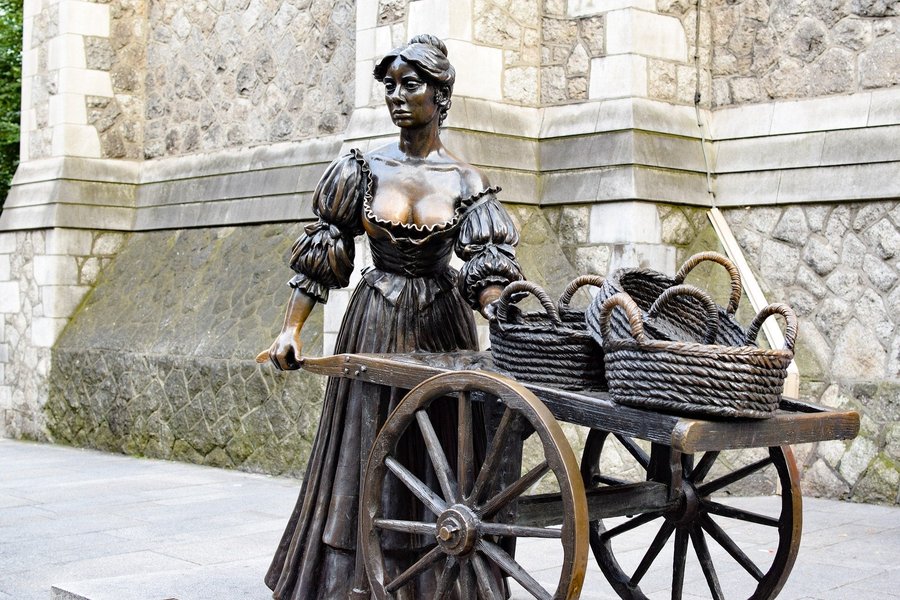
Additionally, the statue of Molly Malone, inaugurated during Dublin’s Millennium celebrations in 1988, portrays her in a way that has been variously interpreted by viewers. While some see the depiction as a valiant homage to a hardworking woman of Dublin, others have interpreted the statue’s form-fitting attire as suggestive of sensuality, which feeds into the narrative of her being more than just a fishmonger. Despite this, the prevailing consensus in mainstream historical accounts and cultural memory remains focused on her role as a pioneering figure in Dublin’s urban legend, rather than on any conjectured salacious behavior.
Analyzing the "Floosie" Label
The Origins of the Term and Its Application
The term "floosie" is a slang descriptor that has been used historically to denote a woman who was believed to have engaged in promiscuity. In examining whether Molly Malone fits this description, it is important to consider both the etymology of the term and the context in which it is applied. Language from the 17th and 18th centuries often saw the application of such labels as a means of moral judgment, especially towards women who operated in public spaces.
In the case of Molly Malone, several factors have contributed to the discussion:
- Name and Reputation: The diminutive "Molly" has been historically linked with familiarity, yet also with a lack of strict decorum in some colloquial uses. This association, however, primarily reflects linguistic trends more than personal biography.
- Economic Status and Street Life: As a street vendor, Molly’s life was characterized by economic hardship, where survival often necessitated manoeuvring within societal margins. Some modern interpretations extend this challenge to assume that her economic circumstances may have compelled her to engage in extra-commercial activities.
- Iconography and Public Perception: Public monuments, such as the well-known Molly Malone statue, sometimes contribute to reinterpreting a figure’s legacy. The statue’s design and the viewer’s interpretation can lead to discussions regarding the nature of her character, though such perceptions are subject to the viewer’s biases.
Despite these factors, it is critical to emphasize that there is no definitive historical evidence that explicitly establishes Molly Malone as having engaged in activities that would unambiguously classify her as a "floosie." Most contemporary academics and cultural observers lean towards viewing the character as an amalgam of historical possibility, local legend, and romanticized narrative rather than a straightforward biography marked by promiscuity.
Modern Interpretations and Societal Impact
In modern discourse, Molly Malone has come to represent much more than the sum of any single label. Whether or not she was a "floosie" is secondary to her symbolic power as an embodiment of Dublin’s vibrant history and resilience. Her depiction in art, literature, and popular media has evolved into a collective cultural icon, capable of inspiring both historical curiosity and contemporary reflection.
Many cultural critics argue that the focus on her potential promiscuity detracts from the broader narratives of survival and community identity. In a time when discussions about gender and societal roles are increasingly nuanced, Molly's story serves as a reminder of how female figures have historically been reinterpreted through the lens of moral judgment. The legacy of Molly Malone is thus best understood as a reflection of society’s evolving attitudes toward women in public and economic life.
Synthesizing the Evidence
When examining the available evidence, it becomes apparent that the label "floosie" is more a product of interpretative drift than a conclusively documented characteristic of Molly Malone. Historical texts provide little to no corroborative evidence for her involvement in prostitution, and the enduring popularity of the song and statue underscores her status as a sympathetic and heroic figure in Dublin folklore.
It is also valuable to note that the ambiguity surrounding her life has allowed for multiple layers of meaning. Instead of confining her to a single narrative, many Dubliners and cultural historians have embraced her complexity—acknowledging the possibility of moral transgression while celebrating her for her role in a broader cultural tradition.
Visualizing Perspectives: Radar Chart Analysis
The following radar chart provides a visual synthesis of various interpretative elements associated with the Molly Malone narrative. The chart aggregates perspectives such as historical evidence, folkloric influence, societal attitudes, cultural symbolism, and popular interpretation. Each dataset reflects an opinionated analysis of these dimensions.
Mapping the Narrative: A Mindmap Overview
Below is a mindmap that visually represents the various interpretative routes taken in the narrative of Molly Malone. Each branch reflects a different aspect of the debate, from historical evidence to folklore and cultural symbolism.
Comparative Viewpoints: An HTML Table Overview
The table below consolidates the main perspectives from various analyses regarding whether Molly Malone was a floosie, highlighting the sources, their viewpoints, and the nature of the evidence or interpretation presented.
| Source | Viewpoint | Evidence/Interpretation |
|---|---|---|
| Historical Records | Ambiguous; limited evidence | Sparse documentation; possible real person, but no clear evidence of promiscuity |
| Folk Song & Local Tradition | Romanticized narrative | The song primarily portrays Molly as a hardworking fishmonger with little explicit mention of sexual behavior |
| Cultural Commentary | Mixed interpretations | Some modern interpretations include allegations of promiscuity influenced by local humor and historical biases |
| Public Debate | Divergent and speculative | Debate reflects societal attitudes toward women and the evolution of language over time |
Multimedia Insight: Molly Malone in Video
The following video provides an engaging exploration of the Molly Malone legend, its historical roots, and the modern interpretations that have fueled debates such as whether she was a floosie. This multimedia presentation expands on the narrative and offers visual context that enhances the discussion.
FAQ Section
What does the term "floosie" mean in historical context?
Is there any concrete historical evidence regarding Molly Malone’s life?
How has public perception influenced Molly Malone’s legacy?
What role does the Molly Malone statue play in this discussion?
References
- Molly Malone - Wikipedia
-
A Brief History of Dublin's Mysterious Molly Malone - Irish Family History Centre
- Who is Molly Malone? - Grafton Street
- Molly Malone Information - Visit Dublin
- Molly Malone: A Dublin Legend - Ask About Ireland
Recommended Searches
 thegrandmalogbook.blogspot.com
Last updated April 1, 2025