
Moncler's 12-Month Outlook: Deciphering the Path for This Luxury Titan
An in-depth equity analysis for Moncler, weighing the prospects of a long versus short position over the upcoming year.
Key Investment Highlights
- Strong Brand & DTC Momentum: Moncler's iconic brand status, coupled with accelerating Direct-to-Consumer (DTC) sales, forms a robust foundation for growth and margin control.
- Asia: The Growth Engine & Geopolitical Wildcard: Significant exposure to the Asian market presents substantial expansion opportunities, yet it's intertwined with regional economic sensitivities and geopolitical factors.
- Valuation Vigilance in a Shifting Luxury Landscape: While fundamentals are strong, current valuation multiples and potential headwinds in the global luxury sector warrant careful monitoring for an optimal 12-month investment strategy.
From the perspective of a long/short equity analyst with a 12-month holding period, evaluating Moncler S.p.A. (MONC.MI) involves a meticulous assessment of its brand power, financial health, strategic initiatives, market positioning, and prevailing risks. The current analysis synthesizes available data to determine the most probable investment thesis for this luxury apparel giant.
The Bull Case: Arguments for a Long Position
Several compelling factors support a long position in Moncler over the next 12 months. The company has demonstrated resilience and a capacity for sustained growth, underpinned by its powerful brand and strategic execution.
Dominant Brand Equity and Market Leadership
Iconic Status and Pricing Power
Moncler is a globally recognized leader in the luxury outerwear segment. Its brand is synonymous with quality, innovation, and exclusivity, which grants it significant pricing power. This strong brand identity allows Moncler to command premium prices and maintain desirability among affluent consumers. The acquisition of Stone Island in 2021 further diversified its portfolio, extending its reach within the premium and streetwear-influenced luxury market, appealing to a broader, yet discerning, customer base.
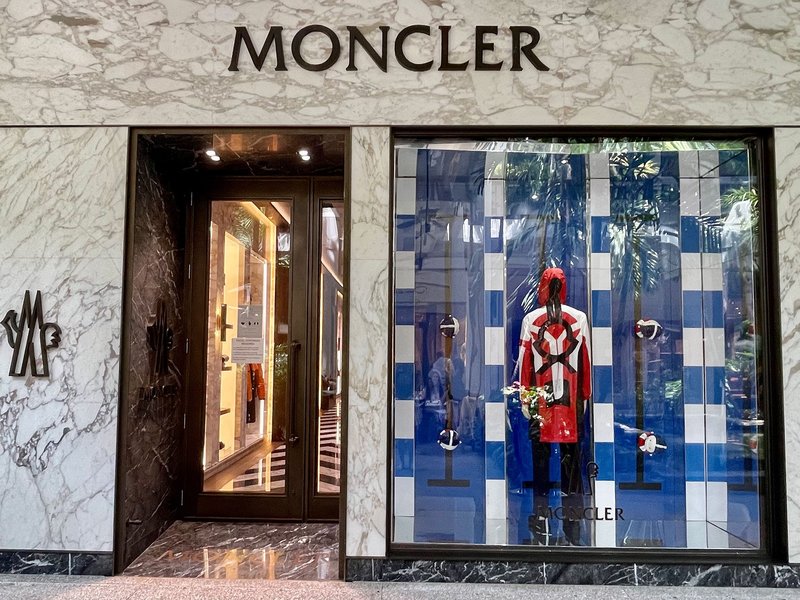
A Moncler boutique, exemplifying its luxury retail presence.
Robust Financial Performance and Growth Trajectory
Strong Revenue and Profitability
Moncler has a track record of impressive financial results. For instance, recent full-year revenues have exceeded €3 billion, with a resilient EBIT margin consistently around 29-30%. This level of profitability is notably high within the luxury sector and underscores the company's operational efficiency and strong demand. Analysts project continued revenue growth, with consensus estimates pointing towards mid-single-digit to low-double-digit increases in the coming years (e.g., around +3.9% in 2025 and +7.6% in 2026 for revenue).
Direct-to-Consumer (DTC) Channel Strength
A key driver of Moncler's success is its robust Direct-to-Consumer (DTC) channel, encompassing both physical flagship stores and e-commerce platforms. Both Moncler and Stone Island have reported double-digit growth in their DTC segments. This channel provides greater control over brand experience, customer relationships, inventory management, and ultimately, higher margins compared to wholesale. The continued expansion and optimization of the DTC network are significant positive catalysts.
Asia as a Key Growth Driver
Geographically, Moncler has a diversified sales profile with a significant and growing presence in Asia. Approximately 50% of sales are generated in Asia and the Rest of the World. This region, particularly China, remains a critical growth engine for luxury goods. Moncler's strategic focus on expanding its footprint and brand appeal in Asia positions it well to capitalize on the region's burgeoning affluent consumer base.
Strategic Vision and Management Acumen
Experienced Leadership
Under the leadership of CEO Remo Ruffini, Moncler has transformed into a global luxury powerhouse. His strategic vision and deep understanding of the luxury market have been instrumental in the brand's evolution and international expansion. Management's significant stake in the company aligns their interests with those of shareholders.
Sustainability Initiatives
Moncler is increasingly focusing on sustainability across its operations, from materials sourcing to supply chain management. This commitment resonates with the growing cohort of ESG-conscious luxury consumers and can enhance long-term brand value and resilience.
The Bear Case: Potential Headwinds and Risks (Grounds for a Short Position)
Despite the strong fundamentals, several factors could present challenges for Moncler and form the basis of a short thesis. These risks warrant careful consideration for a 12-month investment horizon.
Valuation Concerns and Margin Sustainability
Premium Valuation
As a successful luxury brand, Moncler often trades at premium valuation multiples (e.g., a P/E ratio around 21-23). While justified by its growth and profitability, this high valuation means the stock could be vulnerable to corrections if growth moderates, margins face unexpected pressure, or market sentiment shifts. Current analyst price targets, while generally positive, suggest a moderate upside, which might already be priced in.
Margin Pressure Risks
Sustaining industry-leading EBIT margins near 30% can be challenging. Factors such as rising raw material costs, labor inflation, increased marketing spend to maintain brand heat, and global supply chain disruptions could potentially compress margins. Any significant dip in margin performance could negatively impact investor sentiment.
Market Dynamics and Competitive Landscape
Macroeconomic Sensitivity
The luxury goods market is inherently cyclical and sensitive to macroeconomic conditions. An economic slowdown, high inflation impacting discretionary spending, or geopolitical instability could dampen consumer demand for high-end products, affecting Moncler's sales growth.
Dependence on Specific Markets
While Asia, particularly China, is a growth driver, over-reliance on this market also presents risks. Economic slowdowns, regulatory changes, or shifts in consumer preferences within China could disproportionately impact Moncler's performance.
Intense Competition
The luxury apparel and outerwear market is highly competitive, with established fashion houses (e.g., LVMH, Kering) and emerging niche brands vying for market share. Maintaining a competitive edge requires continuous innovation, effective marketing, and astute brand management. Any missteps could lead to market share erosion.
Fashion and Trend Dependency
While Moncler has classic core offerings, a portion of its appeal is tied to evolving fashion trends. The company must continually innovate and adapt to changing consumer tastes. A significant shift in trends away from its signature styles could negatively impact demand.
Execution and Integration Risks
Stone Island Integration
The successful integration and scaling of the Stone Island brand are crucial. While strategically sound, there are inherent risks in integrating a new brand, aligning cultures, and achieving desired synergies. Stone Island has faced some challenges in its wholesale channel, highlighting potential execution hurdles.
Financial Snapshot and Analyst Outlook
To provide a quantitative context, the following table summarizes key financial metrics and analyst projections for Moncler. These figures are indicative and subject to market fluctuations and revised estimates.
| Metric | Value / Projection | Note |
|---|---|---|
| FY23 Group Revenue | Over €3.1 billion (Moncler Group) / Approx. €3 billion (Moncler Brand) | Reflects strong top-line performance. |
| FY23 Group EBIT Margin | Approximately 29.5% (Moncler Group) / 29.3% (Moncler Brand) | Demonstrates high profitability. |
| Projected Revenue Growth (FY25 vs FY24) | Consensus ~+3.9% to mid-single digits | Based on analyst expectations. |
| Projected EPS Growth (p.a.) | Consensus ~+6.6% | Indicates earnings expansion potential. |
| Average Analyst 12-Month Price Target | Around €65 - €71 (approx. $70-$77, subject to FX) | Suggests potential moderate upside from current levels (as of May 2025). |
| Dividend Yield | Approximately 2.0% - 2.4% | Provides an income component for investors. |
| P/E Ratio (Trailing/Forward) | ~21-23 | Reflects market's growth expectations. |
Note: Financial figures and projections are based on publicly available information and analyst consensus around early 2025 and are subject to change. Specific figures may vary slightly between sources.
Visualizing Moncler's Investment Profile: A Balanced Scorecard
The following radar chart offers an opinionated visual assessment of key factors influencing a long or short thesis for Moncler. Scores are on a scale of 1 to 10, where for "Long Thesis Drivers," a higher score is more favorable, and for "Short Thesis Concerns," a higher score indicates a more significant risk.
This chart visually summarizes that while brand strength, Asian growth, and DTC performance are strong positives, valuation concerns and macroeconomic sensitivity pose notable risks that a short-seller might focus on, or a long investor must diligently monitor.
Moncler's Strategic Landscape: A Mindmap View
The following mindmap illustrates the interconnected factors shaping Moncler's investment outlook, highlighting its core strengths, growth avenues, and the challenges it navigates.
12-Month Investment Outlook"] id1["Long Thesis Drivers"] id1_1["Strong Brand Equity
(Moncler & Stone Island)"] id1_2["Robust Financials
(High Margins, Revenue Growth)"] id1_3["Dominant DTC Channel
(Physical & E-commerce)"] id1_4["Asia Market Expansion
(Especially China)"] id1_5["Experienced Management
(CEO Remo Ruffini)"] id1_6["Product Innovation & Desirability"] id2["Short Thesis / Key Risks"] id2_1["Premium Valuation
(High P/E Ratio)"] id2_2["Macroeconomic Headwinds
(Luxury Spending Slowdown)"] id2_3["Intense Competition
(Other Luxury Houses, Niche Brands)"] id2_4["Margin Sustainability
(Cost Pressures, Inflation)"] id2_5["Geopolitical Risks
(Impacting Key Markets like China)"] id2_6["Fashion Cycle Dependency"] id2_7["Stone Island Integration
& Wholesale Channel Challenges"] id3["Strategic Considerations"] id3_1["Sustainability Initiatives (ESG)"] id3_2["Digital Transformation"] id3_3["Geographic Diversification"] id4["Market Sentiment"] id4_1["Analyst Price Targets & Ratings"] id4_2["Institutional Ownership"] id4_3["Stock Volatility"]
This mindmap provides a holistic view of Moncler's strategic positioning, encompassing its internal strengths, market opportunities, and the external pressures it faces. Understanding these dynamics is crucial for formulating an informed investment decision.
Deep Dive: Moncler's Luxury Business Model
Understanding Moncler's approach to the luxury market, particularly its emphasis on Direct-to-Consumer channels and brand building, is crucial. The following video discusses aspects of investing in luxury companies like Moncler, touching upon why DTC is vital for such brands.
This video, "Moncler (MONC): Investing in the Next Big Luxury Company," delves into the investment case for Moncler. Key themes often discussed in such analyses include the importance of brand heritage combined with continuous innovation, the strategic shift towards controlling distribution through DTC channels to enhance customer experience and margins, and the global appeal of luxury items. For Moncler, this translates into leveraging its iconic outerwear while expanding into other apparel categories and accessories, and strategically growing its retail footprint in high-potential markets. The discussion around why DTC is important highlights how it allows luxury brands to maintain price integrity, manage inventory effectively, and gather valuable customer data, all of which are critical for sustained profitability and brand strength in the competitive luxury landscape.
Analyst's Verdict: The Most Likely Pitch for Moncler
Considering the comprehensive analysis of Moncler's strengths, weaknesses, opportunities, and threats, the most likely to be true pitch for a 12-month holding period leans towards a cautiously optimistic long position.
The fundamental strengths of Moncler – its iconic brand, proven pricing power, high-profitability business model, strong DTC execution, and significant growth runway in Asia – provide a compelling case for continued value creation. The company has demonstrated resilience and an ability to navigate challenging market conditions while delivering robust financial results. The dividend also offers a modest income component.
However, this long thesis is not without caveats. The "cautiously optimistic" stance acknowledges the genuine risks highlighted in the bear case:
- Valuation: The stock often trades at a premium, meaning significant outperformance may require flawless execution and continued strong growth to justify further multiple expansion.
- Macroeconomic Sensitivity: A global economic downturn or a specific slowdown in key luxury markets (especially China) could impact sales and sentiment.
- Competitive Pressures: The luxury market is dynamic, and Moncler must continually innovate and invest to maintain its edge.
An analyst at a firm like Point72 would likely structure this as a core long position, potentially with hedges against broader luxury market or macroeconomic downturns. Key monitoring points over the next 12 months would include:
- Quarterly earnings reports, focusing on like-for-like sales growth, DTC performance, regional trends (especially in Asia and the Americas), and margin evolution.
- Progress on Stone Island's integration and growth trajectory, particularly in its wholesale channel.
- Global macroeconomic indicators and consumer confidence levels in key luxury markets.
- Competitive actions and shifts in fashion trends.
In conclusion, while downside risks exist and warrant prudent risk management, Moncler's strong fundamentals and strategic positioning make a long pitch the more probable scenario for realizing positive returns over a 12-month horizon, assuming continued effective execution by its management team.
Frequently Asked Questions (FAQ)
What are the main drivers for a long position in Moncler?
Key drivers include Moncler's powerful brand equity and pricing power, consistent double-digit growth in its Direct-to-Consumer (DTC) channel, strong financial performance with high EBIT margins (around 29-30%), significant growth potential in the Asian market, and experienced leadership. The acquisition of Stone Island also offers diversification and access to a complementary customer segment.
What are the primary risks to consider for Moncler?
Primary risks involve its premium stock valuation which may limit upside, potential for slowing global luxury demand due to economic uncertainty or geopolitical events, intense competition in the luxury sector, challenges in sustaining very high EBIT margins amidst rising costs, reliance on the Chinese market (which carries specific economic and regulatory risks), and execution risks related to Stone Island's integration and performance in wholesale channels.
How significant is the Asian market for Moncler's growth?
The Asian market, particularly Greater China, is extremely significant for Moncler's growth. It accounts for approximately 50% of the company's sales (Asia & Rest of World). The region has a large and growing affluent population with a strong appetite for luxury goods. Continued expansion and success in this market are crucial for Moncler to achieve its future growth targets, though it also exposes the company to regional economic and geopolitical volatilities.
What is the role of the Direct-to-Consumer (DTC) channel for Moncler?
The DTC channel, which includes Moncler's own retail stores and its e-commerce platform, is a cornerstone of its strategy. It allows for greater control over brand presentation, customer experience, pricing, and inventory management. This typically leads to higher profit margins compared to wholesale. Both the Moncler and Stone Island brands have seen strong double-digit growth in their DTC channels, underscoring its importance for future profitability and brand building.
What is the general analyst consensus on Moncler stock?
As of early 2025, the general analyst consensus for Moncler stock is largely positive, often with an "Overweight" or "Buy" average recommendation. Price targets typically suggest a moderate upside potential (around 10-18%) from prevailing stock prices. Analysts forecast continued revenue and EPS growth, although they also acknowledge the risks related to valuation and macroeconomic conditions.
Recommended Further Exploration
- Explore a detailed analysis of Moncler's Direct-to-Consumer strategy effectiveness.
- Investigate the impact of Asian luxury market trends on Moncler's future revenue.
- Conduct a comparative analysis of Moncler versus other luxury outerwear brands.
- Review an assessment of Stone Island's integration and its contribution to the Moncler Group.
References
Last updated May 6, 2025