
Understanding Montauban Ore
A thorough exploration of the Montauban mining legacy and its modern prospects
Key Highlights
- Historical Significance: Montauban’s ore deposits trace back to early 20th-century mining with an extensive legacy.
- Modern Exploitation: Cutting-edge technologies are now applied to legacy tailings to recover valuable resources.
- Resource Composition: The deposit includes a mix of precious metals and base metals with a strong geological framework.
Introduction to Montauban Ore
Montauban ore refers primarily to the mineral deposits located in the Montauban area in Quebec, Canada. Historically an important mining region, the area has been exploited from the early 1900s until the late 20th century. The mineralization, known for its gold-rich volcanogenic massive sulfide (VMS) deposits, has seen intermittent mining efforts over the decades. In recent years, modern mining companies have revisited these historical sites, using innovative milling and exploration technologies to reprocess tailings and further explore the underlying hard rock mineralization.
Historical Background and Geological Context
Mining Heritage of Montauban
The Montauban Mine has a storied history dating back to 1910, when prospectors first discovered its promising ore bodies. Throughout the 20th century, intermittent mining operations led to significant mineral extraction, with periods of high activity interspersed with quieter intervals. This long history has left a legacy of both processed ore and tailings, characteristic of early mining techniques that were less efficient than today’s methods.
Geological Setting and Ore Composition
The Montauban area is situated within a well-known geological province characterized by a complex interplay of metamorphic and igneous processes. The region’s metamorphic frameworks, including the Grenville paragneisses and associated formations, provide the structural setting where mineralization occurred. The ore bodies in this district comprise a mix of various minerals. The primary mineral constituents include galena, chalcopyrite, and pyrrhotite. These minerals are typically found in volcanogenic massive sulfide (VMS) deposits, which are notable for hosting large volumes of both base and precious metals.
Mineral Components and Their Significance
The deposit is particularly notable for its gold and silver content. Historical production records suggest that during active mining phases the economic values reached remarkable highs, sometimes exceeding billions in historical production value. Apart from precious metals, the presence of base metals such as lead, zinc, and copper in some deposits enhances the overall economic attractiveness of the project. The geological complexity often results in a zonation where various metal assemblages exist in juxtaposition, offering multiple avenues for resource recovery.
Modern Approaches in Montauban Ore Exploration and Reprocessing
Reprocessing Legacy Tailings
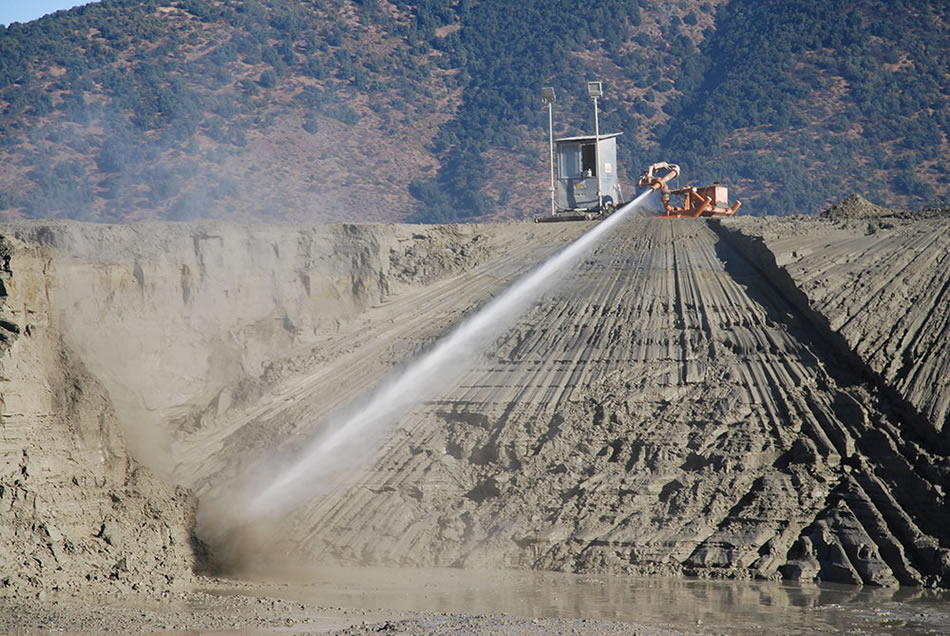
In recent years, advances in milling techniques have made it viable to reprocess tailings left from historical mining operations. Companies now focus on tailings reprocessing not just for economic reasons but as part of environmental restoration initiatives. The Montauban Gold Project stands as a prime example where historical tailings, located at sites such as Anacon Lead 1, Anacon Lead 2, Tétreault 1, Tétreault 2, and Notre-Dame-de-Montauban, are being revisited. Modern reprocessing techniques allow for the extraction of residual valuable resources that were previously uneconomic to recover using older technologies.
Environmental Benefits and Resource Efficiency
The strategy of reprocessing legacy tailings not only contributes to resource recovery but also mitigates environmental issues. By redeveloping these tailings, companies can lessen the environmental footprint left by past mining operations. Advanced environmental restoration plans are integral to modern projects, ensuring that reclamation efforts are implemented in parallel with resource extraction. This dual focus addresses both economic viability and ecological responsibility within the modern mining landscape.
Innovative Exploration Technologies
The exploration phase of modern mining projects at Montauban leverages state-of-the-art methods. One prevalent technology is ANT (advanced near-surface tomography) surveys, which facilitate the construction of detailed three-dimensional models of the deposit. With capabilities that allow identification of mineralization at depths extending up to three kilometers, such surveys enable the targeting of high-priority drill targets and more precise delineation of the deposit’s boundaries.
Advanced 3D Modeling
The use of three-dimensional modeling is a game changer in resource exploration. By digitally reconstructing the geological setting, companies can better understand the spatial distribution of mineralization. These models integrate data from various geophysical surveys, drilling information, and historical records. The high-resolution models provide a comprehensive understanding of the deposit, improving both targeting accuracy and the efficiency of resource extraction. This holistic approach enhances both exploration and subsequent development phases.
Resource Estimates and Economic Implications
Current Resource Estimations
Modern reassessment of Montauban’s historical mining areas has yielded impressive resource estimates. Current indications suggest that there are significant amounts of gold and silver remaining in both indicated and inferred resource categories. Specifically, the indicated resource estimates include approximately 7,800 ounces of gold and 610,350 ounces of silver with an overall tonnage that has been rigorously analyzed using modern resource estimation techniques. In addition, inferred resources are estimated at around 4,200 ounces of gold and 379,100 ounces of silver.
Economic Value and Market Potential
The economic potential of the Montauban ore is further underscored by the favorable grading of the material. With precise tonnage, grade, and metal content estimates, the project is well-positioned for future economic assessments. The reprocessing of tailings, combined with deeper exploration into hard rock mineralization, opens avenues for increased recovery rates and enhanced profitability. In a context where resource sustainability and environmental mandates are crucial, harnessing modern technology to extract these valuable metals aligns perfectly with contemporary market and regulatory needs.
A Comparative Overview
| Resource Category | Gold Content | Silver Content | Estimated Tonnage |
|---|---|---|---|
| Indicated | 7,800 ounces | 610,350 ounces | 603,700 tonnes at 0.4 g/t Au and 31.4 g/t Ag |
| Inferred | 4,200 ounces | 379,100 ounces | 319,300 tonnes at 0.41 g/t Au and 36.9 g/t Ag |
The table above provides a structured overview that demonstrates both the indicated and inferred categories with their corresponding gold and silver contents. Such comparisons help stakeholders understand the scale of the resource and the merit underlying further exploration and development efforts.
Integration of Legacy and Modern Mining Practices
Synergy of Past and Present Techniques
The Montauban ore represents a synthesis of historical mining practices and modern technological advances. While early 20th-century methods laid the groundwork for mineral discovery and extraction, today’s approaches integrate digital modeling, precise geophysical surveys, and environmentally sustainable practices. This combination allows for the re-examination of past waste streams (tailings) for economically viable metals alongside targeted exploration of untouched potential within the mine’s legacy infrastructure.
Technological Integration
Modern mining projects incorporate both legacy data and cutting-edge technology. Detailed historical records provide a baseline understanding of the mineralization, while technologies such as 3D modeling, ANT surveys, and computerized milling techniques offer the precision and efficiency modern mining operations require. This integration not only optimizes metal recovery but also minimizes environmental impacts, ensuring that both economic benefits and community responsibilities are addressed.
Challenges and Mitigation Strategies
Despite its rich history, the Montauban mining project is not without challenges. One of the primary hurdles is the environmental legacy associated with decades of tailings deposition. The reprocessing of tailings must be balanced with stringent environmental restoration policies. Additionally, the heterogeneous nature of the deposit, which is characteristic of VMS systems, requires advanced exploration techniques to accurately delineate ore zones and optimize extraction processes.
Addressing Environmental and Operational Challenges
To overcome these challenges, companies are employing several mitigation strategies. Robust environmental monitoring and reclamation programs accompany the reprocessing operations. Furthermore, simulation models aid in predicting the behavior of the deposit during extraction, allowing operators to adjust mining methods in real-time. The application of modern safety standards ensures that both workers and local communities benefit from enhanced oversight and minimized ecological disruption.
Future Prospects and Industry Implications
Long-term Viability and Resource Expansion
The integration of modern exploration techniques with legacy mining data creates a promising outlook for the Montauban project. The systematic exploration efforts are geared toward unveiling further extents of the deposit, potentially uncovering new zones of mineralization beyond the already identified tailings reprocessing sites. As exploration continues to reveal higher-resolution details about the deposit, the potential for expanding the resource base increases, which is critical for long-term project sustainability.
Contributions to the Mining Industry
Montauban ore serves as an excellent case study in the evolution of mining practices. It illustrates how modern techniques can breathe new life into historical mining sites while also contributing to the global sustainability agenda. By successfully merging legacy data with contemporary exploration tools, the project sets a precedent for other mining operations looking to revitalize old deposits in an environmentally friendly, economically feasible manner.
Market and Regulatory Considerations
Mining projects like Montauban are increasingly subject to regulatory oversight that emphasizes environmental stewardship and community engagement. As global trends lean towards sustainable industrial practices, projects that successfully integrate modern technology with responsible reclamation efforts can expect favorable regulatory reviews and community support. This alignment of market trends with strict regulatory frameworks enhances the economic stability and public trust required for long-term mining projects.
Comparative Analysis and Broader Implications
Comparing Historical and Modern Extraction Techniques
When comparing historical mining methods with today's reprocessing and exploration techniques, the improvement in resource efficiency and environmental responsibility is evident. Early methods often resulted in significant environmental degradation and inefficient recovery of metals. In contrast, modern reprocessing methods optimize resource extraction with technologies that maximize yield while reducing harmful by-products. This evolution not only improves the economic outcomes but also sets new environmental benchmarks in the mining industry.
Impact on Local and Global Markets
The strategic rejuvenation of historical mining resources such as Montauban is influential on both local economies and global markets. Locally, communities experience economic revitalization through job creation and environmental rehabilitation projects. Globally, the increase in recoverable resources contributes to easing supply constraints on precious and base metals, stabilizing prices and promoting investment in mining technologies. Thus, Montauban ore is not merely a relic of past industrial actions but serves as a modern example of sustainable resource management.
The Role of Strategic Partnerships and Investment
To realize the full potential of Montauban ore, strategic partnerships between mining companies, environmental agencies, and local stakeholders are crucial. Collaborative efforts improve both operational outcomes and community relations. Investors in modern mining projects are increasingly attuned to projects that prioritize environmental sustainability, emerging technologies, and transparent operations coupled with a respect for historical resource legacies. This synergy ensures that investments are oriented towards projects with both solid economic foundations and forward-thinking management approaches.
Conclusion
The story of Montauban ore is one of transformation—from a historical mining district with rich yet underutilized resources to a modern exploration project that leverages advanced technology, sustainable practices, and comprehensive environmental restoration. At its core, the Montauban project reflects the seamless integration of past legacy with future potential. It highlights how regional mining heritage can be revisited and enhanced through innovative reprocessing of tailings, detailed 3D geological modeling, and stringent environmental safeguards.
With confirmed resource estimates that include thousands of ounces of gold and significant quantities of silver, Montauban ore presents an enduring economic opportunity. The project embodies a broader trend in the mining industry: the revival and sustainable exploitation of historical deposits using modern methods. This approach not only maximizes resource recovery but also addresses environmental concerns, thus offering a model that could guide similar ventures worldwide.
References
- Montauban Gold Project - ESGold Corp
- ESGold Launches First Ever Systematic Exploration of Montauban's District-Scale VMS Deposit - Junior Mining Network
- Montauban Project - Mining Data Online
- Press Release April - ESGold Corp
- ESGold Montauban - ESGold Corp
- Montauban Mine Information - The Diggings
Recommended Further Reading
Last updated February 22, 2025