
Unlock Peak Performance: Master the Most Effective Study Techniques
Go beyond cramming and discover scientifically-backed methods to learn faster, remember longer, and understand deeper.
Traditional study methods like passively rereading notes or highlighting textbooks often fall short when it comes to long-term retention and true understanding. Fortunately, cognitive psychology and educational research have identified several powerful, evidence-based techniques that actively engage your brain, leading to more efficient and effective learning. Adopting these strategies can transform your study sessions from frustrating chores into productive pathways to academic success.
Highlights: Your Quick Guide to Smarter Studying
- Embrace Active Recall: Constantly test yourself and retrieve information from memory instead of passively reviewing it. This is consistently ranked as one of the most potent learning strategies.
- Leverage Spaced Repetition: Review material at increasing intervals over time. This technique combats the forgetting curve and cements knowledge in your long-term memory.
- Explain It Simply (Feynman Technique): Solidify your understanding by teaching the concept in simple terms, identifying knowledge gaps as you go.
Core Active Learning Strategies
The most effective study techniques shift you from a passive recipient of information to an active participant in your learning. Here are the cornerstone methods:
1. Active Recall (Retrieval Practice): The Memory Strengthener
What It Is
Active recall, also known as retrieval practice or self-testing, involves deliberately pulling information out of your memory rather than simply rereading or looking at it. Instead of reviewing your notes on photosynthesis, you'd try to explain the process from memory or answer questions about it.
Why It Works
Every time you successfully retrieve a piece of information, you strengthen the neural pathways associated with it. This makes the memory more durable and easier to access in the future. It's like exercising a muscle – the more you use it, the stronger it gets. Research consistently shows this method significantly outperforms passive review for long-term retention.
How to Implement It
- Flashcards: Create physical or digital flashcards (apps like Anki or Quizlet are great) with a question/term on one side and the answer/definition on the other. Test yourself regularly.
- Practice Questions: Answer questions from textbooks, create your own, or use online quizzes. Focus on recalling the answer before checking.
- Summarization: After reading a section or watching a lecture, close your materials and write down or verbally summarize the key points from memory.
- Brain Dumps: Take a blank piece of paper and write down everything you can remember about a topic. Then, consult your notes to fill in the gaps.
2. Spaced Repetition (Distributed Practice): Beat the Forgetting Curve
What It Is
Instead of cramming information into one long session, spaced repetition involves reviewing material at increasing intervals. You might review a concept shortly after learning it, then a day later, then a few days later, then a week, and so on.
Why It Works
This technique leverages the "spacing effect," a cognitive phenomenon demonstrating that learning is more effective when study sessions are spaced out. By reviewing information just as you're about to forget it, you signal to your brain that this information is important, strengthening the memory trace each time.
How to Implement It
- Review Schedule: Manually plan review sessions for new material (e.g., review notes 1 day, 3 days, 7 days, and 1 month after the initial lecture).
- Flashcard Software: Use apps like Anki, Quizlet, or RemNote, which have built-in algorithms that automatically schedule cards for review based on your performance (using systems like the Leitner System principle).
- Integrate with Active Recall: Combine spaced repetition with active recall by using flashcards or practice questions during your scheduled review sessions.
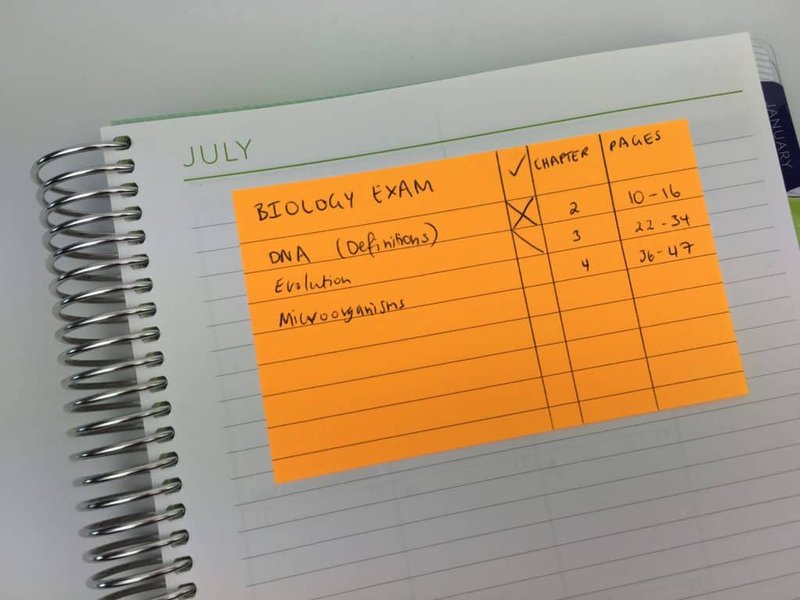
Using planners and sticky notes can help schedule spaced repetition sessions.
3. The Feynman Technique: Achieving True Understanding
What It Is
Named after Nobel Prize-winning physicist Richard Feynman, this technique is designed to ensure you deeply understand a concept, rather than just memorizing terms. It involves explaining the concept in the simplest terms possible.
The Four Steps
- Choose Your Concept: Select the topic you want to understand.
- Teach It to a Child: Write or speak an explanation of the concept using simple language, avoiding jargon. Imagine you're explaining it to someone with no prior knowledge (like a child).
- Identify Gaps & Review: When you get stuck or find yourself using complex terms, that's where your understanding is weak. Go back to your source material (textbook, notes) to clarify and fill these gaps.
- Simplify & Refine: Rewrite or refine your explanation, using analogies and simpler terms until it's clear and concise. Aim for an explanation that even a novice could grasp.
Why It Works
The process of simplifying complex ideas forces you to confront areas where your knowledge is fuzzy. Explaining it requires organizing the information logically and connecting different parts of the concept, leading to much deeper comprehension.
4. Interleaving: Mix It Up for Better Problem-Solving
What It Is
Interleaving involves mixing up different topics or types of problems within a single study session, rather than focusing on one topic exclusively (blocked practice). For example, instead of doing 20 problems on topic A, then 20 on topic B, you'd mix problems from both A and B.
Why It Works
Interleaving helps your brain learn to differentiate between concepts and choose the correct strategy for solving a problem. While it might feel harder initially compared to blocked practice, it leads to better long-term retention and improved ability to apply knowledge in new situations.
How to Implement It
- Mixed Problem Sets: When practicing math or science, work through problem sets that include questions from different chapters or topics covered recently.
- Vary Subjects: Alternate between studying different subjects within a longer study block (e.g., 30 minutes of history, followed by 30 minutes of chemistry).
- Switch Concepts: When learning related concepts (e.g., different verb tenses in a language), mix practice exercises rather than mastering one before moving to the next.
Structured Learning and Engagement Techniques
Beyond the core active methods, structured approaches and techniques that enhance engagement can further boost your learning.
5. SQ3R and PQ4R Methods: Active Reading Strategies
What They Are
These are acronyms for multi-step reading comprehension methods designed primarily for textbook material:
- SQ3R: Survey, Question, Read, Recite, Review.
- PQ4R: Preview, Question, Read, Reflect, Recite, Review.
Both involve previewing the material (headings, summaries), formulating questions, reading actively to find answers, reciting the information in your own words, and reviewing periodically. PQ4R adds a "Reflect" step, encouraging you to connect the material to existing knowledge.
Why They Work
These methods turn passive reading into an active investigation, improving focus, comprehension, and retention of dense material by providing a clear structure for engagement.
6. Dual Coding: Combining Words and Visuals
What It Is
Dual coding theory suggests that we process information through two channels: verbal and visual. Learning is enhanced when you combine both. This means pairing text or spoken words with relevant images, diagrams, graphs, or mind maps.
Why It Works
Using both channels creates stronger memory traces and provides multiple ways to retrieve the information later. Visuals can make abstract concepts more concrete and easier to grasp.
How to Implement It
- Create Mind Maps: Visually organize information, showing relationships between concepts.
- Draw Diagrams: Sketch processes, structures, or relationships (e.g., a biological cycle, a historical timeline).
- Use Infographics: Find or create infographics that summarize key data or steps.
- Annotate Notes with Images: Add simple drawings or icons to your notes to represent key ideas.
Mind Map of Effective Study Techniques
This mind map illustrates how various effective study techniques interconnect and support the overall goal of enhanced learning and retention. It visually represents the core concepts discussed, aligning with the dual coding principle.
(Retrieval Practice)"] id1a1["Flashcards"] id1a2["Practice Testing"] id1a3["Summarization"] id1b["Spaced Repetition
(Distributed Practice)"] id1b1["Review Schedules"] id1b2["Leitner System"] id1b3["SRS Software (Anki)"] id1c["Feynman Technique"] id1c1["Simplify Concepts"] id1c2["Identify Gaps"] id1c3["Teach to Others"] id1d["Interleaving"] id1d1["Mix Subjects/Topics"] id1d2["Varied Problem Sets"] id2["Structured Engagement"] id2a["SQ3R / PQ4R"] id2a1["Survey/Preview"] id2a2["Question"] id2a3["Read Actively"] id2a4["Recite/Reflect"] id2a5["Review"] id2b["Dual Coding"] id2b1["Mind Maps"] id2b2["Diagrams"] id2b3["Visual Notes"] id2c["Elaboration"] id2c1["Ask 'Why?'"] id2c2["Self-Explanation"] id2c3["Connect to Prior Knowledge"] id3["Supporting Strategies"] id3a["Time Management"] id3a1["Pomodoro Technique"] id3a2["Scheduling"] id3a3["Regular Breaks"] id3b["Environment"] id3b1["Minimize Distractions"] id3b2["Dedicated Study Space"] id3c["Note-Taking"] id3c1["Color-Coding"] id3c2["Annotation"] id3c3["Organization (OneNote)"] id3d["Well-being"] id3d1["Hydration & Nutrition"] id3d2["Sleep"] id3d3["Exercise"]
7. Elaboration (Elaborative Interrogation & Self-Explanation)
What It Is
Elaboration involves connecting new information to knowledge you already possess. This can be done by asking yourself "why" and "how" questions about the material (elaborative interrogation) or by explaining the material in detail to yourself, focusing on the logic and connections (self-explanation).
Why It Works
By linking new concepts to existing ones, you create a richer network of knowledge, making the new information more meaningful and easier to remember.
Supporting Strategies for Optimal Learning
While the techniques above are crucial, supporting factors like time management, environment, and well-being play a significant role in their effectiveness.
Time Management and Environment
- Pomodoro Technique: Study in focused bursts (e.g., 25-50 minutes) followed by short breaks (5-10 minutes), with longer breaks after several cycles. This helps maintain concentration and prevents burnout.
- Distraction-Free Zone: Choose a quiet, well-lit study space. Minimize interruptions by silencing your phone and closing irrelevant browser tabs.
- Scheduling: Plan your study sessions in advance. Treat them like important appointments. Use a planner or digital calendar.
- Regular Breaks: Step away from your studies periodically to rest your mind. Short walks or light physical activity can be beneficial.

A dedicated and organized study space minimizes distractions.
Effective Note-Taking
- Color-Coding & Annotation: Use different colors to highlight categories of information (e.g., definitions, examples, key dates). Annotate margins with questions, summaries, or connections.
- Organization: Keep your notes organized, whether digital (e.g., OneNote, Evernote) or physical. Structure helps during review.
- Focus on Key Ideas: Don't try to transcribe everything. Listen/read for main points and supporting details, summarizing in your own words.
Health and Well-being
- Sleep: Adequate sleep is crucial for memory consolidation. Aim for 7-9 hours per night.
- Nutrition & Hydration: A balanced diet and staying hydrated support optimal brain function.
- Exercise: Physical activity can boost mood, reduce stress, and improve cognitive function.
Comparing the Techniques: A Visual Overview
Different techniques excel in different areas. This radar chart provides a comparative overview based on common learning goals. The ratings are qualitative estimates based on the strengths generally attributed to each method in educational research, not hard quantitative data.
Interpreting the Chart
As shown, Active Recall and Spaced Repetition score highly on Long-Term Retention. The Feynman Technique excels in promoting Deep Understanding. Techniques like Interleaving boost Versatility and Understanding, though they might feel less efficient initially. SQ3R/PQ4R methods score well on Engagement Level, particularly for text-based learning. Ease of Implementation varies, with some methods requiring more setup (like Spaced Repetition systems) than others. Remember, the 'best' technique often involves combining several approaches tailored to your needs and the specific material.
Technique Summary Table
Here's a quick reference table summarizing the core principles and ideal applications of the most effective study techniques:
| Technique | Core Principle | Best For | Key Benefit | Considerations |
|---|---|---|---|---|
| Active Recall | Testing yourself; retrieving info from memory. | Facts, concepts, processes (most subjects). | Strengthens memory significantly. | Requires effort; can feel difficult initially. |
| Spaced Repetition | Reviewing material at increasing intervals. | Vocabulary, facts, formulas (long-term memorization). | Combats forgetting; highly efficient for retention. | Requires planning or specific tools (apps). |
| Feynman Technique | Explaining concepts simply; identifying gaps. | Complex topics, ensuring deep understanding. | Reveals misunderstandings; promotes clarity. | Can be time-consuming for broad topics. |
| Interleaving | Mixing different topics or problem types. | Math, science, skills requiring discrimination. | Improves problem-solving and adaptability. | Can feel slower or harder than blocked practice. |
| SQ3R / PQ4R | Structured reading (Survey, Question, Read, Recite, Review). | Textbooks, dense reading materials. | Enhances reading comprehension and engagement. | More structured, may feel rigid to some. |
| Dual Coding | Combining verbal and visual information. | Abstract concepts, processes, organizing info. | Uses multiple pathways for better recall. | Requires creating or finding relevant visuals. |
| Elaboration | Connecting new info to existing knowledge (asking 'why'). | Making connections, understanding context. | Builds a richer knowledge network. | Requires some baseline knowledge to connect to. |
| Pomodoro Technique | Focused work intervals with short breaks. | Maintaining focus during long study periods. | Prevents burnout, improves concentration. | Requires discipline to adhere to timers. |
Expert Insights on Study Techniques
Various experts and learning scientists rank and discuss study techniques based on evidence. Understanding these perspectives can help prioritize methods. This video provides a breakdown of different techniques, evaluating their effectiveness based on cognitive science research.
Learning Expert Ranks Study Techniques From Best to Worst (YouTube: Justin Sung)
The video emphasizes that techniques involving active recall and spaced repetition are generally considered top-tier due to strong empirical support. Methods like highlighting or rereading are often ranked lower because they are passive. However, the effectiveness can also depend on the context and how a technique is implemented. The key takeaway is to prioritize active, effortful strategies over passive ones.
Frequently Asked Questions (FAQ)
▶ What is the single 'best' study technique?
▶ How can I combine different study techniques?
▶ How long should study sessions be?
▶ Do 'learning styles' (visual, auditory, kinesthetic) matter for choosing techniques?
Recommended
- How can I effectively implement spaced repetition without using specialized software?
- What are the most effective ways to apply active recall techniques to subjects like mathematics and science?
- Can the Feynman Technique be combined with mind mapping for studying complex systems?
- How can I overcome procrastination even when trying to use structured methods like the Pomodoro Technique?
References
Last updated May 4, 2025