
PISA-Type Test Items on Aristotelian and Galilean Motion
Engaging multiple-choice questions probing the differences in motion conceptions
Key Highlights
- Contrast of Philosophical vs. Experimental Methods: Items emphasize Aristotle’s philosophical reasoning against Galileo’s empirical approach.
- Differentiating Motion Types: Questions distinguish between vertical motion, horizontal motion, and projectile motion.
- Understanding Natural vs. Uniform Motion: The test items elucidate how each thinker explained the natural tendency or inertia observed in moving objects.
Detailed Test Items
The following 10 PISA-type test items are designed to assess students’ abilities to compare and contrast the Aristotelian and Galilean conceptions of motion, particularly focusing on vertical motion, horizontal motion, and projectile motion. Each item provides a question stem, answer choices, the correct answer, and a brief illustrative suggestion.
Item 1: Aristotelian Vertical Motion
Question
A student observes two objects of different masses being dropped from the same height. According to Aristotelian physics, which of the following statements best explains the motion of these objects?
Answer Choices
- A) Both objects fall at the same rate because they are influenced by the same natural tendency.
- B) The heavier object falls faster because it has a greater inherent drive to reach its natural place.
- C) The lighter object accelerates faster due to lower resistance from its surroundings.
- D) The rate of fall is independent of the object’s mass.
Correct Answer
B) The heavier object falls faster because it has a greater inherent drive to reach its natural place.
Illustration Suggestion
A diagram illustrating two objects (one heavy and one light) being dropped side by side with arrows indicating different speeds assigned to the heavier object.
Item 2: Galilean Vertical Motion
Question
Galileo’s experiments showed that in the absence of air resistance, objects fall with constant acceleration regardless of mass. Which statement best reflects Galileo's view on vertical motion?
Answer Choices
- A) Heavier objects accelerate faster.
- B) All objects fall with an equal acceleration.
- C) Mass influences the rate of fall to a small degree.
- D) Acceleration is due to the natural tendency to reach the ground.
Correct Answer
B) All objects fall with an equal acceleration.
Illustration Suggestion
Diagram showing two objects (a heavy stone and a light feather) falling in a vacuum, with identical acceleration arrows.
Item 3: Aristotelian Horizontal Motion
Question
How did Aristotle explain the continuation of horizontal motion in objects, such as a rolling ball?
Answer Choices
- A) The object continues moving naturally without external force.
- B) The object requires continuous application of force.
- C) Horizontal motion is an illusion created by natural forces.
- D) It depends on the object's weight rather than its motion cause.
Correct Answer
B) The object requires continuous application of force.
Illustration Suggestion
Illustration of a ball on a flat surface with an arrow representing a constant push, highlighting Aristotle’s view.
Item 4: Galilean Horizontal Motion
Question
Galileo’s studies on motion indicated a different behavior for horizontal motion. Which statement best characterizes his explanation?
Answer Choices
- A) Continuous force is necessary to keep the object moving.
- B) Objects move horizontally at a constant velocity if no external forces act on them.
- C) Horizontal motion ceases without perpetual force due to natural friction.
- D) Objects in horizontal motion can only accelerate with constant propulsion.
Correct Answer
B) Objects move horizontally at a constant velocity if no external forces act on them.
Illustration Suggestion
Diagram showing a ball moving on a frictionless surface with a dashed arrow representing constant velocity.
Item 5: Aristotelian Projectile Motion
Question
According to Aristotle, projectile motion involves both vertical and horizontal components. How did he describe the motion of projectiles?
Answer Choices
- A) As a combination of natural vertical motion and a continuous horizontal force.
- B) As uniform motion in all directions without any change in speed.
- C) As solely vertical descent determined by an object’s weight.
- D) As motion in a perfect parabolic curve due to natural forces.
Correct Answer
A) As a combination of natural vertical motion and a continuous horizontal force.
Illustration Suggestion
Image of a cannonball trajectory diagram with separate labels for vertical (downward) and horizontal (force-driven) components.
Item 6: Galilean Projectile Motion
Question
Galileo’s analysis of projectile motion revealed a blend of two types of motion. Which of the following best describes his viewpoint?
Answer Choices
- A) Projectile motion is a result of natural impetus only.
- B) It is a composite of uniform horizontal motion and uniformly accelerated vertical motion.
- C) Motion is unpredictable due to environmental variables.
- D) Projectiles move with constant acceleration in both directions due to gravity.
Correct Answer
B) It is a composite of uniform horizontal motion and uniformly accelerated vertical motion.
Illustration Suggestion
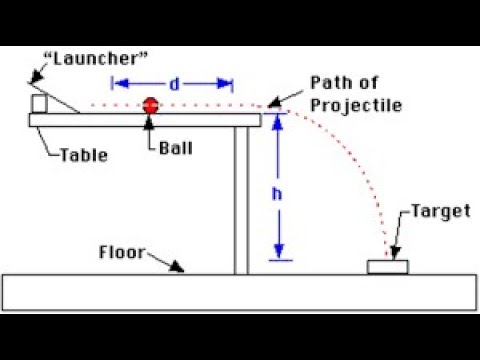
A diagram displaying a projectile’s curved path, with arrows indicating constant horizontal speed and accelerated vertical drop.
Item 7: Role of Experimental Evidence
Question
In challenging Aristotelian theories, Galileo introduced what type of methodology to better understand motion?
Answer Choices
- A) Pure philosophical debate.
- B) The use of controlled experiments and mathematical analysis.
- C) Observation without instrumentation.
- D) Reliance on ancient texts.
Correct Answer
B) The use of controlled experiments and mathematical analysis.
Illustration Suggestion
Depiction of Galileo’s inclined plane experiments, complete with measurement annotations and a representation of calculated motion paths.
Item 8: Natural Place and Material Composition
Question
Aristotle attributed the behavior of falling objects to the concept of "natural place." Which answer best explains this idea?
Answer Choices
- A) Objects are compelled to fall due to gravitational pull.
- B) Objects have inherent properties based on their material composition that drive them to their natural place.
- C) Motion is a random occurrence independent of the object's nature.
- D) Energy differences cause objects to seek equilibrium.
Correct Answer
B) Objects have inherent properties based on their material composition that drive them to their natural place.
Illustration Suggestion
Visual representation of different materials (e.g., stone vs. wood) with arrows indicating motion towards a designated “natural” zone.
Item 9: The Role of Air Resistance
Question
Galileo’s experiments in controlled environments, such as vacuums, helped refine concepts of motion. What conclusion did he come to regarding air resistance?
Answer Choices
- A) Air resistance is the primary factor affecting the rate of fall.
- B) Air resistance can alter horizontal motion but not vertical acceleration in a vacuum.
- C) In the absence of air resistance, all objects fall with constant acceleration regardless of mass.
- D) Air resistance affects heavier objects more significantly than lighter ones.
Correct Answer
C) In the absence of air resistance, all objects fall with constant acceleration regardless of mass.
Illustration Suggestion
A side-by-side diagram comparing motion with and without air resistance, the latter showing parallel acceleration vectors for different masses.
Item 10: Synthesis of Motion Theories
Question
Which of the following statements most effectively synthesizes the contrasting views of Aristotle and Galileo regarding all forms of motion (vertical, horizontal, and projectile)?
Answer Choices
- A) Aristotelian theory advocates that motion is sustained by continuous forces, while Galilean theory demonstrates natural uniformity in motion when external forces are removed.
- B) Both theories rely on continuous external forces to maintain motion in all directions.
- C) Galileo completely dismissed Aristotelian views in favor of modern gravitational concepts without any influence from past ideas.
- D) Aristotelian motion is fundamentally random, whereas Galilean motion depends on material properties.
Correct Answer
A) Aristotelian theory advocates that motion is sustained by continuous forces, while Galilean theory demonstrates natural uniformity in motion when external forces are removed.
Illustration Suggestion
Composite diagram summarizing both theories; one side with arrows showing continuous push for Aristotelian motion and the other with a frictionless track representing Galilean inertial motion.
Summary Table of Test Items
| Item No. | Motion Type | Focus Competency | Correct Answer Concept |
|---|---|---|---|
| 1 | Vertical | Aristotelian view on falling objects | Heavier objects fall faster due to natural tendency |
| 2 | Vertical | Galilean fall acceleration | All objects accelerate equally in a vacuum |
| 3 | Horizontal | Aristotelian view on continuous motion | Requires continuous force |
| 4 | Horizontal | Galilean concept of inertia | Constant velocity in frictionless conditions |
| 5 | Projectile | Aristotelian explanation | Combination of natural vertical and forced horizontal motion |
| 6 | Projectile | Galilean description | Composite motion: uniform horizontal, accelerated vertical |
| 7 | General | Use of experimentation | Galileo’s empirical method |
| 8 | Vertical | Natural place and material composition | Intrinsic properties determine motion in Aristotelian physics |
| 9 | Vertical | Role of air resistance | Uniform acceleration in absence of air resistance |
| 10 | General | Synthesis of both theories | Contrast between externally sustained and inertial motion |
References
- Aristotle vs Galileo - SlideShare
- Aristotle and Galileo's Concept - SlideShare
- Comparative Analysis - Deep Thinkers
- Vertical, Horizontal & Projectile Motion - StuDocu
- Galileo vs Aristotle on Free-Fall - Probing Physics
Recommended Related Queries
 mahenphy20online.wordpress.com
 kviffcogimlibrary.wordpress.com
 sharadkvs11.files.wordpress.com
Last updated March 18, 2025