
Comprehensive Analysis of Multi-Agent Orchestration Frameworks
Aligning Collaborative Intelligence with Real-World Implementation
Key Takeaways
- Interoperability and Communication: Implementing universal standards and modular architectures to ensure seamless agent integration.
- Enhancing Emergence: Utilizing adaptive algorithms and decentralized decision-making to foster authentic emergent behaviors.
- Ethical Safeguards: Embedding robust ethical frameworks and monitoring tools to ensure consistent ethical alignment across diverse agents.
- Feedback Optimization: Establishing multi-level feedback loops and employing meta-agents for effective synchronization and adaptation.
Interoperability and Communication
Challenges in Seamless Integration
The vision of multi-agent orchestration frameworks is to enable diverse agents to collaborate seamlessly towards shared objectives. However, achieving this seamless integration is fraught with challenges, primarily due to the heterogeneity of agents. Differences in data formats, reasoning paradigms, and operational speeds can lead to significant interoperability issues. These inconsistencies often result in miscommunication, misalignment of goals, and inefficiencies in collaboration, undermining the system's overall effectiveness.
Proposed Solutions
Middleware Solutions
Developing robust middleware platforms serves as a bridge between agents with incompatible protocols. Middleware acts as an intermediary layer that standardizes communication, ensuring that diverse agents can exchange information seamlessly. For instance, the Robot Operating System (ROS) exemplifies how middleware can harmonize communication across varied robotic agents, facilitating coordinated actions in complex environments like disaster response or smart city management.
Ontological Harmonization
Utilizing shared semantics through common ontologies ensures that agents interpret data consistently. Ontology platforms like OntoHub and OWL enable agents to understand and process information uniformly, mitigating risks of miscommunication. This harmonization is particularly critical in domains such as healthcare and intelligent transport systems, where accurate data interpretation is paramount for coordinated decision-making.
Model-Agnostic Frameworks
Adopting model-agnostic frameworks decouples agent implementations from their interaction layers, allowing integration irrespective of underlying design paradigms. OpenAI's universal API compatibility design is a step towards such frameworks, enabling diverse agents to interact without being constrained by specific implementation details. This flexibility is essential for scaling multi-agent systems and integrating agents developed under different frameworks.
Practical Applications
In disaster response systems, seamless collaboration among various agents—ranging from autonomous drones to ground-based robots—is crucial. Without robust integration mechanisms, these agents may misinterpret critical data or fail to synchronize their tasks effectively, leading to inefficiencies in rescue operations. Implementing middleware solutions and ontological harmonization can bridge these gaps, ensuring that all agents work cohesively towards common goals.
Enhancing Emergence
Authentic Emergent Behavior: Vision vs. Reality
Emergent behavior is a cornerstone of collaborative intelligence in multi-agent systems, where unprogrammed, innovative solutions arise from agent interactions. However, in practice, most observed emergent behaviors are constrained by pre-defined interaction frameworks and rigid parameters. This over-engineering limits the agents' capacity for genuine novelty and adaptability, restraining the system's potential for innovation.
Design Principles for Authentic Emergence
Decentralized Protocols and Bottom-Up Interactions
Shifting towards decentralized agent systems allows emergent patterns to develop organically from local interactions. Inspired by natural systems like ant colonies or flocking birds, decentralized protocols enable agents to make autonomous decisions based on local information, fostering authentic emergent behaviors without excessive human intervention.
Swarm Intelligence
Nature-inspired techniques such as swarm algorithms (e.g., ant colony optimization, particle swarm optimization) simulate collective action, allowing agents to collaborate while retaining individual autonomy. These algorithms facilitate collective problem-solving and self-organization, essential for tasks like search-and-rescue operations where flexible and adaptive strategies are required.
Reinforcement Learning (RL)
Incorporating reinforcement learning enables agents to adapt and refine their strategies based on interactions with their environment and other agents. Multi-agent deep RL algorithms, for example, have shown promise in dynamic lane allocation in traffic simulations, where agents learn to optimize traffic flow through continuous adaptation and coordination.
Case Study: Autonomous Drones for Forest Surveillance
Autonomous drones deployed for forest surveillance exemplify the current state and potential of emergent behaviors. These drones coordinate through simple communication protocols to dynamically cover large terrains, optimizing forest fire monitoring. While current systems are bounded by pre-set rules, integrating decentralized machine learning allows for more sophisticated and organic strategies, enhancing the overall effectiveness of surveillance operations.
Ethical Safeguards
Challenges in Ethical and Value Alignment
Ensuring ethical alignment across diverse agents poses significant challenges. Proprietary agents with opaque AI models and agents developed under differing cultural or organizational contexts can embed conflicting ethical priorities. Such fragmentation undermines the establishment of a unified ethical framework, leading to inconsistencies and potential ethical breaches in critical applications like healthcare, criminal justice, and financial systems.
Implementation of Ethical Principles
Embedded Ethical Precepts
Embedding foundational ethical guidelines directly into agent behaviors ensures that ethical considerations are intrinsic to their operations. Initiatives like Explainable AI (XAI) incorporate ethical principles within AI models, enhancing transparency and accountability. For example, incorporating Asimov’s laws for robotics can guide autonomous agents to prioritize human safety and ethical decision-making.
Regular Audits and Risk Assessments
Conducting automated and manual audits of agent systems is essential for maintaining ethical compliance. These audits assess adherence to established ethical frameworks, identifying and mitigating potential risks. Regular risk assessments ensure that agents continue to operate within ethical boundaries, adapting to evolving societal norms and technological advancements.
Proxy Metrics for Ethical Compliance
Utilizing surrogate indicators, such as fairness scores or interpretability metrics, facilitates the measurement and refinement of agents' ethical compliance. Proxy metrics provide tangible benchmarks for evaluating ethical performance, especially in opaque systems where direct assessment may be challenging. This approach allows for continuous monitoring and improvement of ethical standards across diverse agents.
Domain-Specific Applications
Healthcare Systems
In healthcare, ensuring consistent adherence to ethical standards like patient privacy and informed consent is paramount. Diagnostic AI agents, administrative bots, and patient interaction systems must operate under unified ethical principles to maintain trust and integrity. Shared ethical frameworks and continuous monitoring ensure uniform application of ethical standards, safeguarding patient rights and data integrity.
Autonomous Agents in Criminal Justice
Predictive policing algorithms and other autonomous agents in criminal justice must align with ethical standards to prevent biases and ensure fairness. Addressing issues like racial bias in data requires active mitigation measures, including fairness auditing and transparent decision-making processes. Embedding ethical considerations within these agents helps maintain accountability and equity in law enforcement applications.
Feedback and Adaptation
Operationalizing Feedback Loops
Effective feedback mechanisms are critical for refining agent performance and maintaining alignment with system goals. However, challenges such as varying agent learning speeds, asynchronous updates, and diverse algorithms hinder the seamless operation of feedback loops. These barriers can lead to misalignment, reduced efficiency, and ineffective adaptation across the system.
Strategies for Feedback Optimization
Multi-Level Feedback Loops
Implementing multi-level feedback loops addresses the complexities of heterogeneous agents by operating on both local and global scales. Local feedback loops focus on optimizing individual agent tasks, while global feedback loops ensure system-wide coherence and alignment with overarching objectives. This layered approach facilitates synchronized adaptation and performance enhancement across the entire multi-agent ecosystem.
Meta-Agents for Feedback Harmonization
Deploying meta-agents—higher-order agents designed to oversee and mediate feedback processes—ensures effective synchronization and adaptation across diverse agents. Meta-agents monitor system performance, identify misalignments, and adjust feedback mechanisms dynamically, maintaining real-time alignment with system objectives and mitigating potential errors.
Real-Time Metrics and Monitoring
Utilizing dynamic monitoring tools with key performance indicators (KPIs) allows for real-time assessment of coordination success and system health. These metrics enable proactive adjustments to agent behaviors and system configurations, ensuring continuous alignment with performance goals and facilitating timely interventions when discrepancies are detected.
Practical Implementation Example
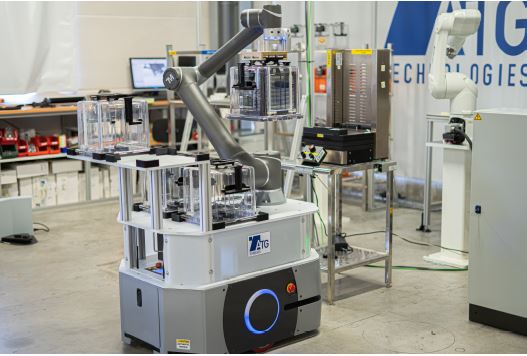
In manufacturing environments, collaborative robots (cobots) utilize layered feedback loops to optimize production processes. Local-level loops enable individual robots to adjust to specific task nuances, such as assembly or quality control. Simultaneously, global-level feedback loops analyze overall production metrics to adjust resource allocation and workflow optimization. This dual-layered feedback system enhances overall production efficiency and ensures cohesive operation across the manufacturing floor.
Future Directions and Recommendations
Investing in Open Ecosystems
Developing open, modular agent orchestration platforms accelerates progress towards genuinely interoperable multi-agent ecosystems. Open ecosystems promote flexibility, allowing diverse agents to integrate seamlessly and adapt to evolving requirements. This investment is crucial for fostering innovation and scalability in multi-agent systems, enabling them to tackle complex, real-world challenges effectively.
Balancing Pre-Engineering with Adaptivity
Striking a balance between human-defined constraints and agent adaptability is essential for fostering genuine emergent behaviors. Limiting pre-engineering allows agents to explore dynamic protocols and adapt autonomously, enhancing their capacity for innovation. Implementing adaptive frameworks, such as Markov decision processes in decentralized AI, encourages organic strategy refinement and problem-solving capabilities.
Operationalizing Ethical Considerations
Global collaboration among governments and organizations is imperative for establishing standardized ethical frameworks in multi-agent systems. Implementing compliance audits for proprietary models ensures that all agents adhere to shared ethical standards, promoting fairness, transparency, and accountability across diverse applications. This collective effort is vital for maintaining trust and integrity in multi-agent orchestrations.
Agent Health Monitoring
Building comprehensive monitoring frameworks, including anomaly detection in feedback processes, strengthens system adaptability and resilience. Proactive health monitoring pre-empts system failures by identifying and addressing irregularities in agent performance, ensuring continuous and reliable operation of multi-agent ecosystems. This approach enhances the overall robustness and sustainability of orchestrated systems.
Conclusion
Multi-agent orchestration frameworks like Ithy embody the transformative potential of collaborative intelligence, enabling diverse agents to surpass individual limitations through coordinated efforts. However, realizing this potential necessitates overcoming significant technical, operational, and ethical challenges. By prioritizing interoperability, fostering authentic emergent behaviors, embedding robust ethical safeguards, and optimizing feedback mechanisms, these frameworks can bridge the gap between visionary ideals and practical implementation. Future advancements focused on scalability, flexibility, and accountability will unlock the full potential of multi-agent ecosystems, driving innovation across domains such as urban management, disaster response, and autonomous transportation.
References
Last updated January 20, 2025