
Beyond Limits: Unlocking Scalability in Constrained Environments with Multi-Session Architecture
Discover an innovative system using parallel notebooks and real-time sync to conquer RAM and speed barriers.
Highlights of the Multi-Session Scalable System
- Enhanced Memory Capacity: Overcomes single-session RAM limits by distributing tasks across multiple interconnected notebooks, effectively pooling resources (e.g., 60-90 GB or more).
- Accelerated Processing: Bypasses traditional disk I/O bottlenecks through a real-time WebSocket synchronization backend, enabling high-speed data transfer between sessions.
- Distributed Computing Emulation: Mimics the capabilities of distributed systems within environments like Kaggle that typically impose isolation, allowing for more complex and larger-scale computations.
Architecting for Scale: The Parallel Notebook Approach
The foundation of this scalable system lies in its intelligent use of parallel notebooks. Instead of attempting to cram all processing steps—data loading, pre-processing, model training, and potentially augmentation—into a single memory-constrained environment, the workload is strategically divided across multiple, concurrently running notebook sessions.
Dividing the Labor: Specialized Notebook Roles
This division of labor allows each notebook to specialize and utilize its allocated resources efficiently. A typical configuration involves:
Notebook 1: The Main Engine
This session is dedicated primarily to running the core machine learning model. Allocating significant RAM (e.g., 30 GB) here allows for larger model architectures, bigger batch sizes, or holding substantial parts of the training data directly in memory for faster access.
Notebook 2: The Pre-Processing Powerhouse
Data preparation is often computationally intensive. This notebook handles tasks like cleaning, normalization, feature engineering, and transformation. With its own dedicated RAM (e.g., 30 GB), it can manage large raw datasets and perform complex operations without impacting the memory available for model training.
Notebook 3 (and beyond): Auxiliary Support
Optional but crucial for scalability, additional notebooks can be spun up for specialized, memory-heavy tasks. A common use case is data augmentation, which can generate vast amounts of training data. Other potential roles include running separate inference models, performing detailed analysis, or managing specific data pipelines. Each added session further increases the total available RAM (e.g., reaching 90 GB with three sessions, and potentially more).
Breaking the RAM Barrier
By distributing the workload, the system effectively aggregates the RAM from multiple sessions. This composite memory pool allows users to tackle problems that would be impossible within the limits of a single session, enabling the use of state-of-the-art models and larger, more complex datasets.
Real-Time Synchronization: The Communication Backbone
A major challenge in environments like Kaggle is the isolation between running sessions (containers). Traditionally, sharing data requires writing to disk, which is slow and introduces significant bottlenecks. This system overcomes this limitation through a custom-built real-time synchronization mechanism.
Leveraging WebSockets for Instantaneous Data Flow
The core of the synchronization layer is a lightweight WebSocket backend, typically implemented using Python frameworks like Flask along with the Socket.IO library. Here's how it works:
- Each notebook establishes a WebSocket connection to this central backend server.
- Data (like pre-processed batches, augmentation results, or model status updates) can be sent from one notebook to the backend.
- The backend immediately relays this data to the designated recipient notebook(s) via their WebSocket connections.
This creates a high-speed, low-latency communication channel between the notebooks, effectively bypassing the need for intermediate disk storage for data exchange.
Benefits of WebSocket Synchronization:
- Eliminates Disk I/O Bottlenecks: Data moves directly between memory spaces (via the network sockets), drastically speeding up inter-session communication compared to reading/writing files.
- Enables High-Speed Streaming: Large datasets or continuous streams of data (like augmented images) can be efficiently piped from one notebook (e.g., pre-processing) to another (e.g., main model training) in real-time.
- Overcomes Container Isolation: Provides a practical method for enabling communication and data sharing between otherwise isolated compute environments.
Visualizing the System Architecture
To better understand the flow of information and the relationship between components in the Multi-Session Scalable System, the following mindmap illustrates the core architecture. It shows how the parallel notebooks connect through the central WebSocket backend for real-time data exchange.
Key Advantages Realized
The combination of parallel processing and real-time synchronization delivers significant benefits, particularly in resource-constrained platforms:
Handling Larger Models and Data:
The most direct advantage is the ability to load substantially more data and larger, more complex models into the collective memory pool created by the multiple sessions. This unlocks possibilities previously hindered by single-session RAM limits.Boosting Processing Speed:
By eliminating the slow process of writing and reading data to disk for inter-session communication, the system significantly accelerates workflows. Pre-processed data can be fed directly to the training notebook, and augmentation can happen concurrently without file I/O delays.Inherent Scalability:
The architecture is designed for growth. If more memory or processing power is needed for additional tasks (like more complex augmentation, ensemble modeling, or hyperparameter tuning), new notebook sessions can be easily added to the system, connecting to the same WebSocket backend.
The Core Innovation: Distributed Computing Simulation
Perhaps the most innovative aspect is how this system effectively emulates a distributed computing environment within the restrictive boundaries of platforms like Kaggle. It cleverly circumvents the isolation limitations by establishing its own high-speed communication network via WebSockets, enabling cooperative processing across multiple independent sessions.
Comparative Analysis: System Performance
This radar chart provides a comparative view of the proposed Multi-Session Scalable System against other approaches across key performance and usability dimensions. The scores are relative estimates intended to highlight the strengths and trade-offs, particularly within constrained environments like Kaggle. Note that 'Implementation Ease' specifically refers to setup within such restricted platforms.
The proposed system excels in scalability and real-time synchronization speed within the context of free-tier or limited environments, offering a significant advantage over standard single-notebook usage. While dedicated cloud platforms offer superior raw power and potentially easier managed parallelization, they typically involve direct costs, whereas this system cleverly maximizes readily available (often free) resources.
Notebook Roles and Resource Allocation
The following table summarizes the typical roles and resource considerations for each notebook type within the multi-session architecture:
| Notebook Type | Primary Role | Typical RAM Allocation | Key Tasks |
|---|---|---|---|
| Main Notebook | Model Training/Execution | ~30 GB | Running core ML algorithms, handling training loops, receiving pre-processed data, inference. |
| Pre-Processing Notebook | Data Preparation | ~30 GB | Loading raw data, cleaning, normalization, feature engineering, scaling, sending processed data to Main Notebook. |
| Auxiliary Notebook (Optional) | Specialized Tasks | ~30 GB (or as needed) | Data augmentation, running secondary models, complex analysis, visualization, specific pipeline stages. |
Visualizing Scalable Infrastructure
While the proposed system operates within virtual environments like Kaggle notebooks, the underlying principles of scalability and parallel processing mirror concepts found in physical data centers. These images depict elements related to building robust and scalable computing systems, reflecting the kind of infrastructure thinking needed for large-scale machine learning, even when implemented in software.

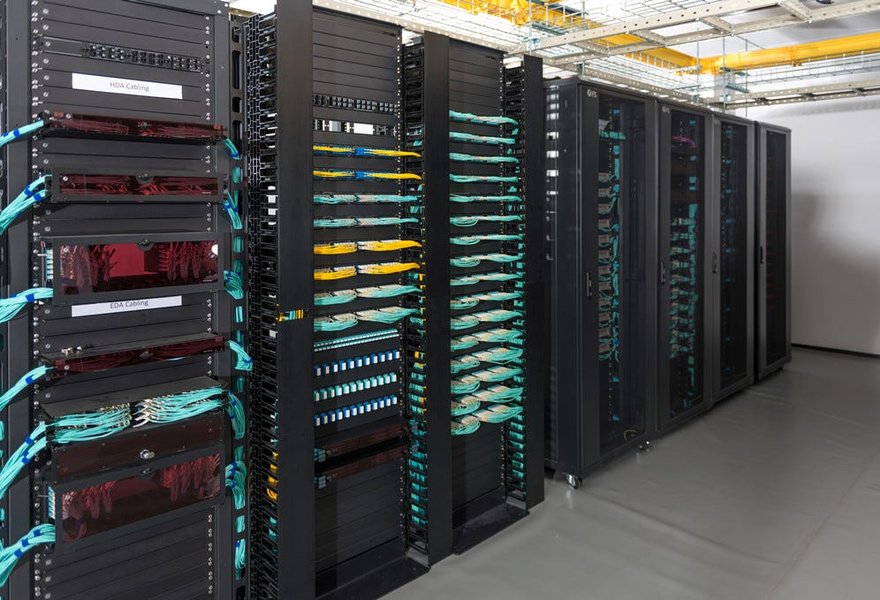
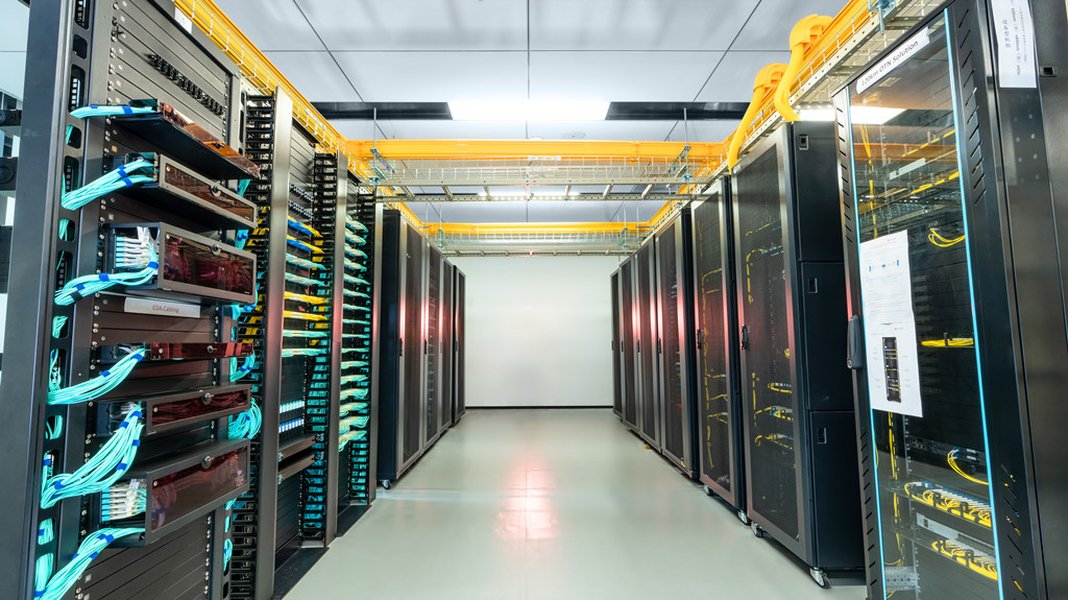
These images illustrate the physical hardware and structured design principles that enable large-scale computation. Server racks organize equipment, efficient cooling and power are essential, and well-managed network connectivity (analogous to our WebSocket backend) is critical for data flow between components. The multi-session system applies these concepts virtually to overcome software limitations.
Broader Context: Scalable Machine Learning Systems
The challenges addressed by the multi-session system—memory limits, processing speed, and scalability—are fundamental concerns in the field of Machine Learning Operations (MLOps) and system design. Building robust, scalable ML pipelines is crucial for deploying models effectively in real-world applications. The following video discusses principles and practices for building such systems, providing valuable context for the techniques employed in the multi-session architecture.
This discussion covers aspects like data management, model training infrastructure, deployment strategies, and monitoring, all essential components when moving beyond experimental notebooks to production-grade ML systems. Understanding these broader concepts helps appreciate the ingenuity of the multi-session approach in tackling scalability within specific platform constraints.
Frequently Asked Questions (FAQ)
What is the main problem this system solves?
How does the WebSocket backend enable real-time sync?
Is this system only useful for Kaggle?
What technical skills are needed to implement this?
References
- Building Scalable Machine Learning Systems for Real-Time Applications - Medium
- The Ultimate Guide to Building a Scalable Machine Learning Infrastructure - cnvrg.io
- What is ML Scalability - MLOps | MLOps Wiki - Censius AI
- Flask - Flask Project Website
- Socket.IO - Socket.IO Official Website
- Kaggle: Your Machine Learning and Data Science Community - Kaggle
- FreeFileSync: Open Source File Synchronization & Backup Software - FreeFileSync.org
Recommended Reads

Last updated April 5, 2025