
Unveiling the Mysteries: What is Multidimensional Collapse Physics?
Exploring the fascinating intersection of quantum mechanics, higher dimensions, and the nature of reality.
The term "Multidimensional Collapse Physics" delves into some of the most profound and perplexing areas of modern physics. It primarily refers to how systems, particularly quantum systems, transition from a state of multiple possibilities to a single, definite outcome, especially when considering scenarios involving more than the three spatial dimensions we experience directly. This concept bridges quantum mechanics, gravitational physics, and theoretical frameworks proposing extra dimensions.
Key Insights into Multidimensional Collapse
- Wave Function Collapse is Central: At its heart, the concept involves the "collapse of the wave function" in quantum mechanics, where a system in a superposition of states settles into one specific state upon measurement or interaction.
- Multiple Meanings of "Multidimensional": This can refer to the complex, multi-variable state spaces describing quantum systems, or more speculatively, to additional spatial dimensions beyond our familiar three, as proposed in theories like string theory.
- Exploring Beyond Standard Quantum Mechanics: The field encompasses objective-collapse theories that propose physical mechanisms for collapse, contrasting with interpretations like the Many-Worlds Interpretation (which denies collapse) and explores how gravitational collapse might behave in higher dimensions.
Understanding Collapse in Quantum Physics
The foundation of "collapse physics" lies in the quantum realm, specifically addressing the measurement problem.
The Quantum Measurement Problem and Wave Function Collapse
Quantum mechanics describes particles existing in a state of 'superposition' – simultaneously possessing multiple potential properties (like being in several locations at once). This is mathematically represented by the wave function. However, when we measure or observe the system, we only ever find one definite outcome. The transition from this fuzzy superposition to a single, concrete state is known as wave function collapse (or state vector reduction). It's as if the act of observation forces reality to "choose" one possibility out of many.
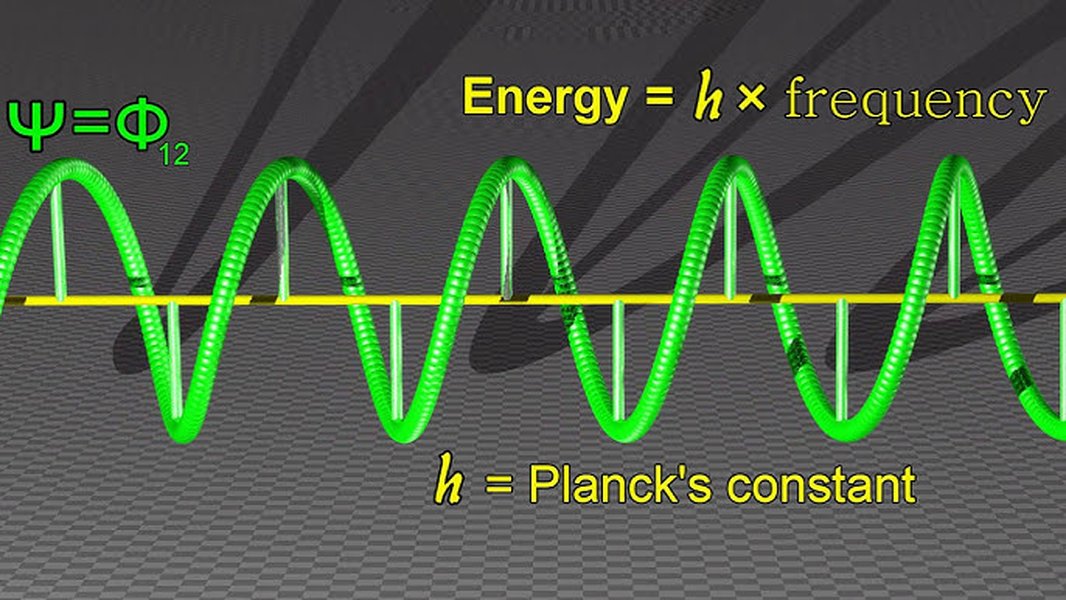
A visual representation attempting to capture the probabilistic nature of a quantum wave function before collapse.
This collapse process is postulated in the standard (Copenhagen) interpretation of quantum mechanics but isn't described by the fundamental equation governing quantum evolution (the Schrödinger equation). This disconnect leads to the "measurement problem": what constitutes a measurement, and why does it uniquely cause collapse?
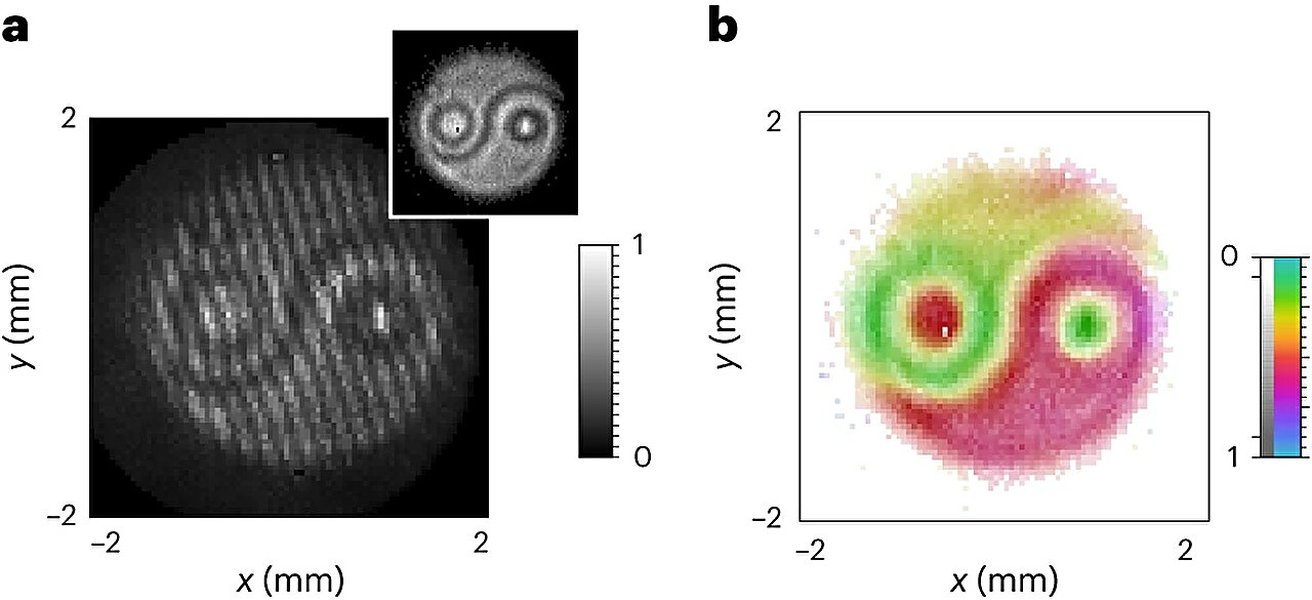
Quantum phenomena like entanglement highlight the non-intuitive nature of quantum states before measurement or collapse.
Interpretations: Competing Views on Collapse
The nature of wave function collapse is highly debated, leading to various interpretations:
The Standard View (Copenhagen-like Interpretations)
These interpretations accept collapse as a fundamental postulate linked to measurement or interaction with a macroscopic system/observer, without necessarily providing a deeper physical mechanism.
Objective Collapse Theories (Dynamical Reduction Models)
These theories propose that collapse is a real, physical process, occurring spontaneously and objectively, independent of observers. Examples include the Ghirardi–Rimini–Weber (GRW) theory and the Continuous Spontaneous Localization (CSL) model. They modify the standard Schrödinger equation with non-linear, stochastic terms that cause wave functions to spontaneously localize (collapse). This effect is proposed to be negligible for microscopic systems but becomes significant for macroscopic objects, explaining why we don't see large objects in superposition. These theories introduce new fundamental constants of nature and are, in principle, experimentally testable, though current experiments constrain them significantly.
Many-Worlds Interpretation (MWI)
MWI offers a radical alternative: there is no collapse. Instead, every possible outcome of a quantum measurement actually occurs, each in its own separate, branching universe or "world". The universal wave function evolves deterministically according to the Schrödinger equation, and the appearance of collapse is merely a result of observers becoming entangled with specific outcomes within their own branch of reality. While elegant in its mathematical formulation, MWI posits an unobservable multitude of parallel universes.
Adding Dimensions: Collapse in Higher-Dimensional Space
The concept of "multidimensional" adds another layer of complexity, referring either to the inherent complexity of quantum state spaces or to hypothetical extra spatial dimensions.
Theoretical Frameworks: Extra Dimensions in Physics
Many modern physics theories, most famously string theory and M-theory, propose the existence of more than three spatial dimensions. These extra dimensions are thought to be "compactified" – curled up on incredibly small scales – making them invisible to our current experiments. The existence of such dimensions could potentially influence fundamental forces, particle properties, and cosmological evolution.
Gravitational Collapse Beyond 3D
General relativity describes gravity as the curvature of spacetime. Gravitational collapse occurs when matter becomes dense enough to collapse under its own gravity, forming objects like black holes or neutron stars. Physicists study how this process might differ in spacetimes with more than four dimensions (3 space + 1 time). Research suggests that in higher dimensions, the formation dynamics, stability, and properties of black holes and singularities could be significantly different. For instance, the conditions leading to naked singularities (singularities not hidden by an event horizon) might change, and the nature of gravitational waves emitted during collapse could be altered.
Quantum Collapse and Higher Dimensions
The interplay between quantum collapse and potential extra dimensions is speculative but intriguing. Could extra dimensions influence the rate or nature of wave function collapse? Some theoretical ideas propose that quantum phenomena might be projections or effects of processes occurring in a higher-dimensional "bulk" spacetime. Objective collapse models might also be modified or constrained by the presence of extra dimensions. However, connecting these ideas remains a significant challenge in theoretical physics.
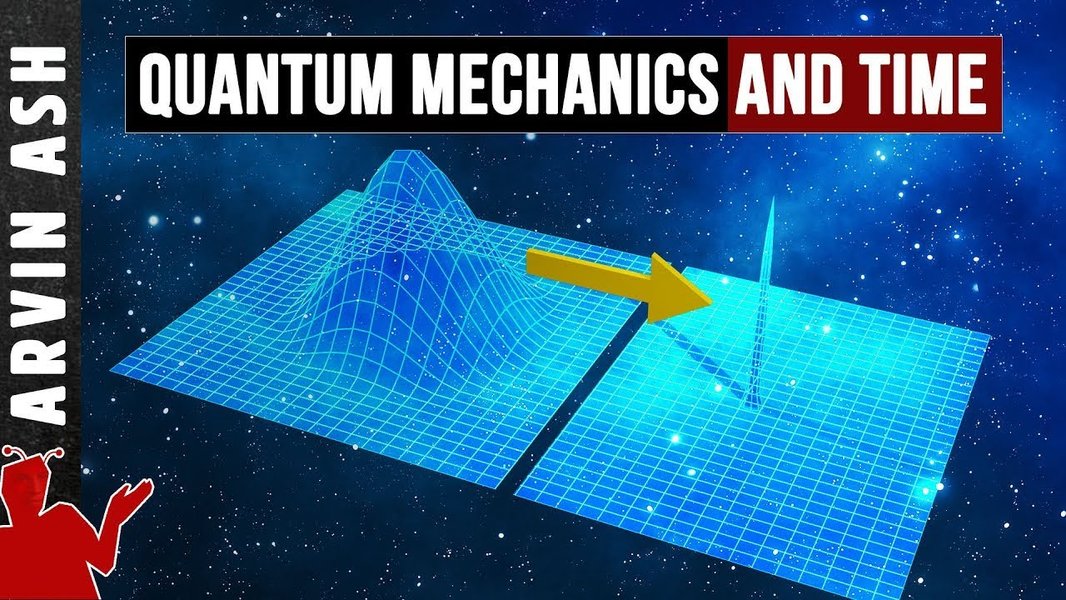
Connecting quantum mechanics (wave function collapse, decoherence) with the structure of spacetime, potentially involving higher dimensions, is a major goal of fundamental physics.
Visualizing Complexity: Dimensions and Collapse Dynamics
Mapping the Concepts
The following mind map illustrates the interconnected ideas within multidimensional collapse physics, showing the relationship between core quantum concepts, theoretical extensions involving higher dimensions, and alternative interpretations.
(GRW, CSL)"] id1b2a["Spontaneous Localization"] id1b2b["Modified Schrödinger Eq."] id1b2c["Testable Predictions"] id1b3["Many-Worlds Interpretation (MWI)"] id1b3a["No Collapse"] id1b3b["Branching Universes"] id2["Higher Dimensions"] id2a["Theoretical Frameworks"] id2a1["String Theory / M-Theory"] id2a2["Compactification"] id2b["Gravitational Collapse in >3D"] id2b1["Black Hole Formation"] id2b2["Singularity Properties"] id2b3["Cosmological Implications"] id2c["Potential Influence on Quantum Collapse"] id3["Related Areas"] id3a["Astrophysics"] id3a1["Core-Collapse Supernovae
(Multidimensional Simulations)"] id3b["Fundamental Physics"] id3b1["Quantum Gravity"] id3b2["Theory of Everything"]
Comparing Interpretations of Quantum Collapse
Different approaches to the measurement problem and the nature of collapse have distinct features and implications. The radar chart below provides a conceptual comparison of the Standard Interpretation (Copenhagen-like), Objective Collapse Theories, and the Many-Worlds Interpretation based on several key aspects. Note that this reflects a qualitative assessment rather than precise quantitative measures.
Comparing Approaches to Quantum Collapse
The table below summarizes the core differences between the main perspectives on wave function collapse:
| Feature | Standard QM (Copenhagen-like) | Objective Collapse Theories (e.g., GRW) | Many-Worlds Interpretation (MWI) |
|---|---|---|---|
| Collapse Postulate | Yes, occurs upon measurement. | Yes, occurs spontaneously via physical mechanism. | No collapse occurs. |
| Evolution Rule | Schrödinger equation + Collapse postulate. | Modified (non-linear, stochastic) Schrödinger equation. | Only Schrödinger equation (universal wave function). |
| Determinism | Non-deterministic (probabilistic outcome). | Non-deterministic (stochastic collapse). | Deterministic (evolution of universal wave function). Apparent randomness from observer's perspective within a branch. |
| Role of Observer/Measurement | Crucial trigger for collapse. | Observer/measurement is irrelevant; collapse is objective. | Observer becomes entangled with system; no special role for measurement itself. |
| Nature of Reality | One observed reality; wave function is primarily informational. | One objective reality; wave function is physically real and collapses. | Multiverse; all possible outcomes exist in different branches. |
| Treatment of Dimensions | Typically assumes standard 3+1 dimensions; collapse acts on state space. | Could potentially be formulated in higher dimensions, but primarily addresses collapse mechanism in standard dimensions. | Branches exist in abstract Hilbert space, potentially relatable to higher-dimensional concepts but not necessarily requiring extra spatial dimensions. |
Objective Collapse Explained
Objective collapse theories attempt to solve the measurement problem by proposing that wave function collapse is a real physical process. The video below explains the Ghirardi–Rimini–Weber (GRW) theory, one of the earliest and most influential objective collapse models.
This video details how GRW theory modifies quantum mechanics to include spontaneous, random "hits" that cause wave functions to localize in space. These hits are rare for individual particles but become frequent for large collections of particles (macroscopic objects), effectively causing their wave functions to collapse rapidly and explaining why we observe definite positions for everyday objects. It highlights how these theories differ from standard interpretations and MWI by positing a physical mechanism for collapse, making them experimentally falsifiable in principle.
Applications and Research Frontiers
Astrophysical Phenomena: Core-Collapse Supernovae
While distinct from quantum or gravitational collapse in extra dimensions, the study of core-collapse supernovae provides an example where "multidimensional" analysis is crucial in physics. These massive stellar explosions are intrinsically three-dimensional events. Simulating them accurately requires complex, multidimensional (2D and 3D) computer models incorporating hydrodynamics, neutrino transport, and nuclear physics. One-dimensional models fail to capture essential instabilities (like SASI and convection) that are now understood to be vital for driving the explosion. This showcases how considering multiple spatial dimensions in simulations is critical for understanding certain physical phenomena, even within standard 3+1 dimensional spacetime.
Theoretical Challenges and Future Directions
Multidimensional collapse physics remains a frontier area with significant challenges:
- Reconciling Quantum Mechanics and General Relativity: Understanding collapse, especially in strong gravitational fields or potentially higher dimensions, is deeply linked to the quest for a theory of quantum gravity.
- Experimental Tests: Designing experiments sensitive enough to detect deviations predicted by objective collapse theories or to probe signatures of extra dimensions is extremely difficult.
- Theoretical Consistency: Developing consistent mathematical frameworks for quantum fields and gravity in higher dimensions, and ensuring objective collapse models are compatible with relativity, are ongoing research efforts.
Continued exploration in these areas promises deeper insights into the fundamental structure of reality, the nature of measurement, and the ultimate fate of massive objects in the cosmos.
Frequently Asked Questions
What is wave function collapse?
Wave function collapse refers to the sudden transition of a quantum system from a superposition of multiple possible states to a single definite state when a measurement is performed or it interacts with its environment. It's how the probabilistic quantum description connects to the specific outcomes we observe.
Do extra dimensions actually exist?
Currently, there is no direct experimental evidence confirming the existence of extra spatial dimensions beyond the three we perceive. Theories like string theory propose them for mathematical consistency and to potentially unify forces, but they remain hypothetical. If they exist, they are likely "compactified" or hidden at extremely small scales.
What's the difference between quantum collapse and gravitational collapse?
Quantum collapse (wave function collapse) is a process in quantum mechanics where possibilities reduce to a single outcome upon measurement. Gravitational collapse is a process described by general relativity where massive objects (like stars) collapse under their own gravity, potentially forming black holes or other dense objects. While distinct, understanding situations involving both (like black hole evaporation or the Big Bang singularity) requires a theory of quantum gravity.
What are objective collapse theories?
Objective collapse theories (or dynamical reduction models) are alternative interpretations/modifications of quantum mechanics that propose wave function collapse is a real, spontaneous physical process, not just related to measurement. They modify the standard quantum equations to include terms that cause collapse automatically, more frequently for larger systems. Examples include GRW and CSL theories.
Is the Many-Worlds Interpretation a type of collapse theory?
No, the Many-Worlds Interpretation (MWI) is fundamentally a *no-collapse* theory. It avoids the postulate of wave function collapse altogether by proposing that all possible outcomes of a quantum event are realized, each in a separate, parallel universe or "branch" of the universal wave function.
References
- Wave function collapse - Wikipedia
- Collapse Theories - Stanford Encyclopedia of Philosophy
- Objective-collapse theory - Wikipedia
- Many-worlds interpretation - Wikipedia
- Gravitational Collapse in Higher-Dimensional Rastall - arXiv
- Shadow of higher dimensional collapsing dark star and blackhole - SpringerLink
- Physics Experiments Spell Doom for Quantum Collapse Theory - Quanta Magazine
Recommended
Last updated April 22, 2025