
Integrated Balanced Reading-Viewing Programs and Multimodal Comprehension
Developing Multimodal Comprehension Capability in Diverse Australian Classrooms
Key Insights
- Multimodal literacy is increasingly crucial in Australian classrooms, encompassing the understanding and creation of texts that combine various modes of communication.
- Implementing balanced reading-viewing programs that integrate explicit instruction in phonics and whole language approaches is essential for supporting diverse learners.
- Effective pedagogical practices, such as teacher modeling and deconstruction of genre, are vital for enhancing students' comprehension of multimodal texts.
The Shifting Landscape of Literacy in Australian Classrooms
In contemporary Australian classrooms, the concept of literacy has expanded significantly beyond traditional print-based reading and writing. The proliferation of digital technologies and diverse communication platforms means students are constantly engaging with texts that combine various modes, such as images, sounds, gestures, and spoken language, alongside written words. This evolving landscape necessitates a focus on multimodal literacy, which is recognized as an emerging area of importance in the Australian curriculum.
Multimodal texts surround us in everyday communication. From websites and social media to advertisements and educational videos, students encounter and need to interpret information presented through a combination of modes. The Australian Curriculum: English explicitly acknowledges the use of multimedia and multimodal texts in the study of written, spoken, and visual language. This reflects a crucial shift in educational priorities, emphasizing the need for students to develop the skills to comprehend and compose texts that integrate these different modes effectively.
Developing multimodal comprehension capability is particularly vital for diverse learners in Australian classrooms. Students bring a wide range of linguistic and cultural backgrounds, prior experiences, and learning preferences to the classroom. Engaging with multimodal texts can provide multiple entry points for understanding and can cater to different learning styles. For example, visual elements can support comprehension for students who are still developing their English language proficiency, while auditory components can enhance engagement for kinesthetic learners.
An integrated balanced reading-viewing program offers a framework for addressing these evolving literacy demands. Such programs aim to synthesize the strengths of different instructional approaches, balancing explicit instruction in foundational skills like phonics with opportunities for engaging with authentic, meaningful texts. By incorporating viewing and other modes alongside reading, these programs can more effectively prepare students to navigate the complex multimodal texts they encounter in the modern world.
Designing Curriculum Content for Multimodal Engagement (2.1)
Designing curriculum content that effectively supports the development of multimodal comprehension capability requires careful consideration of the texts students will encounter and the skills they will need to interpret them. My decisions regarding curriculum content would be directly informed by the understanding that multimodal literacy is not an optional add-on but an integral component of contemporary literacy.
Firstly, it is essential to select a diverse range of multimodal texts that are relevant and engaging for students. This goes beyond traditional literature and includes examples from various media platforms and genres. For instance, analyzing a news website requires students to not only read the headlines and articles but also interpret the accompanying images, videos, and interactive elements. Similarly, studying a graphic novel involves understanding the interplay between the illustrations and the written dialogue.
The Australian Curriculum provides guidance on the types of texts students should be engaging with, emphasizing the importance of using multimedia and multimodal texts across different subject areas. Therefore, curriculum content should integrate multimodal texts not just in English lessons but also in subjects like science, history, and the arts. This cross-curricular approach reinforces the idea that multimodal literacy is applicable in all areas of learning.
Furthermore, curriculum content should explicitly address the different modes used in multimodal texts and how they interact to create meaning. Students need to understand that images are not merely illustrations but convey information and perspectives. They need to analyze how layout and design influence how a text is read and interpreted. This requires moving beyond a purely linguistic focus and incorporating visual literacy, auditory literacy, and other forms of modal understanding.
For diverse learners, providing access to a variety of multimodal texts can be particularly beneficial. Texts with strong visual support can aid comprehension for students with lower English proficiency. Similarly, incorporating texts with auditory elements can support students who benefit from listening and speaking activities. Differentiation in text selection and the scaffolding provided during instruction are crucial to ensure all students can access and learn from multimodal content.
A key aspect of curriculum design for multimodal literacy is ensuring that assessment tasks also reflect the multimodal nature of learning. Rather than solely relying on traditional written assessments, assessments should provide opportunities for students to demonstrate their comprehension and composition skills through a variety of modes. This could include creating a digital presentation, producing a short film, or designing a website.
Utilizing Exemplar Genres to Scaffold Teaching and Learning (2.2)
The collection and use of exemplar genres play a crucial role in supporting teaching and learning within a balanced reading-viewing program focused on multimodal comprehension. Exemplar texts provide students with concrete examples of how different modes are used and combined within specific genres. By examining these examples, students can develop a deeper understanding of genre conventions and how they contribute to meaning.
My approach would involve curating a collection of exemplar multimodal texts representing a variety of genres, both print-based and digital. For instance, when focusing on persuasive texts, the collection might include print advertisements, online commercials, and political cartoons. For narrative texts, it could include picture books, animated short films, and interactive stories.
The use of exemplar genres should be integrated into explicit instruction. Teachers can use these texts to model how to identify genre features and how different modes work together to convey a message. For example, when analyzing a news report, the teacher can highlight how the headline, image, and opening paragraph work together to grab the reader's attention and establish the topic. This process of deconstruction, discussed further in the next section, is essential for making explicit the often implicit conventions of multimodal texts.
For diverse learners, exemplar texts can provide valuable scaffolding. By seeing clear examples of a particular genre, students can gain a better understanding of its structure and language features. Teachers can also select exemplar texts that reflect the diverse backgrounds and experiences of their students, helping to make the learning more relevant and engaging.
Here is a table illustrating how exemplar genres can be used to support multimodal comprehension:
| Genre | Exemplar Multimodal Texts | Focus for Multimodal Comprehension |
|---|---|---|
| News Report | Online news article with images and embedded video | Analyzing how headline, image, and video work together to present information and influence perspective. |
| Picture Book | Picture book with detailed illustrations and text | Interpreting the relationship between illustrations and text to understand plot, character, and theme. |
| Advertisement | Print advertisement with image and persuasive text | Analyzing how visual elements and language are used to persuade the audience. |
| Educational Video | Animated educational video with narration and on-screen text | Understanding how animation, narration, and text work together to explain a concept. |
In addition to using exemplar texts for analysis, students should also have opportunities to create their own multimodal texts within different genres. This allows them to apply their understanding of genre conventions and experiment with combining different modes to communicate their own ideas.
Teacher Modelling and Deconstruction to Enhance Comprehension (2.3)
Teacher modeling and deconstruction of genre parts are fundamental pedagogical strategies for enhancing students' reading and viewing comprehension, particularly in the context of multimodal texts. Modeling involves demonstrating to students how skilled readers and viewers approach texts, making visible the cognitive processes involved in comprehension. Deconstruction involves breaking down a text into its component parts to understand how they function individually and together to create meaning.
In a balanced reading-viewing program, teacher modeling can take various forms. During shared reading or viewing experiences, the teacher can "think aloud" to demonstrate how they make predictions, ask questions, connect ideas, and interpret the interplay between different modes. For example, when viewing a short documentary, the teacher might pause to model how they are interpreting the facial expressions of the people in the video and how those expressions relate to the spoken narration.
Deconstruction is particularly important for multimodal texts because the meaning is often distributed across different modes. Teachers can guide students in analyzing how visual elements, such as color, composition, and perspective, contribute to the overall message. They can also help students understand how sound effects, music, and spoken language influence the mood and interpretation of a text.
For example, when deconstructing a political cartoon, the teacher can model how to identify the key visual symbols and how they are used to convey a particular political message. They can also discuss how the text in the cartoon interacts with the image to create satire or commentary. This explicit teaching of how to "read" visual and other non-linguistic modes is crucial for developing multimodal comprehension.
Teacher modeling also extends to demonstrating how to use comprehension strategies flexibly across different types of multimodal texts. Strategies such as summarizing, questioning, clarifying, and visualizing need to be adapted when working with texts that combine various modes. Teachers can show students how to summarize the key information presented in a video or how to ask clarifying questions about the relationship between an image and its caption.
The Australian Curriculum emphasizes the importance of teachers modeling effective reading and viewing strategies. This includes demonstrating how to comprehend unfamiliar or complex vocabulary, interpret the image-language interface, and make inferences based on information presented in different modes. Modeling provides students with a clear example of what skilled comprehension looks like and provides them with strategies they can then practice independently.
For diverse learners, modeling and deconstruction can be particularly supportive. By explicitly demonstrating how to approach multimodal texts, teachers can make the learning more accessible. Visual and auditory modeling can also be beneficial for students who may find it challenging to access meaning solely through written text. Providing opportunities for students to collaboratively deconstruct texts with teacher guidance can further support their understanding.
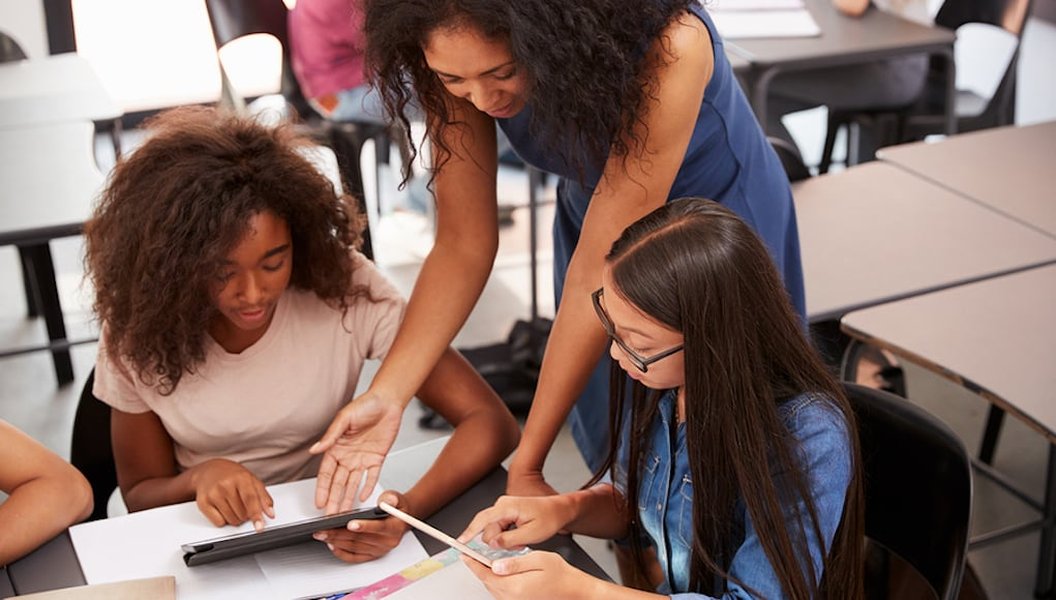
Teacher and student engaging in a discussion about a text, highlighting interactive learning.
The goal of teacher modeling and deconstruction is to empower students to become purposeful, active readers and viewers who can independently apply comprehension strategies to a wide range of multimodal texts. This requires consistent and explicit instruction, providing students with numerous opportunities to observe skilled comprehension and practice these strategies themselves.
Frequently Asked Questions
What is multimodal literacy?
Multimodal literacy refers to the ability to understand and create texts that combine two or more modes of communication, such as written language, spoken language, visual elements (images, layout), audio (music, sound effects), gestural cues, and spatial arrangements.
Why is multimodal comprehension important?
Multimodal comprehension is important because students today are constantly interacting with texts that integrate various modes. Developing this capability allows them to effectively interpret and make meaning from the complex communication they encounter in everyday life and across different subject areas.
What is a balanced reading-viewing program?
A balanced reading-viewing program is an instructional approach that seeks to integrate the best practices from different literacy philosophies, combining explicit instruction in foundational skills (like phonics) with opportunities for authentic reading and viewing experiences. It aims to provide a well-rounded approach to literacy development that includes engaging with multimodal texts.
How can teachers support multimodal comprehension in diverse classrooms?
Teachers can support multimodal comprehension in diverse classrooms by selecting a variety of multimodal texts that are relevant and accessible, explicitly teaching students how to analyze the different modes and their interactions, modeling comprehension strategies, and providing opportunities for students to create their own multimodal texts.
What role do exemplar genres play in teaching multimodal literacy?
Exemplar genres provide students with concrete examples of how different modes are used and combined within specific text types. By studying these examples, students can learn about genre conventions and develop a deeper understanding of how meaning is created in multimodal texts.
References
 footprintsforlearning.files.wordpress.com
 saskatchewanreads.wordpress.com

Last updated April 22, 2025