
Unlocking Cardiovascular Complexity: How Multiomics and Deep Phenotyping Are Revolutionizing Heart Health
Delving into the intricate dance of molecules and patient data to pave the way for personalized cardiovascular medicine.
The landscape of cardiovascular disease (CVD) research and treatment is undergoing a significant transformation. Scientists and clinicians are increasingly turning to the combined power of multiomics and deep cardiovascular phenotyping to unravel the complex mechanisms underlying heart conditions. This integrated approach promises a more precise understanding of individual patient profiles, leading to breakthroughs in diagnostics, risk prediction, and personalized therapies.
Key Insights: The Power of Integration
- Comprehensive Understanding: By merging various "omics" data (like genomics, proteomics, metabolomics) with detailed clinical and physiological information (deep phenotyping), researchers gain an unprecedentedly holistic view of CVD.
- Personalized Medicine: This approach is crucial for identifying distinct patient subgroups, even within the same diagnosis, allowing for tailored treatment strategies rather than a one-size-fits-all model.
- Biomarker Discovery: The fusion of multiomics and deep phenotyping accelerates the discovery of novel biomarkers, improving early detection, prognostic accuracy, and monitoring of treatment efficacy.
Deconstructing Multiomics: A Symphony of Biological Data
Multiomics refers to the large-scale, integrated analysis of diverse biological datasets obtained from different "omics" layers. Each layer provides a unique window into the molecular workings of an organism. In the context of cardiovascular health, the primary omics disciplines include:
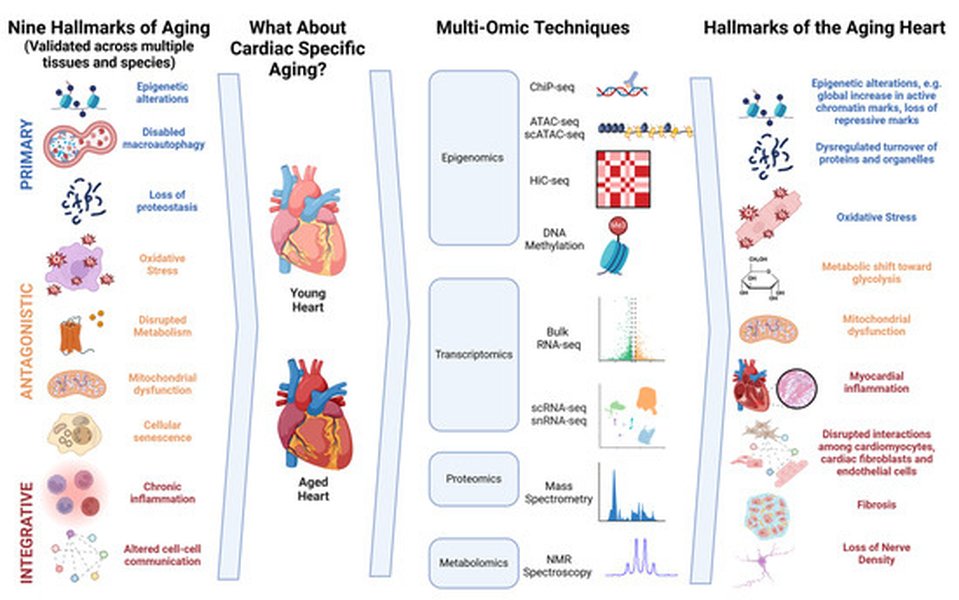
An illustration of the multi-omics approach, showcasing how different data layers contribute to understanding cardiac health and aging.
The "Omics" Orchestra
Genomics
Genomics focuses on an individual's complete set of DNA, including all genes. In CVD, genomic studies help identify genetic variations (like single nucleotide polymorphisms or SNPs) and mutations that may predispose individuals to heart conditions, influence disease severity, or affect their response to medications.
Epigenomics
Epigenomics investigates modifications to DNA that do not change the DNA sequence itself but can affect gene activity. Factors like DNA methylation and histone modifications play a crucial role in regulating gene expression and can be influenced by environmental factors, contributing to cardiovascular risk.
Transcriptomics
Transcriptomics analyzes the complete set of RNA transcripts (the transcriptome) in a cell or tissue at a specific point in time. This reveals which genes are active and at what levels, providing insights into how gene expression patterns change during the development and progression of CVDs.
Proteomics
Proteomics is the large-scale study of proteins, particularly their structures and functions. Proteins are the workhorses of the cell, and changes in protein abundance, modifications, or interactions can directly impact cardiac function and signal pathological processes in CVDs.
Metabolomics
Metabolomics examines the complete set of small-molecule chemicals (metabolites) found within a biological sample. Metabolites are the end products of cellular processes, and their profiles can reflect the biochemical activity and health status of the cardiovascular system, often serving as early indicators of disease.
Lipidomics
A specialized branch of metabolomics, lipidomics focuses on the comprehensive analysis of lipids (fats). Lipids play critical roles in cell membrane structure, energy storage, and signaling pathways, and dysregulation of lipid metabolism is a well-established factor in atherosclerosis and other CVDs.
Deep Cardiovascular Phenotyping: Painting a Detailed Patient Portrait
Deep cardiovascular phenotyping moves beyond standard clinical assessments to capture a highly detailed and comprehensive picture of an individual's cardiovascular health. This involves collecting an extensive range of data points:
- Advanced Imaging: Techniques like echocardiography, cardiac MRI (CMR), and CT scans provide detailed information on heart structure, function, blood flow, and tissue characteristics.
- Physiological Measurements: This includes invasive hemodynamic data, electrocardiograms (ECGs), stress tests, and continuous monitoring of vital signs.
- Clinical Data: Comprehensive medical history, family history, physical examination findings, and detailed symptom reporting.
- Laboratory Biomarkers: A wide array of blood tests measuring traditional risk factors (e.g., cholesterol, glucose) and novel biomarkers indicative of inflammation, cardiac stress, or injury.
- Lifestyle and Environmental Factors: Information on diet, physical activity, smoking status, socioeconomic factors, and exposure to environmental stressors.
The goal of deep phenotyping is to create a rich, multi-dimensional dataset for each patient, allowing for more precise characterization of their specific disease manifestation.

Example of multi-omic data integration, showing a spatial map of a human myocardial infarction, highlighting different cellular and molecular zones.
The Synergy: Integrating Multiomics with Deep Phenotyping
The true power emerges when multiomics data are integrated with deep phenotypic information. This combination allows researchers and clinicians to connect molecular-level changes with observable clinical characteristics and outcomes. This integrated approach leads to several key advancements:
Enhanced Disease Subtyping
Many CVDs, such as Heart Failure with Preserved Ejection Fraction (HFpEF), are notoriously heterogeneous. Patients with the same diagnosis can have vastly different underlying causes, disease trajectories, and responses to treatment. By combining multiomics profiles with detailed phenotypic data, it's possible to identify distinct subgroups of patients. These "phenogroups" or subtypes are characterized by unique molecular signatures and clinical features, paving the way for more targeted interventions.
Unraveling Pathobiological Mechanisms
Integrating omics data with deep phenotyping helps to illuminate the specific biological pathways and cellular processes that drive different forms of CVD. For example, linking genetic variants to changes in gene expression (transcriptomics) and protein levels (proteomics), and then correlating these with specific cardiac imaging findings or clinical symptoms, can reveal novel mechanistic insights into how diseases develop and progress.
Paving the Way for Precision Medicine
The ultimate goal is to move towards precision medicine in cardiology. By understanding an individual patient's unique multiomic and phenotypic profile, treatments can be tailored to their specific disease subtype. This could involve selecting drugs that target the specific molecular pathways active in that patient or identifying individuals who are most likely to benefit from a particular intervention or lifestyle change.
Improving Risk Prediction and Prognosis
Multiomics signatures, when combined with deep phenotypic data, can lead to the development of more accurate risk prediction models. These models can identify individuals at high risk of developing CVD long before symptoms appear, or predict the likely course of disease and response to therapy in patients already diagnosed. This allows for earlier, more proactive interventions.
Illustrating the Impact: Contributions to CVD Understanding
The various omics layers and deep phenotyping components contribute differently to our overall understanding and management of cardiovascular diseases. The radar chart below visualizes hypothetical relative contributions of these elements to achieving key goals in CVD research, such as biomarker discovery, understanding disease mechanisms, and personalizing treatment. For example, genomics might heavily contribute to identifying predisposition, while proteomics and metabolomics are key for understanding active disease states, and deep phenotyping provides the clinical context and outcome measures.
Applications and Real-World Impact
The integration of multiomics and deep phenotyping is already making strides in various areas of cardiovascular research.
Heart Failure with Preserved Ejection Fraction (HFpEF)
HFpEF is a prime example of a heterogeneous syndrome where this integrated approach is vital. Initiatives like the HeartShare Deep Phenotyping Study aim to collect comprehensive clinical, imaging, and multiomics data from HFpEF patients. The goal is to identify distinct HFpEF subtypes, understand their unique mechanistic drivers, and ultimately develop targeted therapies for this challenging condition.
Coronary Artery Disease (CAD) and Myocardial Infarction (MI)
In CAD, multiomics can help identify individuals with genetic predispositions, understand the molecular changes leading to plaque formation and rupture, and pinpoint biomarkers for early detection and risk stratification. For MI, multiomics profiling can shed light on the diverse responses to ischemic injury and help predict recovery trajectories and the risk of future events. Studies are using these approaches to map the molecular landscape of infarcted heart tissue, as illustrated below.

Visual representation of a multi-omics analysis workflow, often applied to conditions like atrial fibrillation or myocardial infarction to understand tissue-specific molecular changes.
The Role of Computational Tools
The sheer volume and complexity of data generated by multiomics and deep phenotyping necessitate advanced computational tools. Machine learning (ML) and artificial intelligence (AI) algorithms are increasingly employed to:
- Integrate and analyze these vast, heterogeneous datasets.
- Identify complex patterns and correlations that may not be apparent through traditional statistical methods.
- Develop predictive models for disease risk, progression, and treatment response.
- Facilitate the discovery of novel biomarkers and therapeutic targets.
Network medicine, which uses systems biology approaches to model interactions between genes, proteins, and metabolites, is also proving valuable in deciphering cardiovascular heterogeneity.
Summary of Omics Layers and Their Contributions
The following table summarizes the key omics layers, the type of biological information they provide, and their principal contributions to deep cardiovascular phenotyping:
| Omics Layer | Biological Information Provided | Primary Contribution to Cardiovascular Phenotyping |
|---|---|---|
| Genomics | DNA sequence, genetic variations, mutations | Identifying inherited risk factors, predispositions to CVDs, pharmacogenomics |
| Epigenomics | DNA modifications (e.g., methylation), histone modifications affecting gene activity | Understanding gene regulation influenced by environment and lifestyle, identifying disease-related epigenetic markers |
| Transcriptomics | RNA transcripts, gene expression levels | Revealing active genes and pathways in specific cardiac states, identifying dysregulated gene networks |
| Proteomics | Protein abundance, modifications, interactions, and functions | Identifying protein biomarkers, understanding disease mechanisms at the functional level, drug target discovery |
| Metabolomics | Small molecule metabolites, metabolic pathway activity | Discovering metabolic biomarkers for early detection and prognosis, understanding metabolic dysregulation in CVDs |
| Lipidomics | Lipid species and profiles | Assessing dyslipidemia, understanding the role of lipids in atherosclerosis and cardiac metabolism |
Visualizing the Interconnections: A Mindmap
To better understand the relationships between multiomics, deep phenotyping, and their applications in cardiovascular disease, the following mindmap illustrates the key concepts and their connections. It shows how various omics layers contribute to a deeper phenotypic understanding, which in turn drives advancements in personalized medicine and disease subtyping for CVDs.
Cardiovascular Phenotyping"] id1["Multiomics Layers"] id1a["Genomics
(Genetic Variants, Risk)"] id1b["Epigenomics
(Gene Regulation)"] id1c["Transcriptomics
(Gene Expression)"] id1d["Proteomics
(Protein Function, Biomarkers)"] id1e["Metabolomics
(Metabolic Signatures, Pathways)"] id1f["Lipidomics
(Lipid Profiles, Atherosclerosis)"] id2["Deep Cardiovascular Phenotyping"] id2a["Advanced Imaging
(Echo, MRI, CT)"] id2b["Physiological Data
(Hemodynamics, ECG)"] id2c["Clinical Data
(History, Symptoms)"] id2d["Biomarkers
(Blood, Tissue)"] id2e["Lifestyle & Environment"] id3["Integration & Analysis"] id3a["Computational Tools
(AI, Machine Learning)"] id3b["Network Medicine"] id3c["Biostatistical Methods"] id4["Applications & Outcomes in CVD"] id4a["Disease Subtyping
(e.g., HFpEF Phenogroups)"] id4b["Mechanistic Insights
(Understanding Pathophysiology)"] id4c["Personalized Medicine
(Tailored Therapies)"] id4d["Improved Risk Prediction"] id4e["Novel Biomarker Discovery"] id4f["Therapeutic Target Identification"] id5["Specific CVD Contexts"] id5a["Heart Failure (HFpEF, HFrEF)"] id5b["Coronary Artery Disease (CAD)"] id5c["Myocardial Infarction (MI)"] id5d["Arrhythmias"] id5e["Cardiomyopathies"]
Introductory Overview: Multiomics
The following video provides a general introduction to the concept of multiomics, explaining how different omics technologies like genomics, transcriptomics, proteomics, and metabolomics are combined to gain a more holistic understanding of biological systems. While not specific to cardiovascular disease, it lays a foundational understanding of why integrating these diverse data types is powerful in complex disease research.
This foundational knowledge is critical as we apply these multi-layered data approaches to the complexities of the cardiovascular system. Each 'omic' layer provides a piece of the puzzle, and by putting them together, along with detailed patient characteristics, we can see a much clearer picture of heart health and disease.
Challenges and the Path Forward
Despite the immense potential, several challenges need to be addressed:
- Data Integration and Standardization: Combining diverse and large-scale datasets from different sources requires sophisticated computational platforms and standardized protocols to ensure data quality and comparability.
- Computational Complexity: Analyzing multi-modal data demands advanced bioinformatics expertise and powerful computing infrastructure.
- Translation to Clinical Practice: Validating multiomic signatures and translating them into clinically actionable tests and interventions that benefit patients is a significant hurdle. This requires rigorous testing in diverse populations.
- Ethical Considerations: Issues related to data privacy, data sharing, and the equitable application of these advanced technologies must be carefully managed.
Despite these challenges, the field is rapidly evolving. Collaborative efforts, such as large-scale cohort studies and data-sharing initiatives, are crucial. Continued advancements in analytical methods, particularly in AI and machine learning, will further enhance our ability to extract meaningful insights from complex multiomics and phenotypic data. The future of cardiovascular medicine lies in harnessing this integrated approach to deliver more precise, personalized, and effective care.
Frequently Asked Questions (FAQ)
What is the main difference between genomics and proteomics in cardiovascular research?
Genomics studies an organism's entire DNA sequence, looking for genetic variations that might predispose someone to cardiovascular disease (CVD) or affect how they respond to drugs. It's about the blueprint. Proteomics, on the other hand, studies the complete set of proteins in a cell or tissue – their structures, functions, and interactions. Since proteins are the "doers" in the cell, proteomics gives insights into the active disease processes and can identify biomarkers or drug targets related to current heart function or dysfunction.
How does deep phenotyping improve upon traditional clinical assessments for CVD?
Traditional clinical assessments provide a snapshot of a patient's condition based on standard tests. Deep phenotyping goes much further by collecting a highly detailed and comprehensive array of data. This includes advanced imaging (like cardiac MRI), extensive lab tests (beyond routine ones), physiological measurements (like detailed hemodynamics), and information on lifestyle and environment. This granularity allows for a much more precise characterization of an individual's specific disease state, helping to uncover subtle differences between patients who might otherwise seem similar based on traditional assessments alone.
Can multiomics approaches help in preventing cardiovascular disease?
Yes, multiomics can play a significant role in CVD prevention. By identifying genetic predispositions (genomics), early molecular changes (e.g., via metabolomics or proteomics indicating inflammation or metabolic stress) even before symptoms appear, and understanding how environmental factors interact with an individual's biology (epigenomics), we can develop more accurate risk prediction models. This allows for targeted preventive strategies, such as lifestyle modifications or early interventions for high-risk individuals, potentially delaying or averting the onset of clinical CVD.
What are some of the main challenges in implementing multiomics in routine clinical cardiology?
Key challenges include the complexity and cost of generating and analyzing multiomics data, the need for specialized bioinformatics expertise and infrastructure, standardization of data collection and interpretation across different labs and hospitals, and the translation of research findings into clinically validated and actionable tests or treatments. Furthermore, ethical considerations regarding data privacy and equitable access to these advanced technologies must be addressed before widespread clinical adoption.
Recommended Further Exploration
- How is machine learning used to integrate multiomics data in cardiovascular disease research?
- What are the specific biomarkers discovered through multiomics for early detection of heart failure?
- Explore the ethical implications of using deep phenotyping and multiomics in personalized medicine for heart conditions.
- What advancements have been made in treating HFpEF using insights from multiomics and deep phenotyping studies like HeartShare?
References
Last updated May 11, 2025