
Event Subscription and Dispatch in libev Multithread
Insights into managing multithreaded event loops using libev
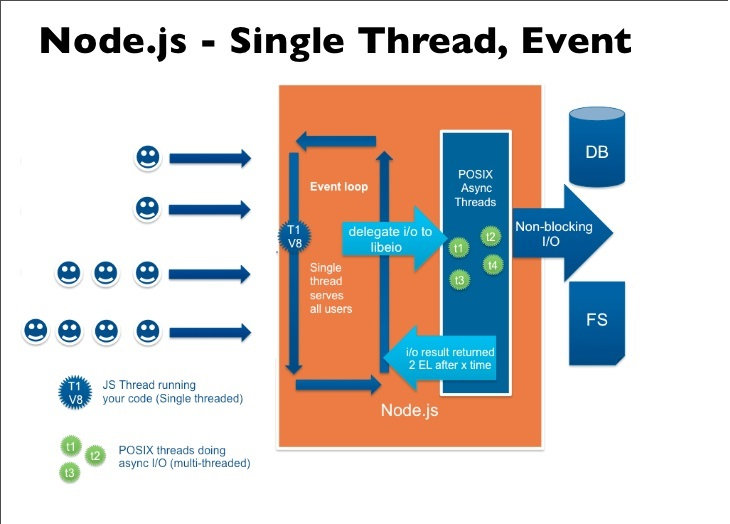
Key Highlights
- Separate Event Loops: Each thread should run its own event loop to ensure safe handling of events.
- Inter-Thread Coordination: Use methods such as ev_async, pipes, or queues to communicate and dispatch events between threads.
- Synchronization and Safety: Properly synchronize shared resources with threading primitives to ensure reliable execution.
Understanding libev in a Multithreaded Context
Libev is a high-performance event loop library designed for handling asynchronous I/O activities. It operates by continuously monitoring various sources for events, such as file descriptor readiness, timers, and signals, and then dispatching corresponding callbacks. In a multithreaded application, libev’s flexibility allows developers to assign individual event loops to different threads to take advantage of multicore processors while maintaining a clear focus on event-driven programming.
Design Philosophy and Event Loop Separation
The fundamental philosophy when deploying libev in a multithreaded environment is to separate concerns by assigning a dedicated event loop to each thread. This separation ensures that each thread is responsible solely for its associated events. It avoids conflicts and reduces the chances of race conditions that could occur if multiple threads were to manipulate a single event loop concurrently.
Benefits of Separate Event Loops
By establishing distinct event loops per thread, several benefits are achieved:
- Performance Optimization: Isolating event handling minimizes costly thread-synchronization operations and leverages multiple CPU cores effectively.
- Enhanced Stability: Freeing each thread from shared event loop responsibilities ensures that errors or delays in one thread do not directly impact others.
- Simplified Debugging: Isolated event loops can simplify debugging because the flow in each thread is encapsulated.
Event Subscription Mechanism in libev
Within each thread’s event loop, you register interest in specific events by creating watchers. A watcher is an abstraction in libev that gets notified when a particular event occurs. The typical watchers include:
- ev_io: Monitors file descriptors for read/write events.
- ev_timer: Triggers callbacks after a set period or at regular intervals.
- ev_signal: Listens for specific signals from the operating system.
- ev_idle: Executes when there is no other event to process.
The process of event subscription involves initializing the watcher with the appropriate event type, setting the callback function that will be executed when the event is triggered, and finally, starting the watcher. All these steps must be executed in the same thread as the event loop that will manage them.
Practical Steps to Subscribe to Events
Initialization and Configuration
Below is a typical sequence to subscribe to an event:
-
Create an Event Loop: Use
ev_loop_new()orev_default_loop()to initialize a new event loop. -
Configure the Watcher: Using functions like
ev_io_init()orev_timer_init(), set up the watcher specifying the callback to invoke once the event occurs. -
Start the Watcher: Begin monitoring for the event using
ev_io_start()orev_timer_start(). -
Run the Loop: Finally, start the event loop by calling
ev_run().
These steps ensure that the event watcher is active in monitoring its designated events, and once an event occurs, the callback function is executed.
Dispatching Events in a Multithreaded Setup
Dispatching events in a multithreaded context with libev involves a careful design. Each thread processes events asynchronously with its own event loop, but it may be necessary to communicate or transfer events between threads. This scenario usually arises in server applications where a main thread accepts incoming connections and then delegates the handling of these connections to worker threads.
Inter-Thread Communication Strategies
Since libev is not inherently designed for cross-thread operations, developers must utilize inter-thread communication techniques to safely dispatch events between threads:
- ev_async Watchers: These watchers allow one thread to send asynchronous notifications to another event loop running on a separate thread. When triggered, the target event loop will execute a specified callback.
- Pipes or Sockets: Another approach is to use operating system-level inter-process communication (IPC) mechanisms, such as pipes or UNIX domain sockets, to signal a thread’s event loop about an event.
- Shared Queues: Maintain a shared job queue using synchronization primitives (mutexes, semaphores) where one thread can place an event or task, and another thread can pick it up for processing.
Example: Using ev_async for Notification
Below is an illustrative code snippet which demonstrates the use of an ev_async watcher in a multithreaded context:
// Sample C code using libev and ev_async for inter-thread notification

#include <ev.h>
#include <pthread.h>
#include <stdio.h>
#include <stdlib.h>

ev_async async_watcher;

// Callback function that processes notifications in the worker thread
static void async_callback(struct ev_loop *loop, ev_async *w, int revents) {
    // Process the event; this callback will be invoked upon notification.
    printf("Worker thread received event notification! \n");
}

// Worker thread function to run its own event loop
void* worker_thread(void *arg) {
    struct ev_loop *loop = ev_loop_new(0);

    // Initialize the asynchronous watcher in this loop
    ev_async_init(&async_watcher, async_callback);
    ev_async_start(loop, &async_watcher);

    // Run the event loop to start processing events
    ev_run(loop, 0);
    ev_loop_destroy(loop);
    return NULL;
}

int main(void) {
    pthread_t thread;

    // Create a new worker thread
    if(pthread_create(&thread, NULL, worker_thread, NULL)) {
        perror("pthread_create");
        exit(EXIT_FAILURE);
    }

    // Simulate main thread work, then trigger the worker thread
    struct ev_loop *main_loop = ev_default_loop(0);
    sleep(1); // simulate delay before notification

    // Trigger the asynchronous event in the worker thread loop
    ev_async_send(main_loop, &async_watcher);

    // Keep main thread active to ensure proper communication
    pthread_join(thread, NULL);
    return 0;
}
In this example, a worker thread is created to run its own event loop. The asynchronous watcher (ev_async) is initialized and started within that thread's event loop. When the main thread sends a notification by calling ev_async_send, the worker thread's event loop picks up the event and executes the designated callback. This mechanism is crucial for safely dispatching events across multiple threads.
Synchronization and Thread Safety
Even though libev provides the flexibility to create multiple event loops in different threads, it does not manage thread synchronization for shared resources. In a multithreaded environment, particularly when these threads need to post or cancel events on another thread’s event loop, developers must enforce safe practices:
Key Considerations for Thread Safety
- Avoiding Data Races: Ensure that event watchers and shared data structures are accessed in a thread-safe manner. Use mutexes or other locking mechanisms to prevent concurrent modification.
- Shared Resource Management: When transferring events between threads (for example, using a shared queue), proper locking is required to maintain consistency.
-
Dedicated Event Loop Ownership: Do not call functions associated with an event loop from threads that are not its owner. Instead, use communication mechanisms like
ev_asyncto signal the correct loop.
The above practices mitigate the potential issues inherent in multithreaded programming, such as deadlocks or unexpected application behavior, and ensure that each event loop’s execution remains isolated while still facilitating inter-thread interaction.
Comprehensive Breakdown Using a Table
| Component | Description | Multithreaded Approach |
|---|---|---|
| Event Loop Creation | Initialize an event loop using ev_loop_new() or ev_default_loop(). |
Each thread should have its own independent event loop. |
| Event Watchers | Observers that monitor specific events (I/O, timers, signals). | Initialized and started within the thread owning the loop. |
| Dispatch Mechanism | Handling and invoking callbacks when an event occurs. | Use ev_async, pipes, or shared queues for cross-thread notifications. |
| Synchronization | Ensuring safe access to shared data. | Implement mutexes, locks, and thread-safe patterns. |
| Error Handling | Callbacks and recovery mechanisms for unforeseen events. | Ensure callbacks are robust and thread-safe. |
Common Use Cases and Practical Applications
Event subscription and dispatch in a multithreaded libev environment are widely applied in areas where high-performance network servers, real-time data processing, and asynchronous I/O operations are required. For example:
- Network Servers: A main thread can accept connections while worker threads handle I/O operations and dispatch application logic in an event-driven manner.
- High-Performance Applications: By distributing event processing across multiple threads, applications can handle thousands of simultaneous connections with minimal latency.
- Real-Time Data Systems: Multithreaded event loops allow real-time monitoring and processing of data streams without blocking other tasks.
Integrative Summary
In summary, adopting a multithreaded architecture with libev revolves around allocating separate event loops for each thread coupled with a robust method for inter-thread communication. This design paradigm ensures that each thread operates independently while still being able to collaborate when necessary through asynchronous notifications or shared queues.
Furthermore, the success of such a system relies heavily on ensuring thread safety. By sticking to strict synchronization principles, developers can avoid potential pitfalls such as race conditions, deadlocks, and resource starvation. Practical examples, such as the one provided above, showcase how using ev_async can simplify inter-thread communication. This not only facilitates better distribution of workloads across multiple cores but also improves overall application performance, especially in real-world networked environments.
Developers seeking to implement or optimize multithreaded applications using libev should continuously refer to authoritative resources, community examples, and comprehensive documentation for best practices. This methodical approach guarantees that the system is stable, performs optimally, and scales efficiently with increased loads.
References
- Using libev with multiple threads - Stack Overflow
- Libevent Official Site - Libevent
- Multi-threaded Libevent Server Example - Ronce Mer
- Libev Documentation - CPAN
- Libevent Event Documentation - Libevent.org
Recommended Queries for Deepening Your Knowledge
Last updated March 12, 2025