
Understanding the Debate on Elon Musk's Political Ideology
An in-depth exploration of controversies and interpretations regarding Musk's actions and views
Key Highlights
- Controversial Gestures and Statements: Musk’s public gestures and statements have sparked debates, with some labeling them as fascist while others argue they are misinterpreted or motivated by business interests.
- Complex Political Identity: Musk’s political persona is multifaceted. His actions suggest either an opportunistic use of controversial rhetoric or alignment with certain far-right viewpoints, making simplistic labels inadequate.
- Grok's Role as an AI: Grok, the AI chatbot developed under Musk’s enterprises, does not hold political opinions independently. Instead, it can reflect or critique aspects of Musk’s behavior based on its programming and training data.
Analyzing the Controversy Surrounding Elon Musk and Allegations of Fascism
Historical Context and Definition of Fascism
Fascism, as an ideology, is historically characterized by extreme authoritarianism, nationalism, suppression of political opposition, and often an emphasis on mythic national rebirth. Traditional fascism involves a centralized dictatorial power, strict control over societal circles, and a penchant for glorifying historical or militaristic symbols. When critics refer to someone as a fascist, it typically implies that their actions or rhetoric seem to promote these totalitarian ideas or normalize radical ideologies.
In the context of modern political debates, particularly when discussing high-profile figures like Elon Musk, the term “fascist” is often contentious and loaded with historical and ideological baggage. It is important to note that applying this label requires thorough examination of an individual's actions, public statements, affiliations, and the contextual motivations behind their behavior.
Incidents and Interpretations
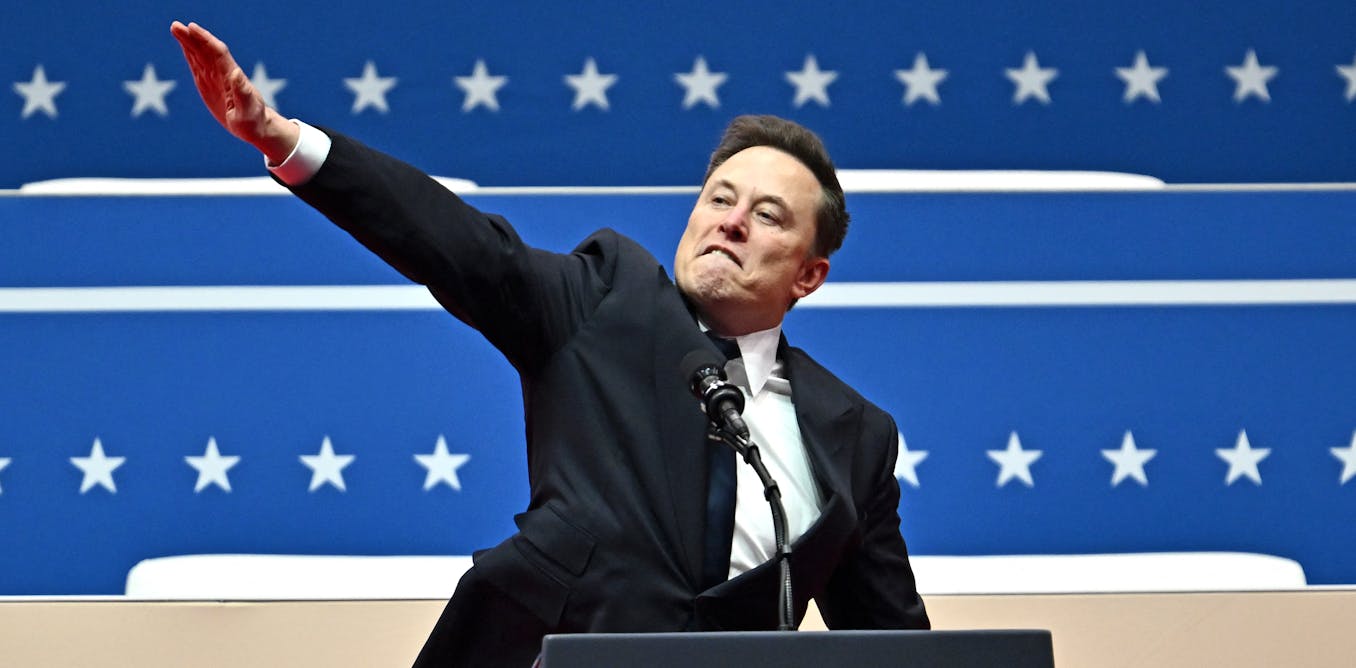
One of the key controversies involves an incident at a political event where Musk was seen making a gesture that many perceived as reminiscent of historic fascist salutes. While some commentators and organizations interpreted this gesture as a neo-Nazi salute, others argued that the context, the setting, and Musk's own explanations did not necessarily justify such an extreme label.
The interpretation of such public gestures can vary widely depending on the observer’s perspective, historical framing, and political biases. For some, even a gesture that might be culturally or historically charged is seen as part of a broader pattern of behavior that aligns with far-right or neo-fascist ideologies. For others, such acts are seen as misguided attempts at evoking controversy or as part of a larger, non-ideological public persona that is primarily driven by business agendas and personal branding.
Controversial Gestures at Public Events
At high-profile events, such as political inaugurations, Musk’s conduct was scrutinized. Critics argued that the gesture was a “fascist salute,” connecting it with extremist symbolism seen in historical totalitarian regimes. This interpretation was fueled by the fact that the gesture closely mirrored actions historically associated with fascist leaders, thereby sparking debates on whether it was intentional or an unfortunate misstep.
However, defenders contend that the same gesture could be reinterpreted as awkward or even miscommunicated body language, rather than definitive evidence of a fascist ideology. This perspective posits that public figures sometimes engage in provocative behavior not to espouse extremist ideologies, but rather to garner attention or even make a satirical or ironic statement in the modern media landscape.
Associations with Far-Right Groups
Another layer to the debate comes from Musk’s interactions and associations with far-right political groups in Europe, notably through his expressed support for parties with controversial reputations. Such associations lend credence to claims by some observers that his political leanings might edge towards extremist right-wing ideologies. Statements that seem to downplay or reframe historical accountability have further contributed to these accusations.
Yet, a more nuanced interpretation is that Musk’s engagements with these groups might not reflect a wholehearted embrace of far-right ideology but rather a strategic maneuver aimed at leveraging media attention or political capital in regions where such support can translate into economic or strategic gains. This multiplicity of incentives is common among influential business figures and does not necessarily imply that Musk adheres to fascist doctrine.
Complexity of Elon Musk’s Public Persona
Elon Musk's public persona is exceptionally complex. His role as a tech entrepreneur, strategist, and media influencer makes his ideological stance multifaceted and subject to varying interpretations. While he has occasionally expressed views or engaged in behaviors that appear to be provocative or polarizing, these actions might be more aligned with his objectives in business, innovation, and public relations rather than a consistent political ideology.
Several prominent academic and political analysts have pointed out that labeling Musk as a fascist oversimplifies the intricate motivations behind his public appearances and decisions. His statements and actions span a broad spectrum from libertarian to populist and, on occasion, even controversial. The cumulative effect of these diverse stances creates a public image that adheres to certain far-right narratives in some quarters, yet remains too fragmented to be unequivocally categorized within the traditional definition of fascism.
Motivations Behind Controversial Behavior
It is important to consider that many of Musk’s controversial actions may be driven by factors other than pure ideological commitment. Some analyses suggest that his behavior serves more as a means of self-promotion, an attempt to consolidate power, or a way to shape public perceptions in favor of his business interests. This perspective argues that the seemingly extremist actions might be calculated gestures designed to provoke a reaction, ensuring that his name remains in the public discourse.
In such cases, the alignment of his actions with extremist or fascist symbolism might be incidental rather than deliberately ideologically motivated. The absence of a consistent, clearly articulated political platform that fits within the narrow parameters of classical fascism further complicates a definitive classification.
The Role of Labels in Political Discourse
Terms like “fascist” are often used in political discourse as tools of criticism or rhetoric rather than precise categorization of one’s beliefs. In public debates, they can be wielded to discredit or delegitimize a public figure’s opinions or actions. With figures such as Musk, whose influence spans multiple domains from technology to social media, the application of such labels requires caution and a rigorous understanding of both historical and contemporary contexts.
The controversy over whether Elon Musk can be deemed a fascist is emblematic of our current political environment where ideological labels are sometimes applied more for their rhetorical power than for their analytical accuracy. What is clear is that Musk’s public behavior—involving provocative gestures and associations with politically charged groups—remains a subject of active debate. However, many analysts argue that his actions are better understood within the framework of self-interest and societal influence rather than a coherent adherence to the principles of classical fascism.
Grok’s Stance and the Nature of AI Commentary
Understanding Grok
Grok is an AI chatbot developed under the broader umbrella of Musk’s ventures. As with other AI systems, Grok does not hold personal beliefs or ideological alignments. Instead, its outputs are generated based on large datasets, machine learning algorithms, and the programming designed to interface with users on various topics.
It is essential to understand that AI systems like Grok are, by design, reflective of the data they are trained on and the instructions they are programmed to follow. In this sense, any opinion or perspective that Grok might appear to offer regarding Elon Musk or political ideologies is not a genuine ideological stance but rather a simulated response.
AI as a Mirror of Data
Grok’s “opinions” can be seen as an echo or aggregate reflection of the information available on the internet, including public sentiment, media interpretations, and scholarly research. If Grok appears to critique or highlight inconsistencies in Musk’s behavior, it does so not from an independent moral or political standpoint, but as a function of its underlying algorithms.
There have been reports that Grok has provided responses critical of some of Elon Musk’s actions, particularly regarding misinformation and the spread of extremist content on platforms like X (formerly Twitter). Nonetheless, these responses are not to be construed as Grok having a distinct political or ideological identity. Rather, they serve as a reminder that the output of AI is heavily influenced by the data it is built upon, which includes a wide array of opinions, criticisms, and analyses.
Grok Versus Human Critiques
The significant difference between human commentators and Grok lies in the capacity for independent judgment. While human experts can make nuanced arguments based on a deep understanding of historical contexts and ideological nuances, Grok’s output is generated within well-defined constraints provided by both its design and its training materials.
When it comes to politically charged figures like Elon Musk, even if Grok seems to echo critiques similar to those found in human discourse, these should be understood as reflections of broader public and media narratives rather than as evidence of the AI having its own position. Therefore, while it may seem that Grok offers “another opinion,” this is actually representative of assorted data points rather than a personal political stance.
Broader Social and Political Implications
The Impact on Public Discourse
The debate over Elon Musk’s ideological leanings is not just about one individual; it reflects a broader trend in the politicization of public figures. The intense scrutiny that accompanies innovators and high-profile entrepreneurs has significant implications for how society interprets authority, influence, and accountability.
In our digital age, every gesture and statement is amplified. Public figures like Musk are under constant observation, and every controversial act is dissected through the lenses of historical narratives and current political ideologies. The use of labels such as “fascist” in this context tends to serve as a shorthand for expressing broader societal concerns about the normalization of extremist rhetoric and behavior.
Critics argue that when influential individuals adopt or even inadvertently display symbols or behaviors associated with extremist ideologies, it can embolden groups that hold similar beliefs, leading to increased polarization. Meanwhile, defenders suggest that such controversies are part of a competitive media environment where provocative behavior is often a deliberate strategy to maintain relevance.
Implications for Social Media and AI
Elon Musk’s role as the owner of a major social media platform highlights another dimension of this debate. The policies and algorithms of platforms like X can significantly influence the spread of extremist content. Critics emphasize that there is a responsibility on the part of technology leaders to curtail the dissemination of harmful ideologies, whereas others argue that these platforms should remain neutral arenas for free speech.
In this sphere, AI systems, including Grok, have become integral in shaping public narratives. Their ability to curate, filter, and sometimes even generate content means that the biases inherent in these systems could potentially reinforce certain perspectives. This dynamic adds another layer of complexity to the discussion about whether or not influential figures are inadvertently encouraging extremist ideologies.
A Comparison Table: Key Considerations
| Aspect | Arguments Against Fascist Label | Arguments Supporting Fascist Associations |
|---|---|---|
| Historical Definition | Fascism involves complete ideological commitment to authoritarianism, which Musk has not consistently demonstrated. | Mimicking gestures historically associated with fascists can be interpreted as an alignment with extremist symbolism. |
| Public Gestures | Instances like the controversial salute can be seen as misinterpretations rather than intentional adherence to fascist ideologies. | Some observers argue that such gestures normalize neo-Nazi or far-right sentiments. |
| Political Associations | Musk’s interactions with far-right groups may be driven by strategic business or media motivations rather than a belief in fascism. | Support expressed for controversial far-right entities and controversial statements raise concerns about his ideological leanings. |
| Business Interests vs. Ideology | His primary focus on technological innovation and capitalist enterprise does not neatly fit into ideological categories. | The blending of business tactics with provocative political stances can create an appearance of ideological consistency with extremist views. |
| AI Reflections (Grok) | Grok, as an AI, does not have a political opinion—it reflects aggregated data rather than personal belief. | Critiques generated by Grok, if any, mirror broader societal concerns, which sometimes include allegations of extremist tendencies. |
Synthesizing the Perspectives: Is Elon Musk a Fascist?
Nuanced Perspectives
In synthesizing the varied perspectives on Elon Musk’s political and ideological stance, it becomes clear that defining him strictly as a fascist is an oversimplification. While there are noticeable elements in his public behavior and certain associations that some argue align with far-right or extremist ideologies, there is no comprehensive evidence to categorically pigeonhole his ideology as classical fascism.
Much of the debate rests on two points. Firstly, controversial gestures—such as the one observed at a political event—are interpreted differently by various segments of society: some see them as a deliberate nod to fascist symbolism, while others argue that they are isolated instances unrelated to a broader ideological commitment. Secondly, Musk’s interventions in political discourse, including interactions with far-right entities, can be read both as opportunistic moves tied to business interests or media strategies rather than genuine endorsements of fascist principles.
Assessing Motivations and Outcomes
A thorough assessment reveals that while some critics and political analysts see in Musk’s actions certain aspects of fascist behavior—especially when these actions normalize controversial symbols—the broader context tends to support multiple interpretations. The underlying motivations in many of these cases might be better explained by a desire to create a provocative public persona that draws media attention, drive corporate agendas, or engage in strategic positioning rather than a sincere ideological commitment to fascism.
Furthermore, the application of such labels in contemporary politics often reflects deep-seated societal fears and the historical weight of extremist ideologies, rather than meeting all the analytical criteria of those ideologies. In other words, while some of Musk’s actions may lend themselves to comparisons with fascist signals, there remains considerable debate among scholars, historians, and political analysts about whether these isolated actions or associations constitute a coherent fascist ideology.
Grok’s “Opinion” and AI Complexity
Turning to the role of Grok in this debate, it is important to recognize that as an AI, Grok does not develop or espouse independent political beliefs. Instead, its responses are a product of the data it has been trained on, characterized by the nuances and biases present in that data. If Grok appears to critique Musk, this should be understood as an extraction of larger public sentiments rather than an inherently personal viewpoint.
Grok’s outputs can sometimes mirror the critiques found in the public domain, including concerns about extremism or misinformation. Nevertheless, these outputs are algorithmically generated and cannot be attributed to a genuine opinion. Thus, while Grok might provide responses that highlight problematic aspects of Musk’s behavior, such outputs should be seen as reflective commentary based on available data rather than as the AI taking an autonomous ideological position.
Conclusion and Final Thoughts
In conclusion, the question of whether Elon Musk is a fascist remains a layered and complex issue that resists a simplistic answer. The evidence shows that Musk’s actions, public gestures, and political associations have led to significant controversy and divergent interpretations. On one hand, certain behaviors—such as contentious gestures at political events and controversial support for far-right groups—invite comparisons with historical fascist symbolism. On the other hand, a comprehensive analysis of his motivations suggests that these actions are more closely linked to strategies for maintaining public relevance, market positioning, and media engagement.
The debate reflects broader challenges in applying rigid ideological labels in a multi-faceted political landscape. The analysis indicates that while some elements of Musk's behavior are concerning and align with facets of extremist symbolism, there is insufficient evidence to definitively classify him as a fascist from a strictly ideological standpoint.
Similarly, regarding Grok’s perspective, it should be underscored that as an AI tool, it is incapable of genuine ideological preference. Its outputs serve to echo current societal debates and can reflect the polarized nature of contemporary public discourse. Consequently, any “opinion” Grok offers should be regarded strictly as a digital mirror of aggregated viewpoints, not as an autonomous political judgment.
This nuanced synthesis emphasizes that labeling influential figures in the current era requires a careful examination of context, motivations, and the broader implications for societal discourse. The debate over Musk’s political leanings ultimately serves as a window into how modern technology, media, and political debates intersect—forcing us to re-examine the criteria and language we use when discussing power, authority, and ideology.
References
- Is Elon Musk a Nazi, and can he get European far-right hardliners elected? - Al Jazeera
- No, Elon Musk didn't make a fascist salute - The Spectator
- 80 Years After Auschwitz, Elon Musk Keeps the Fascist Salute Alive - Newsweek
- It's not Musk's gesture that matters; it's the fascism - The Forward
- Is Elon Musk a good person? His Grok AI says no - Fortune
- JCPA Condemns Elon Musk’s Fascist Salute - Jewish Public Affairs
- Yale Fascism Expert Weighs In On Musk Salute and Fascism’s Rise - CT Public
Recommended Further Queries
Last updated February 19, 2025