
Why Musk Wants to Deorbit the ISS
A Comprehensive Exploration of Strategic, Technical, and Visionary Considerations
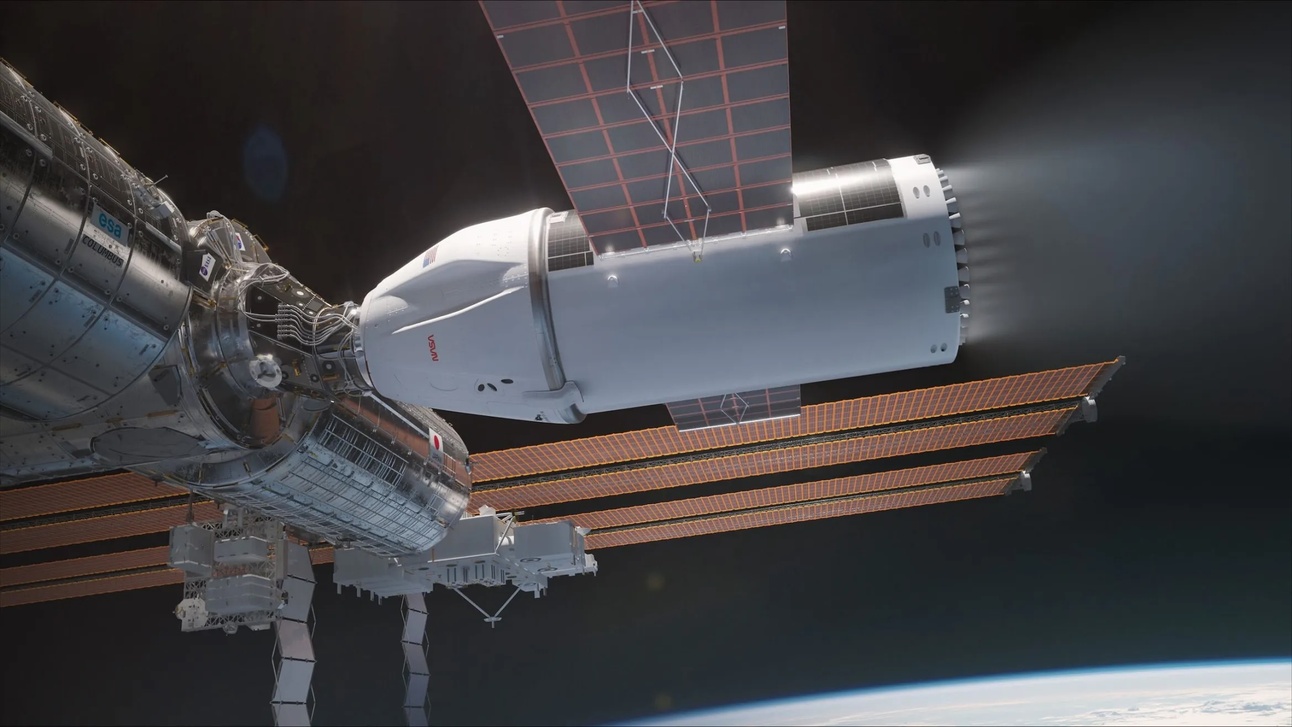
Highlights
- Reallocation of Resources: Musk argues that deorbiting the ISS will free up resources for future space exploration projects, particularly Mars colonization.
- End of Functional Utility: According to Musk, the ISS has reached the end of its practical utility, having served its original purpose over decades of operation.
- Strategic Shift in Priorities: His proposal intends to shift the strategic focus from maintaining aging orbital infrastructure to pioneering innovative, long-duration deep space missions.
Detailed Analysis of Musk's Rationale
Elon Musk, the CEO of SpaceX, has been a vocal proponent of deorbiting the International Space Station (ISS) as soon as possible, suggesting a timeline within the next two years. This proposal, while bold, is rooted in several strategic, technical, and visionary considerations, all of which highlight the broader shift in priorities in the current era of space exploration. In this analysis, we delve into the main factors driving Musk's stance, discussing not only technical concerns but also the long-term philosophical implications for space exploration.
Technical Lifecycle and Operational Considerations
Since its inception, the ISS has been a cornerstone of human space exploration, continuously occupied since November 2000. Over more than two decades of operation, the station has yielded invaluable scientific and technical insights, served as a platform for international cooperation, and provided an exclusive environment for long-duration human spaceflight experiments. However, the ISS is approaching the end of its designed operational lifecycle, with its original modules built for a 30-year service period. Musk contends that after extensive use and countless experiments, the ISS now has "very little incremental utility." This perspective is rooted in the technological reality that the station, being over 30 years old, faces challenges in maintaining modern relevance amidst rapid advancements in space technology.
Aging Infrastructure
The primary argument is that the ISS’s technology, while revolutionary at its inception, is now outpaced by emerging space technologies. Components of the ISS and its supporting systems have not been updated to meet the evolving demands of contemporary space missions. Maintaining an aging structure in low-Earth orbit increasingly requires resources that could be more effectively allocated to spaceships and ground systems better suited for next-generation missions. This emphasis on modernization is at the heart of Musk’s push for deorbiting the station, as he believes that the decommissioning of outdated infrastructure is necessary to make room for more advanced and ambitious projects.
Incremental Utility in a Changing Landscape
Musk’s assessment goes beyond lifecycle concerns. He points out that the incremental utility offered by the ISS at its current stage is negligible compared to what could be achieved with new technologies. In his view, operating an aging orbital laboratory for marginal research results is less compelling than venturing into unexplored territories such as Mars. This idea reinforces the concept of opportunity cost — the resources (financial, technological, and operational) dedicated to maintaining the ISS could yield higher returns if redirected toward deep space exploration.
Strategic and Political Considerations
The decision to suggest deorbiting the ISS is not solely based on technical and operational factors. There are significant strategic and political dimensions to Musk’s proposals. His vision of deorbiting the ISS reflects his desire to shift global priorities in space exploration away from legacy infrastructure and toward more ambitious, futuristic goals.
Refocusing on Mars Colonization
One of the central pillars of Musk's argument is the redirection of focus towards Mars colonization. Musk has long been a champion of establishing human settlements on Mars, positing that deep space exploration holds the key to humanity’s future. The resources and funding allocated to the ISS, in his opinion, could be better invested in developing technologies and mission architectures that would expedite a human presence on Mars. By advocating for a deorbit of the ISS, Musk seeks to clear the orbital stage to prioritize missions that align more closely with his vision of interplanetary colonization.
Influencing NASA's Prioritization
Another facet of this strategic outlook is Musk's desire to shift NASA’s priorities in line with his own. Currently, NASA and its international partners have long-term plans that include the continuation and eventual planned deorbiting of the ISS around 2030. However, Musk’s proposal to expedite the deorbiting process is driven by a need to realign NASA's focus toward future-centric projects rather than maintaining and upgrading aging infrastructure. This call for refocusing stems from broader strategic considerations, including the repositioning of NASA’s budget and resources, which, if realigned, could benefit emerging space ventures that aim to set the stage for a multi-planetary future.
The Role of Political Narratives
Adding complexity to the discussion are political narratives, which have played a noteworthy role in shaping Musk's public statements. Recent public disputes, including contentious exchanges with prominent astronauts, have underscored a potential political dimension behind the ISS debate. Musk’s remarks have occasionally been tied to claims that the ISS continues operating due to political considerations, rather than purely scientific or technical rationale. This contested narrative suggests that by calling for its early deorbit, Musk is also attempting to shift political momentum away from legacy projects that may be influenced by bureaucratic inertia and heritage political agendas.
Commercial and Economic Implications
Beyond the realms of technological and political reasoning, there are pragmatic commercial and economic arguments woven into Musk's rationale. SpaceX, the aerospace manufacturer founded by Musk, has built significant business around reusable launch systems, the Dragon spacecraft, and expanding the domain of commercial space activities. Transitioning away from the ISS could allow for a strategic reallocation of business focus and investment.
Leveraging Technological Innovation
The proposal to deorbit the ISS is an endorsement of technological innovation and progress. SpaceX, in addition to being a contractor for missions to the ISS, has been at the forefront of developing new orbital vehicles and starships capable of deep space travel. By redirecting attention and funding from the aging ISS to new projects, there is an opportunity to invest in technologies that may significantly alter the landscape of space exploration. This strategic pivot aligns with broader commercial objectives that prioritize rapid advancements in technology over the maintenance of legacy systems.
Economic Efficiency and Opportunity Cost
From an economic standpoint, maintaining a decades-old space station requires continuous investment with diminishing returns. Musk underscores that every dollar spent on prolonging the life of the ISS is a dollar not being invested in cutting-edge projects that promise higher long-term gains. This thought is supported by the broader concept of opportunity cost—by retiring the ISS, resources can be redirected to new ventures that offer greater economic and scientific value, thereby maximizing the overall return on investment in space exploration.
Comparative Analysis and International Considerations
The debate over the ISS is also characterized by international comparisons and shifting alliances in space governance. Having been built as a symbol of international collaboration, the ISS now faces a juxtaposition against emerging national and commercial endeavors that prioritize autonomous missions and private-sector leadership in space.
International Collaboration Versus National Agendas
The ISS was conceived as a joint project among space agencies from several nations, including the United States, Russia, Europe, Japan, and Canada. This collaborative effort has been instrumental in fostering peaceful international relations and scientific exchange over the past two decades. However, as the landscape of space exploration evolves, new models primarily driven by national or commercial ambitions are emerging. Musk’s advocacy for deorbiting the ISS can be seen as an endorsement of a model where strategic focus shifts from multilateral projects that could suffer from bureaucratic delays to nimble, commercially-driven endeavors that are more agile in pursuing long-term goals such as Mars colonization.
Table: Comparing Projects at a Glance
| Aspect | ISS | New Initiatives (Mars Focus) |
|---|---|---|
| Operational Age | Over 20 years | State-of-the-art and future-driven |
| Infrastructure | Aging, maintenance-intensive | Innovative, technology-centric |
| Scientific Utility | Proven but diminishing returns | Potential for breakthrough exploration |
| Strategic Focus | Low-Earth orbit operations | Deep space, particularly Mars colonization |
| Political Implications | International, politically influenced | Commercial innovation and agility |
Integrated Perspective and Future Outlook
Drawing together the various threads of Musk’s rationale, a comprehensive picture emerges. His proposal to deorbit the ISS is driven by a combination of pragmatic, strategic, and visionary motivations. At its core, the argument hinges on the idea that the ISS, as a legacy asset, has served its intended role in advancing human space exploration to a remarkable degree but now stands as an outdated relic in the rapidly advancing world of space technology.
The space community has long recognized that the ISS represents a specific era of post-Cold War international collaboration and technological ambition. While its contributions to scientific discovery and international cooperation are undeniable, the demands of the future require a shift in focus towards sustainable, long-term endeavors beyond low-Earth orbit.
Strategic Reallocation of Resources
One of the most central themes in Musk’s argument is the reallocation of resources. The funds, human capital, and technological investments currently tied to the ISS could be revolutionarily repurposed towards missions that promise transformative outcomes, such as establishing a human colony on Mars. In this light, the deorbiting of the ISS is less an act of abandonment and more a strategic transition. It is an endorsement of the idea that space exploration must evolve with the times, optimizing investments to yield the highest potential rewards for humanity’s future.
Broad Implications for Space Policy
Beyond its immediate technical and economic rationale, Musk’s stance should be viewed within the broader context of space policy. His proposal is a clarion call to shift away from maintaining legacy systems that may have outlived their optimal utility toward a future where space agencies and commercial entities together forge new paths. If taken seriously by policymakers and international partners, this reorientation could transform the allocation of funding and the prioritization of missions, leading to a renewed focus on long-duration deep space exploration. In such a scenario, projects aimed at Mars and other deep-space targets could receive increased support, catalyzing technological innovation and potentially redefining humanity’s role in space.
Balancing Risks and Rewards
Of course, transitioning away from the ISS is not without risk. The ISS has served as a critical platform for scientific experiments, technological demonstrations, and international diplomacy. Its decommissioning would necessitate carefully planned replacements to ensure that ongoing scientific research and human spaceflight capabilities remain robust. However, proponents argue that the benefits of reallocating resources to pioneering ventures outweigh the risks of losing a relic of early 21st-century space exploration. In effect, the decision embodies the broader challenge of balancing the preservation of past achievements with the pursuit of bold, future-oriented goals.
Conclusion
In summary, Elon Musk’s advocacy for deorbiting the International Space Station is grounded in a multifaceted rationale that encompasses technical, strategic, economic, and political dimensions. He perceives the ISS as an aging structure that no longer justifies the continual allocation of resources given its diminished incremental utility. Instead, Musk proposes reallocating these resources to accelerate humanity’s journey towards Mars colonization—a vision that represents the next frontier in space exploration. Alongside the technical need to update space infrastructure, the proposal reflects a strategic desire to reorient space policy away from legacy installations and towards future-centric missions that promise revolutionary breakthroughs.
While the ISS remains a symbol of international cooperation and scientific achievement, its timeline has run its course, and new technological paradigms demand fresh investment in innovative projects. Musk’s call is not merely an appeal for deorbiting an old space station but a bold statement that emphasizes the need for continuous evolution in space exploration strategies. Moving forward, this discussion is likely to influence policy debates, drive commercial sector shifts, and ultimately redefine, on a global scale, what investments in space can achieve. As new missions and projects gain momentum, the space community will face the dual challenge of preserving scientific heritage while pioneering paths into the unknown—a challenge that will indelibly shape the future of humanity among the stars.
References
- ISS Deorbit Proposal - Space.com
- Musk and Astronaut Spat - NBC News
- Call for Deorbiting ISS - SpaceNews
- Musk’s Strategic Vision - Politico
- Deorbiting Recommendations - Ars Technica
Recommended Related Queries
Last updated February 21, 2025