
Contribution of Three Muslim Scholars to Analytics and Statistics
Exploring the Impact of Al-Khwarizmi, Al-Kindi, and Jamshīd al-Kāshī
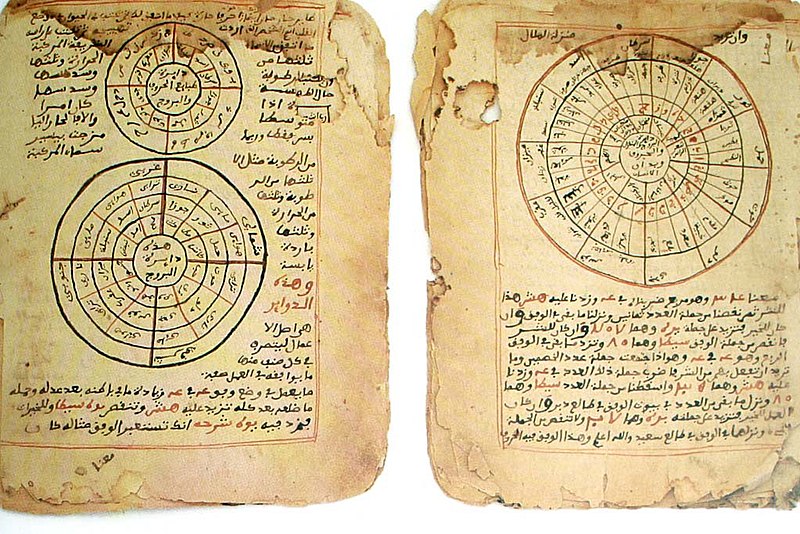
Highlights
- Foundations of Algebra: Pioneering work by Al-Khwarizmi in developing algebraic concepts and the numeral system that are vital for modern analytics.
- Early Cryptanalysis and Frequency Analysis: Al-Kindi’s application of statistical methods to decipher cryptographic patterns, setting the stage for contemporary data analysis.
- Precision in Mathematical Calculations: Jamshīd al-Kāshī’s advanced techniques in trigonometry and decimal fractions significantly impacting computational statistics.
Introduction
The contributions of Muslim scholars during the Islamic Golden Age have had a profound and enduring impact on numerous areas of modern science, particularly in the fields of analytics and statistics. Their groundbreaking work not only laid the groundwork for advanced mathematical theories but also set precedents for systematic data collection, analysis, and algorithmic reasoning. This assignment explores the significant contributions of three distinguished scholars: Muhammad bin Musa al-Khwarizmi, Ibn Ishaq al-Kindi, and Jamshīd al-Kāshī. Through an in-depth analysis of their work, this document illustrates how each scholar contributed to the evolution of analytical thought and statistical methodologies. In doing so, we highlight their roles in transforming abstract theory into practical techniques that are still relevant in today’s data-driven world.
Historical Context and Legacy
The Islamic Golden Age was marked by a flourishing intellectual environment where scholars engaged in rigorous inquiry across multiple disciplines. Within this era, advancements in mathematics were particularly notable. Muslim scholars developed methods that not only solved practical problems of their time but also provided a theoretical framework that later influenced European scientific thought. The fusion of empirical research and mathematical rigor resulted in the birth of analytics and statistical analysis as essential tools in both science and everyday problem-solving.
The intellectual legacy of this period is evidenced by the preservation and expansion of knowledge. The works of these scholars were translated into Latin, influencing the Renaissance and the subsequent development of modern science. Their contributions to numeric calculation, algebra, and analytical methods remain embedded in contemporary learning, serving as a foundation for current analytical technologies and statistical methodologies.
Detailed Analysis of Contributions
Al-Khwarizmi: The Pioneer of Algebra and Analytical Methods
Muhammad bin Musa al-Khwarizmi, who flourished between the 8th and 9th centuries, is revered as one of the most influential mathematicians of his time. His systematic approach to solving linear and quadratic equations laid the foundational stones for algebra, a field pivotal to modern analytics. Al-Khwarizmi’s seminal work not only introduced a clear, methodical way of handling mathematical problems but also played a critical role in the dissemination of the Hindu-Arabic numeral system.
Development of Algebraic Techniques
Al-Khwarizmi's contributions are best exemplified by his treatises on solving equations. His methods were built on geometric reasoning and were used to methodically break down complex problems into simpler, more manageable parts. These techniques, often referred to as "al-jabr" (from which the word algebra is derived), were revolutionary in that they provided a structured approach to unknown quantities and their relationships. This systematic form of reasoning is a cornerstone of modern analytical methods, where complex data sets are broken down into components that can be individually analyzed and recombined to derive meaningful insights.
Influence on Computational Techniques
Beyond theoretical aspects, the methodologies introduced by al-Khwarizmi have profound implications in the field of computation. His work significantly influenced algorithmic thinking. The term "algorithm" itself is derived from a Latinized version of his name, signifying his lasting impact on computer science. Modern computational statistics and data analysis rely on algorithms that echo the logical sequencing devised by al-Khwarizmi, demonstrating a clear lineage from ancient methodologies to state-of-the-art computational techniques.
Ibn Ishaq al-Kindi: The Pioneer of Cryptanalysis and Frequency Analysis
Ibn Ishaq al-Kindi, often immortalized as the "Philosopher of the Arabs," made pioneering contributions to the field of cryptanalysis. His work on frequency analysis represents one of the earliest applications of statistical methods in practical scenarios. By studying the frequency of letters and other symbols in texts, al-Kindi laid the philosophical and methodological groundwork for decoding and understanding encrypted communication.
Innovations in Cryptographic Analysis
One of al-Kindi’s most notable achievements is his development of a systematic approach to cryptography. In his treatise detailing methods for deciphering encrypted messages, he introduced the idea that the frequency distribution of elements—whether letters or words—could be statistically analyzed to break codes. This insight was revolutionary, as it demonstrated the applicability of quantitative analysis to linguistic phenomena.
The method of frequency analysis has since become an essential tool in modern cryptography. By leveraging statistical data to analyze patterns in language, researchers can effectively decode unknown texts and secure digital communications. As such, al-Kindi’s early work has had a sustained impact on a field that underpins modern information security.
Broader Contributions to Empirical Research
Beyond his work in cryptology, al-Kindi made significant strides in highlighting the importance of empirical observation. His approach emphasized the need for data collection and systematic analysis, paving the way for later developments in statistics and analytics. By advocating for the application of reason and quantitative methods to everyday problems, he essentially helped bridge the gap between theoretical mathematics and practical data analysis.
Jamshīd al-Kāshī: The Innovator in Trigonometry and Decimal Fractions
Jamshīd al-Kāshī, a prominent figure active during the 14th and 15th centuries, is famed for his work in trigonometry and numerical approximations. His contributions to the development of decimal fractions and methods for calculating roots have had a lasting impact on the field of analytical mathematics.
Advancements in Trigonometry
Al-Kāshī’s pioneering work in trigonometry advanced previously held mathematical conceptions. He refined the laws of sines and cosines, providing more precise methods for calculating angles and distances. His approach, which integrated geometric and algebraic methods, allowed for higher accuracy in computations—a critical requirement for both astronomical observations and fields relying on statistical modeling.
Decimal Fractions and Root Calculation
In addition to his contributions to trigonometry, al-Kāshī's work on decimal fractions fundamentally transformed numerical calculations. Prior to his work, approximating values was a laborious process that depended heavily on fractions and ratios. By introducing decimal fractions, al-Kāshī improved the precision of calculations, thereby enhancing the reliability of statistical data analysis. His method for calculating roots, influenced by early techniques analogous to what is known today as Horner’s method, provided a systematic approach to approximating complex mathematical expressions.
The significance of al-Kāshī’s contributions lies in their enduring relevance. His methodologies underpin many modern algorithms in numerical analysis and computational statistics, ensuring that precise measurements and calculations remain possible across various scientific disciplines.
Comparative Analysis of Their Contributions
To gain a clearer understanding of how these three scholars laid the foundations for modern analytics and statistics, it is useful to compare their contributions side by side. Their work, though distinct in focus and application, overlaps in its reliance on empirical methods, mathematical rigor, and analytical structure. The table below summarizes a comparative analysis of their fields of influence, primary contributions, and long-term impacts on statistical thought.
| Scholar | Primary Contributions | Impact on Analytics and Statistics |
|---|---|---|
| Al-Khwarizmi |
|
|
| Al-Kindi |
|
|
| Jamshīd al-Kāshī |
|
|
Extended Discussion on Methodologies and Their Modern Relevance
The analytical approaches developed by these scholars are not confined to their historical context; rather, they have evolved into essential methodologies that power contemporary statistical and computational practices. The work of al-Khwarizmi in systematizing algebraic equations has directly influenced the design of modern algorithms that underpin everything from database management to machine learning techniques. These algorithms rely on step-by-step procedures to handle vast data sets, reflecting the structured problem-solving methods introduced during his time.
Similarly, al-Kindi's analytical frameworks in cryptanalysis continue to resonate in modern cryptographic protocols. In today’s digital age, frequency analysis remains a critical tool for cybersecurity experts who seek to protect sensitive information from breaches. The empirical methods he championed exemplify how observational data can be transformed into actionable insights, a concept that is fundamental to the design of statistical models used in various fields, including economics, sociology, and public health.
Jamshīd al-Kāshī’s contributions have been equally influential. His refinement of numerical methods not only advanced scientific inquiries in his era but also laid the groundwork for the computational techniques prevalent in contemporary analytics. Decimal calculations and accurate trigonometric models are indispensable in fields such as engineering, astronomy, and computer science. Today, numerical analysis is a vibrant area of research that supports simulations, statistical inference, and optimization problems, reflecting the practical legacy of al-Kāshī’s innovations.
Taken together, the contributions of these scholars illustrate a trajectory of intellectual advancement that transformed abstract theories into practical tools. Their methodologies underscore the importance of precision, systematic data collection, and empirical validation—principles that continue to guide modern-day analytics and statistical practices.
Integration of Their Work in Modern Education and Research
Modern curricula across mathematics, computer science, and data analytics routinely integrate historical insights from these scholars. In many academic programs, courses on algorithms, cryptography, and numerical analysis not only reference but also build upon their foundational theories. Their work is often showcased as part of the historical evolution of analytical thought—demonstrating that modern practices in analytics are the culmination of centuries of scholarly inquiry.
For instance, textbooks on algebra and computation frequently include case studies on al-Khwarizmi's methods, illustrating the transition from geometric reasoning to algebraic abstraction. Universities also incorporate studies of early cryptographic methods, drawing directly from al-Kindi’s techniques to explain how statistical analysis can decipher complex patterns. In engineering and applied mathematics courses, al-Kāshī’s precision in numerical approximations is used as a benchmark for teaching error analysis and computational accuracy.
This incorporation into modern education not only pays tribute to the historical significance of these scholars but also serves as an inspiration for contemporary research. Their legacy encourages ongoing exploration of analytical methods and fosters an appreciation for the evolution of quantitative reasoning over time. As current research continues to push the boundaries of data analytics, the principles derived from their work remain a guiding light in the quest for innovation.
Practical Applications and Future Directions
The practical applications of the methodologies developed by these scholars are expansive. In modern industry, their early contributions have been adapted to address complex problems in fields such as finance, healthcare, telecommunications, and artificial intelligence. As analytics continues to evolve, the influence of their work is seen in several key areas:
Computational Algorithms
The algorithmic principles inherited from al-Khwarizmi are central to software that handles big data and machine learning. Whether it is sorting, searching, or optimizing operations, these algorithms help computers process and analyze data efficiently. In today’s digital era, every time a search engine returns a result or an app processes transactions, the influence of his methodologies is at play.
Cybersecurity and Data Protection
Al-Kindi’s work in cryptanalysis has found new life in modern cybersecurity. With the ever-increasing need to secure digital communications, statistical techniques for frequency analysis and pattern detection remain relevant. These methods help to uncover vulnerabilities and design encryption protocols that protect sensitive information.
Numerical Simulations in Science and Engineering
The numerical methods refined by al-Kāshī continue to support simulations in various scientific disciplines. From climate modeling to structural analysis, precise numerical approximations ensure that computational models accurately reflect real-world phenomena, leading to better predictions and safer structural designs.
Looking forward, the integrated methodologies of these scholars provide a robust framework for the next generation of analytics. Researchers are increasingly combining principles from traditional numerical techniques with modern computational power, leading to innovations in artificial intelligence and data science. This progressive integration will undoubtedly continue to highlight the timeless nature of their contributions.
Conclusion
In conclusion, the contributions of Muhammad bin Musa al-Khwarizmi, Ibn Ishaq al-Kindi, and Jamshīd al-Kāshī have left an indelible mark on the field of analytics and statistics. Their pioneering work in algebra, cryptanalysis, and numerical methods has not only revolutionized the scientific disciplines of their time but also formed the bedrock upon which modern analytical and computational techniques are built. By transforming abstract mathematical theories into systematic methods, they have provided enduring tools that enable precise data analysis and computational efficiency.
The intellectual legacy of these scholars underscores a vibrant tradition of inquiry, empirical research, and methodological innovation that continues to drive advancements in analytics. Their work has influenced generations of mathematicians, scientists, and engineers, reinforcing the enduring importance of rigorous analytical thinking. As modern research and technology continue to evolve, the foundational insights provided by these scholars remain integral, inspiring new approaches to data analysis and problem-solving in an increasingly complex world.
References
- Top 8 Facts about Islamic Mathematician Al Khwarizmi - University of Waterloo
- Contributions of Muslim Scholars in Mathematics - LinkedIn
- Al-Kindi - Wikipedia
- The Contribution of Muslims to the world of sScience - Review of Religions
- Contributions of Islamic Scholars to Scientific Enterprise - ERIC
- Statistics in Islamic Scriptures and Legacy - SSRN
- Science in the Medieval Islamic World - Wikipedia
Recommended Searches
Last updated February 23, 2025