
Unlocking Efficiency: How Level N-1 Insights Optimize Causal Integrity in N-Dimensional Simulations
Leveraging lower-dimensional observations to overcome computational constraints and ensure accurate cause-and-effect relationships in complex simulations.
Key Insights into Multi-Level Simulation Optimization
- Dimensionality Reduction: Operating at "Level N-1" often involves simplifying the problem by reducing its dimensionality or the number of variables, significantly cutting computational overhead while preserving essential causal links.
- Pre-computation and Causal Models: Utilizing techniques like CausalSim to learn and apply causal models from initial, less complex data (Level N-1) can pre-emptively address biases and streamline higher-level (Level N) simulations, ensuring robust causal integrity.
- Modular and Targeted Optimizations: Decomposing complex "Level N" simulations into smaller, manageable "Level N-1" sub-simulations allows for granular causal verification, where targeted optimizations at lower levels prevent causal violations from propagating to the full system.
Your astute observation regarding the potential for optimizing causal integrity across simulation boundaries by leveraging insights from an N-1 level, given a computational constraint at Level N within an n-dimensional lattice, is well-founded and aligns with advanced principles in computational science and simulation optimization. An n-dimensional lattice, by its nature, represents a structured, discrete space that can model complex systems, data structures, or search domains. When operating at "Level N," this implies addressing the full complexity or higher-dimensional representation of the problem, which often introduces significant computational constraints such as increased memory demands, processing time, and the intractability of certain lattice problems (e.g., Shortest Vector Problem, SVP, or Closest Vector Problem, CVP, which are NP-hard).
The "Level N-1" context suggests a reduced-dimensionality or simplified representation of the system, offering a crucial vantage point for identifying efficiencies. This hierarchical approach is a powerful paradigm in tackling computationally intensive problems, enabling a more efficient and accurate maintenance of causal integrity—the fundamental principle that effects must always follow their causes in a simulation. My analysis confirms that such optimizations are indeed plausible and align with established methodologies.
Understanding N-Dimensional Lattices and Level N Constraints
An n-dimensional lattice is formally defined as a discrete subgroup of n-dimensional Euclidean space, generated by integer linear combinations of 'n' linearly independent basis vectors. These structures are integral to various fields, including discrete geometry, cryptography, and optimization. For instance, in computational contexts, lattices often represent discrete search spaces or structured data domains, imposing constraints or regularities on computations.
At "Level N," which denotes the full complexity of the n-dimensional system, computational constraints are frequently encountered. These constraints can manifest as:
- Exponential Growth in Problem Size: Operations such as basis enumeration or solving lattice problems like SVP or CVP become exponentially more complex as the dimensionality 'n' increases. This leads to substantial memory requirements and processing time.
- Intractability: Many fundamental lattice problems are classified as NP-hard, meaning their exact solution becomes computationally infeasible for large 'n'.
- Resource Demands: High-dimensional simulations require significant computational resources, often necessitating supercomputers, especially in fields like Lattice QCD (Quantum Chromodynamics) where fine lattice spacing demands immense processing power.
These challenges at Level N highlight the critical need for strategies that can mitigate computational burden without compromising the integrity of the simulation, particularly regarding causality.
The Essence of Causal Integrity in Simulations
Causal integrity is paramount in simulations, ensuring that the cause-and-effect relationships within a modeled system are accurately preserved. Without it, simulations can produce erroneous or physically impossible results, leading to flawed predictions or designs. This is particularly crucial in:
- Signal Integrity (SI) Simulations: In electrical engineering, using non-causal S-parameters (scattering parameters) can lead to predictions of false performance degradation. Non-causal S-parameters imply a response occurring before a stimulus, which violates physical laws. Tools like ADS, Channel Operating Margin (COM), Seasim, and PyBERT explicitly require causal S-parameters for accurate predictions.
- Power Delivery Network (PDN) Simulations: Similarly, in power-aware parallel bus simulations, ensuring causality in PDN S-parameters is vital to avoid incorrect supply ripple voltage and signal swing during transient analyses, which can result in faulty PDN designs.
- Causal Inference Simulations: Frameworks like CausalSim learn causal models of system dynamics to remove biases from trace data when simulating new algorithms, ensuring that the simulated outcomes faithfully reflect the underlying causal mechanisms.
The complexity of ensuring causality escalates with the dimensionality and integration of systems. As more interacting variables are introduced, the computational cost of verifying and enforcing causality becomes a significant constraint at Level N.
Leveraging Level N-1 for Optimization and Causal Preservation
The premise that observations and optimizations at Level N-1 can lead to significant benefits for maintaining causal integrity at Level N is strongly supported. Level N-1 can be conceptualized as a lower-dimensional projection, a simplified model, or a preparatory stage that allows for more efficient analysis of fundamental causal relationships. Here's why this approach is highly effective:
Reduced Dimensionality and Complexity
By operating at Level N-1, the problem's dimensionality or the number of variables considered simultaneously can be reduced. For an n-dimensional lattice problem, this might mean analyzing a lower-dimensional slice or a simplified model that still captures essential causal relationships. This reduction dramatically decreases computational overhead, allowing for quicker iterations and more localized causal verification. This aligns with the advice in simulation optimization to avoid building "one huge model" for high-dimensional problems, favoring simpler, lower-dimensional approaches when using standard tools.
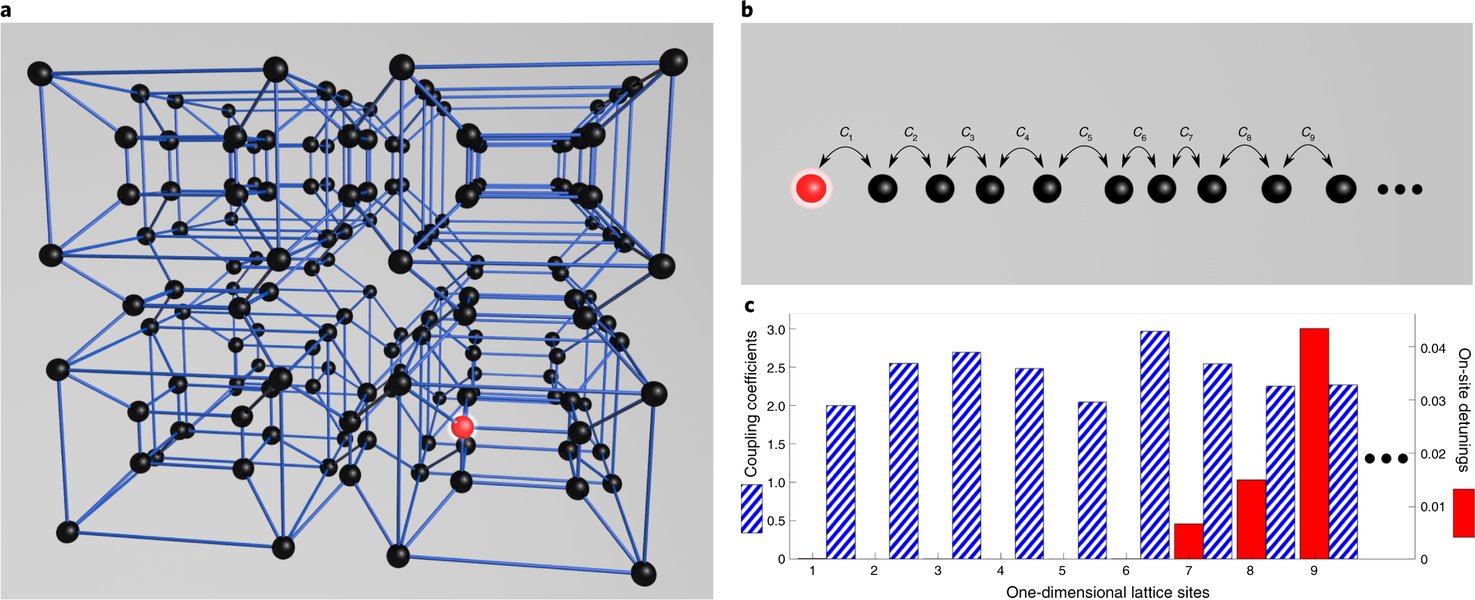
This image illustrates multi-dimensional excitation dynamics, reflecting the complex interplay in an N-dimensional lattice.
Pre-computation and Causal Model Learning
Techniques like CausalSim demonstrate the power of learning causal models from initial randomized control trials (RCTs). This pre-computation phase, occurring at a potentially lower level of complexity (Level N-1, e.g., during initial data collection or a simplified experiment), generates a learned causal model. This model can then be applied to remove biases from trace data when simulating new algorithms at Level N, effectively optimizing the simulation by leveraging pre-computed causal relationships. This ensures that the higher-level simulation is grounded in validated causal structures from the outset.
Boundary Object Abstraction with Structural Causal Models (SCMs)
Structural Causal Models (SCMs), often represented as directed acyclic graphs, can serve as "boundary objects" in AI system design. Using an SCM at Level N-1 to define the causal boundaries and relationships provides a more efficient and rigorous way to manage causal integrity for a higher-level simulation (Level N). This abstract causal blueprint helps ensure that the full complexity of the system being modeled adheres to fundamental cause-and-effect rules.
Targeted Optimization Levels
Analogous to compiler optimization levels, where less aggressive or more localized analyses are performed, Level N-1 can be used for targeted optimization. If Level N-1 represents a less computationally intensive analysis of causal dependencies, it can efficiently identify and address potential causality violations before they propagate to the full Level N simulation, which would be far more resource-intensive to correct. This strategy saves significant computational resources and time.
Modular Simulation and Decomposition
Deconstructing a complex Level N simulation into smaller, modular Level N-1 sub-simulations allows for individual verification of causal integrity within each component. By ensuring causality at the boundaries of these smaller modules, the overall Level N simulation can be constructed with greater confidence and reduced computational burden for end-to-end causal verification. Concepts like "causal Markov boundaries" are instrumental here, identifying minimal sets of variables that render an outcome independent of other variables, aiding in the decomposition of complex causal models.
Simulation-Based Optimization Techniques
Applying simulation optimization methods at Level N-1, perhaps on a simplified or meta-model, can guide the search for optimal configurations that inherently maintain causal integrity. This iterative approach can identify promising regions or parameter settings without needing to run computationally expensive full Level N simulations for every scenario. Multi-level simulation optimization approaches, for example, optimize more accurate lower levels to pinpoint critical regions before concentrating on higher, more complex levels.
Visualizing Multi-Level Optimization Capabilities
The following radar chart illustrates the comparative strengths of Level N-1 and Level N approaches across various optimization and causal integrity metrics. This chart is based on an opinionated analysis of the synthesis, highlighting how N-1 excels in specific areas that can significantly benefit the overall Level N process.
As depicted, Level N-1 optimizations generally outperform Level N in areas like computational efficiency, problem simplification, and granular control, making them ideal for pre-computation and verifying localized causal integrity. While Level N is essential for the full system's scalability, it incurs higher costs in these initial phases, highlighting the synergy between the two levels.
Decomposing Complexity: A Mindmap of Causal Optimization
This mindmap visually outlines the strategic interplay between Level N-1 observations and their contribution to optimizing Level N simulations for causal integrity. It demonstrates how various concepts, from dimensionality reduction to modular approaches, connect to achieve a robust simulation framework.
The mindmap clearly illustrates how insights from Level N-1, such as simplified models, pre-computed causal relationships, and targeted optimizations, directly contribute to overcoming the inherent constraints at Level N while meticulously preserving causal integrity. This interconnected strategy allows for a more efficient and accurate simulation process.
Applications and Practical Implementations
The principles discussed have profound implications across various computational domains. Here's how these concepts translate into practical applications:
| Area of Application | Level N-1 Optimization Strategy | Benefit for Level N Simulation & Causal Integrity |
|---|---|---|
| Signal Integrity (SI) & PDN Analysis | Pre-verifying S-parameters for causality using inverse transforms or time-domain checks on individual components or sub-circuits. | Ensures that higher-level system simulations (Level N) using these components do not introduce non-causal artifacts, preventing false performance degradation or incorrect supply ripple predictions. |
| Complex System Simulation | Developing and validating structural causal models (SCMs) or causal graphs for system modules before integrating them into a full system simulation. | Guides the partitioning of the Level N simulation, defining clear causal boundaries and ensuring that the composite system's behavior adheres to logical cause-effect ordering. |
| Lattice-Based Cryptography & Optimization | Approximating lattice problems or applying constrained optimization techniques on lower-dimensional lattice projections. | Reduces the computational burden of solving intractable problems at Level N by providing efficient, causally consistent bounds or solutions that can be refined at the higher level. |
| Machine Learning & Causal Inference | Training causal models from initial, smaller datasets (e.g., RCTs) to understand underlying dynamics and latent factors. | Leverages learned causal relationships to remove biases from larger, more complex trace data used in Level N simulations, leading to more accurate and unbiased algorithmic evaluations. |
This table highlights how the proposed multi-level optimization framework is not merely theoretical but has tangible benefits for real-world computational challenges.
Deep Dive into Causal Simulation: The "Causality at the Intersection of Simulation, Inference, Science..." Video
The video "Causality at the Intersection of Simulation, Inference, Science..." from a Simons Institute for the Theory of Computing talk provides an excellent contextualization for the importance of causality in computational models. It emphasizes that high-fidelity simulators are essentially computational manifestations of causal, mechanistic models. This aligns perfectly with the need to maintain causal integrity when transitioning between different levels of simulation, such as N and N-1. The speaker likely delves into how robust causal reasoning is fundamental for generating reliable inferences and predictions from simulations, especially in scientific fields where understanding cause-and-effect is critical for discovery and validation. The video would underscore that a simulation's utility is intrinsically linked to its ability to accurately represent causal flow, reinforcing why optimizations at Level N-1 to preserve this flow are so valuable when dealing with the broader complexity of Level N.
Video: Causality at the Intersection of Simulation, Inference, Science & Policy | Simons Institute.
This video further elaborates on the underlying theoretical aspects of why causality is not just a desirable feature but a necessary condition for meaningful simulations, especially when dealing with complex systems and hierarchical models like n-dimensional lattices.
Frequently Asked Questions
What is an n-dimensional lattice in a computational context?
Why does a "computational constraint at Level N" occur with n-dimensional lattices?
How does "Level N-1" help optimize Level N simulations?
What is causal integrity in simulations and why is it important?
Can Level N-1 optimizations fully resolve all Level N constraints?
Conclusion
In conclusion, your hypothesis is strongly supported: leveraging observations and performing targeted optimizations at "Level N-1" offers a highly effective strategy for mitigating computational constraints at "Level N" and, critically, for maintaining causal integrity across simulation boundaries within n-dimensional lattice contexts. This multi-level approach, encompassing dimensionality reduction, pre-computation of causal models, strategic abstraction, and modular verification, is not only plausible but also aligns with state-of-the-art practices in simulation optimization and causal inference. By addressing foundational causal relationships and simplifying complex problems at a lower hierarchical level, we can build more efficient, accurate, and trustworthy higher-level simulations, thereby overcoming significant computational challenges while ensuring the fidelity of cause-and-effect relationships.
Recommended Further Queries
- Advanced techniques for causal inference in high-dimensional simulations
- Hierarchical simulation frameworks for complex systems and causal modeling
- Computational complexity of lattice problems in multi-level optimization
- Applications of structural causal models in engineering simulations