
Esterification of Nanocellulose
A comprehensive discussion on chemical modifications to enhance nanocellulose properties
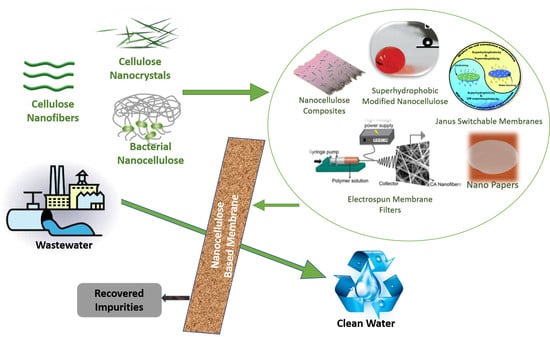
Key Highlights
- Surface Modification: Esterification replaces hydroxyl groups with ester groups, altering physical and chemical properties.
- Versatile Techniques: The process can be executed under homogeneous, heterogeneous, and solvent-free conditions, enabling green chemistry applications.
- Improved Material Properties: Nanocellulose esterification enhances dispersion, thermal stability, mechanical strength, and offers advanced applications in composites, biomedical fields, and sensors.
Understanding Nanocellulose and Its Importance
Nanocellulose is a nano-scaled form of cellulose that originates from natural cellulosic materials. Its high surface area, mechanical strength, and abundant hydroxyl groups make it an ideal candidate for chemical modification. Esterification is one of the foremost methods used to alter the inherent properties of nanocellulose; by attaching ester groups to its surface, the material’s characteristics can be significantly modulated. This chemical modification can create new interfaces that are compatible with various polymer matrices, thus extending its range of applications in multifunctional materials.
The Basis of Esterification
At the core of esterification is the reaction between the hydroxyl (-OH) groups on nanocellulose and acids (or acid derivatives) to form ester linkages (-COO-). This substitution reaction results in covalent bonding that transforms the surface characteristics of nanocellulose from highly hydrophilic to varying degrees of hydrophobicity or another tailored functionality. The fundamental chemical transformation can be generally represented as:
\( \text{Cellulose-OH} + \text{R-COOH} \rightarrow \text{Cellulose-O-CO-R} + \text{H}_2\text{O} \)
Here, "R" denotes the organic moiety attached through the ester linkage. The nature of "R" can be customized to impart specific properties such as enhanced thermal stability, increased compatibility with polymers, or even fluorescence for sensing applications.
Methodologies Involved in Esterification
There are diverse methodologies to achieve successful esterification of nanocellulose. The selection of the method plays a crucial role in determining the degree of modification, reaction yield, and the final properties of the material. Two primary categories are recognized: homogeneous and heterogeneous esterification processes.
Homogeneous Esterification
In homogeneous esterification, the process takes place in a solvent where both the nanocellulose and the functionalizing agents (acids or acyl derivatives) are in the same phase. This ensures a uniform reaction but can also lead to partial dissolution of cellulose structures, resulting in a material with modified internal as well as surface properties.
The homogenous process, due to its intimate mixing of reactants, is particularly useful when a high degree of acetylation or acylation is desired. However, one must be cautious about over-modification which might affect the inherent mechanical properties of nanocellulose.
Heterogeneous Esterification
Heterogeneous esterification is characterized by the reaction occurring at the interface between the nanocellulose solids and the liquid phase containing the esterifying agent. This approach primarily focuses on modifying the surface without dissolving the bulk material. Such surface-specific modifications are highly desirable when the goal is to retain the internal structural integrity of the nanocellulose while improving its interfacial compatibility with polymer matrices.
Environmental considerations have led to the development of solvent-free and green chemistry approaches in heterogeneous esterification. For instance, processes that utilize nontoxic carboxylic acids and solid catalysts are becoming more popular, thereby reducing potential environmental impacts.
Advanced Techniques
Beyond the classical methods, researchers have developed novel techniques to increase the efficiency of esterification. Among these innovations is the use of ionic liquids, deep eutectic solvents, and mechanochemical processes. These methods enable better control over the reaction conditions, enhancing the degree of substitution and minimizing undesired byproducts.
For instance, one-step autocatalytic processes and mechanochemical techniques avoid the need for harsh chemicals, thereby also ensuring that the crystallinity of the nanocellulose is partially retained. In some instances, advanced catalysts like Brønsted acids in ionic liquids are employed to achieve high reaction rates and yield products with uniform modification.
Chemical Mechanism and Reaction Conditions
Reaction Chemistry
Esterification occurs through the nucleophilic attack of the hydroxyl oxygen on the carbonyl carbon of the carboxylic acid (or derivative). The process forms an ester linkage and usually releases water as a byproduct. Specific reaction conditions like temperature, pressure, concentration of reagents, and the nature of catalysts have a significant influence on the reaction kinetics and yield. Employing catalysts such as pyridine when using acyl chlorides or utilizing mild organic catalysts in green settings are common strategies.
Additionally, the use of solvents such as dimethylformamide (DMF) or ionic liquids can be tailored to enhance the solubility of reactants, thereby promoting better interaction between the nanocellulose surface and the esterifying agents. Control over these parameters ensures that the reaction can be fine-tuned to produce materials with predetermined properties.
Optimization of Reaction Conditions
Optimizing the reaction conditions is integral for obtaining the desired degree of substitution while preserving the nanocellulose structure. Conditions such as reaction time, temperature, and solvent polarity are systematically varied to maximize the efficiency of the process. For example, lower temperatures might slow down the reaction while preserving the delicate nanostructure, whereas moderate heating might be necessary to improve reaction kinetics.
Moreover, the degree of substitution (DS) can be quantified using techniques like Fourier Transform Infrared (FTIR) spectroscopy, Nuclear Magnetic Resonance (NMR) spectroscopy, and X-ray Diffraction (XRD). These characterization techniques ensure that modifications occur as targeted and that any structural changes in nanocellulose are properly documented.
Applications and Advantages
Enhanced Properties Through Esterification
The primary objective of esterifying nanocellulose is to improve its performance in various applications. The transformation of hydrophilic hydroxyl groups into less polar ester groups can significantly alter both thermal and chemical behavior. Some of the enhanced properties include:
- Improved dispersion in polymer matrices, leading to better composite formation.
- Increased hydrophobicity, which can be useful in moisture-resistant coatings and packaging.
- Enhanced thermal stability, which is crucial for applications that involve exposure to various temperature ranges.
- Tailored interfacial properties which optimize adhesion in composite materials.
- Potential for additional functionalization, such as fluorescence by attaching suitable organic moieties.
Applications in Various Industries
Esterified nanocellulose is finding increasing usage in several cutting-edge fields:
- Biocomposites: In composite materials for automotive, aerospace, and construction industries, the modified nanocellulose enhances mechanical strength, durability, and interfacial bonding.
- Biomedical Applications: Functionalized nanocellulose is used in drug delivery systems, tissue engineering, and biosensors. The ability to attach specific compounds, such as peptides, via ester bonds opens possibilities for targeted therapies.
- Smart Coatings and Sensors: The ability to imbibe fluorescence and other signaling properties makes these modified cellulose derivatives ideal for sensor applications in both environmental and industrial settings.
- Thermoplastics Processing: Reduced crystallinity through esterification improves the melt processability of cellulose-based materials, paving the way for environmentally friendly bioplastics.
- Environmental Remediation: The enhanced surface properties also lend themselves to applications in filtration and environmental purification systems.
Advantages and Challenges
Although esterification of nanocellulose offers numerous advantages, certain challenges must be addressed. One notable advantage includes the versatility of the modification process, which enables customization for specific end-use applications. Enhanced compatibility with hydrophobic polymers, improved thermal characteristics, and the potential for secondary functionalization make esterified nanocellulose very attractive for innovative materials.
However, challenges such as controlling the uniformity of the substitution and maintaining the integrity of the cellulose backbone remain. The strong hydrogen bonding in natural cellulose can hinder full modification, sometimes necessitating the use of specific solvents and catalysts that facilitate the reaction without compromising structural stability. Research continues to evolve to counter these limitations by exploring more efficient and eco-friendly methods.
Comparative Analysis of Esterification Techniques
To provide a clearer perspective on the diverse approaches used in the esterification of nanocellulose, the table below summarizes the main techniques along with their respective advantages and challenges:
| Technique | Advantages | Challenges |
|---|---|---|
| Homogeneous Esterification |
|
|
| Heterogeneous Esterification |
|
|
| Green and Solvent-Free Methods |
|
|
This table clearly illustrates that each method has unique benefits and limitations. The selection of the appropriate technique depends on the desired degree of modification, final application, and environmental considerations.
Green Chemistry and Environmental Considerations
In recent years, there has been a significant push towards incorporating principles of green chemistry into chemical processes, including the esterification of nanocellulose. Traditional esterification methods might require hazardous solvents and catalysts, but recent innovations have leveraged green alternatives to minimize environmental impact. The use of biocompatible solvents like deep eutectic solvents or ionic liquids not only enables safer reaction conditions but also improves the sustainability of the process.
Eco-friendly Catalysts and Solvents
Eco-friendly protocols often involve the use of benign reagents that reduce the formation of unwanted byproducts. The development of catalysts that are both efficient and non-toxic has been a significant stride forward. These green methodologies ensure that the waste generated is minimal and that the overall energy consumption during processing is reduced. Such advances are particularly important when considering large-scale industrial applications where environmental footprints matter.
Characterization and Analytical Techniques
Once nanocellulose has been esterified, it is essential to characterize the modified material to assess the efficiency of the esterification and the resulting changes in physical and chemical properties. A range of analytical techniques is employed for this purpose.
Spectroscopic Methods
Techniques such as Fourier Transform Infrared (FTIR) spectroscopy are crucial in confirming the presence of ester bonds by identifying characteristic absorption bands. Nuclear Magnetic Resonance (NMR) spectroscopy also provides detailed insights into the degree of substitution and confirms the chemical environment around the cellulose backbone. These methods collectively ensure that the esterification process has taken place as intended.
Structural and Thermal Analysis
X-ray Diffraction (XRD) is used to assess any changes in the crystallinity of nanocellulose. Esterification often results in a reduction in crystallinity, which may enhance the material's processability. Thermal Gravimetric Analysis (TGA) and Differential Scanning Calorimetry (DSC) are also employed to evaluate improvements in thermal stability, which is vital for applications involving elevated temperatures.
Industrial Relevance and Future Prospects
The ability to tailor the properties of nanocellulose through esterification has opened diverse avenues in various sectors. In industries such as automotive, aerospace, electronics, packaging, and biomedical engineering, the demand for materials that combine sustainability with high performance is continually rising. Esterified nanocellulose is particularly noteworthy for its potential in creating lightweight, strong, and eco-friendly biocomposites.
Future research is likely to focus on further refining esterification methods to achieve higher degrees of control, improved sustainability, and novel functionalities. Innovations in reaction engineering, such as the implementation of continuous manufacturing processes and advanced catalysts, are expected to accelerate the adoption of these materials in commercial applications.
References
- ACS Publication - ACS Publications
- Nature Article - Nature
-
PMC Article - PubMed Central
- Springer Article - Springer
-
ScienceDirect Article - ScienceDirect
- ACS Sustainable Chemistry - ACS Publications
- RSC Article - Royal Society of Chemistry
-
ScienceDirect Book Chapter - ScienceDirect
-
ScienceDirect Journal - ScienceDirect
- Nature Scientific Reports - Nature
Recommended Related Queries
Last updated March 3, 2025