
Nanotechnology Seminar Report
A comprehensive exploration into the nanoscale world and its transformative impact
Key Takeaways
- Interdisciplinary Innovation: Nanotechnology weaves together physics, chemistry, biology, engineering, and material science to revolutionize industries.
- Cutting-edge Tools and Techniques: The use of advanced instruments like scanning tunneling microscopes (STMs), atomic force microscopes (AFMs), and transmission electron microscopes (TEMs) enables the exploration of matter at the atomic level.
- Expansive Applications and Challenges: With applications spanning healthcare, electronics, environment, energy, and space, nanotechnology offers immense benefits while posing technical, ethical, and environmental challenges.
Introduction
Nanotechnology represents the engineering and manipulation of matter on a molecular and atomic scale, typically within the range of 1 to 100 nanometers. The seminar report presented here delves into the fundamental aspects of nanotechnology, tracing its historical roots, exploring the key tools and techniques used in the field, examining myriad applications, and addressing the future challenges, ethical considerations, and potential impacts of this rapidly evolving technology.
This report is designed not only to educate professionals and students but also to spark future research and discussions about the integration of nanoscale engineering across multiple scientific and industrial domains. By focusing on the interdisciplinary nature and innovative potential of nanotechnology, we aim to provide a detailed narrative that captures both the promise and hurdles associated with the technology.
Historical Perspective and Evolution
Early Inspirations and Foundational Concepts
The conceptual seeds of nanotechnology were sown in 1959 through Richard Feynman’s visionary lecture, “There’s Plenty of Room at the Bottom,” where he introduced the idea of manipulating individual atoms to craft miniature machines. This early inspiration laid the groundwork for what would become a transformative field.
Milestones in Nanotechnology History
Over the decades, several key milestones have accelerated the progress of nanotechnology:
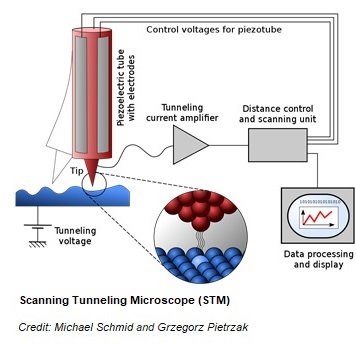
- Invention of the Scanning Tunneling Microscope (STM): Developed in the early 1980s, this instrument allowed scientists to visualize surfaces at an atomic level, ushering in an era of direct manipulation of nanomaterials.
- Development of Atomic Force Microscopy (AFM): Following the STM, AFM provided further insight by mapping the topography and properties of surfaces with atomic precision.
- Emergence of Nanofabrication Techniques: The evolution from “top-down” methods (e.g., lithography and milling) to “bottom-up” approaches (e.g., chemical synthesis and self-assembly) has opened new avenues for constructing materials with tailored properties.
Each of these developments contributed to defining nanotechnology as an interdisciplinary field that crosses conventional boundaries between scientific disciplines. The convergence of ideas from physics, chemistry, material science, biology, and engineering has set the stage for innovations that were once considered nearly impossible.
Fundamentals of Nanotechnology
Definition and Key Concepts
Nanotechnology is fundamentally about controlling matter at the scales of atoms and molecules. At this scale, traditional physical and chemical laws begin to behave in non-intuitive ways. Often, materials display unique properties such as heightened reactivity, unexpected electrical conductivities, and unprecedented mechanical strengths due to the dramatically increased surface area-to-volume ratio.
Properties Affected by Nanoscale Dimensions
When materials are reduced to the nanoscale, their physical properties often change due to quantum effects and high surface energy. For instance:
- Enhanced Strength: Nanomaterials such as carbon nanotubes exhibit extraordinary mechanical properties, including a tensile strength far exceeding that of their bulk counterparts.
- Unique Electrical Properties: Materials like gold and silver alter their conductivity and color when reduced to nanoparticles, leading to their use in electronics and chemical sensors.
- Improved Catalytic Activity: Nanoparticles have a significant surface area, enhancing their performance as catalysts in chemical reactions.
These transformations enable the design of materials that are lighter, stronger, and more efficient, thereby contributing greatly to advancements in various technological sectors.
Tools and Techniques in Nanotechnology
The ability to visualize, manipulate, and construct at the nanoscale is supported by an array of sophisticated tools and fabrication techniques. These are essential for both basic research and industrial applications.
Microscopy and Imaging Techniques
Among the most critical tools used in nanotechnology are:
- Scanning Tunneling Microscope (STM): This device uses the quantum tunneling effect to generate detailed images of surfaces at the atomic level.
- Atomic Force Microscope (AFM): AFM scans surfaces with a fine, silicon-based tip and computes the topography based on the force interactions, providing high-resolution images.
- Transmission Electron Microscope (TEM): TEM uses a high-energy electron beam to pass through samples, offering insights into the internal structure and composition of nanomaterials down to atomic dimensions.
Nanofabrication Approaches
Nanotechnology leverages two primary nanofabrication strategies:
- Top-down methods: Techniques such as lithography and milling remove material from larger substrates to create smaller, functional structures.
- Bottom-up methods: These approaches involve the self-assembly of atoms and molecules into desired configurations, often through chemical synthesis or template-guided processes.
Applications of Nanotechnology
Diverse Impacts Across Industries
The potential to manipulate matter at the nano level has unlocked a suite of applications across various fields. This breadth of impact is one of the hallmarks of nanotechnology.
Medicine and Healthcare
In the realm of healthcare, nanotechnology has paved the way for significant advances:
- Drug Delivery Systems: Nanocarriers offer targeted delivery of pharmaceuticals, enhancing therapeutic efficacy while reducing side effects by releasing drugs precisely where needed.
- Diagnostic Imaging: Nanomaterials are used in contrast agents for improved imaging, aiding in early disease detection.
- Tissue Engineering and Regenerative Medicine: Nanostructured scaffolds support cell growth and tissue regeneration, enabling breakthroughs in reconstructive surgery and prosthetics.
Electronics and Energy
In electronics, the miniaturization enabled by nanotechnology has led to the creation of faster, smaller, and more energy-efficient devices. Some major contributions include:
- Nanoelectronics: Enhanced semiconductors and nanoscale transistors facilitate rapid data processing and reduced power consumption.
- Energy Conversion: Nanomaterials boost the efficiency of solar cells and fuel cells, contributing to the production of greener energy solutions.
Environmental and Agricultural Advancements
Environmental applications of nanotechnology focus on sustainability and resource management:
- Water Purification: Nanomembranes and nanoparticle-based filters enable the removal of contaminants, ensuring access to clean water.
- Pollution Remediation: Nanocatalysts help break down pollutants in air and water, contributing to environmental cleanliness.
- Agricultural Enhancements: Nanotechnology can improve crop yield and resilience by modifying seeds and fertilizers at the nanoscale.
Space and National Security
Nanotechnology is also making headway into areas traditionally characterized by high risk and innovation:
- Advanced Materials for Aerospace: Carbon nanotubes and other nanocomposites are being developed for space applications, promising lighter yet stronger materials for spacecraft.
- Nanorobotics: Potential applications in surveillance, repair, and even space exploration may soon benefit from the programmed precision and adaptability of nanobots.
Innovative Case Applications and Industry Adoption
Several industries have integrated nanotechnology into their ecosystem:
| Field | Key Application | Impact |
|---|---|---|
| Healthcare | Targeted Drug Delivery | Reduced side effects with increased efficiency |
| Electronics | Nanoelectronics | Faster, energy-efficient devices |
| Environment | Water Purification | Access to clean water with advanced filtration |
| Energy | Enhanced Solar Cells | Higher energy conversion and sustainability |
| Aerospace | Nanocomposites | Lighter structures with superior strength |
Challenges and Ethical Considerations
Navigating the Complexities
Despite the transformative potential of nanotechnology, several challenges and ethical dilemmas must be thoughtfully addressed. The technical hurdles include ensuring reproducibility of nanoscale fabrication processes, integrating nanomaterials with existing platforms, and scaling up production. Moreover, the unique properties of nanomaterials can lead to unanticipated health and environmental risks.
Technical and Safety Challenges
Practical implementation of nanotechnology encounters several hurdles:
- Precision and Reproducibility: Operating at the nanoscale demands extreme precision. Slight variations in conditions can alter the properties of nanomaterials, making standardized production difficult.
- Integration Issues: Incorporating nanoscale devices with macro-scale systems presents challenges due to differences in scale, which may affect performance and reliability.
- Health and Environmental Risks: The small size and high reactivity of nanoparticles raise concerns over toxicity if they become airborne or are ingested. Research is ongoing to define safety guidelines and regulatory frameworks to mitigate potential risks.
Ethical, Societal, and Economic Considerations
The rapid development of nanotechnology also brings with it ethical and societal implications. Key issues include:
- Equitable Access: As with many breakthrough technologies, ensuring that advancements in nanotechnology benefit a broad spectrum of society is a crucial concern.
- Environmental Impact: The lifecycle of nanomaterials—from production to disposal—requires careful scrutiny to prevent adverse effects on ecosystems.
- Regulatory and Intellectual Property Issues: Determining oversight and patent rights in an area that is inherently interdisciplinary poses complex legal and ethical dilemmas.
Future Directions and Emerging Trends
Where Nanotechnology is Headed
As research advances, the evolution of nanotechnology appears poised to not only refine existing technologies but also pioneer entirely new realms of innovation. Several emerging trends indicate the directions for future exploration:
Multifunctional Nanomaterials
Researchers are increasingly focused on creating materials that combine several desirable properties—strength, conductivity, and sustainability—into a single multifunctional nanomaterial. Such advancements could revolutionize industries ranging from aerospace to consumer electronics by enabling lightweight, durable, and efficient materials.
Nanotechnology and AI Integration
The synergy between nanotechnology and artificial intelligence (AI) is becoming more apparent. AI-driven algorithms are being used to optimize nanomaterial synthesis and predict material behavior, facilitating faster and more efficient design cycles.
Expansion into Biotechnology
The integration of nanotechnology with biotechnology is set to accelerate advances in personalized medicine, diagnostic tools, and biocompatible materials. This cross-disciplinary approach promises significant enhancements in treatment outcomes and the development of next-generation medical therapies.
Detailed Seminar Report Outline
Overview of Report Structure
The seminar report is structured to provide clarity and depth across the following sections:
- Introduction: An overview of nanotechnology, its definition, and its groundbreaking significance.
- Historical Background: A review of key developments from the theoretical inception by Feynman to modern advanced imaging techniques and fabrication methods.
- Fundamental Concepts: An examination of properties unique to the nanoscale and the theoretical basis that distinguishes nanomaterials from traditional materials.
- Tools and Techniques: A detailed exploration of STMs, AFMs, TEMs, and various nanofabrication methods which facilitate experimental and applied nanoscience.
- Applications: Discussion of nanotechnology’s transformative influence on healthcare, energy, electronics, environmental management, and aerospace.
- Challenges and Ethical Considerations: Analysis of the technical, safety, regulatory, and ethical issues that arise with the expansion of nanoscale manufacturing and applications.
- Future Directions: Projections for the evolving integration of nanotechnology into a broad range of industries, including emerging trends such as multifunctional nanomaterials and the fusion of AI with nanoscience.
By following this outline, the seminar report ensures that all critical aspects of nanotechnology are addressed, providing a cohesive narrative that not only informs but also inspires innovation and responsible development.
Conclusion
In summary, the field of nanotechnology encapsulates a cutting-edge multidisciplinary approach that promises to revolutionize numerous sectors through the precise manipulation of matter at the atomic and molecular level. Its evolution—from the visionary ideas of early pioneers to state-of-the-art imaging and fabrication techniques—demonstrates an exciting journey of scientific discovery and technological innovation. However, as the technology continues to advance, it is imperative to address associated technical challenges and ethical implications through rigorous research, collaboration, and thoughtful regulation.
The future of nanotechnology hinges not only on further scientific breakthroughs but also on ensuring that the benefits of nanoscale innovations are distributed equitably, safely, and sustainably. As a dynamic field with the potential to create new industrial paradigms and improve quality of life, nanotechnology remains at the forefront of contemporary scientific inquiry and application.
Referenties
- Seminar Report - Scribd
- Report on Nano Technology - SlideShare
- Nanotechnology Seminar and PPT with PDF Report - StudyMafia
- Seminar Report on Nanotechnology - Scribd
- Nanotechnology - SlideShare
Meer Informatie
Last updated February 18, 2025