
Zdenka Kuncic’s Pioneering Research on Nanowire Networks
Innovating Neuromorphic Computing through Advanced Nanowire Technologies
Key Takeaways
- Neuromorphic Capabilities: Nanowire networks emulate brain-like information processing, demonstrating learning and memory akin to human neural systems.
- Memristive Behavior: The inherent memristive properties of nanowire junctions enable dynamic adaptability and non-linear conduction phenomena essential for advanced computing.
- Scalability and Integration: Ongoing research focuses on integrating nanowire networks with other materials and computing architectures to enhance performance and applicability.
Comprehensive Overview of Zdenka Kuncic’s Work
Neuromorphic Nanowire Networks: Mimicking the Brain
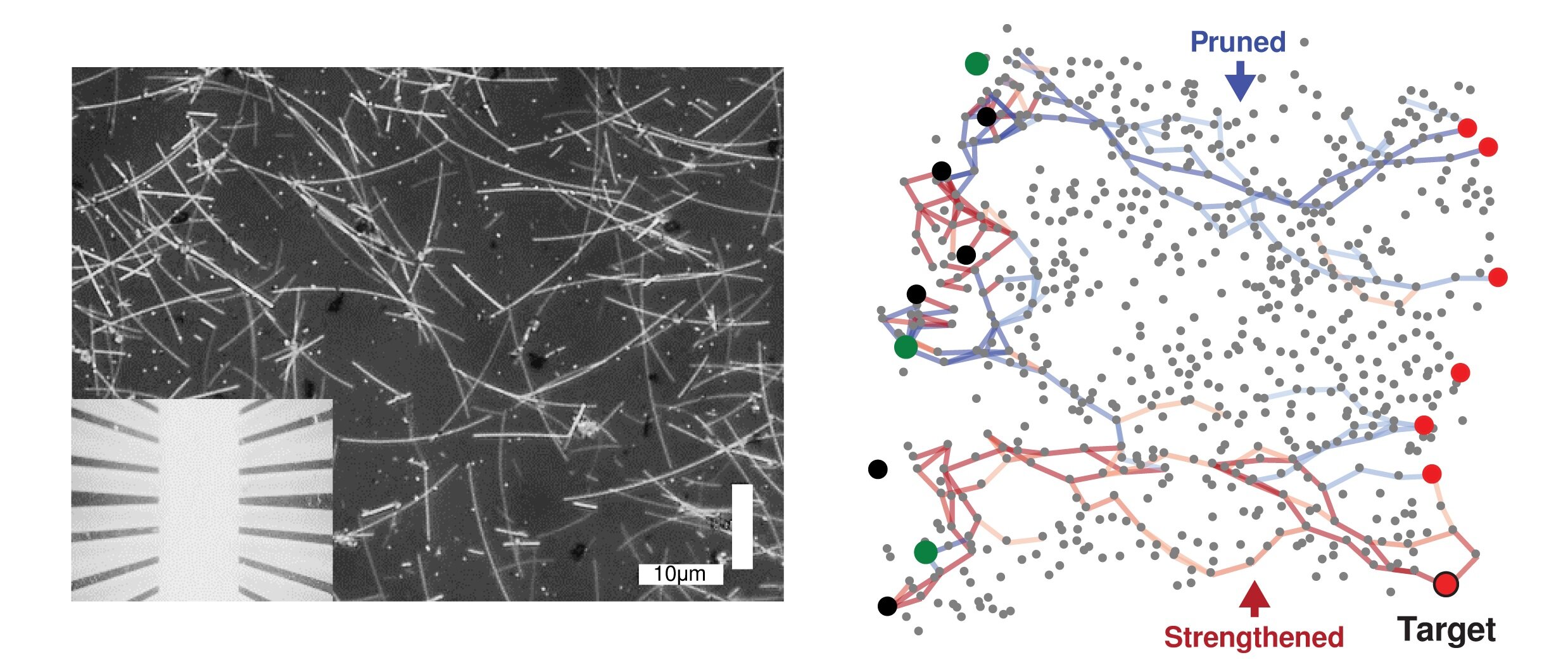
Professor Zdenka Kuncic has been at the forefront of neuromorphic computing research, particularly focusing on nanowire networks (NWNs) that emulate the structural and functional aspects of human neural systems. These NWNs consist of self-assembled nanowires, typically silver, arranged in complex, disordered patterns that mirror the connectivity of biological neural networks. The high interconnectivity of resistive switching memory (memristive) cross-point junctions within these networks facilitates emergent behaviors such as learning, memory, and adaptive information processing.
Emergent Learning and Memory Capabilities
One of the remarkable features of Kuncic’s NWNs is their ability to exhibit both short-term and long-term memory capabilities, drawing parallels to human cognitive functions. Through resistive switching at nanowire junctions, these networks can store and recall sequences of electrical stimuli, enabling tasks such as image recognition with high accuracy (93.4% on the MNIST dataset) and performance on memory tests like the N-Back test, which assesses short-term memory retention.
Memristive Behavior and Non-linear Conduction
The memristive properties of NWNs are central to their functionality, allowing for dynamic changes in electrical pathways based on input stimuli. This non-linear conduction behavior is critical for neuromorphic computing, as it enables the networks to adapt and learn from incoming data without explicit programming. The interplay of disorder and functionality within the NWNs leads to robust and reproducible macroscopic electrical properties, making them suitable for complex information processing tasks.
Structural and Functional Characteristics
The structural integrity of NWNs is characterized by their small-world architecture, which promotes efficient information transfer and processing akin to biological neural networks. The self-assembly process results in a modular and clustered network structure, enhancing the networks' adaptability and resilience. These characteristics contribute to the NWNs' ability to perform complex cognitive tasks and adapt to changing environmental conditions, positioning them as a promising candidate for next-generation neuromorphic systems.
Energy Efficiency and Real-Time Processing
In addition to their computational capabilities, NWNs offer significant advantages in terms of energy efficiency. Their ability to process data in real-time with low energy consumption makes them ideal for applications requiring continuous and adaptive learning without the overhead of extensive memory storage. This feature is particularly beneficial for deployable systems in fields such as robotics and autonomous vehicles, where power efficiency and real-time processing are paramount.
Application Potential and Current Achievements
Kuncic’s research has demonstrated the practical applicability of NWNs in various domains. Notably, the networks have achieved high accuracy in image recognition tasks and have exhibited memory performance comparable to human short-term memory. These achievements underscore the potential of NWNs to bridge the gap between traditional silicon-based computing systems and the adaptive, learning-driven paradigms of neuromorphic computing.
In-Depth Analysis of Nanowire Networks
Interplay of Disorder and Functionality
The self-assembly of nanowires introduces a level of disorder at the nanoscale, which paradoxically contributes to the emergent functionality of the network. By controlling factors such as nanowire length distributions, junction resistances, and overall network topology, Kuncic’s research has illuminated how disordered structures can lead to robust and reproducible electrical properties. This delicate balance between disorder and functionality is crucial for the reliable operation of NWNs in practical applications.
Emergent Electrical Properties
NWNs exhibit complex, non-linear conduction phenomena, including memristive behavior that is dependent on voltage and current stimuli. These properties enable the networks to dynamically reconfigure their electrical pathways, a fundamental requirement for adaptive and learning-based computing. The emergent electrical properties facilitate hardware-based learning and the incorporation of adaptive circuit elements, paving the way for more sophisticated neuromorphic systems.
Bridging Fundamental Physics to Practical Applications
Kuncic’s work significantly bridges the gap between fundamental physics and applied engineering. By understanding how variations in network topology influence device performance, her research opens avenues for engineering NWNs with tailored switching characteristics and enhanced sensitivity. This foundational knowledge is instrumental in advancing NWNs from experimental setups to commercially viable neuromorphic computing devices.
Scalability and Integration
A critical aspect of Kuncic’s ongoing research is the scalability of NWNs. Exploring the integration of NWNs with existing computing architectures involves addressing challenges related to controlled assembly processes, network stability, and interfacing with other materials. The integration with two-dimensional (2D) materials such as graphene or MoS₂ presents a promising direction, potentially enhancing the tunability and performance of NWNs for various sensing and computing applications.
Proposed Next Research Steps
Integration with 2D Materials
Building upon the current advancements, a promising next step involves the integration of NWNs with two-dimensional materials. This hybrid approach aims to leverage the high mobility and tunable properties of 2D materials to enhance the conductivity and adaptability of NWNs. Investigating the interface physics between nanowires and 2D substrates will provide insights into charge transfer mechanisms, interfacial polarization, and strain engineering, which are vital for modulating conduction pathways and memory effects.
Machine Learning–Guided Network Design
Incorporating machine learning algorithms into the design and assembly of NWNs represents a significant advancement. By utilizing computational frameworks that adapt based on modeling and experimental feedback, it is possible to optimize network parameters such as nanowire length distributions and junction resistances. This approach not only enhances device performance but also deepens the understanding of the interplay between network topology and emergent properties in disordered systems.
Adaptive and Reconfigurable Networks
Advancing the concept of self-adaptivity, the development of NWNs that can be trained in real-time is a critical research direction. Integrating local sensors and active stimuli, such as optical, thermal, or electrical pulses, can enable dynamic reconfiguration of conductive pathways. This adaptation is essential for creating devices that mimic learning processes and respond dynamically to environmental changes, thereby enhancing the capabilities of artificial intelligence systems at the material level.
Scalability and Stability Enhancements
Ensuring the scalability of NWNs while maintaining their stability and performance is paramount for handling larger datasets and more complex computational tasks. Research should focus on developing methods to scale up NWNs without compromising their structural integrity or functional properties. This includes exploring novel fabrication techniques and materials that support larger, more stable networks capable of advanced information processing.
Hybrid Systems with Traditional Computing Architectures
Exploring hybrid systems that combine NWNs with traditional silicon-based computing architectures can leverage the strengths of both approaches. This synergy has the potential to create more robust and efficient artificial intelligence systems by integrating the adaptive, learning-driven capabilities of NWNs with the reliability and scalability of conventional computing systems.
Performance Metrics and Comparative Analysis
| Performance Aspect | Nanowire Networks (NWNs) | Traditional Neural Networks |
|---|---|---|
| Learning Capability | Hardware-based learning through memristive junctions, enabling real-time adaptation | Software-based learning requiring significant computational resources |
| Energy Efficiency | Low energy consumption due to passive memristive elements | Higher energy consumption, especially in deep learning models |
| Scalability | Challenging due to self-assembly processes, but ongoing research aims to improve | Easily scalable with advancements in semiconductor technologies |
| Memory Retention | Short-term and long-term memory capabilities comparable to human memory | Primarily relies on external memory storage systems |
| Integration Potential | Potential for integration with 2D materials and edge computing systems | Well-established integration with existing digital systems |
Conclusion
Zdenka Kuncic’s groundbreaking research on nanowire networks has significantly advanced the field of neuromorphic computing. By leveraging the unique properties of memristive nanowire junctions, her work has demonstrated the potential of NWNs to emulate brain-like information processing, offering capabilities in learning, memory, and adaptive computing that rival traditional neural systems. The emergent electrical properties and non-linear conduction phenomena inherent in NWNs open new avenues for hardware-based learning and real-time data processing with enhanced energy efficiency.
Moving forward, the integration of NWNs with two-dimensional materials, the application of machine learning for network design optimization, and the development of adaptive and reconfigurable network architectures represent promising directions. These advancements aim to overcome current scalability and stability challenges, positioning NWNs as a cornerstone of next-generation artificial intelligence systems. By bridging fundamental physics with practical engineering, Kuncic’s research continues to push the boundaries of what is possible in the realm of neuromorphic computing, paving the way for innovative, efficient, and intelligent computing solutions.
References
Last updated February 16, 2025