
Narendra Modi: Architect of a New India or a Figure of Division?
An in-depth look at the multifaceted political career of India's Prime Minister.
Evaluating whether Narendra Modi is a "good" politician is a complex task, eliciting a spectrum of passionate responses both within India and across the globe. His tenure as Prime Minister has been characterized by bold initiatives and significant transformations, alongside considerable controversies and criticisms. This analysis aims to provide a comprehensive overview by synthesizing various perspectives on his leadership, policies, and impact.
Key Highlights of Narendra Modi's Premiership
- Economic Modernization & Welfare: Modi's government has championed ambitious economic reforms like "Make in India" and "Digital India," alongside widespread social welfare schemes such as the Pradhan Mantri Jan Dhan Yojana (financial inclusion) and Swachh Bharat Mission (sanitation).
- Decisive Leadership & Popular Appeal: Known for a strong and decisive leadership style, Modi has maintained significant popularity, leading his party to multiple electoral victories. He is often seen as a charismatic figure who connects directly with a large segment of the Indian populace.
- Controversies and Concerns: His premiership has been marked by criticisms regarding democratic backsliding, the rise of Hindu nationalist policies potentially marginalizing minorities, economic disruptions from policies like demonetization, and concerns over press freedom.
Achievements and Positive Contributions
Narendra Modi's time in office is associated with a range of significant policy implementations and achievements across various sectors.
Economic Reforms and Infrastructure Development
A cornerstone of Modi's agenda has been economic revitalization and modernization. Initiatives like "Make in India" were launched to boost domestic manufacturing, attract foreign investment, and create jobs. "Digital India" aimed to transform the nation into a digitally empowered society and knowledge economy. Significant investments have been directed towards infrastructure development, including highways, railways, and urban amenities. While the Goods and Services Tax (GST) aimed to unify India's complex tax structure, its implementation, along with the 2016 demonetization policy, has had mixed economic consequences and drawn both praise for intent and criticism for execution.
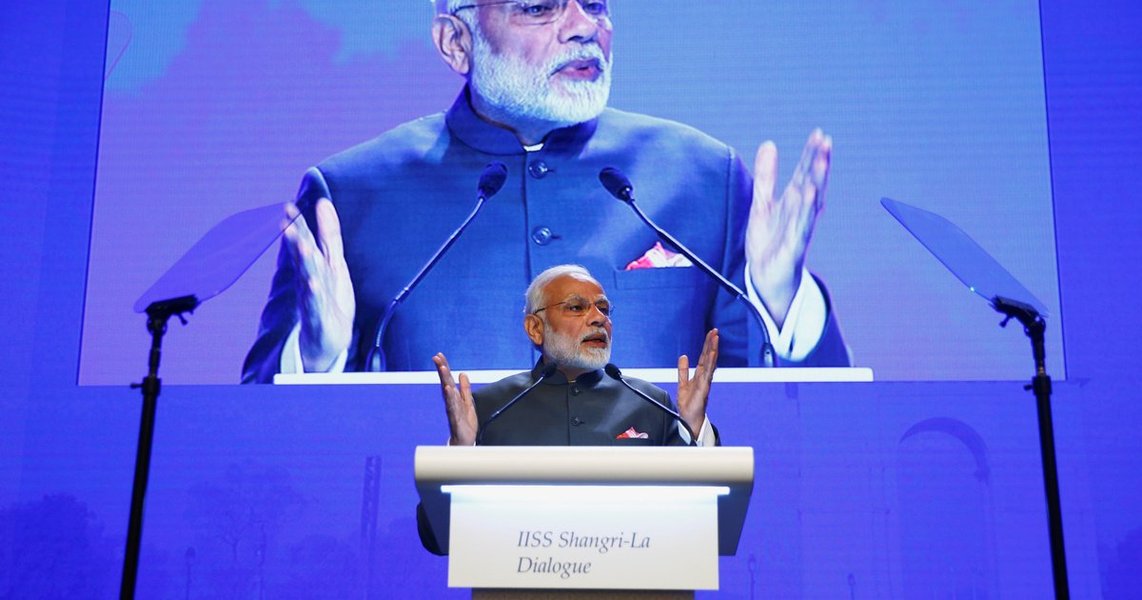
Narendra Modi addressing an audience, reflecting his active role in national and international discourse.
Social Welfare Programs
The Modi administration has rolled out several large-scale social welfare programs. The Pradhan Mantri Jan Dhan Yojana significantly expanded financial inclusion by bringing millions of unbanked citizens into the formal banking system. The Swachh Bharat Mission focused on improving sanitation and cleanliness, leading to the construction of millions of toilets and receiving international recognition, including the Global Goalkeeper Award for Modi. The Pradhan Mantri Ujjwala Yojana provided LPG connections to women from below-poverty-line households, aiming to reduce indoor air pollution and improve health.
National Security and Foreign Policy
Modi's government has adopted a strong stance on national security, particularly concerning cross-border terrorism. On the international front, his tenure has seen active engagement aimed at bolstering India's global standing. Efforts have been made to strengthen ties with major world powers, including the United States, Russia, and countries in East Asia and the Middle East. India's role in international forums has been emphasized, and Modi has been the recipient of several international awards, such as the Order of St. Andrew from Russia and the Champions of the Earth award from the UN for his leadership on the International Solar Alliance.
Popularity and Electoral Success
Narendra Modi has consistently enjoyed high approval ratings within India for much of his tenure. His leadership of the Bharatiya Janata Party (BJP) has resulted in significant electoral victories, including securing a third consecutive term as Prime Minister in 2024, albeit with a coalition government, which contrasts with the strong majorities his party held previously. This sustained popularity is often attributed to his perceived decisiveness, strong leadership image, and effective communication.
Criticisms and Controversies
Despite the achievements, Modi's premiership has been accompanied by significant criticisms and controversies that raise concerns among various sections of society and international observers.
Democratic Backsliding and Authoritarian Tendencies
Critics frequently point to a perceived erosion of democratic norms and institutions under Modi's leadership. Allegations include the centralization of power, a weakening of federal structures, suppression of dissent, and an increase in actions against critical media voices and civil society organizations. These concerns have led to discussions about democratic backsliding in India.
Hindu Nationalism and Majoritarian Policies
The BJP's Hindu nationalist ideology (Hindutva) has been a focal point of criticism. Policies such as the Citizenship Amendment Act (CAA) and the revocation of Article 370, which granted special status to Jammu and Kashmir, have been accused of being discriminatory towards India's Muslim minority and furthering a majoritarian agenda. The handling of communal tensions and incidents of mob violence has also drawn scrutiny. The legacy of the 2002 Gujarat riots, which occurred during his tenure as Chief Minister, continues to be a contentious aspect of his political career.

Election campaigns often highlight the polarized nature of political discourse surrounding Modi's policies.
Economic Challenges
Unemployment and Inequality
Despite overall economic growth, concerns persist regarding job creation and rising income inequality. Data, including some internal government reports, indicated high unemployment rates, particularly post-demonetization and GST implementation. The benefits of economic growth have not been evenly distributed, with wealth concentration remaining a significant issue.
Impact of Demonetization and GST
The 2016 demonetization, aimed at curbing black money and counterfeit currency, caused widespread economic disruption, especially in the informal sector. While the Goods and Services Tax (GST) was a landmark reform to simplify indirect taxation, its initial implementation posed challenges for many businesses. The long-term efficacy and impact of these measures remain subjects of debate.
Anti-Corruption Measures
While tackling corruption has been a stated priority, the effectiveness of measures like the Prevention of Money Laundering Act (PMLA) has been questioned. Despite an increase in cases registered under the PMLA, conviction rates have remained notably low, leading to debates about the actual impact on curbing financial crimes.
Handling of the COVID-19 Pandemic
While the initial response to the COVID-19 pandemic received some public approval, the government's handling of the devastating second wave in 2021 drew widespread criticism. Issues related to healthcare infrastructure, oxygen shortages, and vaccine distribution strategies were highlighted, impacting public perception of governance competence during the crisis.
Leadership Style: A Closer Look
Narendra Modi's leadership style is a defining characteristic of his political persona and governance approach. It is often described with a mix of admiration and concern.
Decisive and Proactive
Modi is widely viewed as a decisive and proactive leader, unafraid to make bold and sometimes controversial decisions. This trait resonates with supporters who see him as a strong figure capable of implementing significant changes. His "Mann Ki Baat" radio program allows him to communicate directly with citizens, bypassing traditional media channels to an extent.
Centralized Control
His governance is marked by a high degree of centralization, with key decisions often driven from the Prime Minister's Office (PMO). While this can lead to swift action, critics argue it undermines institutional autonomy and consultative processes, contributing to the aforementioned concerns about authoritarian tendencies.
Charisma and Personality Cult
Modi possesses considerable charisma and has cultivated a powerful personal brand. This has contributed to his immense popularity but has also led to accusations of fostering a personality cult, where the leader's image overshadows party and policy.
"Minimum Government, Maximum Governance"
A key slogan of his administration has been "Minimum Government, Maximum Governance," emphasizing efficiency, streamlined bureaucracy, and the use of technology in governance. Initiatives like "Digital India" reflect this philosophy.
This video discusses the successes and criticisms of the Modi government, offering a broader perspective on his tenure.
Comparative Perspectives on Modi's Leadership
The perception of Narendra Modi's effectiveness as a politician varies dramatically. The following radar chart attempts to visualize these differing viewpoints across several key governance aspects. The 'Supporter Perspective' generally highlights strengths in areas like economic reform and national security, while the 'Critic Perspective' tends to focus on concerns regarding democratic values and social harmony. A 'Neutral Assessment' might find a mixed record across these domains.
This chart visualizes subjective assessments and is intended for illustrative purposes to show how different groups might rate various aspects of governance under Narendra Modi. Scores are on a scale of 1 to 10, where 10 represents the most positive assessment.
Key Policy Initiatives and Their Impact
Understanding Narendra Modi's political impact involves examining some of his government's flagship policies. The table below summarizes a few key initiatives, their stated objectives, achievements, and associated criticisms.
| Policy Initiative | Stated Objective(s) | Reported Achievements | Criticisms / Concerns |
|---|---|---|---|
| Make in India | Boost domestic manufacturing, attract FDI, create jobs, enhance skill development. | Increased FDI inflows in some sectors, focus on improving ease of doing business. | Mixed results on job creation, impact on MSMEs, competition from global markets. |
| Demonetization (2016) | Curb black money, counterfeit currency, and terrorism financing. | Increase in digital transactions, expansion of tax base. | Severe disruption to the informal economy, job losses, limited success in unearthing black money, impact on GDP growth. |
| Goods and Services Tax (GST) (2017) | Unify indirect tax system, create a common national market, simplify compliance. | Streamlined tax structure, improved tax collection over time. | Initial implementation complexities, burden on small businesses, multiple tax slabs, technical glitches. |
| Swachh Bharat Mission | Achieve universal sanitation coverage, eliminate open defecation, promote cleanliness. | Significant increase in toilet construction, improved sanitation in many areas, international recognition. | Concerns about sustainability, water availability, behavioral change, and actual usage of toilets. |
| Pradhan Mantri Jan Dhan Yojana | Ensure access to financial services (banking, credit, insurance, pension) for all households. | Millions of new bank accounts opened, increased financial inclusion. | Issues with dormant accounts, accessibility of services in remote areas, financial literacy. |
| Citizenship Amendment Act (CAA) (2019) | Provide Indian citizenship to persecuted religious minorities (excluding Muslims) from Pakistan, Bangladesh, and Afghanistan. | Framework for granting citizenship to eligible individuals. | Criticized for violating secular principles of the constitution, discriminating based on religion, leading to widespread protests. |
Mapping Modi's Political Landscape
Narendra Modi's political journey and impact are multifaceted. The mindmap below provides a visual overview of the key domains defining his political profile, encompassing his achievements, the criticisms he has faced, his distinct leadership style, and some of his most significant policies.
(e.g., Make in India, Digital India)"]) id_infra(["Infrastructure Development
(Roads, Railways, Urban)"]) id_social_welfare(["Social Welfare Schemes
(e.g., Jan Dhan Yojana, Swachh Bharat)"]) id_nat_sec(["Strong National Security Posture"]) id_global(["Enhanced Global Standing & Diplomacy"]) id_electoral(["Consistent Electoral Successes"]) id_criticisms(["Major Criticisms & Controversies"]) id_dem_backslide(["Democratic Backsliding
& Authoritarian Tendencies"]) id_hindu_nat(["Hindu Nationalism &
Majoritarian Policies (e.g., CAA)"]) id_econ_issues(["Economic Challenges
(Unemployment, Inequality, Demonetization Impact)"]) id_kashmir(["Revocation of Kashmir's
Special Status"]) id_press_freedom(["Concerns over Press Freedom
& Dissent Suppression"]) id_guj_riots(["Legacy of 2002 Gujarat Riots"]) id_leadership(["Leadership Style"]) id_decisive(["Decisive & Proactive Decision-Making"]) id_centralized(["Centralized Power & Control (PMO-centric)"]) id_charismatic(["Charismatic Appeal & Mass Popularity"]) id_min_gov(["'Minimum Govt, Maximum Governance' Philosophy"]) id_personality(["Accusations of Personality Cult"]) id_impact(["Overall Impact"]) id_transform(["Significant Transformative Changes in India"]) id_polarization(["Increased Socio-Political Polarization"]) id_global_image(["Shifting India's Global Image"])
This mindmap illustrates the interconnected aspects of Narendra Modi's political career, highlighting the breadth of areas influenced by his leadership and policies.
Frequently Asked Questions (FAQ)
What are Narendra Modi's main achievements?
Narendra Modi's tenure is credited with several achievements. Key among them are:
- Economic Reforms: Initiatives like "Make in India," "Digital India," and the implementation of the Goods and Services Tax (GST) aimed at modernizing the economy and improving ease of doing business.
- Infrastructure Development: Significant investments in roads, railways, airports, and urban infrastructure.
- Social Welfare Programs: Large-scale schemes such as the Pradhan Mantri Jan Dhan Yojana (financial inclusion), Swachh Bharat Mission (sanitation), and Ujjwala Yojana (clean cooking fuel) have reached millions.
- Foreign Policy: Enhanced India's global engagement and strengthened diplomatic ties with various countries, alongside receiving international awards for leadership in areas like solar energy and sanitation.
- National Security: A firm stance on national security issues, particularly concerning terrorism.
What are the primary criticisms against Narendra Modi?
Key criticisms leveled against Narendra Modi and his government include:
- Democratic Backsliding: Concerns about the weakening of democratic institutions, centralization of power, and suppression of dissent and press freedom.
- Hindu Nationalist Agenda: Accusations of promoting majoritarian policies that marginalize religious minorities, particularly Muslims, and foster religious polarization (e.g., Citizenship Amendment Act, handling of communal issues).
- Economic Hardships: Issues like high unemployment, rising income inequality, and the disruptive impact of policies such as demonetization and the initial rollout of GST on the informal sector and small businesses.
- Handling of Protests and Dissent: Criticism for the government's response to various protests and the use of stringent laws against activists and critics.
- Controversial Policies: Actions like the revocation of Jammu and Kashmir's special status have been highly controversial domestically and internationally.
How is Narendra Modi's leadership style described?
Narendra Modi's leadership style is often characterized by several distinct traits:
- Decisive and Bold: He is known for making quick and often unconventional decisions.
- Centralized Authority: Power is significantly concentrated in the Prime Minister's Office (PMO), leading to a top-down approach to governance.
- Charismatic and Populist: He possesses strong oratory skills and a direct connection with a large voter base, often projecting a strongman image.
- Proactive and Hands-on: Often takes a direct interest in the implementation of key projects and policies.
- Emphasis on "Minimum Government, Maximum Governance": A focus on efficiency, digitalization, and reducing bureaucratic hurdles.
- Critics, however, sometimes describe his style as authoritarian, fostering a personality cult, and limiting space for consultation or dissent.
What has been the impact of Modi's Hindu nationalist agenda on India?
The promotion of a Hindu nationalist (Hindutva) agenda under Narendra Modi's government has had several significant impacts:
- Increased Religious Polarization: Critics argue that policies and rhetoric have deepened communal divides between Hindus and religious minorities, especially Muslims.
- Concerns for Minority Rights: Policies like the Citizenship Amendment Act (CAA) and events like the Ram Temple consecration in Ayodhya have raised concerns about the status and security of minorities in a constitutionally secular India.
- Rise in Majoritarianism: There is a perception that the government's actions often prioritize the interests and cultural symbols of the Hindu majority, potentially undermining India's pluralistic fabric.
- Social Tensions: Incidents of communal violence and hate speech have been reported, which critics link to an enabling environment created by the dominant political narrative.
- International Scrutiny: India's record on religious freedom and minority rights has faced increased scrutiny from international human rights organizations and foreign governments.
- Supporters, however, often view these developments as a reclamation of India's cultural heritage and a correction of past imbalances.
Recommended Further Exploration
To delve deeper into the complexities of Narendra Modi's political career and its impact, consider exploring these related queries:
- What has been the long-term economic impact of demonetization and GST in India?
- How valid are the claims of democratic backsliding in India during Narendra Modi's tenure?
- In what ways has India's foreign policy evolved under Prime Minister Narendra Modi?
- What is the role and influence of Hindu nationalism in contemporary Indian politics and society?
References
Last updated May 19, 2025