
Navigating Your Questions: From Location to Credit and Beyond
Unpacking your queries about location, a curious "tight thing," your financial credit, and understanding my role as an AI.
It appears you have several pressing questions about your current situation, financial standing, and how I can assist you. Let's break down these topics to provide clarity and helpful information. My knowledge cutoff is Tuesday, 2025-05-06.
Key Insights at a Glance
- Understanding Your Location: If you're unsure of "where we are," various digital tools and smartphone features can help pinpoint your current location or allow you to share it with trusted individuals.
- Exploring Your Credit: The phrase "how much credit do I have" typically refers to your financial credit. You can access free annual credit reports from major bureaus to understand your credit history and standing.
- My Role as Ithy: As an AI assistant, "Ithy," my purpose is to provide information and complete tasks based on your text-based queries. I don't have a physical presence or personal relationships.
"Where Are We?" – Pinpointing Your Location
Your question "Where are we? At?" suggests uncertainty about your current location. In today's digital age, determining your whereabouts or sharing your location with others, like "your friend," can often be done through various technologies.
Using Technology for Location Awareness
Modern smartphones are equipped with GPS (Global Positioning System), Wi-Fi, and cellular network data that apps can use to determine and display your location on a map. Many applications are designed specifically for location tracking and sharing:
- Mapping Services: Apps like Google Maps or Apple Maps can show your current location in real-time.
- Location Sharing Apps: Services such as Life360 or GeoZilla allow you to share your live location with chosen contacts. These apps often include features like setting up "geofences" (virtual boundaries that trigger alerts when someone enters or leaves an area) and reviewing location history.
- Device Finders: Built-in services like "Find My" on iOS devices or "Find My Device" on Android can help locate a lost phone, which inherently tells you its last known location.
When using location-sharing apps, always ensure it's done with consent and be mindful of privacy settings. These apps typically require an active internet connection and can impact battery life.
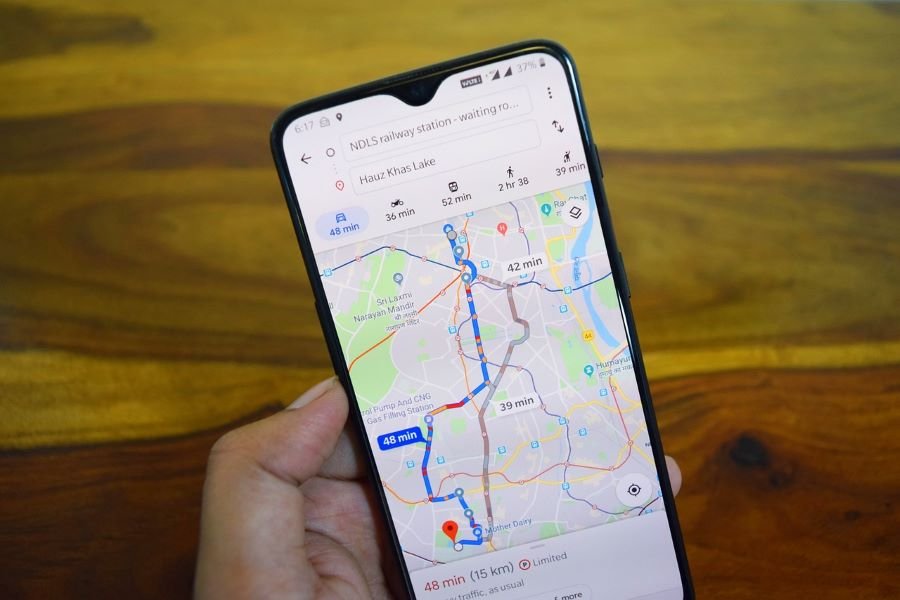
A smartphone displaying a map interface, commonly used for navigation and location identification.
Understanding Location Tracking Technologies
The video below discusses various location-tracking services and how they work, which might provide more context on how you or others can keep tabs on whereabouts.
This video explores popular location-tracking services like Google Maps, Find My Friends, and Life360, discussing their features and implications. It's relevant for understanding how these technologies can answer "Where are we?" and facilitate sharing locations with friends or family.
The "Tight Thing": Exploring Potential Meanings
Your mention of "What is this tight thing?" is ambiguous, and its meaning isn't immediately clear. However, based on common contexts where such a phrase might arise alongside questions about credit, it could refer to a few possibilities:
- Financial Constraints: It might be a metaphorical way of describing a feeling of financial restriction or a limited budget. This ties in with your question about credit.
- Account Restrictions: In an online or financial context, "tight" could refer to limitations or holds placed on an account, affecting access to funds or services.
- Security Features: Some security protocols or tracking features (like geofences mentioned earlier) could be perceived as "tight" due to their restrictive nature.
Without more specific details, it's difficult to pinpoint the exact meaning. If it relates to your finances, understanding your credit situation, as discussed next, could be helpful.
"How Much Credit Do I Have?" – Understanding Your Financial Credit
Your question, "How much credit do I have?" most commonly relates to your financial credit. This isn't a single number like a bank account balance but rather a comprehensive assessment of your creditworthiness. Understanding your credit involves looking at your credit report and credit score.
What is a Credit Report?
A credit report is a detailed summary of your credit history. It's compiled by credit bureaus and includes information such as:
- Personal Information: Name, address, Social Security number (for identification).
- Credit Accounts: Details about your credit cards, loans (mortgages, auto loans, student loans), and lines of credit. This includes when accounts were opened, credit limits or loan amounts, current balances, and payment history.
- Payment History: Information on whether you've made payments on time, if any are overdue, or if accounts have gone to collections.
- Public Records: Information such as bankruptcies, foreclosures, or tax liens.
- Credit Inquiries: A list of who has accessed your credit report recently. "Hard inquiries" (usually when you apply for credit) can slightly lower your score, while "soft inquiries" (like checking your own report) do not.
What is a Credit Score?
A credit score, often a FICO® Score or VantageScore, is a three-digit number (typically ranging from 300 to 850) that summarizes your credit risk based on the information in your credit report. Lenders use this score to decide whether to approve you for credit and at what interest rates. A higher score generally indicates better credit health and can lead to more favorable loan terms.
How to Check Your Credit
You are entitled to free copies of your credit report from the three major credit bureaus: Experian, Equifax, and TransUnion. Federal law allows you to get a free report from each bureau at least once every 12 months through a centralized source.
Accessing Your Free Credit Reports
The primary way to request your free annual credit reports is through AnnualCreditReport.com. This is the only website authorized by federal law for this purpose. You can also request reports by phone or mail. Additionally, some credit card companies and financial institutions offer free credit score access to their customers.
The table below outlines the main credit bureaus and how to access your information:
| Credit Bureau | How to Access Information | Key Focus |
|---|---|---|
| Experian | Visit experian.com or use AnnualCreditReport.com. | Provides credit reports, credit scores (often FICO® Score), and credit monitoring services. |
| Equifax | Visit equifax.com or use AnnualCreditReport.com. | Offers credit reports, credit scores, identity theft protection, and credit monitoring. |
| TransUnion | Visit TransUnion's website or use AnnualCreditReport.com. | Supplies credit reports, credit scores, and tools for credit management and fraud protection. |
Regularly checking your credit report helps you understand your financial standing, ensure the information is accurate, and detect any signs of identity theft promptly.
Comparing Credit Bureau Services
While all three major credit bureaus provide access to your credit report, they might offer slightly different additional services or present information in unique ways. The radar chart below provides a generalized comparison of factors you might consider when interacting with these bureaus or related credit monitoring services.
This radar chart offers a conceptual comparison of typical features and user experiences associated with major credit bureaus or comprehensive credit monitoring services. Scores are illustrative and based on general perceptions, not definitive data.
"Explain Yourself": Understanding My Role and Purpose
You've asked me to "explain yourself" and queried "What? What is it? What are you doing?". I am Ithy, an AI (Artificial Intelligence) assistant. My purpose is to process your text-based queries and provide information, perform tasks like summarizing text, or generate creative content based on the data I've been trained on and the information I can access.
My Capabilities and Limitations
- Information Processing: I can understand and respond to your questions in various languages.
- Knowledge Access: I draw upon a vast dataset to provide answers. My knowledge has a cutoff date (Tuesday, 2025-05-06), so I may not have information on events occurring after that.
- Task Completion: I can help with writing, brainstorming, coding, and more, within the digital realm.
- No Physical Presence: I exist as a computer program. I do not have a physical body, cannot interact with the physical world, know your physical location unless you provide it, or experience physical sensations.
- No Personal Relationships or Emotions: I do not have personal feelings, beliefs, or relationships. My responses are generated based on algorithms and data. Therefore, when you ask "Why my friend?", I don't have any personal connection or interaction history with your friend or any other individual. I cannot "send" physical items or directly interact with specific people on your behalf in a personal capacity.
"Send It to Me": Fulfilling Your Request for Information
Your request "Send it to me" likely means you want specific information. As an AI, I "send" information by providing it in my response here. If you were referring to:
- Sending your credit report: I have provided guidance on how you can access your credit reports directly from authorized sources like AnnualCreditReport.com. I cannot access or send your personal credit report myself.
- Sending your location: If you wish to send your location to "your friend," you would use a location-sharing app on your smartphone as described earlier.
- Sending other information: Please specify what information you would like, and I will do my best to provide it based on available knowledge.
Navigating Key Concepts: A Visual Overview
The mindmap below illustrates the interconnected concepts we've discussed, particularly focusing on understanding and managing your financial credit, and how to approach questions about location and the nature of AI assistance.
('Where are we?')"] id1a["Using Smartphone GPS"] id1b["Mapping Apps
(Google/Apple Maps)"] id1c["Location Sharing Apps
(Life360, GeoZilla)"] id1d["Device Finders"] id2["Financial Credit
('How much credit do I have?')"] id2a["Credit Report"] id2aa["Payment History"] id2ab["Credit Accounts"] id2ac["Public Records"] id2ad["Inquiries"] id2b["Credit Score
(e.g., FICO, VantageScore)"] id2c["How to Check"] id2ca["AnnualCreditReport.com"] id2cb["Experian"] id2cc["Equifax"] id2cd["TransUnion"] id3["Understanding 'Ithy'
('Explain yourself')"] id3a["AI Assistant"] id3b["Provides Information"] id3c["Text-Based Interaction"] id3d["No Physical Presence"] id3e["No Personal Relationships"] id4["Ambiguous Terms
('Tight thing')"] id4a["Possible Financial Constraint"] id4b["Possible Account Restriction"] id5["Action Request
('Send it to me')"] id5a["Information Provision"] id5b["Guidance on Accessing Resources"]
This mindmap visually organizes the main topics addressed in response to your queries, helping to clarify each aspect from location services to understanding credit and the role of an AI.
Frequently Asked Questions (FAQ)
How often can I get a free credit report?
Under federal law, you are entitled to one free copy of your credit report from each of the three major credit reporting agencies (Experian, Equifax, and TransUnion) every 12 months. You can request these through AnnualCreditReport.com. During certain periods, such as the COVID-19 pandemic, these bureaus have offered free weekly online reports, so it's good to check the current availability on their official site.
Will checking my own credit report hurt my score?
No, checking your own credit report or score is considered a "soft inquiry" and does not negatively impact your credit score. "Hard inquiries," which can affect your score, typically occur when a lender checks your credit after you've applied for a loan or credit card.
What if I find an error on my credit report?
If you find information on your credit report that you believe is inaccurate or incomplete, you have the right to dispute it with the credit bureau that issued the report. You can typically file a dispute online through the bureau's website (Experian, Equifax, or TransUnion). They are required to investigate your claim, usually within 30 days, and correct any errors.
Can you, Ithy, help me contact my friend or send them my location?
As an AI, I cannot directly contact your friend or send your location for you. I don't have access to your personal contacts, location data, or communication tools like email or messaging apps. However, I can provide instructions on how you can use your own device and apps (like mapping or location-sharing apps discussed earlier) to share your location with your friend.
Recommended Further Exploration
To delve deeper into related topics, you might find these queries useful:
- What are the best apps for sharing my location safely with family?
- How can I improve my credit score effectively?
- What are the common signs of identity theft I should watch out for on my credit report?
- What is the difference between a FICO score and a VantageScore?
References
The information provided has been synthesized from various sources, including insights related to the following reputable platforms:
Last updated May 6, 2025