
Streamlining EPC Projects: Why Integrating NCR Tracking and Client Notifications is Non-Negotiable
Unlock efficiency and transparency in your projects by mastering Non-Conformance Report management and communication protocols.
In the complex world of Engineering, Procurement, and Construction (EPC) projects, managing deviations from plans or standards is crucial. Non-Conformance Reports (NCRs) are the primary tools for documenting these issues, but their effectiveness hinges on proper integration and communication. Let's explore how optimizing NCR processes can significantly benefit project outcomes.
Essential Takeaways for Enhanced NCR Management
- Integration is Key: Seamlessly integrating NCR tracking with your overall document control system ensures centralized management, version control, and easier access to critical information.
- Client Transparency Matters: Implementing clear provisions for notifying clients about NCRs that impact project timelines or deliverables builds trust and facilitates collaborative problem-solving.
- EPC's Communication Role: EPC entities must guarantee timely and comprehensive notification to *all* stakeholders, especially the client, when NCRs pose risks to project schedules, ensuring alignment and proactive adjustments.
Understanding Non-Conformance Reports (NCRs)
A Non-Conformance Report (NCR) is a formal quality control document used across various industries, particularly in manufacturing and construction, to record any event where a product, process, service, or system deviates from specified requirements, standards, or procedures. Identifying and documenting non-conformances is the first step towards rectifying errors, preventing recurrence, and driving continuous improvement.
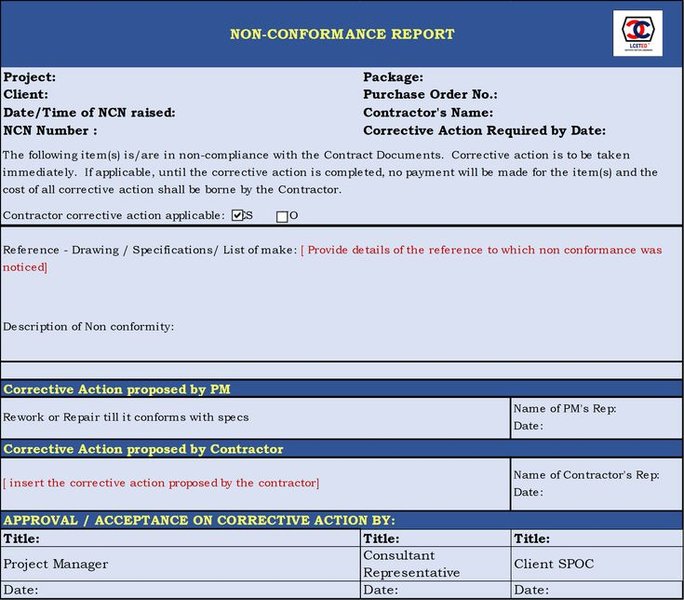
Visual guide illustrating decision points for issuing an NCR.
Why Are NCRs Critical in EPC Projects?
In large-scale EPC projects, adherence to strict specifications and timelines is paramount. NCRs serve several vital functions:
- Quality Assurance: They provide documented evidence that quality control mechanisms are functioning.
- Problem Identification: They pinpoint specific deviations, allowing for targeted investigation and root cause analysis.
- Corrective/Preventive Actions (CAPA): They form the basis for initiating CAPA processes to address the immediate issue and prevent future occurrences.
- Compliance: They help organizations meet regulatory requirements and industry standards, such as ISO 9001:2015, which mandates the control of nonconforming outputs.
- Continuous Improvement: Analyzing NCR data reveals trends and systemic issues, enabling process optimization.
Integrating NCR Tracking with Document Control Systems
Manually tracking NCRs using spreadsheets or disparate systems can lead to inefficiencies, errors, and lost information. Integrating NCR management into a centralized Document Control System (DCS) offers significant advantages for EPC projects.
Benefits of Integration
Centralized Management
A DCS provides a single source of truth for all project documentation, including NCRs. This ensures that everyone is working with the latest information and reduces the risk of using outdated documents.
Workflow Automation
Modern DCS platforms often include workflow automation capabilities. NCRs can be automatically routed through predefined stages (creation, review, investigation, disposition, closure) to the correct personnel, ensuring timely processing and accountability. Features like automated version control and audit trails enhance traceability.
Enhanced Traceability and Audit Trails
Integration allows linking NCRs to related documents, such as drawings, specifications, test reports, and CAPA records. This provides a complete history of the non-conformance and actions taken, which is invaluable during audits or project reviews.
Improved Reporting and Analytics
Centralizing NCR data enables powerful reporting and analytics. Project managers can easily track NCR statuses, identify trends, analyze root causes, and measure the effectiveness of corrective actions, leading to data-driven decision-making.
Evaluating NCR System Effectiveness
An effective NCR system relies on several interconnected factors. The radar chart below visualizes the relative importance and typical performance levels of key attributes in a well-integrated NCR management process within an EPC context. High scores indicate strong performance or high importance.
As the chart suggests, while integration and client notification are highly important, typical system performance may lag, indicating areas for potential improvement in many EPC projects. Focusing on enhancing these aspects can yield substantial benefits.
Notifying Stakeholders: Clients and Concerned Parties
Clear, timely, and appropriate communication regarding NCRs is essential, especially when they impact project milestones or deliverables. This involves establishing clear protocols for notifying both the client and other relevant internal and external stakeholders.
Provision for Client Notification
A specific provision should be formalized within the project's quality management plan or communication protocol outlining *when* and *how* the client will be notified about NCRs. This provision should mandate notification if an NCR:
- Causes or is likely to cause a delay in the project schedule.
- Impacts key deliverables or product/service specifications.
- Affects project costs significantly.
- Raises safety or environmental concerns.
The notification mechanism, often facilitated by the integrated DCS, should ensure promptness and provide sufficient detail for the client to understand the issue, its potential impact, and the proposed or ongoing corrective actions. Automated alerts can be configured based on NCR severity or impact criteria.
EPC's Responsibility for Broader Notification
As the entity often overseeing the entire project, the EPC contractor bears the responsibility for ensuring *all* relevant parties are informed about significant NCRs. This goes beyond just the client and includes:
- Internal Project Teams (Engineering, Procurement, Construction, Quality)
- Subcontractors and Suppliers
- Regulatory Bodies (if applicable)
- Management Personnel
EPC must establish and enforce a robust notification process, leveraging the integrated DCS and automated workflows where possible. This ensures that everyone who needs to know is informed promptly, facilitating coordinated responses and minimizing potential disruptions or misunderstandings. Proactive communication, especially regarding timeline impacts, maintains transparency and stakeholder confidence.
Visualizing the NCR Ecosystem
Understanding the flow and connections within the NCR process helps clarify roles and dependencies. The mindmap below illustrates the key components and relationships in managing NCRs within an EPC project context, emphasizing integration and notification.
(Eng, QA, PM)"] id4b["Client Notification
(Triggered by Impact:
Timeline, Deliverables, Cost, Safety)"] id4c["Suppliers/Subcontractors"] id4d["Management"] id5["Closure & Analysis"] id5a["Verification of Effectiveness"] id5b["NCR Closure"] id5c["Trend Analysis & Reporting"] id5d["Continuous Improvement Input"] id6["EPC Responsibility"] id6a["Oversee Entire Process"] id6b["Ensure System Integration"] id6c["Guarantee Timely Notifications"]
This mindmap highlights how NCR identification flows through processing, relies heavily on system integration, triggers necessary stakeholder notifications (with specific triggers for client alerts), and feeds into closure and continuous improvement cycles, all under the oversight of the EPC.
Key Components of an NCR and Process Steps
A well-structured NCR document and process are fundamental. The table below outlines typical information included in an NCR and the general steps involved in its lifecycle.
| NCR Component / Process Step | Description |
|---|---|
| Unique NCR Identifier | A unique number or code for tracking purposes. |
| Date Identified | The date the non-conformance was discovered. |
| Source of Identification | How the NCR was found (e.g., inspection, audit, customer complaint). |
| Detailed Description | Clear and concise description of the non-conformance, including location, product/process involved, and specific requirements not met. |
| Immediate Containment Actions | Steps taken immediately to prevent the issue from worsening or affecting other areas (e.g., quarantining affected parts). |
| Root Cause Analysis (RCA) | Investigation findings identifying the fundamental cause(s) of the non-conformance. |
| Proposed Disposition | Recommended action for the non-conforming item/process (e.g., rework, repair, scrap, use-as-is, regrade). Often requires MRB (Material Review Board) approval. |
| Corrective Actions | Actions planned or taken to eliminate the root cause and correct the immediate issue. |
| Preventive Actions | Actions planned or taken to prevent the recurrence of the non-conformance or similar issues. |
| Responsible Person(s) & Due Dates | Individuals assigned responsibility for actions and target completion dates. |
| Verification & Closure | Confirmation that all actions have been completed effectively, followed by formal closure of the NCR. |
| Associated Documents/Evidence | Links or references to supporting documents like photos, test results, specifications. |
Leveraging Technology for NCR Management
Various software solutions can streamline NCR management, integrating it with quality control and document handling. The video below discusses features in JobBOSS² software relevant to non-conformance tracking and document management, illustrating how technology aids these processes.
This video highlights functionalities like tracking non-conformances, managing associated documents, and facilitating corrective actions within a software environment. Such tools embody the principles of integrated NCR tracking, providing centralized control, automated workflows, and better visibility, which are crucial for effective management in demanding EPC projects.
Frequently Asked Questions (FAQ)
What triggers the issuance of an NCR?
An NCR should be issued whenever a deviation from established requirements, specifications, standards, procedures, or plans is identified. This could relate to products, materials, processes, services, or even system performance during activities like inspections, audits, testing, or based on feedback (internal or external).
Why is integrating NCR tracking with Document Control Systems (DCS) so important?
Integration provides a single source of truth, ensures version control, enables automated workflows for routing and approvals, enhances traceability by linking NCRs to related documents, facilitates comprehensive audit trails, and allows for better reporting and trend analysis. This streamlines the process and improves overall quality management efficiency.
Under what circumstances should the client be notified about an NCR?
Clients should typically be notified if an NCR significantly impacts the project, specifically concerning: agreed-upon timelines (potential delays), key project deliverables (quality or specification deviations), project costs, or aspects related to safety and environmental compliance. Establishing clear criteria in the project plan is crucial.
What is EPC's role regarding NCR notifications?
The EPC contractor is responsible for ensuring that *all* relevant parties—including the client, internal teams, subcontractors, and potentially suppliers or regulators—are properly and promptly notified about NCRs, especially those affecting project timelines or critical deliverables. This involves setting up and managing the notification process, often leveraging integrated systems.
Recommended Reading
- How does document control software specifically aid NCR and CAR management?
- What are the best practices for implementing client notification protocols for NCRs in EPC projects?
- Explore examples of NCR workflows in integrated quality management systems.
- What is the role of AI in modern NCR management and predictive quality control?
References
Last updated April 29, 2025